If you like the idea of waking up with soft bends rather than plugging in a wand, this Kitsch Satin Heatless Curling Rod review gets straight to the real question: does it make heatless styling easier, or is it another accessory that only works on perfect hair days?
Quick verdict: the Kitsch Satin Heatless Curling Rod is a strong, low-effort option for medium to long hair that already holds shape reasonably well. It is less convincing for very short cuts, very heavy hair that drops quickly, or anyone who dislikes sleeping with a rod across the head. Shortlist it if you want a softer, more undone curl than a traditional curling wand gives, and you are willing to practise sectioning and tension.
Product overview
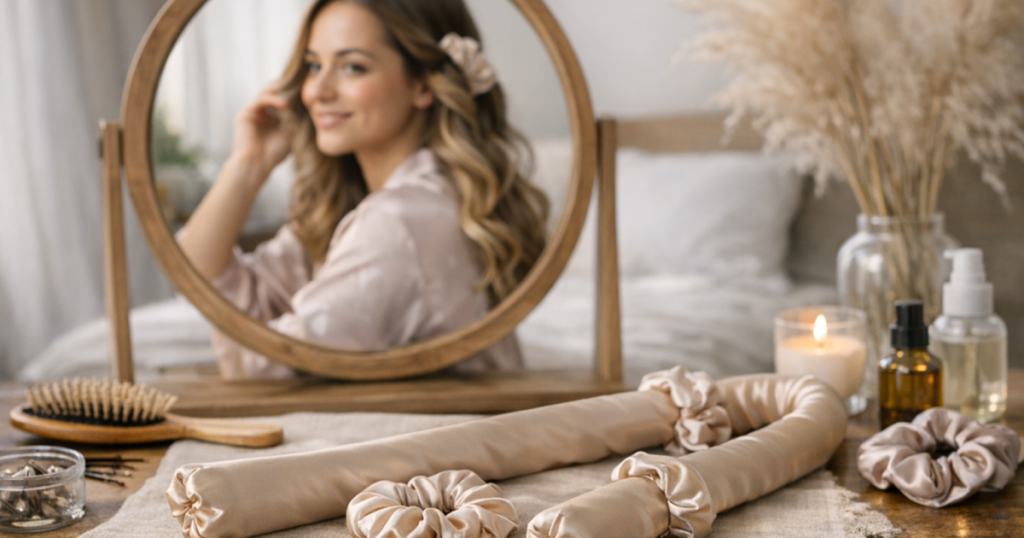
The Kitsch Satin Heatless Curling Rod is a non-heated styling accessory designed to create curls or waves while the hair sets around a satin-covered rod. Instead of clamping hair around a hot barrel, you wrap sections over the rod, secure them, leave the hair to set, then unravel once it has cooled, dried or settled into shape.
Its main appeal is simplicity. It does not require heat technique, temperature judgement or constant mirror work. That makes it especially useful for people trying to reduce heat styling, preserve colour-treated lengths, or avoid that slightly crisp finish that can happen when already-dry ends meet a curling tong too often.
That said, it is not magic. Heatless rods work best when the prep suits your hair. Hair that is too wet can dry slowly and flatten at the roots. Hair that is completely silky and product-free may slip before it sets. The sweet spot is usually lightly damp, almost-dry hair, or dry hair misted and given a little styling support.
For a wider fabric comparison, the difference between satin and silk is worth understanding before you buy. Our guide to silk vs satin heatless curlers explains how feel, friction and hair type can affect the result.
Key specs
- Product type: satin-covered heatless curling rod.
- Styling method: hair is wrapped around the rod and left to set without heated plates or barrels.
- Best hair length: generally easiest on medium to long hair, especially shoulder length and below.
- Typical finish: soft curls, bends or loose waves depending on section size, tension, layering and prep.
- Heat level: no direct heat is used.
- Routine fit: suited to overnight setting or a slower daytime styling routine.
- What to verify before buying: current package contents, securing accessories, rod dimensions, colour options and retailer return policy, as these can vary by listing.
Pros and cons
Pros
- Gentler than heated curling: it avoids the repeated direct heat that can leave ends feeling dry or rough over time.
- Good for relaxed, wearable curls: the finish is more soft and undone than formal, which suits everyday styling.
- Useful for low-morning-effort routines: once you have wrapped the hair properly, the styling work is mostly done while the hair sets.
- Satin surface helps reduce rough friction: it feels smoother against the hair than some basic foam or cotton-covered options.
- No socket or hot-tool space needed: handy if your dressing table is crowded or you prefer not to heat style before leaving the house.
Cons
- Not equally comfortable for every sleeper: side sleepers may feel the rod more than they expect.
- Needs practice: uneven sectioning can create one polished side and one chaotic side.
- Short layers can escape: face-framing pieces, bobs and choppy cuts may need clips or a different roller method.
- Very thick hair may need extra patience: large sections can set weakly, while small sections take longer to wrap.
- Results are prep-dependent: too much moisture, too little hold, or slippery freshly conditioned hair can all affect the curl.
Performance in real use
Ease of wrapping
The Kitsch Satin Heatless Curling Rod is easy to understand but slightly harder to master than it first appears. The basic movement is simple: place the rod across the crown, wrap sections away from the face, add more hair as you work down, then secure the ends. The challenge is keeping even tension without pulling so tightly that the roots look stretched or uncomfortable.
For medium-density straight or wavy hair, the learning curve is fairly forgiving. You can take moderate sections, wrap both sides, and still get a presentable finish. For thick, coarse or layered hair, smaller sections usually give better control. The more hair you try to wrap in one go, the more likely the underneath layers are to dry or set unevenly.
Comfort while setting
Comfort is the biggest make-or-break point. If you sleep on your back, the rod can feel reasonably manageable once positioned securely. If you sleep on your side or move a lot, you may notice it more. The trick is to keep the rod high enough that it does not sit awkwardly behind the ears, but not so high that the front sections pull at the hairline.
Daytime setting is underrated. If overnight curlers annoy you, wearing the rod for a few hours on almost-dry hair can still give soft bends, particularly on hair that takes shape easily. The finish may be looser than a full overnight set, but the comfort trade-off is often worth it.
Finish by hair type
On fine hair, the rod can create pretty, airy bends, but hold is the issue. Fine hair often benefits from a light mousse or setting spray before wrapping, applied sparingly so the hair does not feel crunchy. Avoid wrapping oversized sections, as they can fall into vague movement rather than clear curls.
On medium-density hair, this is where the product feels most at home. The curls tend to look soft rather than overly styled, and the satin surface helps the hair slide off without too much disruption when you unwrap it. Brushing out should be gentle: fingers first, then a wide-tooth comb only if you want a looser wave.
On thick hair, the result depends on section discipline. Thick hair can look gorgeous with this kind of heatless set, but only if the hair has enough time to dry or settle fully. If the inner layers are still damp when removed, the curl can collapse or puff. For coarse textures, a smoothing cream through the lengths can help, but heavy oils before setting may make the hair too slippery.
On curly hair, the rod is better for stretching and reshaping than for creating uniform ringlets. It can soften the curl pattern into bigger waves, but it may not smooth every root or layer. If your main goal is elongation without heat rather than a curled finish, banding may be more predictable for some curl patterns.
Hold and next-day wear
The curl hold is realistic rather than salon-locked. Expect soft shape, not the firm spring you would get from a hot tong and strong hairspray. Hair that normally drops quickly will still need styling support. Hair that naturally holds a wave can look polished with very little product.
For best longevity, let the set cool or dry fully before removing the rod, then avoid aggressive brushing. A tiny amount of lightweight oil or serum on the ends can reduce fluff, but apply it after the curl has formed, not before wrapping.
Maintenance and durability
Because this is a fabric-covered accessory, maintenance is more about keeping product build-up under control than technical upkeep. If you regularly use mousse, leave-in conditioner or setting spray, check the care instructions on the current product listing before cleaning. Let it dry fully before storing it, and avoid leaving it crushed under heavier tools, as shape and surface smoothness matter for easy wrapping.
Value for the routine
The value is strongest if you will use it weekly or as a genuine replacement for some heat styling. It is less compelling if you only curl your hair for formal occasions and need a highly controlled finish. Think of it as a routine tool, not an event-styling guarantee.
Who it’s best for / who should skip it
It is best for: medium to long hair, soft waves, loose curls, heat-reduction routines and people who prefer a lived-in finish. It also suits anyone who wants a lower-effort morning and does not mind doing the setup the night before.
Fine hair: worth trying if your hair can hold shape with a little product. Use smaller sections and do not over-condition immediately before styling.
Thick hair: a good option if you are patient with sectioning. Wrap less hair per pass and allow enough setting time, otherwise the result can be soft on the outside and unfinished underneath.
Curly or textured hair: useful for stretching into a looser shape, but it may not give even smoothing from root to tip. Pair with a curl-friendly leave-in and avoid forcing too much tension around fragile edges.
Skip it if: your hair is very short, heavily layered around the face, or you need precise curls that last through a long formal day. If your bob or crop needs root lift more than length-wrapped curls, a roller method may suit you better; our tutorial on using foam rollers on short hair is a more targeted next step.
Common questions
Should hair be wet or dry before using it?
Almost dry is usually best. Very wet hair can take too long to dry around the rod, while bone-dry hair may not set unless it already holds shape easily.
Can it replace a curling wand?
For soft everyday waves, yes for many hair types. For sharp, glossy, uniform curls, a heated tool is still more predictable.
Does it work on layered hair?
It can, but short layers may slip out. Use clips to secure awkward pieces, and keep sections neat rather than trying to wrap too much hair at once.
Will it make hair frizzy?
Not usually by itself. Frizz is more likely from removing it too early, brushing too hard, or using too little smoothing product on porous ends.
Alternatives
If the Kitsch Satin Heatless Curling Rod feels too bulky for sleep, silk or satin curling ribbons with a softer structure may feel more comfortable, though the result will still depend on tension and prep. For shorter cuts, foam rollers are often more practical because they can be placed exactly where lift or bend is needed rather than relying on length wrapped around one central rod.
For curly hair where the goal is lengthening rather than curling, banding can be a better heatless route. It gives more control over stretch and can be adjusted section by section, which is useful when different parts of the head shrink at different rates.
Verdict + score
The Kitsch Satin Heatless Curling Rod is a worthwhile buy for the right routine: medium to long hair, soft styling goals, and a willingness to practise wrapping. It is comfortable enough for many users, gentler than hot curling, and capable of pretty, wearable waves, but it is not the most reliable choice for very short cuts, very heavy hair that drops fast, or anyone wanting crisp occasion curls. As an everyday heatless styling tool, it earns 8.2/10.
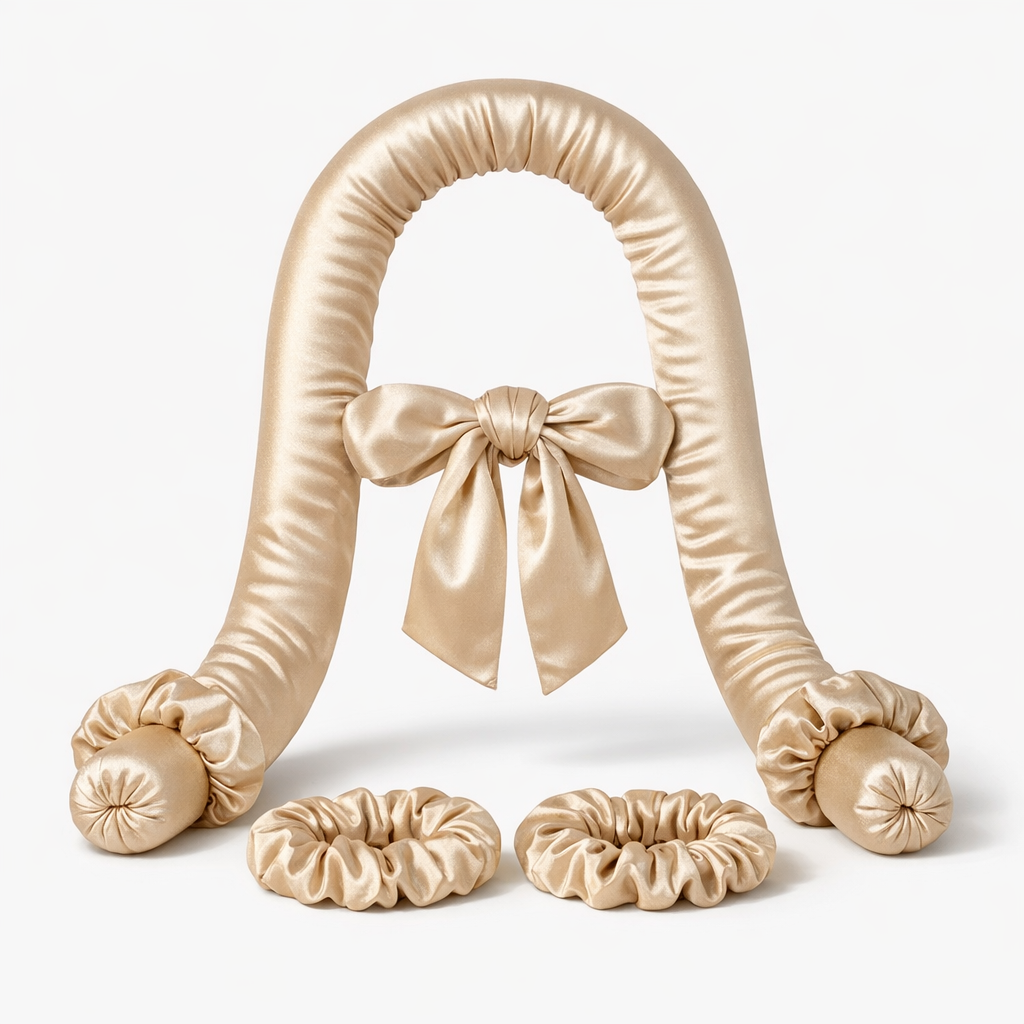
Kitsch Satin Heatless Curling Rod
As an everyday heatless styling tool, it earns 8.
You might also like: Tangle Teezer Original Detangling Brush Review: Fine or Thick Hair?.