Clips are the quiet workhorses of a good at-home styling routine: they section hair before heatless curls, hold layers while you smooth the front, and rescue a second-day style when a full wash feels excessive. This Kitsch Hair Clips review looks at whether they feel useful enough for everyday sectioning, curl setting and quick up-dos, not just pretty on a dressing table.
Quick verdict: Kitsch Hair Clips make most sense for readers who want attractive, easy-to-grab clips for light to medium styling jobs. They are not a full replacement for salon sectioning clips on very dense hair, but they are more polished than basic grips and more wearable than purely functional clips.
Product overview
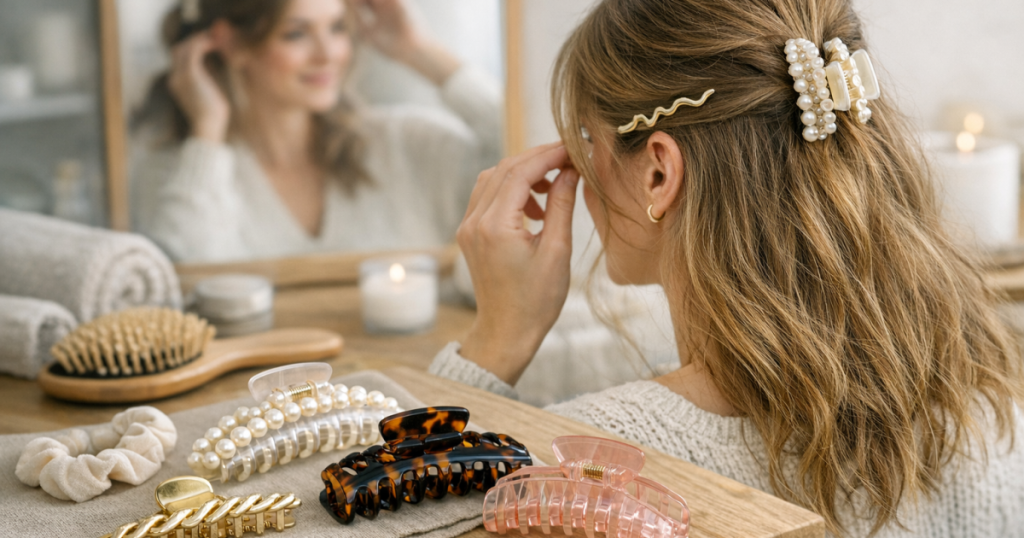
The Kitsch Hair Clips sit in that useful middle ground between styling accessory and visible hair detail. Kitsch is known for beauty accessories with a more elevated look than standard high-street basics, and these clips follow that pattern: they are the kind of item you might use while styling, then leave in place if the shape and finish suit your outfit.
For an at-home routine, the main question is not whether they look appealing. It is whether they hold hair without constant readjustment, whether they feel comfortable at the roots, and whether they suit your actual texture rather than the neat, low-density hair often shown in product imagery. Used well, they can help with sectioning before heatless curls, clipping the front away while applying hair oil, or creating a casual half-up style without reaching for elastics.
Their value depends heavily on the version you choose, because Kitsch sells different clip styles across retailers. Before buying, check the exact clip type, pack contents, colourway, dimensions and material description on the retailer page. A small decorative clip and a larger claw-style clip will behave very differently on long, thick or layered hair.
Key specs
- Brand: Kitsch.
- Product type: hair clips.
- Main use: sectioning, pinning back face-framing pieces, half-up styles and supporting low-effort at-home styling.
- Best matched to: light to medium hold needs, depending on the exact clip shape and size selected.
- Hair routine fit: useful before heatless styling, brushing, oil application, fringe control and quick up-dos.
- What to verify before buying: pack quantity, clip size, grip style, material, finish, colour and whether the shape is intended for decorative wear, styling sectioning or stronger hold.
- Care expectations: wipe clean as needed and avoid leaving product build-up around hinges, teeth or grip areas.
Pros and cons
Pros
- They look more dressing-table friendly than plain black sectioning clips, so they can move from styling to wearing without feeling too utilitarian.
- They are easy to keep near your heatless tools, brush or hair oil because they are small, low-effort accessories rather than bulky tools.
- They are useful for separating layers when working in stages, especially around the crown, fringe and front sections.
- They can reduce reliance on tight elastics for casual pinning, which is helpful if you dislike dents or tension marks.
- The range of Kitsch designs means you can usually choose between more discreet and more decorative looks, depending on stock at the retailer.
Cons
- Hold strength will vary by the exact clip style, so you should not assume every Kitsch clip will manage thick, heavy or slippery hair equally well.
- Very dense hair may need larger claw clips or professional sectioning clips for secure working sections.
- Small decorative clips can feel more like finishing accessories than true styling tools.
- Glossy or smooth finishes may slide more easily on freshly conditioned, very silky or oil-treated hair.
- Pack value is difficult to judge without checking the specific retailer listing, because quantities and styles can differ.
Performance in real use
For everyday sectioning, Kitsch Hair Clips are at their best when you use them strategically rather than expecting one clip to hold a large amount of hair. On fine or medium hair, a small section at the front, a clipped-back fringe or a half-up twist is realistic. On thick hair, they are better used in multiples, with smaller sections, or as finishing clips once the heavy lifting has been done by a stronger claw clip or sectioning clamp.
Grip is the biggest deciding factor. If your hair is smooth, straight or freshly treated with serum, look for a clip shape with enough teeth, tension or surface grip to stop slipping. If your hair is wavy, curly or textured, the clip should open wide enough to capture the section without snagging or compressing the curl pattern too harshly. Mixed-texture hair often needs a combination approach: use stronger clips for the denser areas and gentler clips around fragile edges or face-framing pieces. For a broader tool-matching approach, the guide to styling tools for mixed-texture hair is a useful next read.
Comfort is generally where decorative clips can win over tight elastics. A clip can hold hair away from the face without pulling from one narrow point, provided it is not overloaded. If you feel tugging at the temples or pressure at the crown, the section is too large or the clip shape is not right for that placement. For work-from-home hair, make-up routines and overnight prep, comfort matters as much as hold because you are likely to keep the clip in longer than planned.
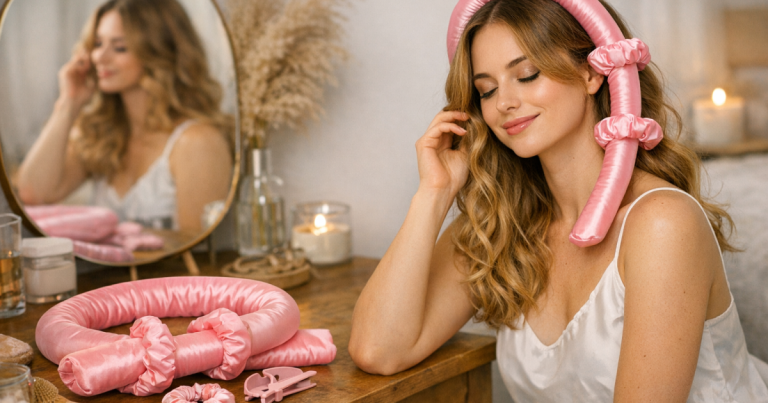
For heatless styling, these clips are most useful as support accessories. They can keep unused hair out of the way while wrapping sections around a curling ribbon, secure loose front pieces while curls set, or hold the top layer up while you brush through the underneath. They are not the main curling tool, but they make the process neater. If your main issue is losing lift when wrapping thick hair, the tutorial on using heatless curling ribbons on thick hair without flat roots explains how section control affects the finished shape.
Durability is harder to judge without long-term use of the exact pack, because hinges, springs and teeth differ between clip designs. The practical test is simple: open and close the clip a few times before committing to regular use, check whether the hinge feels aligned, and avoid forcing too much hair into a clip that is clearly resisting. Overfilling is one of the quickest ways to make any hair clip feel weak, even if the clip itself is well made.
Maintenance is low-effort but worth doing. Hair oil, dry shampoo, mousse and scalp products can collect on the inner grip areas, making clips feel more slippery over time. A quick wipe with a slightly damp cloth, followed by drying before storage, keeps the contact points cleaner. If you use argan oil or smoothing products before straightening or blow-drying, clip the hair after the product has settled rather than immediately over a slick section.
Who it’s best for / who should skip it
Kitsch Hair Clips are best for people who like their tools to look good as well as work. They suit fine to medium hair particularly well for everyday pinning, soft half-up styles and tidy sectioning during styling. They are also a good match for layered hair, where shorter pieces around the front need controlling without flattening the whole shape.
For long hair, they are useful but should be chosen carefully. Larger clip styles will be more realistic for securing length, while smaller clips are better for face-framing pieces, fringe control or styling prep. If your hair is long and heavy, expect to use them alongside stronger tools rather than as your only hold option.
Curly and coily hair can use them successfully, but the clip opening and edges matter. Avoid designs that force curls into a narrow, sharp grip or catch at the ends when removed. For textured hair, the best use is often gentle placement around the front or sectioning during a routine, rather than clamping a large coil-dense section at the back of the head.
You should skip them if you want a purely professional sectioning tool for blow-drying very thick hair, a maximum-hold claw for heavy up-dos, or a clip that can secure all your hair with no additional pins or support. In those cases, a purpose-built sectioning clip, a larger claw clip or a roller-and-clip setup may be a better fit.
Alternatives
If your priority is root lift rather than holding hair back, Velcro Hair Rollers are the more targeted choice. They create shape at the crown and around the face in a way decorative clips cannot, though they take more placement time and need the right section size to avoid tangling.
If your priority is protecting a finished style, a Silk Hair Wrap is a better alternative for bedtime or lounging. It will not help much with active sectioning, but it can reduce friction while keeping curls, waves or smoothed lengths contained. In short, Kitsch Hair Clips are the better grab-and-go accessory; rollers and wraps are better when your goal is volume or preservation.
Common questions
Do Kitsch Hair Clips work on thick hair?
They can, but only if the clip style is large and grippy enough for the section. For thick hair, use smaller sections rather than expecting one decorative clip to hold a heavy twist.
Are they better for styling or wearing out?
They sit between the two. They are useful during styling, but their main advantage over basic sectioning clips is that many designs look polished enough to wear out.
Will they leave dents in the hair?
Any clip can leave a mark if it is tight, wet-set into the hair or worn for a long time. For fewer dents, clip loosely, avoid clamping freshly styled bends, and reposition if you feel pressure.
Can they be used with hair oil?
Yes, but let the oil absorb first and avoid over-applying near the roots. Slick, freshly oiled hair makes most clips more likely to slide.
Are they worth buying for heatless styling?
They are worth considering as support tools, not as curl makers. They help section, lift and control hair while your main heatless tool does the shaping.
Verdict + score
Kitsch Hair Clips are a stylish, genuinely useful add-on for at-home styling routines, particularly if you want something prettier than salon-style sectioning clips and gentler than tight elastics. They are strongest for fine to medium hair, face-framing control, casual half-up styles and tidy prep before heatless styling. Their main limitation is hold: very thick, long or slippery hair needs the right clip size and may still require stronger support. For beauty-savvy everyday use, they earn 8.2/10.
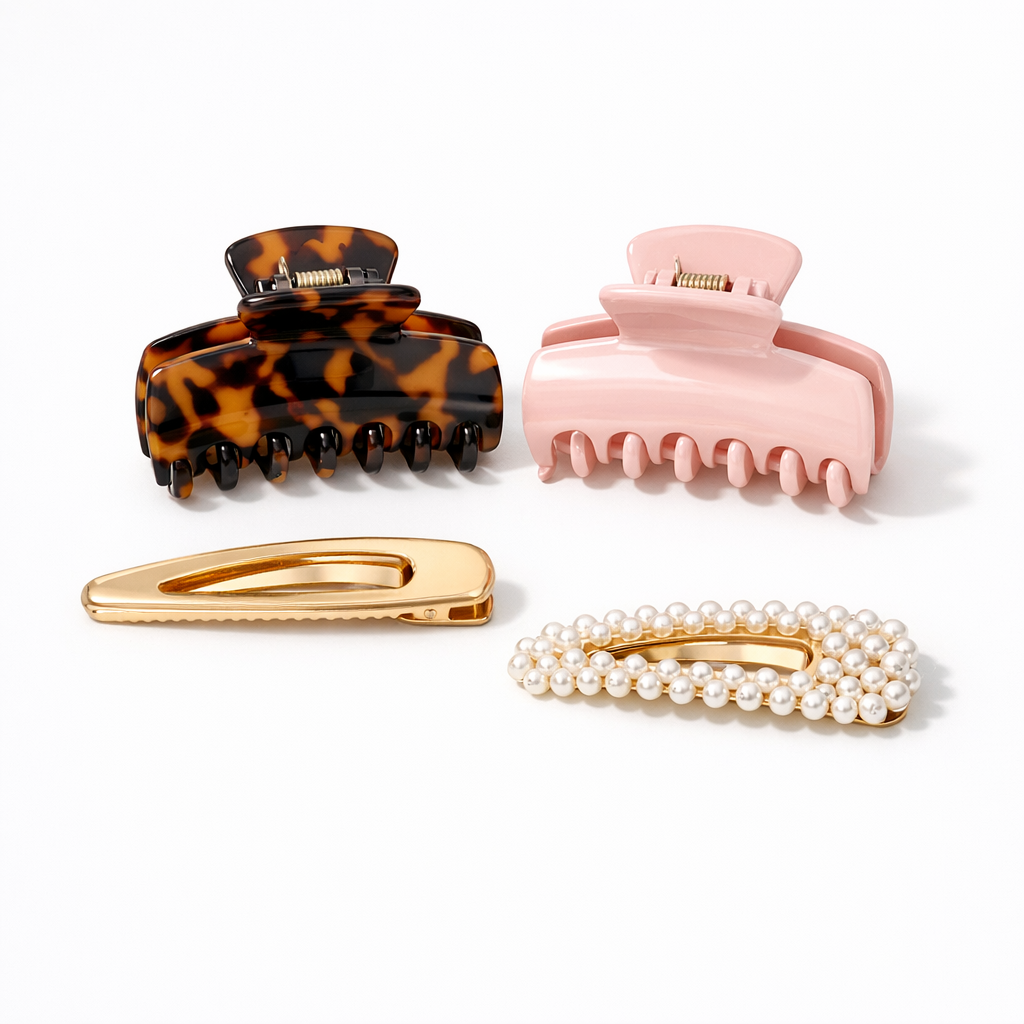
Kitsch Hair Clips
For beauty-savvy everyday use, they earn 8.
You might also like: RobeCurls Heatless Curling Headband Review for Long Hair.