Morning curls rarely fail all at once; they usually flatten at the crown, kink at the elastic, or lose polish around the face. This Sleepy Tie review looks at whether the viral overnight hair tie actually helps preserve heatless curls and soft blowout bends without asking you to restyle from scratch.
Product overview
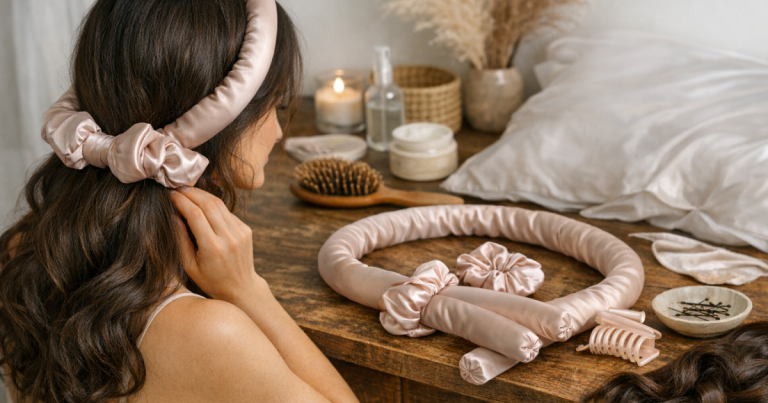
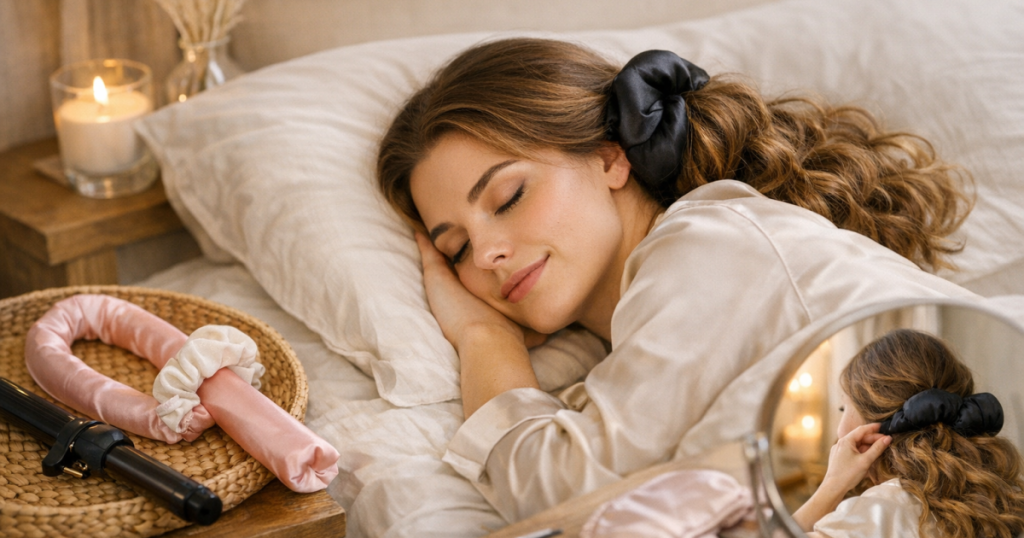
The Sleepy Tie is an overnight hair accessory designed to hold already-styled hair up and away while you sleep. It is not a curling wand, diffuser, roller set or wet-setting tool. Its job is simpler: gather dry, styled lengths so the shape is less crushed against the pillow.
The quick verdict: it makes the most sense if your hair already has a bend, curl, blowout shape or heatless set that you want to protect for another day. It is less convincing if your hair is very short, very slippery, heavily layered around the face, or if you expect it to create defined curls from unstyled hair.
Think of it as a preservation tool rather than a styling tool. That distinction matters. If you go to bed with frizz, uneven curl pattern or limp roots, Sleepy Tie will not fix those issues by morning. If you go to bed with soft curls that usually collapse overnight, it can reduce the amount of refreshing needed the next day.
For UK shoppers, the sensible checks are straightforward: confirm the current fabric composition, care instructions, return policy and whether the listing is sold by a reliable retailer. As with many viral hair accessories, availability and exact product details can vary by seller, so do not rely only on social clips when deciding whether it suits your routine.
Key specs
- Product type: overnight hair tie for preserving curls, waves and blowout shape.
- Heat use: none; it is designed for dry hair that has already been styled.
- Best hair length: medium to long hair that can be gathered comfortably high on the head.
- Best hair finish: soft curls, bouncy blowout ends, loose waves and heatless sets that need protection overnight.
- Hair condition: works best when the hair is dry, detangled and not overloaded with heavy finishing product.
- Material details: check the current retailer listing for the exact fabric composition and washing guidance.
- Travel use: compact enough for overnight bags, gym bags and weekends away, provided it suits your hair length.
- Routine fit: used before sleep, then removed in the morning before finger-styling or light refreshing.
Pros and cons
Pros
- Helps keep curled lengths lifted away from the pillow, which can reduce overnight flattening.
- More comfortable for many people than sleeping in a full set of rollers.
- Useful for extending a heatless curl set or salon-style blowout shape by another day.
- Does not add extra heat exposure to already-styled hair.
- Quick to use once you understand the placement and tension your hair needs.
- Can reduce morning restyling time if your hair holds shape well.
Cons
- Not designed to create fresh, structured curls from straight, unstyled hair.
- Can slip on very silky, fine or freshly conditioned hair unless positioned carefully.
- Short layers and face-framing pieces may fall out overnight.
- May not preserve tight curl definition as well as a bonnet, wrap or pineapple method for some curl patterns.
- Results depend heavily on how your hair was styled before bed.
- It may feel bulky if you are sensitive to anything on your head while sleeping.
Performance in real use
Preserving curl shape
Sleepy Tie performs best with loose curls, brushed-out heatless curls and blowout bends where the aim is movement rather than ringlet-level definition. It helps by keeping the lengths gathered rather than letting them rub and flatten across the pillow. The next morning, the result is usually softer, looser and more lived-in than the night before, not freshly curled.
If your curls are created with a satin rod, large rollers or a round-brush blow-dry, this type of overnight hold can be genuinely helpful. If your curls are very precise, small or gel-cast, the gathering action may disturb the pattern. For curlier textures, it is worth thinking about whether you need preservation, stretching or definition; those goals often need different methods. For broader context, see how much heat each hair type needs before deciding whether overnight preservation is enough on its own.
Comfort while sleeping
Comfort is one of the main reasons to consider it. Compared with sleeping in rigid rollers, a gathered hair tie is much less intrusive for back sleepers and side sleepers who dislike lumps around the sides of the head. Placement is important: too low and it can press against the pillow; too tight and it can pull at the scalp.
The sweet spot is usually high on the head, with enough tension to hold the hair but not enough to stretch out your curl. If you wake up with root soreness or a visible bend where the hair was secured, it is too tight or placed too close to the crown.
Ease of use
The method is simple, but not completely foolproof. Hair should be dry, cool and fully set before you put it up. If you secure warm curls too soon, they can reshape in the wrong direction. If you use it on damp hair, the result may be uneven and frizzy rather than polished.
For best results, lightly shake out the curls, gather the lengths without brushing through them aggressively, then secure the hair so the ends sit neatly rather than being crushed. In the morning, remove it gently, let the hair drop for a minute, then use fingers rather than a brush if you want to keep the bend.
Frizz and finish
Sleepy Tie can help reduce friction compared with leaving hair loose, but it is not a full pillowcase replacement or a sealed hair wrap. If your main issue is halo frizz, a silk or satin pillowcase may still be needed alongside it. If your ends are dry, a tiny amount of lightweight oil or serum before styling can help, but avoid coating the hair so heavily that the curl collapses.
Fine hair should be especially careful with product. A heavy leave-in or oil can make the accessory slip and leave the morning shape looking limp. Thick, coarse or porous hair may tolerate more smoothing product, but still benefits from a lighter hand near the roots.
Hair-type guidance
- Fine straight to wavy hair: good for preserving soft bends, but use minimal product and avoid over-tightening.
- Medium-density wavy hair: one of the strongest matches, particularly if your waves flatten underneath while you sleep.
- Thick hair: can work well if all lengths fit comfortably, though very heavy hair may need extra support or a different overnight method.
- Curly hair: useful for looser curl preservation, but tight curl patterns may prefer a bonnet, scarf or pineapple depending on the desired finish.
- Short hair: often the weakest match because there may not be enough length to gather securely without pieces falling out.
Durability, care and value
Durability depends on the fabric, stitching and how often it is washed, so check the care label or retailer guidance rather than assuming it can go through any laundry cycle. Product build-up from hairspray, oil and dry shampoo can transfer onto the fabric, so regular gentle cleaning matters if you use it several nights a week.
Value comes down to how often you restyle. If preserving curls saves you from redoing your hair with heat every morning, it has a clear role. If you mainly wear your hair straight, very short or freshly washed each day, it may become one of those accessories that looks clever but rarely leaves the drawer.
Who it’s best for / who should skip it
Best for: people with medium to long hair who already create curls, waves or bouncy ends and want to keep that shape overnight with less heat refreshing. It is particularly appealing for second-day hair, brushed-out heatless curls, soft glam waves and blowout-style movement.
Also worth considering if: you dislike sleeping in rollers, want a quicker bedtime routine, or find that loose hair becomes tangled and flat by morning. It can be a tidy middle ground between doing nothing and wearing a full protective wrap.
Skip it if: your hair is too short to gather high, your curls need firm definition from root to tip, or you want a product that creates curls on its own. It is also not ideal if you cannot tolerate any tension while sleeping, even light tension.
Questions people ask
Does Sleepy Tie curl your hair?
No. It is better understood as a curl-preserving accessory. It can help maintain shape from a previous style, but it is not a substitute for rollers, a heatless curling rod or a full setting method.
Should hair be wet or dry before using it?
Dry is the safer choice for a polished result. Damp hair can dry into an uneven shape, and wet lengths are more vulnerable to stretching, frizz and dents.
Will it work on fine hair?
It can, provided the hair is long enough and not overloaded with slippery product. Fine hair usually needs lighter tension and a minimal amount of finishing product to avoid flatness.
Is it better than a bonnet?
Not always. Sleepy Tie is better for holding a blowout-like shape up and away, while a bonnet can be better for reducing all-over friction and protecting curl definition.
Alternatives
If you need to create curls rather than preserve them, a satin curling rod is the more relevant tool. The Kitsch Satin Heatless Curling Rod review is a better next read if your main goal is forming soft overnight curls from straight or lightly waved hair.
If your priority is frizz control rather than maintaining a bouncy shape, a silk or satin hair wrap may be more suitable. It will not give the same lifted, blowout-preserving effect, but it can protect the surface finish more evenly, especially on textured or frizz-prone hair.
Verdict + score
The Sleepy Tie is a genuinely useful overnight accessory when the brief is clear: preserve existing curls, waves or blowout bends with less flattening and less morning restyling. It is not a miracle curl-maker, and it will not suit every cut or texture, but for medium to long hair that already holds a shape, it fills a practical gap between sleeping loose and setting the hair all over again. Its strongest match is soft, polished, second-day hair; its weakest is short, very layered or highly defined curl styling. Score: 8.2/10.
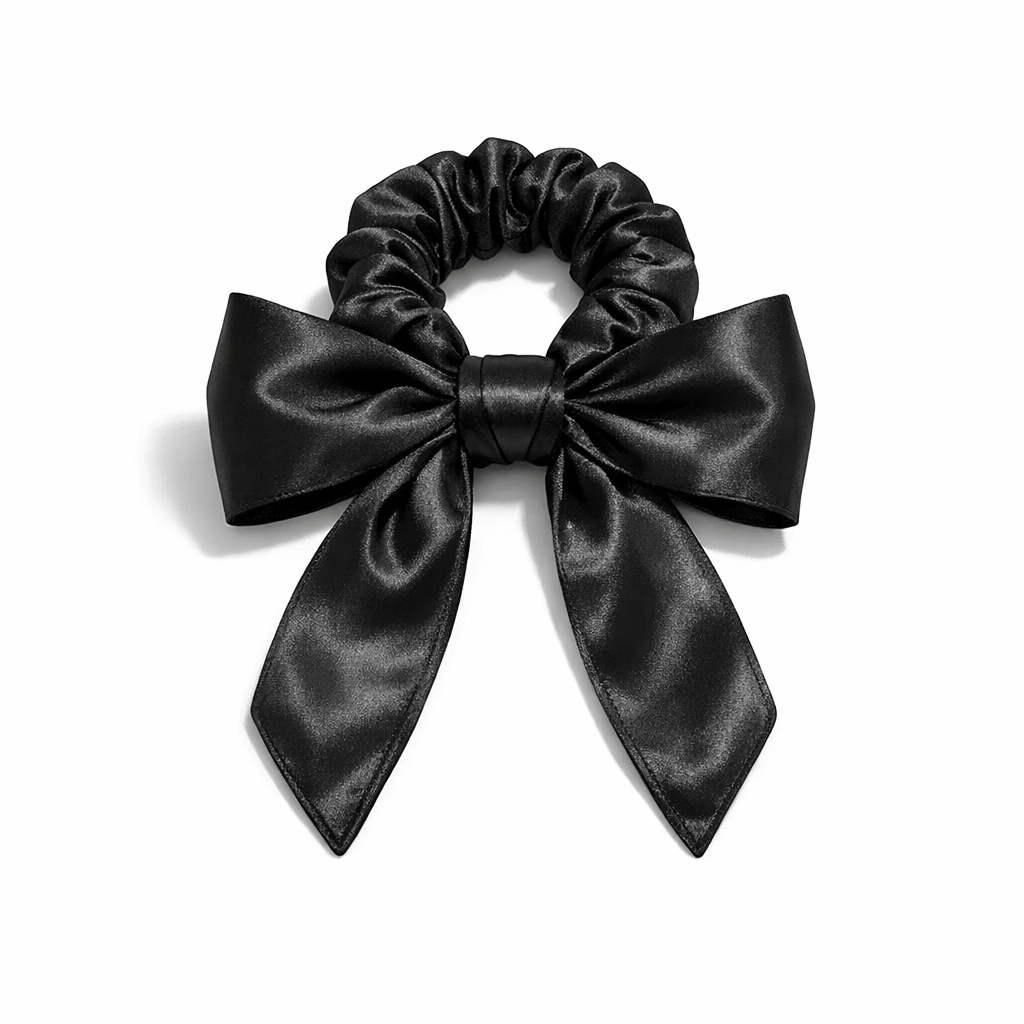
The Sleepy Tie
Its strongest match is soft, polished, second-day hair; its weakest is short, very layered or highly defined curl styling.
You might also like: Olaplex No.4 Bond Maintenance Shampoo Review for Heat-Styled Hair.