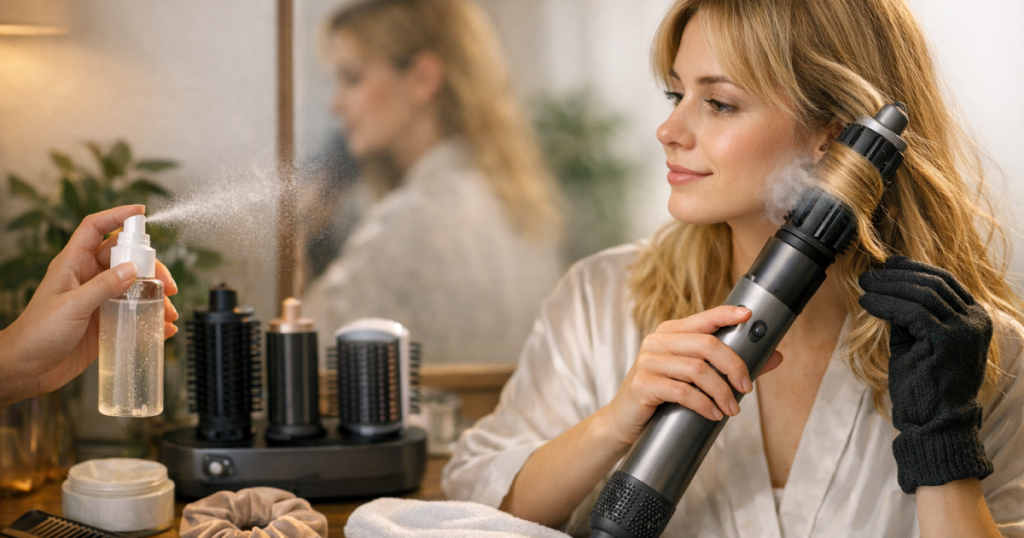
Fine hair can look glossy and styled in minutes, but it can also lose shape, snag easily and show heat stress faster than thicker strands. The safest way to protect fine hair with a multi-styler is to reduce repeated passes, choose lower-tension attachments, prep lightly and finish with hold rather than extra heat. The aim is not to avoid styling altogether; it is to make each pass count.
Multi-stylers are useful because they can dry, smooth, lift and curl with one tool, but fine hair needs a slightly different routine from medium or coarse hair. Small changes in section size, product amount and drying stage can make the difference between soft volume and limp, overworked ends.
The short version
- Start with hair that is detangled, towel-blotted and not dripping wet unless your tool is designed for wet-to-dry styling.
- Use the gentlest effective airflow, heat and tension rather than the fastest setting by default.
- Pick attachments by result: smoothing brush for polish, round brush for lift, curling barrel for bend, diffuser-style drying for natural texture.
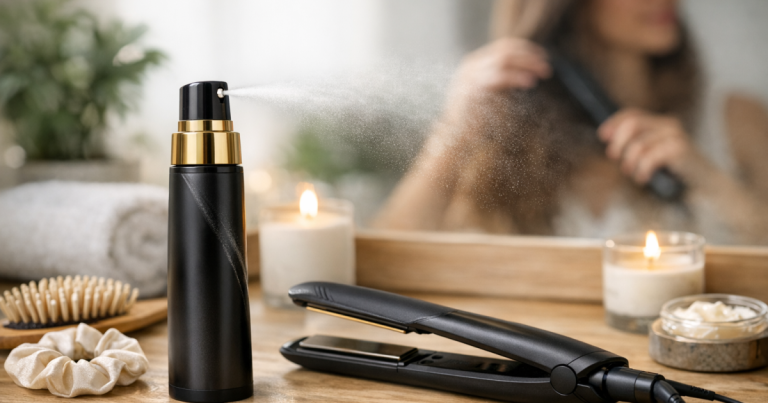
- Apply heat protectant sparingly and evenly, concentrating on mid-lengths and ends.
- Let each section cool before brushing, touching or adding more heat.
- Use heatless support overnight or between wash days so the multi-styler is not doing all the work every morning.
Why fine hair needs a different multi-styler routine
Fine hair has a smaller strand diameter, so it tends to heat through quickly. That can be helpful for fast styling, but it also means there is less margin for repeated smoothing, over-brushing or holding one section against a hot attachment for too long. Fine hair can also collapse under too much product, so the usual advice to add more cream, oil or serum often backfires.
The main risk is not one careful styling session; it is the build-up of small stresses: rough towel-drying, dragging a brush through knots, using maximum heat on half-dry hair, then reworking the same front sections because they have fallen flat. A protective routine gives the strand fewer reasons to fray, flatten or lose shine.
If you are still deciding which attachment does what, the clearest starting point is matching the tool head to your texture and goal. This guide to choosing multi-styler attachments for your hair type is useful before building a fine-hair routine around one favourite barrel or brush.
The big picture: protect fine hair without sacrificing volume
Fine hair protection is a balancing act. Too much heat can leave the ends dry; too much conditioner can make the roots oily; too much tension can stretch fragile sections; too little hold can make you restyle repeatedly. The best routine uses light preparation, controlled drying and a finish that sets the shape without coating the hair heavily.
Think of the multi-styler as a finishing and shaping tool, not a replacement for every stage of hair care. Your shampoo, conditioner, detangling method and drying habits decide how much work the tool has to do. If the hair is already smooth, separated and 70–90% dry, most fine hair needs fewer passes to look finished.
Step 1: Prep with light slip, not heavy coating
After washing, squeeze water out gently with a microfibre towel or soft cotton towel. Rubbing the hair roughs up the cuticle and creates tangles that need more brushing later. Apply a light detangling spray or heat protectant in a fine mist, then comb or brush from ends upwards with a flexible detangling brush.
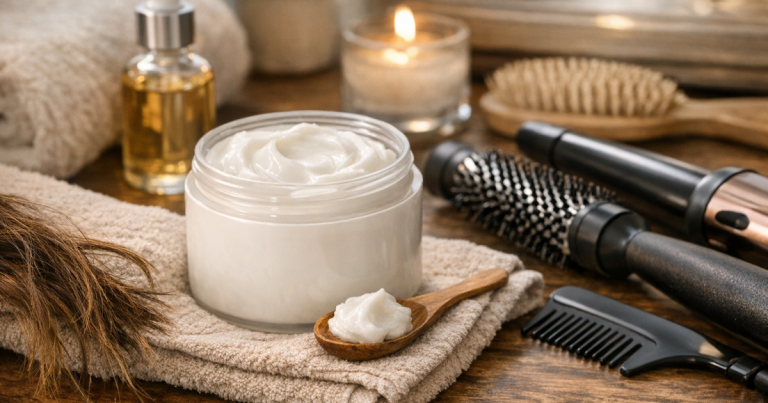
For fine hair, product placement matters more than product quantity. Keep richer creams and oils away from the first few centimetres at the root unless your scalp and hair genuinely need them. A tiny amount of argan oil hair treatment can help dry ends, but too much can make the style drop before you have even started.
If you like a named heat protectant, products such as GHD Bodyguard Heat Protect Spray or Kérastase Genesis Défense Thermique are examples many UK shoppers recognise, but always check the current label directions, hair-type suitability and whether the texture suits fine hair. The right formula should leave the hair touchable, not tacky or stiff before styling.
Step 2: Dry to the right stage before shaping
Fine hair is most vulnerable to rough handling when wet. Unless your multi-styler is specifically intended for wet-to-dry use, rough-dry gently first with airflow or let the hair air-dry part way. The hair should feel damp, flexible and separated rather than wet enough to clump.
Roots usually need the most control. Dry the root area in the direction you want it to sit, then add lift by directing airflow upwards or away from the scalp. If the roots are still damp when you curl or smooth the ends, the finished style is more likely to collapse.
Step 3: Choose the gentlest attachment for the result
Not every attachment creates the same level of tension. Fine hair often does better with airflow-led shaping than with strong pulling or repeated brushing. Use the attachment that gets closest to the result with the least reworking.
- Smoothing brush: good for reducing fluff and creating a polished finish, but use slow, light passes rather than pressing the hair hard into the bristles.
- Round brush: useful for root lift and curved ends. Keep sections small and roll only as much as needed to create shape.
- Curling barrel: best for bends and loose curls. Let airflow and wrap do the work; avoid pulling the curl straight while it is still warm.
- Drying nozzle or concentrator: useful before styling, especially at the roots, because it reduces the time spent using a brush attachment.
- Diffuser-style attachment: helpful for fine waves that need definition without being stretched flat.
If root volume is your main struggle, the technique matters as much as the head you use. The same principles apply to hot brushes too, and this tutorial on using a hot brush without losing root volume explains why lifting, cooling and section direction make such a difference.
Step 4: Control heat, tension and time on the hair
The lowest setting is not automatically the best if it means you keep going over the same section, but maximum heat is rarely necessary for fine hair. Use the gentlest setting that shapes the hair efficiently. If the section is not responding, check whether it is too wet, too large or overloaded with product before turning up the heat.
Work in neat sections rather than grabbing random pieces. Fine hair can look sparse if sections are too wide, but tiny sections can encourage over-styling. Aim for enough hair that the attachment has grip, while still allowing airflow to reach the full section.
- Keep the tool moving unless the attachment instructions say otherwise.
- Do not clamp, wrap or brush through the same piece repeatedly while it is hot.
- Let curls or bends cool in your hand for a few seconds before releasing fully.
- Style the front hairline last if it is fragile, highlighted or prone to snapping.
- Stop once the shape is there; chasing perfect symmetry is where fine hair often gets overworked.
Step 5: Build hold without making hair crispy
Fine hair usually needs some hold, but heavy styling layers can flatten it. A light mousse at the roots before drying can help some hair types, while a flexible hairspray after styling can reduce the urge to restyle later in the day. Apply finishing products in light layers and wait before adding more.
For curls or waves, avoid brushing immediately. Use fingers or a wide-tooth comb once the hair has fully cooled. If you want a softer finish, shake at the roots first, then separate the ends. This preserves volume and reduces friction through the most delicate lengths.
Step 6: Rotate in heatless styling days
Multi-stylers are convenient, but fine hair benefits from recovery days. Heatless curling rods, Velcro hair rollers, a silk hair wrap or soft overnight rollers can refresh shape without another full heat session. This is especially useful for fringes, curtain bangs, face-framing layers and ends that start to flick out after sleep.
Fine hair often drops heatless curls faster than thicker hair, so setting technique is important. If you want to reduce hot-tool use while keeping shape, the tips in making heatless curls last on fine hair pair well with a multi-styler routine.
Common mistakes that cause fine hair damage
- Using too much product before heat: heavy layers can steam, feel sticky or make hair look greasy. Start with less than you think.
- Styling hair that is still too wet: this increases time on the tool and makes sections harder to shape cleanly.
- Overworking the front pieces: the hair around the face is often finer and more exposed to colour, UV and brushing.
- Skipping the cool-down: warm hair is still malleable. Touching it too soon can undo the shape and lead to more passes.
- Using one attachment for everything: a smoothing brush may polish, but it may not give the root lift or curl pattern you want without extra tension.
Helpful questions
Can fine hair use a multi-styler every day?
It can, but daily heat is not ideal for every fine-hair routine. If you style often, keep sessions short, use light protection, avoid repeated passes and rotate in heatless refresh methods between washes.
Should fine hair be fully dry before using curling barrels?
Follow your tool’s instructions, but fine hair usually styles better when it is mostly dry rather than wet. Too much moisture increases styling time and can make curls drop as the roots finish drying.
Why does my fine hair go limp after using a multi-styler?
The most common causes are too much product, roots left damp, sections that are too large, or brushing the style before it has cooled. Focus on root drying and lighter finishing layers.
Is a heat protectant enough to prevent damage?
No. Heat protectant helps, but it does not cancel out high heat, rough tension or repeated styling. Technique, drying stage and frequency matter just as much.
What should I do if my ends feel dry after styling?
Use less heat on the ends, trim when needed, add a tiny amount of lightweight oil or serum only where dry, and avoid restyling the same ends every day.
What stands out
Fine hair does not need a complicated routine; it needs restraint. Prep lightly, dry the roots properly, choose the attachment that creates the result with the least tension, and stop once the shape is set. A multi-styler can be a smart everyday tool for fine hair when it is used as part of a gentler rotation rather than as a fix for every styling problem.