Frizz-prone curls can turn brush-styling into a gamble: the right tool smooths and groups strands, while the wrong one separates curl clumps before they have a chance to set. This Tangle Teezer The Curler review looks at whether it earns a place beside your diffuser, clips and heatless styling accessories, rather than treating it like a miracle fix for every curl pattern.
Product overview
Quick verdict: Tangle Teezer The Curler is most convincing as a curl-shaping accessory for damp styling, especially when you want smoother clumps without relying on extra heat. It is not the brush to choose if your main problem is heavy detangling, scalp brushing or creating maximum root lift, but it can be a useful upgrade if your current routine leaves curls stringy, uneven or fluffy at the ends.
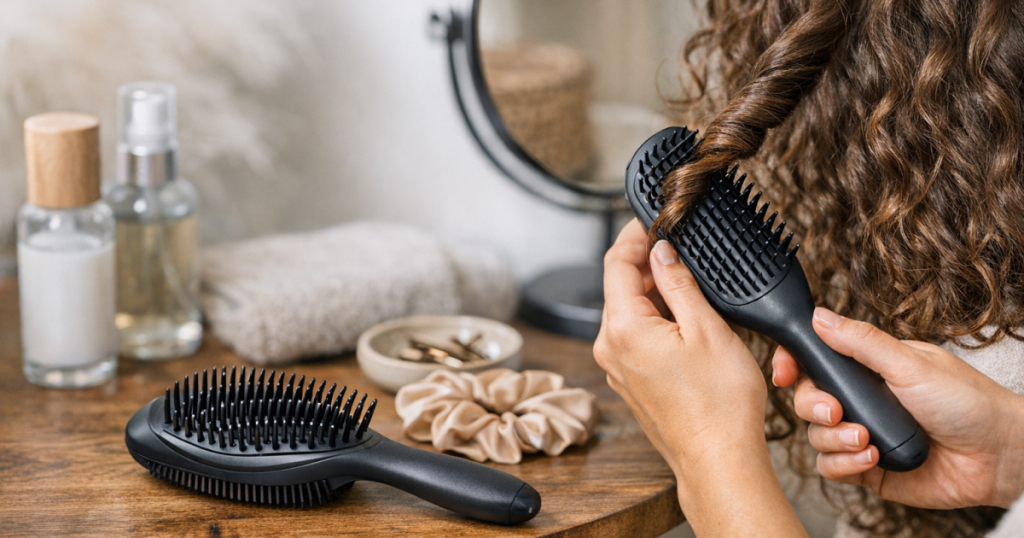
The appeal is simple: instead of raking product through with fingers and hoping each section forms neatly, you use the brush to encourage more consistent curl groups. For frizz-prone hair, that matters because random separation is often what makes the surface look puffy, even when the hair is hydrated. The Curler works best as part of a deliberate routine: detangle first, apply leave-in or styler, then use the brush on controlled sections before drying or air-drying.
In the UK, check the current product listing before buying because colourways, stockists and packaging names can change. Look at the brand’s own guidance and major beauty retailers for the most up-to-date usage notes, and avoid assuming it will behave like a standard detangling brush.
Key specs
- Brand: Tangle Teezer.
- Product: The Curler.
- Product type: Curl-styling brush/accessory for shaping and defining curl clumps.
- Best routine stage: After detangling and product application, usually on damp hair.
- Heat required: No direct heat is required; it can be paired with air-drying or diffusing.
- Hair focus: Wavy, curly and coily textures that need more definition and less surface frizz.
- What to verify: Current retailer guidance on hair-type suitability, cleaning instructions, colour options and whether the version listed matches the product you intend to buy.
Pros and cons
Pros
- Helps create more deliberate curl clumps than finger-raking alone.
- Useful for smoothing styling product through mid-lengths and ends.
- Works without heat, so it fits easily into lower-damage routines.
- Good for refreshing styling habits if curls look fluffy rather than defined.
- Compact enough to sit with regular styling accessories rather than replacing your entire routine.
Cons
- Not the most logical first choice if you mainly need knot removal.
- Can separate curls if used too aggressively or on hair with too little slip.
- May feel slow on very dense hair unless you section properly.
- Will not create lift at the roots in the way clips, rollers or a diffuser technique can.
- Results depend heavily on styling product, wetness level and drying method.
Performance in real use
Definition and clump control
The Curler is at its best when you want cleaner curl families: not rigid ringlets, but sections that look more intentional. On loose waves, it can help stop the canopy from looking brushed-out before drying. On medium curls, it can improve consistency from section to section. On tighter curls and coils, the result depends more on patience, section size and how much slip your leave-in or cream provides.
The biggest mistake is using it like a quick everyday brush. Frizz-prone curls usually need less disruption, not more. Work in small sections, brush with tension only where the hair can tolerate it, then let each clump fall back into shape. If you plan to diffuse afterwards, keep the curl groups intact and use a low-disruption drying method; this guide to diffusing curly hair without creating frizz is a useful next step once the brush-styling part is done.
Frizz control
This brush can reduce the look of frizz when the frizz is caused by uneven product distribution or broken-up clumps. It will not solve dryness, damage or humidity on its own. If your hair is porous, colour-treated or heat-styled regularly, pair the brush with enough conditioning and a styler that gives the curl some hold. Without hold, the initial smoothness may collapse as the hair dries.
Ease of use
There is a learning curve, but it is not complicated. Detangle with your usual detangling tool first, then use The Curler only for shaping. For shoulder-length curls, start underneath and work upwards, clipping sections away if your hair is thick. For longer curls, keep the ends supported as you brush so you are not dragging through fragile lengths.
Fine curls need the lightest hand. Too much brushing can flatten the pattern or make the roots sit close to the scalp. Dense curls need smaller sections and more time. If you rush the process, the brush is more likely to skim the surface than define the full section.
Comfort and tension
The right level of tension should feel controlled, not snaggy. If the brush catches, stop and add slip or detangle again. Frizz-prone hair is often more vulnerable when wet, so the goal is smooth guidance rather than force. Used carefully, it feels like a styling aid; used too firmly, it becomes another source of mechanical roughness.
Maintenance and value
Like any styling brush used with curl cream, gel or mousse, it needs regular cleaning. Product build-up makes the brush less effective and can transfer residue back onto clean hair. Value depends on whether you will actually use it as a styling step. If you already brush-style regularly, it is a sensible accessory to consider. If you prefer a very quick wash-and-go with minimal sectioning, it may sit unused.
Who it’s best for / who should skip it
Best for: curl wearers who already detangle separately and want a more polished finish from their styling routine. It suits people whose curls form, but do not form evenly, and those who find finger-raking leaves too many wispy pieces around the surface.
Good match for hair types: loose curls that need encouragement, classic curly patterns that respond well to brush-styling, and dense hair that benefits from structured sectioning. It can also help wavy hair if used lightly and followed by careful scrunching.
Skip it if: your main need is removing knots, lifting roots, stretching curls or drying hair faster. It is also not ideal if you dislike sectioning, because the best results come from using it deliberately rather than dragging it through the whole head in one pass.
Alternatives
If you want a detangling-first brush rather than a styling-first curl brush, Tangle Teezer The Ultimate Detangler Naturally Curly is the more obvious product to compare. It is better suited to the prep stage, while The Curler is better judged on finish and definition.
If you prefer stronger brush-styling tension and a more traditional salon-style feel, Denman D3 Original Styler is the classic alternative to look at, though you should verify the row setup and size that suits your hair density before buying.
For readers moving away from heat tools altogether, the better alternative may not be another brush. A satin curling rod, silk wrap or roller routine can preserve shape with less manipulation, especially overnight. If your curls look good on wash day but frizz by morning, read this guide to sleeping in heatless curls without frizz before adding more daytime styling steps.
Common questions
Should I use it on wet or dry curls?
It makes most sense on damp hair with slip from a leave-in, cream or gel. On dry curls, brushing can disturb clumps and increase frizz unless you are doing a controlled refresh.
Can it replace my detangling brush?
Not for most people. Treat it as a styling brush, not your main knot-removal tool. Detangle first, then use The Curler to shape the curl pattern.
Will it work on fine curly hair?
Yes, but use small amounts of product and light tension. Fine curls can lose volume if you over-brush or apply too much styling cream before using it.
Is it suitable for thick curls?
It can be, provided you section properly. Thick curls usually need smaller sections, more slip and patience to get an even result throughout the underneath layers.
Does it stop frizz completely?
No brush can do that. It can help reduce styling-related frizz by improving clump formation, but humidity, dryness, damage and lack of hold still affect the final finish.
Verdict + score
Tangle Teezer The Curler is a smart accessory for curl wearers who want smoother, more intentional definition without adding heat. It is not a universal curl fix, and it should not be judged as a heavy-duty detangler, but it does make sense if your frizz comes from uneven clumps, patchy product distribution or rushed styling. Choose it if you are willing to section your hair and use it as a finishing step in a damp styling routine; skip it if you want instant root lift or a one-brush solution for knots. Score: 8.2/10.
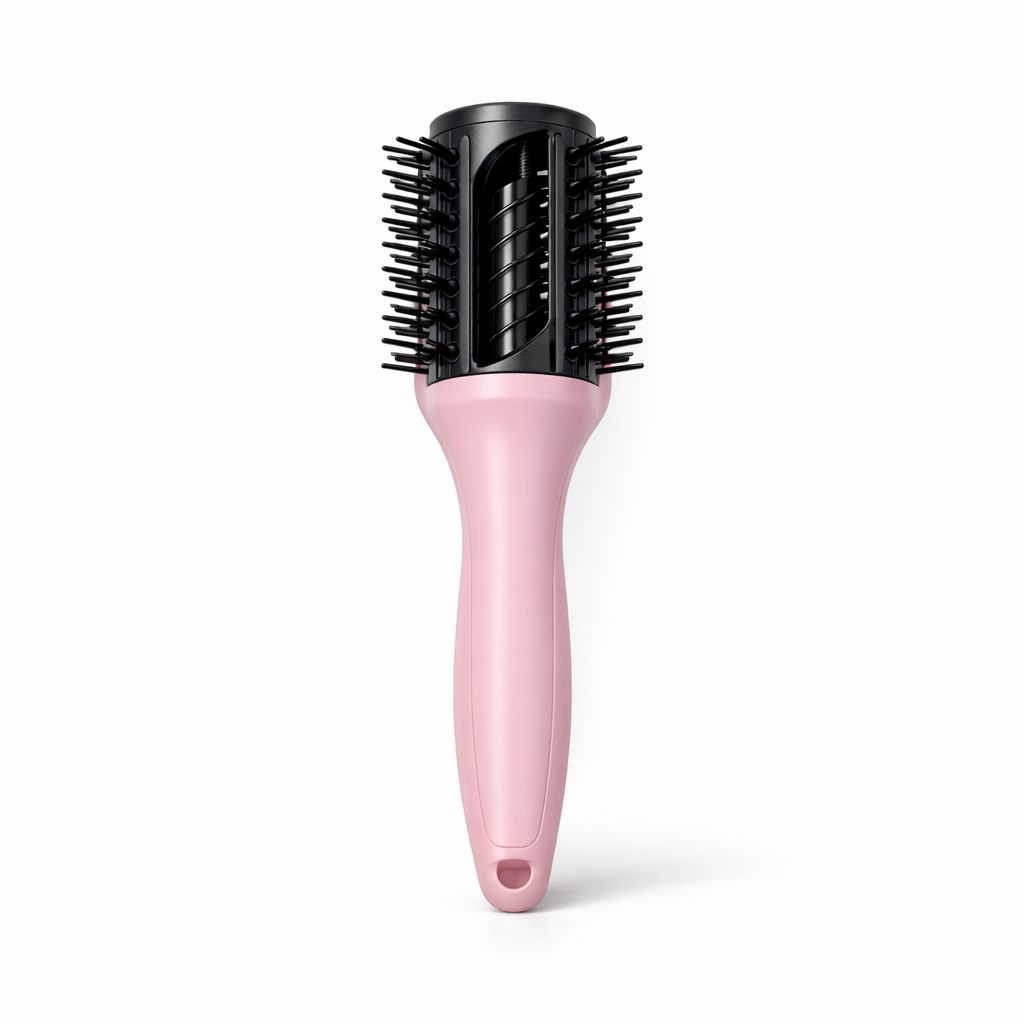
Tangle Teezer The Curler
Choose it if you are willing to section your hair and use it as a finishing step in a damp styling routine; skip it if you want instant root lift or a one-brush solution for knots.
You might also like: How to Diffuse Wavy Hair Without Frizz or Crunch.