If your Airwrap leaves roots puffy, ends flicky or fine hair too flat, the brush attachment may be the problem rather than your technique. Choosing the right Dyson Airwrap smoothing brush matters because the firm and soft versions create different levels of tension, polish and lift. Used well, either can turn damp, unruly lengths into a smoother blow-dry finish without reaching straight for irons.
At a glance
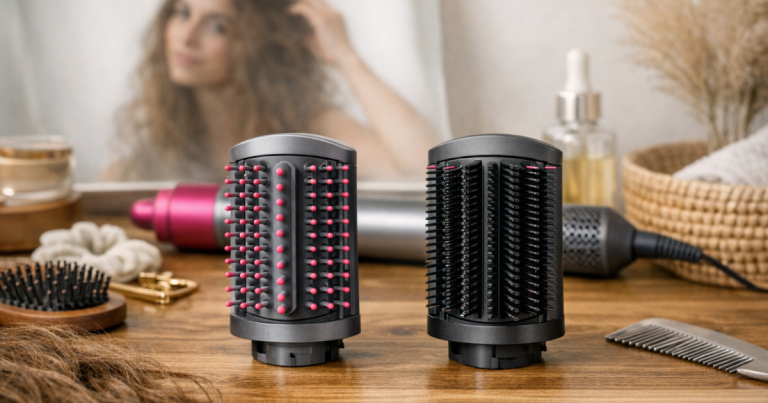
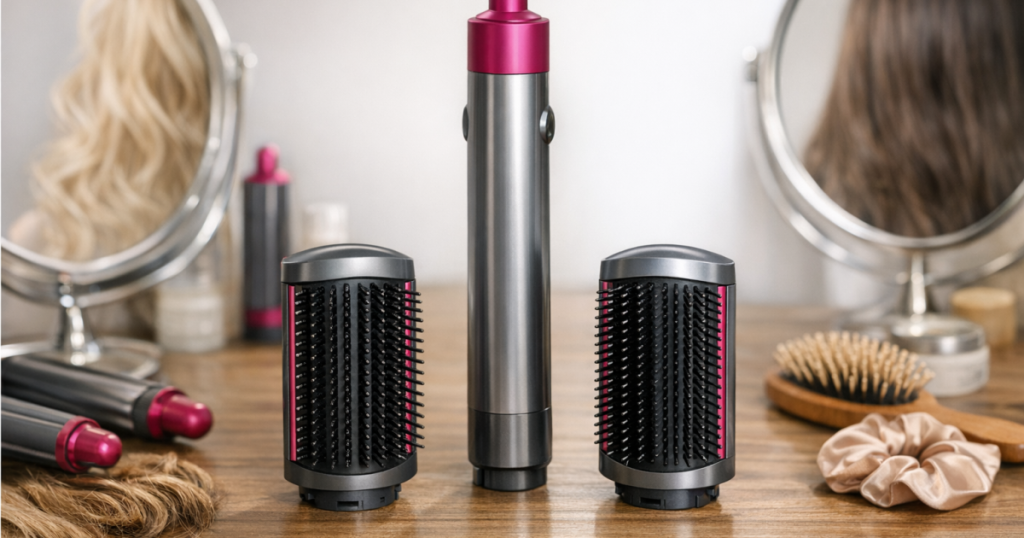
The firm smoothing brush is the better match for hair that needs more control: thick hair, coarse strands, frizz-prone lengths, stubborn bends and hair that tends to swell as it dries. The soft smoothing brush is gentler and more flexible, so it suits fine hair, fragile ends, looser waves, layered cuts and anyone who wants a smoother finish without losing all movement.
- Choose firm if your main issue is puffiness, surface frizz or hair that resists a smooth blow-dry shape.
- Choose soft if your hair collapses easily, snags when brushed, or looks too stretched and flat with stronger tension.
- Use either on damp, not soaking, hair so the attachment can shape the hair rather than simply pushing water around.
- Do not judge it from one pass; the result depends heavily on section size, product load and how you finish the roots and ends.
How the two attachments feel in use
The Dyson Airwrap multi-styler uses controlled airflow and tension from its attachments to style as hair dries. With the smoothing brushes, the difference is not just about “strong” versus “gentle”. It is about how much grip the brush gives your hair while the airflow encourages it into a smoother direction.
The Dyson Airwrap Firm smoothing brush has a more assertive feel through the hair. It gives more resistance as you guide it from roots to ends, which can help compact the cuticle, pull out bends and calm a fluffy outline. That extra control is useful when your hair looks smooth at first but expands again within an hour.
The Dyson Airwrap Soft smoothing brush feels lighter and more forgiving. It glides with less pull, so it is less likely to over-stretch fine hair or make layered face-framing pieces sit too straight. It is usually the easier attachment for a soft, everyday blow-dry look where you still want the hair to move.
Where each Dyson Airwrap smoothing brush performs best
Fine or low-density hair
Fine hair often needs smoothing, but too much tension can make it look smaller. Start with the soft brush if your hair is easily flattened, has delicate ends or loses bounce quickly. Keep sections slightly lifted away from the scalp and avoid repeated passes over the same area. If fine hair still frizzes around the crown, use the firm brush only on the outermost layer and keep it moving rather than pressing hard into the roots.
Thick, coarse or high-density hair
Thicker hair usually benefits from the firm brush because it needs more grip to create a visible smoothing effect. Work in smaller sections than you think you need, especially around the nape and behind the ears. If the outside looks polished but the underneath remains puffy, the section is too wide or too wet. The firm brush is not a shortcut for very dense hair; it works best when you give it clean, manageable panels.
Wavy hair that turns fluffy
If your waves are loose and you mainly want a sleeker blow-dry finish, either brush can work. Use the soft brush when you want to keep some bend through the lengths. Use the firm brush when humidity, canopy frizz or uneven texture is the bigger problem. For defined waves rather than a smoothed-out finish, you may get better results from a diffuser routine; this is a different styling goal, not a failure of the brush.
Layered cuts and face-framing pieces
Layers can flick out because the shorter pieces dry in different directions. The soft brush is usually kinder around the face because it lets you curve the hair slightly without forcing it poker-straight. Use the brush vertically near the front, then rotate your wrist just enough to tuck the ends. On thicker layered hair, use the firm brush at the root and mid-lengths, then switch to a lighter touch near the ends.
Step-by-step: choosing the better brush for your routine
1. Start with your natural drying behaviour
Notice what your hair does when it air-dries for ten to fifteen minutes. If it becomes wide, rough or uneven, the firm brush will probably give you more of the control you want. If it dries limp, stringy or easily dented, the soft brush is likely to be more flattering.
2. Check how your hair reacts to tension
Run a normal styling brush through a dry section and look at the finish. If the section becomes smoother and shinier with firm brushing, your hair may respond well to the firm attachment. If it looks stretched, static or sparse, keep the Airwrap tension lighter and use the soft attachment first.
3. Match the brush to your finish, not just your hair type
The same person may use both attachments on different days. A sleek workday finish on thick hair might call for firm tension through the canopy. A soft weekend blow-dry, or hair that will later be waved, may look better with the soft brush because it leaves more body in the lengths. If you still prefer a more deliberate S-wave after smoothing, the technique in using a 32 mm curling iron for soft waves explains how larger-barrel styling changes the finish.
4. Consider product build-up
Heavy creams, excess leave-in conditioner and too much oil can make either attachment drag. If your brush feels as if it is skimming over coated hair rather than gripping cleanly, wash day product choice may be part of the issue. A tiny amount of finishing oil can help dry ends, but it should not replace proper smoothing technique; our argan oil hair treatment review covers the shine-versus-weight trade-off in more detail.
Technique tweaks that change the result
Whichever attachment you use, the brush should be doing controlled styling work, not battling soaking-wet hair. Rough-dry or pre-dry until the hair is damp and pliable, then smooth in sections. Aim the airflow down the hair shaft and keep the brush moving steadily from roots to ends.
- For root puffiness: place the brush close to the root, lift slightly, then glide down. Do not press so hard that you squash all root movement.
- For frizzy top layers: use smaller surface sections and slow the pass slightly through the mid-lengths.
- For flat fine hair: use the soft brush, lift sections upwards, and stop before the ends become overly straight.
- For coarse ends: use the firm brush through the final third, then curve the brush under for a softer edge.
- For static: reduce repeated passes, avoid over-drying, and check whether your hair needs more conditioning rather than more tension.
Compatibility and care checks before replacing an attachment
If you are buying a replacement or adding a missing attachment, check that it is compatible with your exact Airwrap model and connector style. Dyson has released different Airwrap versions and attachment ranges, so do not assume every brush head will fit every device. Look at the product listing, your original box details or Dyson’s own compatibility information before ordering.
Keep the attachment clean, too. Product residue and lint can reduce glide, making the brush feel harsher than it should. Remove trapped hair after each use and wipe the brush surface when it starts to feel coated. If the airflow seems weaker than usual, check the main styler’s filter care guidance rather than blaming the brush straight away.
Making the finish last
Smoothing brushes are excellent for creating a polished base, but they do not lock hair into place on their own. Let each section cool before touching it too much, and avoid brushing through the finished style repeatedly. If your hair loses smoothness overnight, protecting the finish can matter as much as the attachment you used. For sleep protection, wrapping finished hair in silk overnight can help reduce friction while you rest.
For long days, focus on the areas that visibly change first: crown, hairline, nape and ends. Many people do not need to re-smooth the whole head. A quick pass over the canopy with the right brush often looks fresher than fully restyling, especially on hair that becomes dry or brittle with too much manipulation.
Common questions
Can I use the firm smoothing brush on fine hair?
Yes, but use it selectively. It can help with crown frizz or stubborn bends, but the soft brush is usually better for the whole head if fine hair loses volume easily.
Is the soft smoothing brush only for straight hair?
No. It can work well on loose waves, layered cuts and fragile hair when you want a smoother finish without removing every bit of movement.
Why does my hair still look frizzy after using the firm brush?
Your sections may be too large, too wet or coated with heavy product. Try smaller panels, pre-dry more thoroughly and use slower, downward passes through the outer layer.
Should I own both attachments?
If your hair changes with weather, styling goal or wash day products, both can be useful. If you only want one, choose based on your main issue: control and frizz for firm, softness and volume for soft.
Can these brushes replace straighteners?
They can create a smoother blow-dry look, but they will not give the same compressed, glass-straight finish as plates. They are better for natural polish with movement.
Final thoughts
The firm brush is the more controlling attachment, while the soft brush is the more forgiving one. For thick, coarse or frizz-prone hair, firm usually gives the stronger smoothing payoff. For fine, layered or easily flattened hair, soft often looks fresher and more natural. The best choice is not about which brush is “better”; it is about how much tension your hair needs before smooth turns into flat, stretched or overworked.
Quick Buying Links
Dyson Airwrap Firm Smoothing Brush
It is about how much grip the brush gives your hair while the airflow encourages it into a smoother direction.The Dyson Airwrap Firm smoothing brush has a more assertive feel through the hair.
Soft Smoothing Brush
The soft smoothing brush is gentler and more flexible, so it suits fine hair, fragile ends, looser waves, layered cuts and anyone who wants a smoother finish without losing all movement.Choose firm if your main issue is puffiness, surface frizz or hair that resists a smooth blow-dry shape.Choose soft if your hair collapses easily, snags when brushed, or looks too stretched and flat with stronger tension.Use either on damp, not soaking, hair so the attachment can shape the hair rather than simply pushing water around.Do not judge it from one pass; the result depends heavily on section size, product load and how you finish the roots and ends.How the two attachments feel in useThe Dyson Airwrap multi-styler uses controlled airflow and tension from its attachments to style as hair dries.