A Conair Self-Grip Rollers review needs to answer one thing quickly: are these rollers genuinely useful, or are they just the sort of old-school styling tool that looks better in a dressing-table drawer than in real hair? The short verdict is that they are good for soft volume, root lift and polished ends, but they are not magic curl-makers. Their success depends heavily on hair texture, section size and how patiently you remove them.
The main appeal is obvious: no heat plates, no complicated technique and no clips for many hair types. Used on dry or freshly blow-dried hair, Conair Self-Grip Rollers can add shape while you do make-up, get dressed or let a blow-dry cool into place. The trade-off is that the grippy surface can snag if hair is very long, fragile, highly textured or not properly detangled first.
Product overview
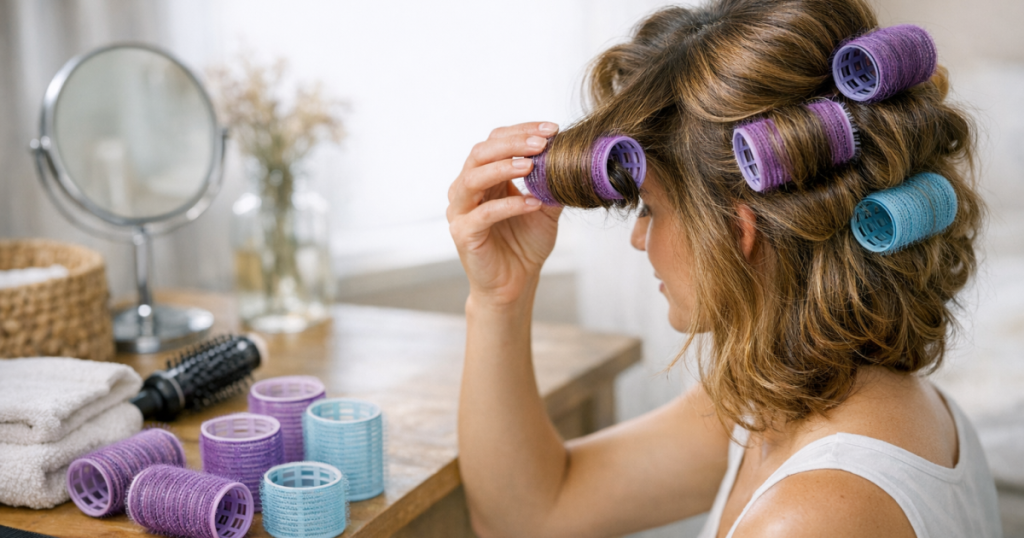
Conair Self-Grip Rollers are Velcro-style hair rollers designed to cling to the hair without traditional pins. They are best understood as a finishing and volume tool rather than a full curl-styling system. Think bouncy fringe, lifted crown, curved-under layers and a smoother blow-dry shape, not uniform ringlets.
The roller surface grips the outer layer of hair, so tension comes from the wrap rather than from heat or a clamp. That makes them a gentler option than hot tools for many routines, although “gentler” does not mean completely risk-free for every hair type. If your hair knots easily, has split ends, is bleached, or has a lot of texture, removal technique matters as much as the rollers themselves.
They sit in the useful middle ground between a round brush blow-dry and a heatless overnight curler. They are quicker and less fussy than sleeping in a curling rod, but they do not create the same long-lasting curl pattern. For fine hair that loses shape after brushing, they can be a smart top-up tool. For thick hair, they work better as a crown-volume aid than as a whole-head styling method.
Key specs
- Product type: self-grip, Velcro-style hair rollers for at-home styling.
- Heat use: heatless by design, though they can be placed into hair that has already been blow-dried and is cooling.
- Hold method: textured self-grip surface; some hair types may still prefer using a clip for extra security.
- Best styling effect: root lift, soft bend, fringe shaping, rounded layers and smoother ends.
- Hair length suitability: generally easiest on short to medium layers; longer hair needs smaller sections and slower removal.
- Pack contents: roller count and size mix vary by pack and retailer, so check the listing photos and description before buying.
- Maintenance: remove trapped hair after use and keep styling product build-up off the roller surface.
- UK buying note: when comparing UK listings, check whether the pack includes mixed sizes or one roller size only.
Pros and cons
Pros
- Adds visible lift at the roots without using a curling wand or straightener.
- Useful for reviving a blow-dry that has dropped flat through the crown.
- Lightweight and simple to use once you understand section size.
- Works well for curtain fringes, face-framing layers and curved-under ends.
- No pins are needed for many hair types, which keeps the routine quick.
- Easy to store and travel with compared with bulky heated styling tools.
Cons
- Can snag if removed by pulling straight down instead of unrolling carefully.
- Not ideal for very knot-prone, fragile or highly textured hair without extra care.
- Does not create strong curls or the defined shape of a heated tong.
- May need clips on slippery, heavy or very long hair.
- Results can fall quickly if hair is damp, overloaded with product or naturally resistant to styling.
- Pack variations make it important to check roller sizes before ordering.
Performance in real use
Volume and lift
This is where the Conair rollers make the most sense. Placed at the crown, they can give fine or medium hair a lifted set while the hair cools. The trick is to over-direct the section slightly, roll with even tension and let the hair sit long enough to take shape. If your hair collapses at the roots within minutes of styling, these rollers are more useful as a setting step than as a last-second fix.
They are particularly good for a fringe or front section that needs shape but not a full curl. Roll the front away from the face for a soft sweep, or roll under for a smoother, salon-brush finish. Fine hair tends to show the lift most clearly, but it also needs restraint with product. Too much oil, serum or heavy spray can flatten the very volume you are trying to create.
Curl shape and finish
The finish is soft and blown-out rather than curly. On layered hair, the rollers can create movement through the ends and a fuller silhouette around the face. On one-length hair, the result is subtler: more bend than bounce. If you want heatless curls that look like a curling wand set, these rollers will probably feel underwhelming.
For smoothness, they perform best when hair has already been brushed or blow-dried into a neat direction. They will not polish frizz in the way a hot brush or round brush tension can. If fine hair is your main concern and you are comparing tools, our guide on using a hot brush without flattening fine hair is a useful next step because it explains when heat-assisted shape may work better than rollers alone.
Grip and comfort
The self-grip surface is the feature that makes these rollers convenient, but it is also the feature that divides opinion. On smooth, medium-density hair, they can stay in place surprisingly well. On slippery hair, they may loosen unless you use smaller sections or support them with a clip. On curly, coily or very tangle-prone hair, the grip can feel too grabby, especially near the ends.
Comfort is good for short setting sessions. They are not the nicest option for sleeping because the firm roller shape presses into the scalp and can shift overnight. If you want an overnight style, a softer heatless method is usually kinder and more comfortable.
Ease of use
The learning curve is not complicated, but it is real. The most common mistake is using sections that are too wide or too thick. A roller can only shape the hair that makes clean contact with its surface. If the section is bulky, the outside layer may set while the inside stays flat and shapeless.
Start with hair that is fully dry or only slightly warm from a blow-dry. Brush through the section, hold the ends neatly, then roll with steady tension rather than scrunching the hair onto the roller. To remove, do not yank. Gently unwind the roller in the opposite direction, supporting the hair with your other hand. That one habit makes the difference between soft lift and unnecessary frizz.
Durability and care
There is not much to maintain, but cleanliness affects performance. Hair, lint and styling residue can collect on the roller surface, making the grip less even and the finish less smooth. After a few uses, pull away trapped strands and avoid coating the rollers with sticky sprays. If you use hairspray, apply it lightly after removing the rollers rather than soaking the rollers themselves.
Value for money
Value depends on expectations. As an inexpensive-feeling, low-commitment styling tool, they make sense if you want lift and bend without buying another heated device. They are less convincing if you expect a complete curl routine from one pack. Before ordering, check the number of rollers, their sizes and whether the mix suits the sections you actually style most often. A pack full of small rollers is not the same experience as a pack with larger volume rollers.
Who it’s best for / who should skip it
Best for
- Fine, flat hair: useful for crown lift, fringe shaping and adding airy movement after a blow-dry.
- Medium-density layered hair: good for rounded ends and soft face-framing shape.
- Heat-conscious routines: a sensible option for reducing reliance on curling tongs or straighteners.
- Quick daytime setting: helpful when you want hair to cool in a lifted shape while you get ready.
- Second-day styling: works well for refreshing front pieces and roots that have gone limp.
Consider skipping if
- Your hair tangles very easily: the self-grip surface can catch unless you are extremely careful.
- You want defined curls: these are better for volume and bend than curl formation.
- Your hair is very long and heavy: you may need clips, smaller sections and more patience than expected.
- Your hair is fragile or breaking: any gripping roller can worsen roughness if removed carelessly.
- You need an overnight tool: softer heatless curlers are usually more comfortable for sleeping.
Alternatives
If your goal is smooth, bouncy lift with minimal heat, Conair Self-Grip Rollers are a practical starting point. If your goal is a more deliberate curl pattern, a satin heatless curling rod will usually give a clearer wave or curl shape, though it takes more planning and is better suited to overnight or longer setting time. For help keeping that style intact until morning, read our guide on sleeping in heatless curls without frizz.
If frizz control is the bigger issue, a styling brush designed for curl definition may be more useful than Velcro-style rollers. The Tangle Teezer The Curler is a very different tool: it helps shape and clump curls rather than add roller-set volume. It is worth considering if your natural texture needs definition more than root lift.
For a blow-dry look with stronger polish, a hot brush can deliver more smoothing and shape, but it brings heat back into the routine. That is the core decision: rollers are gentler and simpler, while heated tools are usually faster and more controlling.
Helpful questions
Do Conair Self-Grip Rollers work on dry hair?
Yes, they are most predictable on dry hair, especially hair that is still warm from a blow-dry. Damp hair can take too long to set and may dry with frizz if the section is wrapped unevenly.
Will they get stuck in fine hair?
They can catch if fine hair is knotty, over-processed or pulled out too quickly. Use small, smooth sections and unwind each roller rather than dragging it down the hair.
Are they better than heated rollers?
They are better if you want low-heat volume and a softer finish. Heated rollers are usually better for stronger, longer-lasting shape, particularly on resistant hair.
How long should you leave them in?
Leave them in until the hair has fully cooled and feels set. The exact time depends on hair type, section thickness and whether you used them after blow-drying.
Do you need clips with them?
Not always. Shorter layers and medium hair may hold without clips, but long, heavy or slippery hair often benefits from a clip to stop the roller sagging.
Verdict + score
Conair Self-Grip Rollers are a useful, affordable-feeling styling staple for soft volume, fringe control and blow-dry shape, provided you treat them as a finishing tool rather than a curl machine. They suit fine to medium hair best, especially layered cuts that benefit from lift and rounded movement. The main drawback is the grip: convenient when it works, frustrating when hair is fragile, knot-prone or removed too quickly. Choose them for root lift and bend, skip them for defined curls or overnight comfort. Score: 8.1/10.
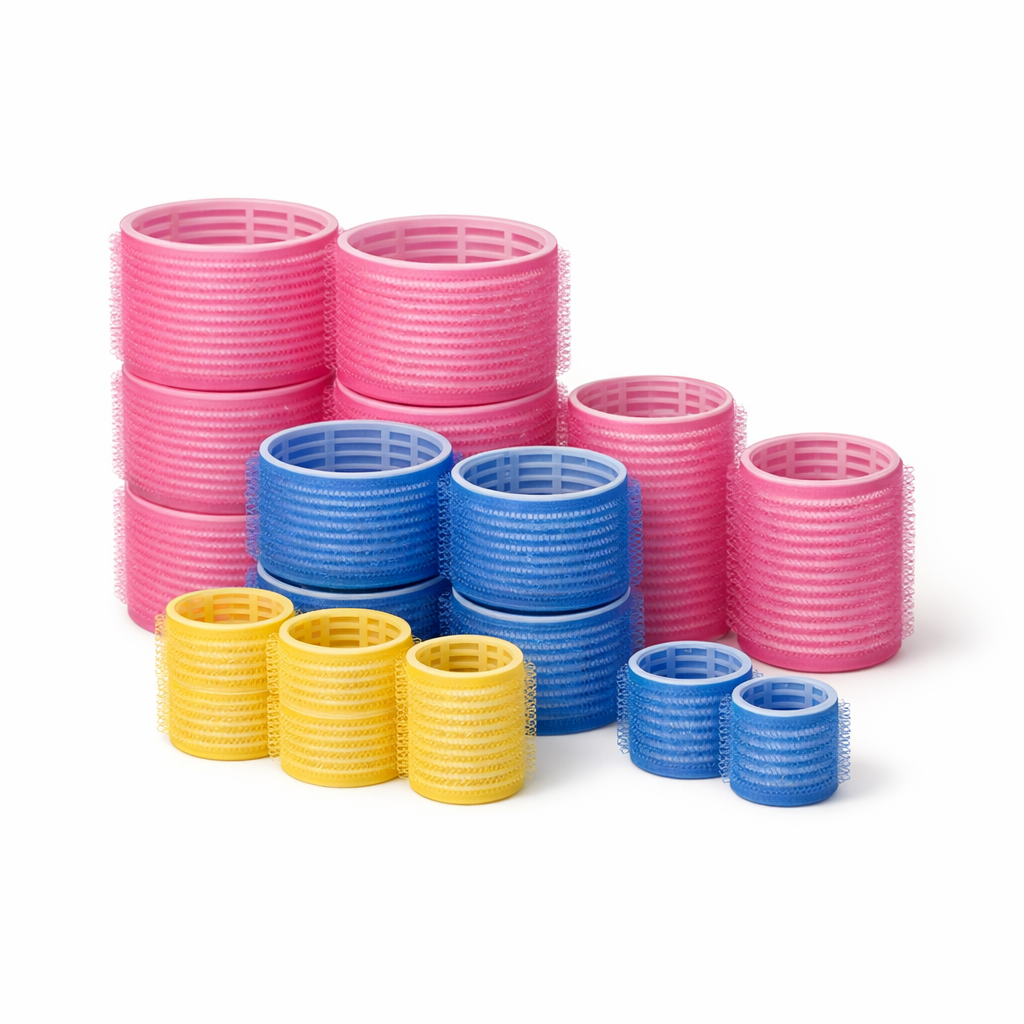
Conair Self-Grip Rollers
Choose them for root lift and bend, skip them for defined curls or overnight comfort.
You might also like: How to Use BaByliss Curl Secret Without Tangles.