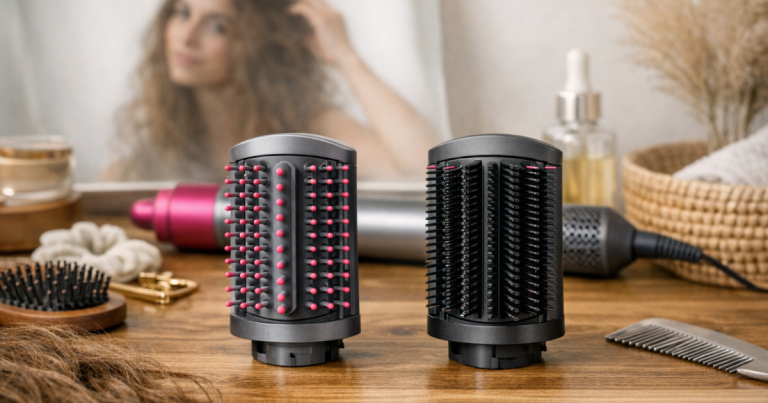
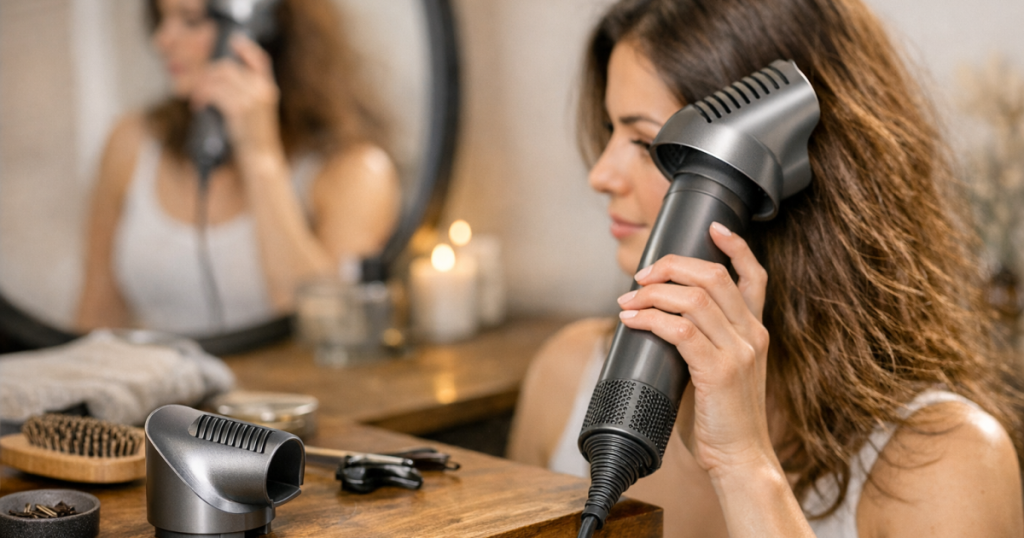
Frizz that looks polished at home but turns fuzzy by the front door is exactly the situation this Dyson Flyaway Attachment review is for. It looks at the attachment as a finishing accessory, not a miracle cure: useful for smoothing visible flyaways on compatible Dyson Supersonic dryers, less convincing if your hair needs tension, stretch or moisture control first.
The Dyson Flyaway Attachment is one of those accessories that makes most sense when you already own the right dryer and want your finish to look neater without reaching for straighteners every time. If you are starting from fluffy, damp, high-frizz hair, it will not replace a full drying routine. If your hair is already dry and styled but has a halo of shorter hairs on the surface, it can be genuinely useful.
Product overview
Quick verdict: the Dyson Flyaway Attachment is best seen as a polishing step for compatible Dyson Supersonic hair dryers. It is designed to smooth the look of flyaways using airflow, so it suits people who like a sleeker blow-dry finish but want to avoid clamping hair between hot plates.
It is not the attachment I would buy first if your main problem is root lift, curl definition or drying speed. Its sweet spot is the final pass: after a blow-dry, after rough-drying and brush work, or after refreshing hair that has puffed up around the parting and crown.
For UK shoppers, the value question is simple: if you already have a compatible Dyson Supersonic and often fight surface frizz, it is a neat upgrade. If you would need to buy a Dyson dryer just to use it, the decision becomes much less straightforward. Before buying, check the retailer’s compatibility details against your exact Dyson Supersonic model and what is included in the box.
Key specs
- Product type: hair dryer smoothing attachment.
- Designed for: compatible Dyson Supersonic hair dryers; check model compatibility before buying.
- Main purpose: to reduce the visible look of flyaways and smooth the surface of styled hair.
- Styling stage: best used as a finishing step on dry or nearly finished hair rather than as the main drying attachment.
- Attachment style: Dyson’s Supersonic accessories are designed to attach magnetically, but buyers should verify fit with their own dryer.
- Hair goal: a sleeker, more polished top layer rather than curl creation, strong hold or root volume.
- Maintenance: keep the attachment clean and free from sticky styling product build-up so airflow is not compromised.
Pros and cons
Pros
- Good for smoothing the visible halo of flyaways after blow-drying.
- Works without squeezing hair between hot straightener plates.
- Useful for polished ponytails, sleek partings and smooth second-day refreshes.
- Small enough to store with other dryer attachments.
- A logical add-on if your Dyson Supersonic is already central to your routine.
Cons
- Only makes sense if it is compatible with your existing Dyson hair dryer.
- Not a complete frizz solution for hair that needs moisture, tension or stronger styling prep.
- Less useful for people who mainly wear defined curls or waves.
- Can feel like an expensive finishing step if you only blow-dry occasionally.
- Does not create hold; you may still need the right styling product for weather-prone hair.
Performance in real use
On straight or softly blow-dried hair, the attachment’s biggest strength is visual tidiness. It helps the top layer sit flatter, so the hairline, crown and parting look more groomed. That matters for frizzy hair because surface texture is often what makes a style look unfinished, even when the lengths are technically dry and smooth.
On fine hair, it is most useful when used lightly. Too much smoothing can take away the airy movement that makes fine hair look fuller, so the trick is to target only the flyaway zones rather than running it repeatedly through the entire head. If flatness is your bigger concern, it is worth balancing smoothing with lift-focused drying habits; this guide to air-drying fine hair without it looking flat is a helpful next step for building volume before any finishing tool comes into play.
On thick hair, the attachment is better at surface polish than deep smoothing. If the underneath layers are still puffy, rough or not fully dried into shape, the top may look sleeker while the overall style still feels bulky. Thick hair usually benefits from sectioning, brush tension and enough drying time first; the Dyson Flyaway Attachment then becomes the tidy final pass rather than the workhorse.
On wavy hair, the result depends on how you wear your texture. If you blow-dry waves smooth, it can help refine the finish. If you want to preserve natural wave pattern, it may soften the look too much or disturb clumps around the surface. This is where product choice matters: a light cream or anti-frizz leave-in may be a better first step than extra airflow.
On curly and coily hair, it is more situational. It can make sense after a stretched blow-dry or sleek style, but it is not designed to define curls, shape coils or replace a diffuser. If frizz appears because the hair is dry, porous or lacking hold, airflow alone will not solve the root cause. Readers who are unsure whether their hair drinks in products or repels them should start with this high vs low porosity hair styling tools guide, because porosity often explains why a smoothing accessory works brilliantly for one person and barely registers for another.
For humidity, expectations need to stay realistic. The attachment can make the style look sleeker before you leave the house, but it does not seal hair permanently against damp British weather. If your hair expands in drizzle, fog or a warm commute, pair the attachment with humidity-conscious styling prep and avoid heavy oils near the roots unless your hair can genuinely handle them.
Ease of use is one of its best points. There is no complicated technique compared with a round brush or curling wand. The main learning curve is restraint: use it where the hair needs polish, not everywhere. Overworking frizz-prone hair can make it feel limp, static or overly smooth at the roots while the ends still need shape.
Who it’s best for / who should skip it
Best for: people who already own a compatible Dyson Supersonic and regularly style their hair smooth. It is particularly appealing for straight, fine-to-medium, frizz-prone hair that gets a visible halo around the crown, parting or face-framing layers. It also suits anyone who wants a neater finish for work, events or polished everyday styling without adding a straightener step.
Also worth considering for: thick hair that is already well blow-dried but needs surface refinement. It will not do the heavy lifting, but it can make the final result look more salon-finished.
Skip it if: you do not own a compatible Dyson dryer, you mainly wear wash-and-go curls, or your frizz comes from dryness, damage or lack of styling hold rather than flyaways. In those cases, the money is usually better put towards better drying technique, a suitable brush, a microfibre towel, a silk wrap or the right leave-in product.
Think carefully if: you only blow-dry for special occasions. A premium accessory makes most sense when it fixes a frequent problem, not when it sits in a drawer for most of the year.
Things readers ask
Does it work on wet hair?
It is better treated as a finishing attachment, not your main wet-to-dry tool. Dry and shape the hair first, then use it to smooth visible flyaways.
Will it replace straighteners?
No. It can make the surface look sleeker, but it will not give the same strong flattening effect as straighteners on bends, kinks or very textured hair.
Is it good for fine frizzy hair?
Yes, provided you use it sparingly. Fine hair often needs root lift first, so smooth only the crown, parting and face-framing flyaways.
Does it stop frizz coming back outside?
Not completely. It improves the finish before you go out, but humidity resistance still depends on your hair condition, styling prep and weather.
Can curly hair use it?
Curly hair can use it after a stretched or smooth blow-dry, but it is not a curl-defining attachment and may disrupt natural curl clumps.
Alternatives
If the goal is smoother hair but the Dyson Flyaway Attachment feels too narrow a fix, consider the routine rather than just the accessory. A concentrator nozzle with a brush can give more tension and shape during the drying stage, which matters if your hair is puffy from the roots down rather than only fuzzy on top.
If you are still deciding whether a dryer-led routine suits you better than a heated styling tool, this comparison of the T3 Cura Luxe Hair Dryer and Remington Proluxe Curling Wand is useful for thinking through drying, smoothing, curls and heat exposure as separate styling choices.
For a lower-heat route, start with water removal and friction control: a microfibre towel, a silk hair wrap and a detangling brush can reduce the amount of frizz you need to correct later. That approach is slower and less instantly glossy, but it can be kinder for breakage-prone hair and works even if you do not own a Dyson dryer.
Verdict + score
The Dyson Flyaway Attachment is worth it for frizzy hair when the problem is mainly visible flyaways on an already smooth blow-dry. It is sleek, clever and genuinely useful as a finishing accessory, but it is not a universal frizz fix and it does not replace good drying technique, moisture balance or hold. For compatible Dyson Supersonic owners who want a cleaner, more polished surface finish, my score is 8.1/10.
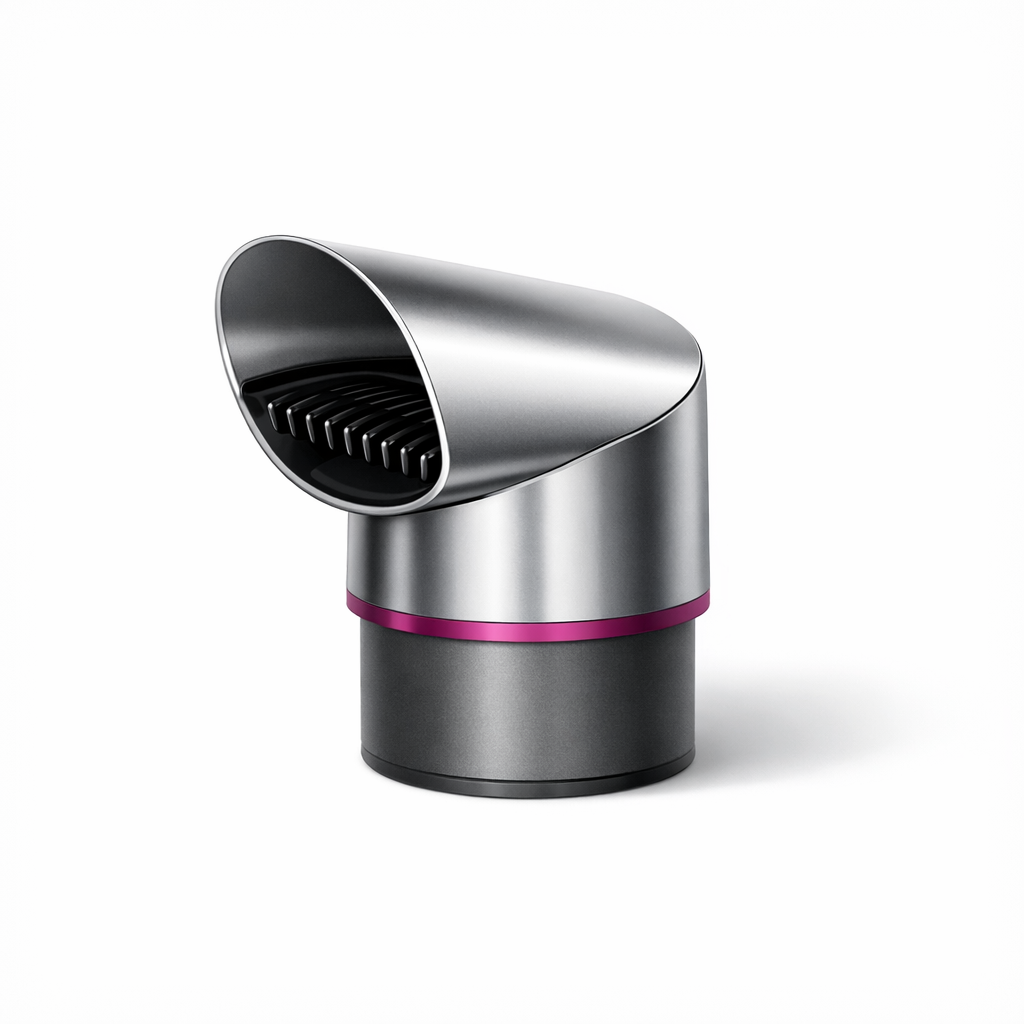
Dyson Flyaway Attachment
It is sleek, clever and genuinely useful as a finishing accessory, but it is not a universal frizz fix and it does not replace good drying technique, moisture balance or hold.