Curly hair usually tells you quickly whether a dryer attachment is helping or simply blowing your pattern apart. This Toni & Guy Diffuser review focuses on the bit that matters most: can it soften airflow enough to support waves, curls and coils without turning wash day into a frizz session?
The short answer: it is a useful, simple accessory if it fits your dryer properly and your goal is gentler drying with more shape. It is not a magic curl-maker, and the final result still depends on product choice, sectioning, drying angle and how much you touch your hair while it is drying.
Product overview
Quick verdict: the Toni & Guy Diffuser is best viewed as a practical diffuser attachment for people who already like using a hair dryer but want less direct blast on textured hair. It suits wavy and curly routines where definition, reduced disruption and softer volume matter more than a poker-smooth finish.
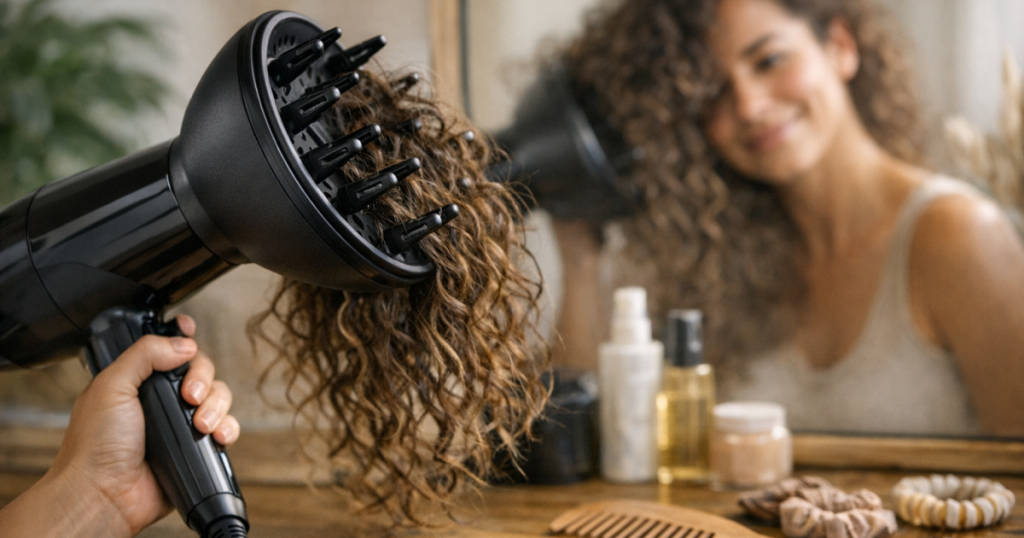
A diffuser works by spreading the dryer’s airflow across a wider area. Instead of blasting one section and disturbing the curl clumps, it lets you cup, hover or gently lift the hair while moisture leaves more gradually. That makes the attachment particularly relevant for type 2 waves, type 3 curls and some looser type 4 textures that are dried in their natural pattern.
The biggest buying point is also the biggest thing to verify: compatibility. Diffuser attachments are not automatically universal, even when they look similar online. Before adding it to your basket, check the retailer listing against your hair dryer model or nozzle diameter, and look closely at whether it is sold as a standalone attachment or intended for specific Toni & Guy dryers.
Key specs
- Product name: Toni & Guy Diffuser.
- Brand: Toni & Guy.
- Product type: hair dryer diffuser attachment.
- Primary use: spreading airflow for drying waves, curls and textured hair with less disruption.
- Best matched with: a compatible hair dryer with a nozzle shape and diameter that the diffuser can grip securely.
- Hair types to consider: type 2 waves, type 3 curls and looser or stretched type 4 styling routines where diffused drying is preferred.
- Important checks: confirm fit, attachment method, bowl size, prong depth and whether the listing matches your exact dryer before buying.
- Not a standalone tool: it needs a hair dryer to provide heat and airflow.
Pros and cons
Pros
- Helps reduce the harsh, directional airflow that can break up curl clumps.
- Useful for drying curly or wavy hair without immediately flattening the overall shape.
- Can support root lift when used with a gentle lift-and-hover technique rather than heavy scrunching.
- Simple accessory with no complicated routine to learn.
- More affordable in principle than replacing your entire hair dryer, assuming it fits the one you already own.
Cons
- Compatibility is the main uncertainty; a poor fit makes the attachment frustrating and less secure.
- It will not create curls on hair that does not naturally hold a wave or curl pattern.
- Results depend heavily on styling product, moisture level and drying technique.
- May feel slower than direct nozzle drying, particularly on dense or long hair.
- Not the right accessory if your main goal is sleek straightening or high-gloss smoothing.
Performance in real use
On curly hair, the Toni & Guy Diffuser makes the most sense when you use it to protect the shape you have already created during styling. Apply your curl cream, mousse, gel or leave-in first, form your clumps while the hair is damp, then use the diffuser to dry without blasting those clumps apart.
For type 2 waves, hovering tends to be the safest starting point. Hold the diffuser near the hair without pressing the bowl hard into the lengths. This keeps waves from being overstretched and helps avoid that fluffy, half-straight finish that can happen when fine wavy hair is moved around too much.
For type 3 curls, cupping sections into the bowl can work well once the hair has started to set. Bring the diffuser up slowly, hold it still, then move to the next section. The stillness matters. Constant bouncing, twisting or pushing can undo definition and encourage frizz, even with a diffuser attached.
For type 4 textures, suitability depends on the finish you want. If you are drying a wash-and-go, the diffuser can help reduce wetness without stretching the pattern too aggressively. If you prefer elongation, a diffuser may not give the same controlled stretch as a tension method or brush-assisted blow-dry. It is more about preserving shape than pulling hair smooth.
Root volume is possible, but it needs a light hand. Flip your head only if your hair tolerates it; some curl patterns gain lift, while others gain frizz. A safer method is to tilt your head sideways, place the diffuser close to the roots and let airflow lift the area without dragging through the lengths. If root volume is your recurring problem, the guide to choosing whether frizz control, definition or volume matters most is a useful next read.
Frizz control is good rather than miraculous. A diffuser can reduce mechanical disruption, but it cannot compensate for rough towel drying, skipped heat protection, too much touching or a product that does not suit your porosity. Use a microfibre towel or soft cotton T-shirt before drying, keep the dryer on a sensible setting for your hair, and stop before the hair feels parched.
Ease of use depends almost entirely on fit. A secure diffuser feels like a natural extension of the dryer. A loose diffuser interrupts the routine because you end up holding the attachment in place instead of concentrating on your curl pattern. This is why the compatibility check is not a minor detail; it is the difference between a helpful accessory and a drawer-filler.
Maintenance is straightforward. Let the attachment cool, remove loose hair, and wipe away product residue when needed. Curl products can transfer onto diffuser prongs and bowl surfaces over time, particularly gels, oils and leave-ins. Keeping the attachment clean helps airflow stay consistent and prevents old product from being warmed onto freshly washed hair.
Who it’s best for / who should skip it
The Toni & Guy Diffuser is best for people who already own a compatible hair dryer and want a gentler way to dry natural texture at home. It is most appealing if your hair looks better air-dried than rough-dried, but you do not always have the time or weather for air drying. In the UK, that can be a very real point: damp roots in cool weather are not always practical.
It is a good fit for wavy hair that collapses under strong airflow, curly hair that needs help setting its cast, and medium-density hair where air drying takes too long. It can also help if you are trying to reduce how often you reach for straighteners but still want a finished look on wash day.
Skip it if your hair dryer is not compatible, if you want a straight and polished blow-dry, or if you mainly style very short hair where the diffuser bowl cannot comfortably hold or hover around sections. You may also find it less useful if your hair is extremely thick and long and you want very fast drying above all else; a diffuser usually trades speed for control.
If you are not sure how your curl pattern affects tool choice, the Type 1 to 4 hair styling tool guide gives a clearer framework for matching attachments, hot tools and heatless options to your texture.
Alternatives
If fit is uncertain, the most sensible alternative is a diffuser made specifically for your exact hair dryer. A matching attachment from the same dryer range is usually less of a gamble than trying to force a near-fit. Check the official product listing, nozzle shape and retailer compatibility notes before deciding.
If your priority is no-heat styling rather than gentler heat drying, a satin heatless curling rod or soft overnight curl method may be more aligned with your routine. That route will not dry wet hair in the same way, but it can help create shape without relying on a dryer. For people who want smoother roots, fewer flyaways or straighter lengths, a diffuser is simply the wrong category; a hot brush or straightener technique will be more relevant.
Things readers ask
Does the Toni & Guy Diffuser fit every hair dryer?
No. Diffuser fit depends on the dryer’s nozzle size and shape, so check compatibility carefully before buying. A loose fit can make the attachment awkward and less effective.
Is it better for curly hair than air drying?
It depends on your routine. Air drying can give soft definition, but diffusing is more practical when you need roots and lengths dry sooner. Use lower disruption, not maximum blast, as the goal.
Can it reduce frizz?
It can reduce airflow-related frizz, especially compared with direct rough drying. It will not fix frizz caused by product mismatch, dryness, rough towel drying or over-handling.
Should I use it on soaking wet or damp hair?
Damp, styled hair is usually easier to control. Remove excess water first, apply your styling product, then diffuse without repeatedly touching the curls.
Is it useful for fine curls?
Yes, but use a light touch. Fine curls and waves can lose shape if they are pushed too much into the bowl, so hovering and short drying intervals often work better.
Verdict + score
The Toni & Guy Diffuser is a worthwhile add-on for curly and wavy hair if compatibility is confirmed and your expectations are realistic. It helps make hair drying more curl-friendly by softening airflow, supporting definition and giving you more control than direct rough drying. Its value drops sharply if it does not fit securely, and it is not the answer for sleek straight finishes or maximum-speed drying. Choose it if you want a simple attachment that supports your natural pattern rather than fighting it. Score: 7.8/10.
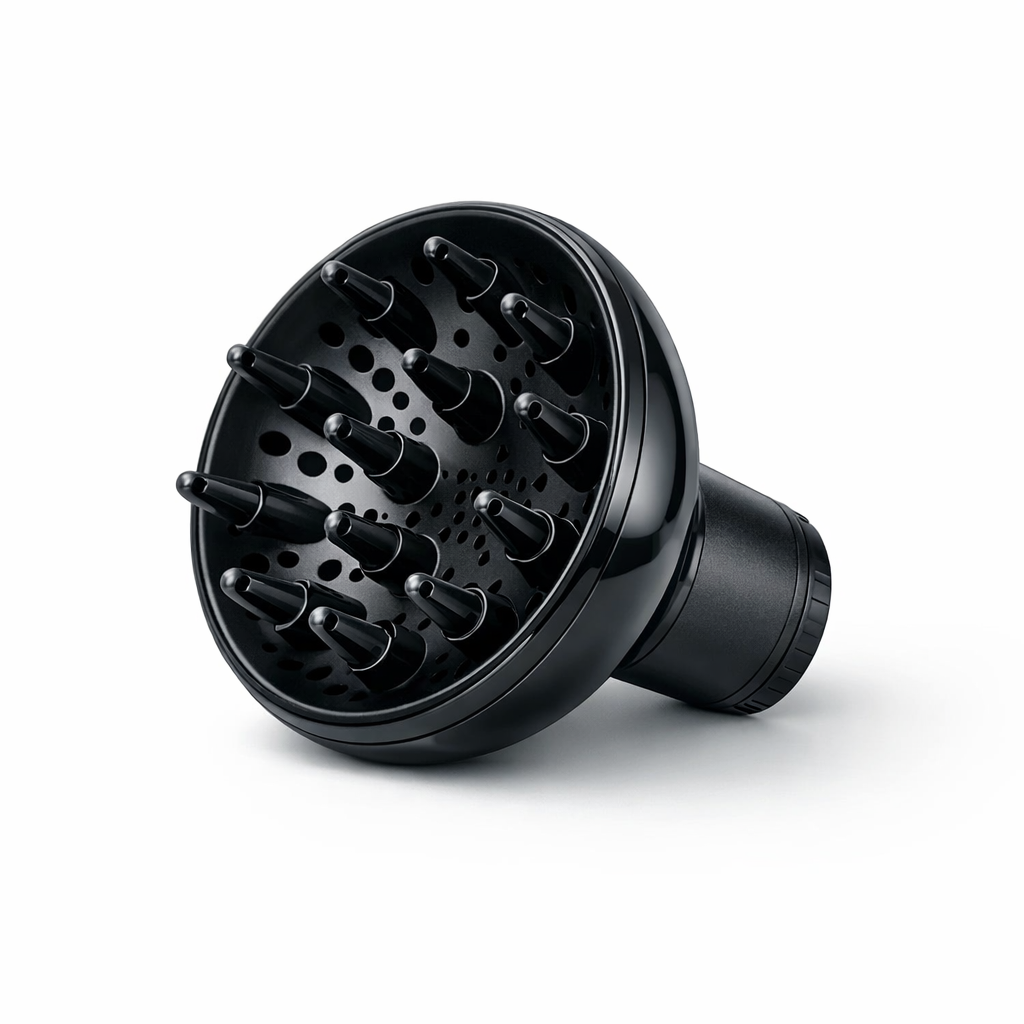
Toni & Guy Diffuser
Choose it if you want a simple attachment that supports your natural pattern rather than fighting it.
You might also like: How to Sleep in Heatless Curlers Without Flattening Roots.