Wet hair asks more of a brush: it needs slip, patience and teeth that flex rather than snag. This Tangle Teezer Original review looks at whether the palm-held classic is gentle enough for strands that snap easily, and where it sits beside newer wet-hair brushes. Short verdict: it is a clever, compact detangler for light to moderate knots, but it is not the most forgiving choice for very dense, soaking-wet hair or anyone who needs a handle for controlled sectioning.
If you want a small, easy-to-rinse brush for wash-day detangling, travel and pre-styling smoothing, shortlist the Tangle Teezer Original. If your hair tangles into tight mats or you prefer to detangle under the shower stream, read the caveats before choosing it.
Product overview
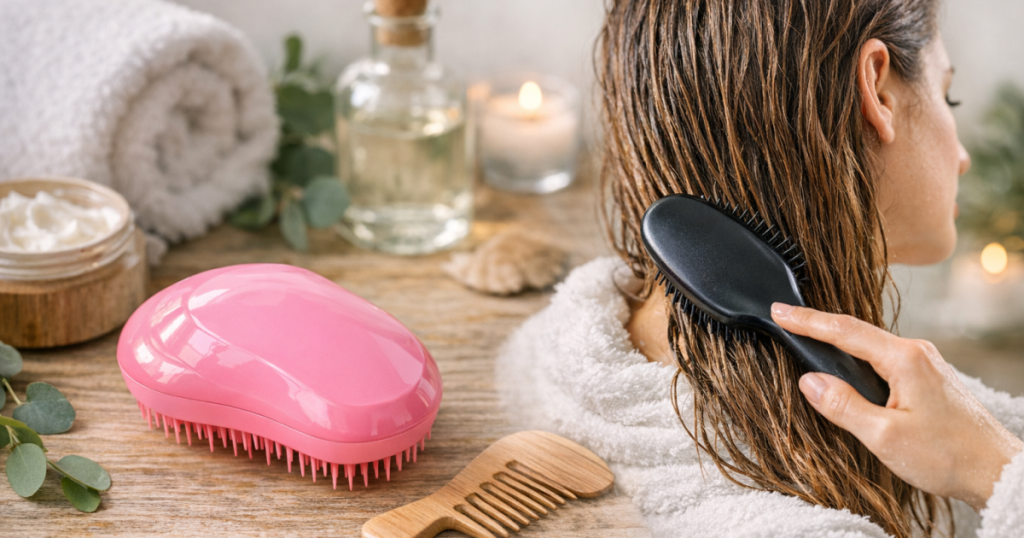
The Tangle Teezer Original is the brand’s recognisable palm-held detangling brush. Instead of a traditional handle, it sits in the hand and uses flexible teeth to work through knots. Its appeal is simple: it is lightweight, easy to manoeuvre around the head, and less aggressive-feeling than many stiff-bristled brushes when used carefully from the ends upwards.
For breakage-prone hair, the key question is not whether a brush can magically prevent snapping. It cannot. The real test is whether it helps you detangle with less pulling, less panic and fewer rushed strokes. Used on conditioned, damp hair in small sections, the Tangle Teezer Original can be a useful protective step before heatless styling, blow-drying or air-drying. Used quickly on thick wet hair from root to tip, it can still tug.
It is best viewed as a compact detangling tool rather than a full styling brush. It will not give the tension of a paddle brush for smoothing a blow-dry, and it does not replace a wide-tooth comb for every curl pattern. Its strength is quick knot removal and gentle daily tidy-ups, provided the hair is not overloaded with tangles.
Key specs
- Product type: palm-held detangling hair brush.
- Main design feature: flexible, two-tier teeth intended to move through knots with less harsh pulling than rigid bristles.
- Handle style: no handle; it is held in the palm, which suits some users and frustrates others.
- Best use case: detangling damp or dry hair, smoothing before styling, and working through light to moderate knots.
- Hair lengths: most practical on short to medium hair, layered hair and manageable long hair; very long or very thick hair benefits from careful sectioning.
- Wet-hair note: check the current product packaging and retailer description for the exact wet/dry usage guidance on the version you buy, as Tangle Teezer also makes wet-specific brushes.
- Maintenance: remove trapped hair regularly, rinse product residue from the teeth, and let it dry fully between uses.
Pros and cons
Pros
- Gentler-feeling than many stiff brushes when used slowly on conditioned hair.
- Compact shape makes it easy to keep in a gym bag, overnight bag or dressing-table drawer.
- Good for smoothing out light tangles before heatless curls, rollers or overnight styling.
- Works well for fine to medium hair that knots easily but is not extremely dense.
- Easy to rinse clean after use with leave-in conditioner or detangling spray.
Cons
- The handle-free shape can be slippery on wet hands, especially in the shower.
- Not ideal for very thick, coarse or tightly tangled hair unless you section patiently.
- Can skim over dense hair if you use broad strokes instead of smaller sections.
- Does not give the control of a handled brush for root-to-end detangling.
- May disrupt curls if used on dry textured hair without moisture or product.
Performance in real use
Wet detangling on fragile strands
On wet, breakage-prone hair, the Tangle Teezer Original performs best when the hair has enough slip. That usually means conditioner in the shower, a leave-in conditioner on towel-dried hair, or a light detangling spray through the mid-lengths and ends. Start at the ends, brush in short strokes, then move gradually upwards. This matters more than the brush itself: even a gentle brush can cause unnecessary breakage if it is dragged through knots too quickly.
For fine hair that tangles around the nape, it is particularly handy. The flexible teeth can separate small knots without the harsh scraping sensation of some firm paddle brushes. For bleached, highlighted or heat-styled hair, the gentler feel is a plus, but you still need to avoid brushing when hair is dripping, stretched and overloaded with water.
Grip, control and comfort
The biggest divide is the palm-held design. Some people love it because it feels close and controlled, almost like guiding the brush with the whole hand. Others find it harder to manage when hair is wet, hands are slippery or sections are large. If you have wrist sensitivity or prefer a longer grip, a handled wet brush may feel more secure.
Scalp comfort is good when the brush is used lightly. Pressing hard is not necessary and can feel scratchy, especially if your scalp is sensitive after washing. The better approach is to let the teeth do small, repeated passes rather than forcing the brush through in one go.
Thick, curly and coily hair
For thick hair, the Tangle Teezer Original is not a one-pass solution. It can work, but only if you divide the hair and keep the sections realistic. Dense hair tends to hide knots underneath the top layer, so brushing the surface can make hair look smooth while tangles remain closer to the roots. If this sounds familiar, the sectioning method in this guide to sectioning thick hair for even waves translates well to detangling too: smaller panels, cleaner partings and less tension per pass.
On curly hair, it is most useful when hair is wet and conditioned. Used dry, it can separate curl clumps and create frizz, so it is better for wash-day detangling than day-two curl refreshing. Coily or very tight curl patterns may prefer finger detangling first, followed by a wide-tooth comb or a brush designed specifically for wet detangling with more grip.
Before heatless styling
This brush earns its place before heatless curls because smooth, knot-free hair wraps more evenly around ribbons, rods and rollers. That does not mean hair should be brushed into a perfectly flat sheet. For natural movement, detangle first, then add your leave-in or styling product, then section. If your hair puffs up after brushing, wait until it is damp rather than wet, and use your hands to re-form the direction before wrapping.
For a fuller prep routine, pair it with the steps in our guide to detangling before heatless styling without frizz. The Tangle Teezer Original suits the detangling stage; it is not the whole routine.
Durability and cleaning
There are no complicated maintenance demands. Pull away shed hairs after use, rinse out conditioner residue, and avoid storing it teeth-down in a damp shower corner. The teeth need to stay clean and flexible to work properly. If you notice product build-up at the base of the teeth, a gentle wash with warm water and a mild cleanser helps keep it fresh.
Value for a breakage-conscious routine
The value depends on your hair density and how you brush. For fine, fragile, colour-treated or shoulder-length hair, it can become a daily staple because it is quick and unintimidating. For very thick hair, the lack of handle may make it feel less efficient than a wet-specific handled brush. It is still a solid tool, but not automatically the best Tangle Teezer for every wet-hair routine.
Who it’s best for / who should skip it
Best for
- Fine to medium hair that tangles easily around the ends or nape.
- Breakage-prone hair that needs a gentler-feeling brush for slow detangling.
- Short, shoulder-length or layered hair where a compact brush is easy to control.
- People who prepare hair for heatless curls, satin rods, rollers or air-drying.
- Travel users who want a small brush without a long handle taking up space.
Skip it if
- You detangle mainly in the shower and want a secure handle.
- Your hair is very dense, coarse or prone to deep tangles at the roots.
- You prefer a brush that can tension hair for smoothing and styling.
- You have curls or coils that lose definition when brushed outside wash day.
- You often rush detangling; fragile hair needs slower sections, whatever brush you use.
Questions people ask
Can I use the Tangle Teezer Original on wet hair?
Many people use it on damp or conditioned hair, but check the current packaging for the exact version you buy. If you mainly detangle under running water, a wet-specific handled brush may feel safer and easier to grip.
Will it stop hair breakage?
No brush can stop breakage on its own. It can help reduce harsh tugging when paired with conditioner, small sections and brushing from the ends upwards.
Is it good for bleached or highlighted hair?
It can be a good fit for fragile colour-treated hair, especially for light knots. Be extra careful when hair is wet, as lightened hair can feel more elastic and vulnerable.
Does it work better than a wide-tooth comb?
It depends on the hair. A wide-tooth comb is often better for preserving curl clumps, while the Tangle Teezer Original can be quicker for fine or medium hair with scattered tangles.
Alternatives
If you like the brand but want more control on wet hair, the Tangle Teezer Ultimate Detangler is the obvious alternative to compare because its handled shape is designed to feel more secure during wet detangling. It is the one to consider if the Original slips in your hand or if you regularly detangle in sections after washing.
If you prefer a softer, handled brush feel, the Wet Brush Original Detangler is another familiar option. It may suit people who want a traditional handle and a cushioned brushing motion, though the better choice still depends on hair density, curl pattern and how much slip you use.
Verdict + score
The Tangle Teezer Original is a strong compact detangler for fine to medium, breakage-prone hair, particularly when used on conditioned damp hair before heatless styling or air-drying. Its flexible teeth and small shape make it kinder-feeling than many rigid brushes, but the lack of handle limits control on very wet, very thick or heavily tangled hair. Choose it if you want a neat, travel-friendly detangling brush and you are willing to section patiently; skip it if you need maximum grip in the shower. Score: 8.1/10.
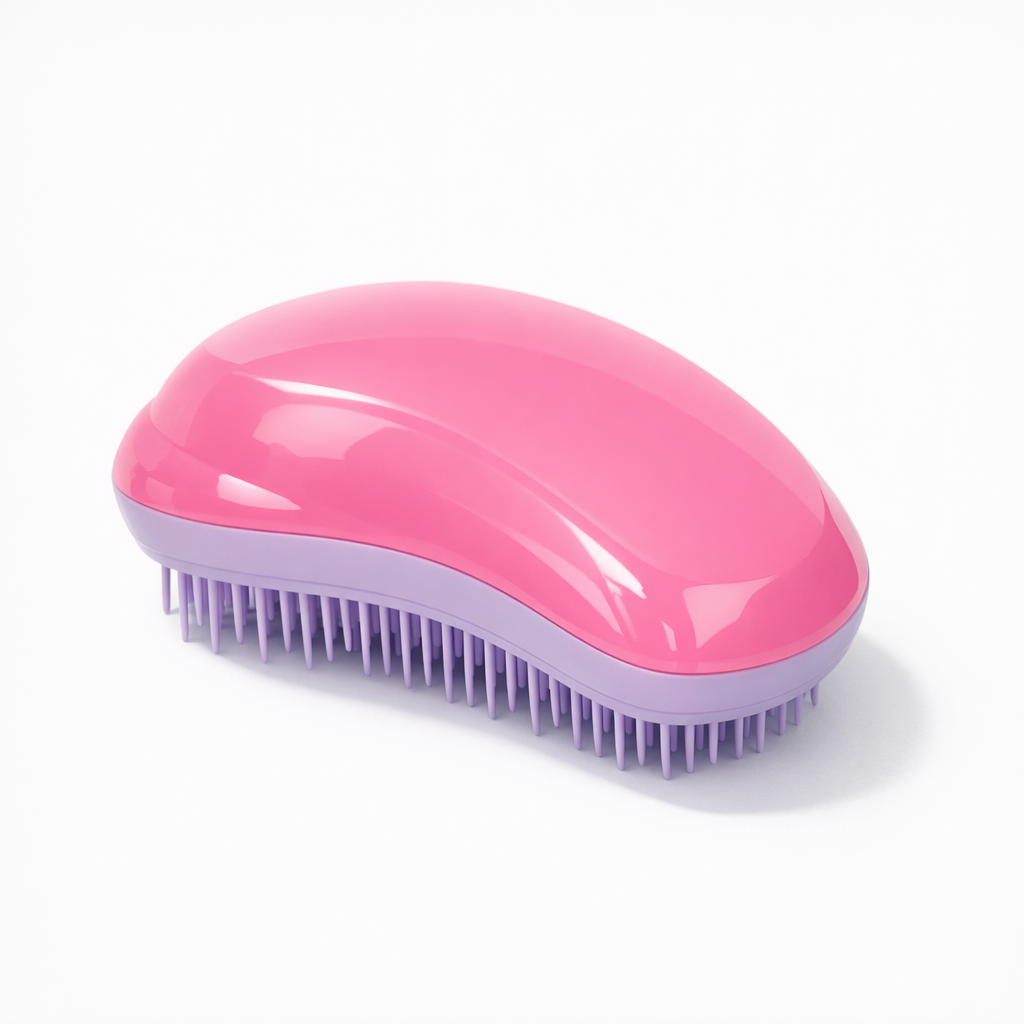
Tangle Teezer Original
Choose it if you want a neat, travel-friendly detangling brush and you are willing to section patiently; skip it if you need maximum grip in the shower.
You might also like: Dyson Airwrap 30mm vs 40mm Barrels for Long Hair: Which Gives Better Curls?.