The awkward bit of wash day is rarely the shampoo; it is the slow, snaggy detangling afterwards. This Wet Brush Original Detangler review looks at whether the cult flexible-bristle brush is genuinely useful at home, or just another pretty brush that promises more than it can deliver.
The short answer: the Wet Brush Original Detangler is a very easy brush to like if your hair tangles after washing, around the nape, or after sleeping on styled waves. It feels more forgiving than a stiff paddle brush, works well for gentle section-by-section detangling, and is simple enough for everyday use. It is not a miracle tool for matted knots, very dense coils, or anyone who brushes from root to tip in one rushed pass.
The short version
The Wet Brush Original Detangler is best seen as a low-effort comfort upgrade rather than a dramatic styling tool. It helps you work through tangles with less tugging, which matters if you are trying to preserve curl clumps, minimise frizz, or prep hair before heatless styling.
Its biggest strength is the flexible feel of the bristles. They bend more readily than the teeth on a traditional rigid brush, so the brush is less likely to yank sharply when it meets resistance. The trade-off is control: on very thick, compact, or heavily tangled hair, those same flexible bristles may skim over deeper knots unless you section carefully.
Product overview
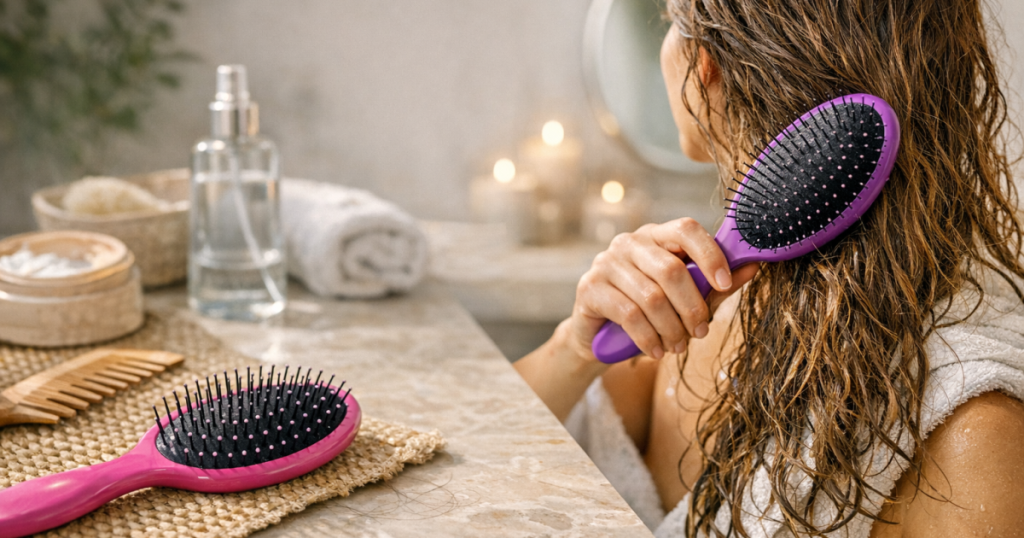
The Wet Brush Original Detangler is a full-size handled detangling brush designed for use on wet or dry hair. It sits in the everyday haircare category rather than the styling-tool category: it does not create curls, smooth like a hot brush, or replace a wide-tooth comb for every curl pattern. Its job is simpler and more useful: easing knots before styling, drying, diffusing, heatless curling, or tying hair up for the day.
For UK readers building a practical at-home routine, this brush makes the most sense as a pre-styling step. It can be used after conditioner in the shower, after towel-drying with a leave-in product, or on dry hair when a section has tangled at the ends. If your styling routine includes rollers, satin rods, a curling tong, or a diffuser, smoother detangling beforehand helps the finished style look more intentional.
The brush has a familiar shape: a broad head, handle, and rows of flexible bristles. Wet Brush offers the Original Detangler in many colours and design finishes, so shoppers should check that the listing is for the standard Original Detangler rather than a mini, pro, shower, or vented variant. Those versions can feel different in the hand and may suit different routines.
Key specs
- Product name: Wet Brush Original Detangler.
- Brand: Wet Brush.
- Product type: detangling brush.
- Best use case: easing knots before styling, drying, diffusing, braiding, or heatless curling.
- Hair state: suitable for use on wet or dry hair, with best results when you detangle gently in sections.
- Brush feel: flexible-bristle design rather than a rigid paddle-brush feel.
- Format: full-size handled brush; check listings carefully if you prefer a compact or travel version.
- Heat styling role: no heat; it is a prep and maintenance tool, not a curl-forming or smoothing appliance.
- What to verify before buying: exact variant, colour, handle style, retailer returns policy, and whether the brush is sold individually or as part of a set.
Pros and cons
Pros
- Feels gentle compared with many traditional stiff brushes, especially through damp mid-lengths and ends.
- Easy to use without a learning curve; start at the ends, work upwards, and section if needed.
- Good everyday prep brush before heatless curls, blow-drying, diffusing, or tying hair back.
- Helpful for fine hair that tangles easily but can look flat when overworked with heavy styling tools.
- Can be used on dry hair for small knots, provided you avoid aggressive brushing through curls or waves.
- Widely recognisable, so it is easy to compare variants and spot whether you are buying the exact model you want.
Cons
- Not the most precise choice for defining curls; it is better for detangling than styling curl shape.
- Very dense, coily, or highly textured hair may need more sectioning and conditioner slip than the brush alone can provide.
- Flexible bristles can glide over deeper knots if you rush or take sections that are too large.
- Dry brushing can disturb waves and curls, so it needs to be used carefully on textured hair.
- Like any brush, it needs regular hair removal and cleaning to stay pleasant to use.
Performance in real use
Detangling on wet hair
Wet hair is where the Wet Brush Original Detangler makes the clearest case for itself. After conditioning, it moves through light to moderate tangles with less of the sharp pulling you can get from a rigid brush. It works best when the hair has some slip: conditioner, leave-in spray, or a lightweight oil through the ends can make a noticeable difference.
The technique matters more than the brush marketing. Start at the last few centimetres of hair, release the ends first, then move gradually towards the mid-lengths. If you begin at the roots, the brush can still push knots down into one stubborn bundle. That is not a product flaw so much as a detangling mistake.
Fine hair and fragile-feeling ends
For fine hair, the main appeal is control without too much drag. Fine hair can knot quickly after scarves, hoods, workouts, or sleeping with hair loose, and it often looks worse when over-brushed. The Wet Brush Original Detangler is useful because you can target the ends without needing heavy tension.
It will not add volume, and it can still flatten roots if you brush repeatedly from scalp to ends. For fine hair, use it as a reset tool: detangle, stop, then style. If your goal is lift, you will still need the right drying method, rollers, or a root-focused styling tool afterwards.
Wavy and curly hair
On waves and loose curls, this brush is strongest before styling rather than after curls have formed. Use it during the conditioning stage, before applying curl cream, mousse, gel, or heatless curl products. Once curls have set, brushing through them dry can separate clumps and create frizz.
If your curls are frizz-prone and you want a brush that is more about shaping and styling than basic detangling, the technique will differ. Our Tangle Teezer The Curler review for frizz-prone curls is a better next step for understanding curl-focused brush styling.
Thick hair and stubborn knots
Thick hair is the category where expectations need managing. The Wet Brush Original Detangler can work well, but not if you treat the whole head as one section. Divide hair into smaller panels, hold each section above the knot to reduce scalp pulling, and use more slip where the ends feel compacted.
For stubborn nape knots or post-swim tangles, the brush may need help from fingers first. Gently separate the worst of the knot before brushing. This is also where product choice matters: a very light leave-in may not give enough glide for dense hair, while too much rich oil can leave fine sections limp. If you are deciding whether an oil belongs in your routine, our Moroccanoil Argan Oil Hair Treatment review explains the shine-versus-weight trade-off clearly.
Styling prep and finish
As a styling prep tool, the brush is quietly useful. It helps create smoother sections for rollers, plaits, claw clips, heatless rods, and loose waves. It is also handy before a blow-dry because tangles can make a round brush or hot brush catch, which encourages rougher handling.
It does not polish hair in the way a boar-bristle finishing brush might, and it does not replace a comb for perfect partings. Think of it as the brush you reach for before the detailed styling begins.
Cleaning and durability
Maintenance is straightforward: remove shed hair regularly and clean the bristle area when product build-up appears. If you use leave-ins, oils, gels, or dry shampoo, the base of the brush can collect residue. A quick wash with mild shampoo and proper air drying keeps it feeling fresher. Do not store it permanently in a damp shower corner unless the specific variant is designed for that environment.
Durability will depend on use, storage, hair density, and how heavily you press. Check bristles over time; if they bend permanently, lose their smooth tips, or start catching, the brush is no longer doing its gentlest work.
Who it’s best for / who should skip it
The Wet Brush Original Detangler is best for people who want a softer-feeling everyday brush for light to moderate knots. It suits straight hair, fine hair, loose waves, children’s hair when used carefully, and anyone who wants a simple tool before heatless styling. It is also a good fit if you dislike the scraping feel of harder brushes on the scalp.
It is less ideal if you mainly want curl definition, root volume, high-tension smoothing, or a brush for very compact knots. Tighter curls and coils may still prefer finger detangling, a wide-tooth comb, or a brush specifically chosen for textured-hair sectioning. If your hair is chemically lightened, heat-damaged, or prone to snapping, the brush can help you be gentler, but it will not compensate for rough technique.
Buy it if you want an affordable-feeling routine upgrade and you are willing to detangle in smaller sections. Skip it if you want one brush to define, volumise, smooth, and style every hair type equally well.
Alternatives
For a single product review, the fairest alternatives are not a long shopping list but a clearer sense of when a different tool makes more sense. If your main issue is curl clump shaping rather than basic knots, a curl-focused brush such as Tangle Teezer The Curler may be more relevant. If your main issue is protecting a finished style overnight, a silk or satin wrap is a better companion tool than another detangling brush.
If you already own the Wet Brush Original Detangler, the best alternative may be technique rather than replacement: use more conditioner slip, section smaller, and avoid dry brushing formed curls. That will change the result more than swapping between similar detangling brushes.
Common questions
Can the Wet Brush Original Detangler be used in the shower?
It can be used on wet hair, but check the exact variant and retailer description if you specifically want a shower brush. After use, let it dry properly rather than leaving it constantly wet.
Is it suitable for curly hair?
Yes, for detangling before styling. For curls, use it with conditioner or leave-in slip, work in sections, and avoid brushing through dry curl clumps unless you intentionally want a softer, brushed-out look.
Will it stop hair breakage?
No brush can guarantee that. It can make detangling feel gentler, but breakage also depends on hair condition, colouring history, wet-hair handling, product slip, and how much tension you use.
Is it better than a wide-tooth comb?
Not always. A wide-tooth comb can be better for very curly, coily, or heavily conditioned hair. The Wet Brush Original Detangler is easier for quick everyday knots and smoother pre-styling sections.
Verdict + score
The Wet Brush Original Detangler earns its place as a dependable everyday detangling brush, particularly for fine hair, straight hair, loose waves, and anyone who wants a softer-feeling tool before styling. It is not the most curl-defining, thick-hair-powerful, or salon-polishing option, but it does the basic job well when used with patience and enough slip. For most at-home routines, it is a sensible buy rather than a dramatic transformation: useful, gentle-feeling, easy to keep by the shower or dressing table, and most effective when you let the technique do half the work. Verdict: 8.2/10.
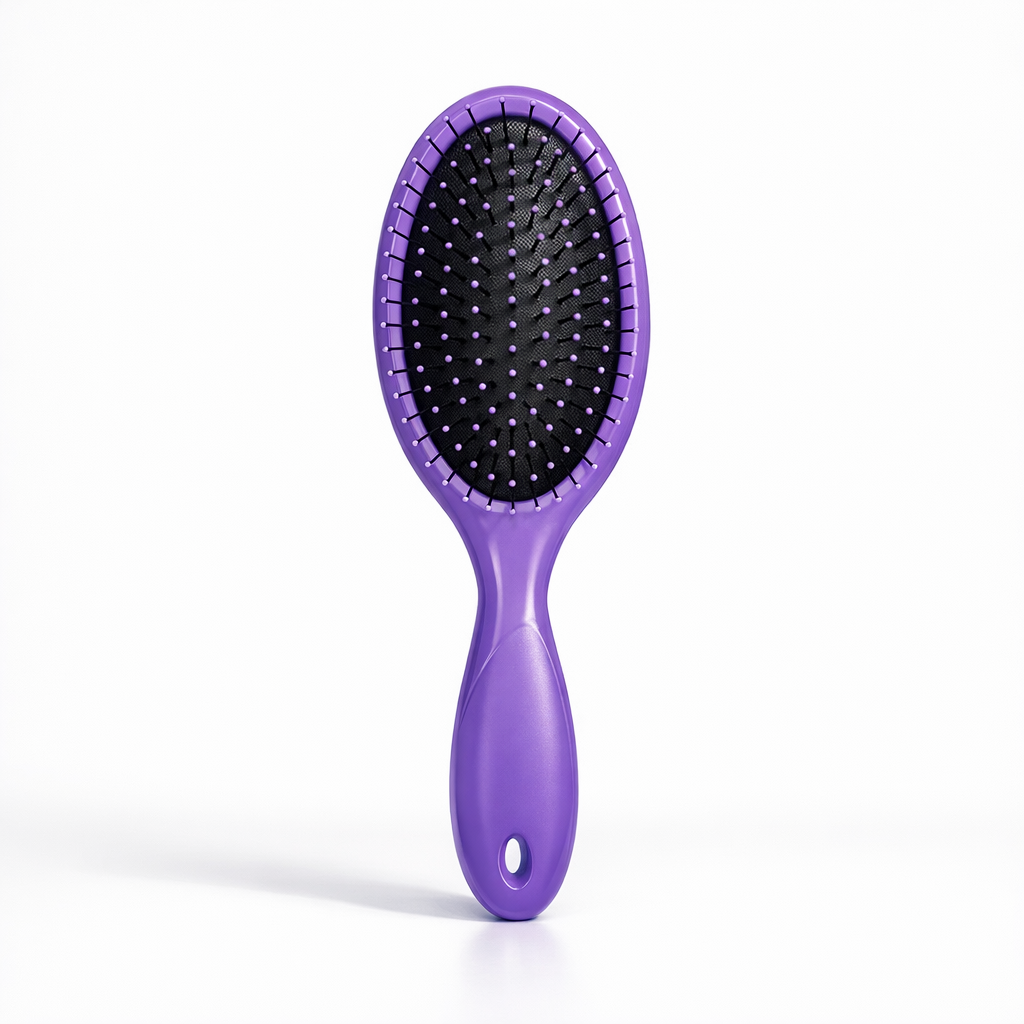
Wet Brush Original Detangler
Verdict: 8.2/ 10.
You might also like: How to Use a 32 mm Curling Iron for Soft Waves.