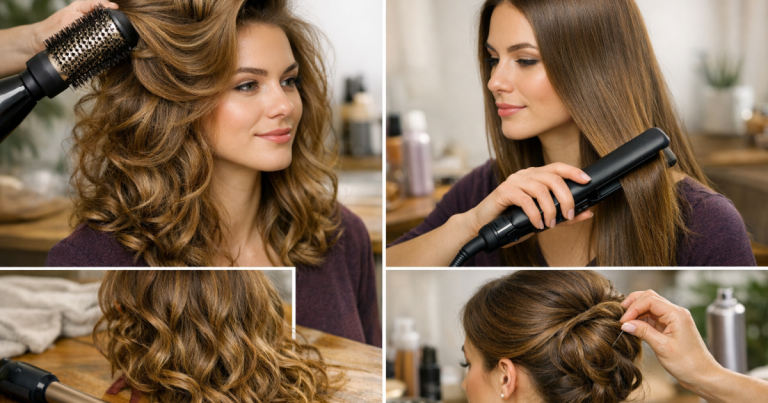
The easiest way to get more consistent hair is to stop starting with the tool and start with the finish you actually want. A styling routine works best when every step, from wash day to final hold, is chosen to support one clear result: sleekness, bounce, soft waves, definition or lived-in texture.
That does not mean doing the same thing every day. It means knowing which prep, drying method, shaping technique and finishing product suit the look you are aiming for, while still respecting your real texture, density and level of dryness.
In brief
- Choose the finish first: sleek, bouncy, wavy, defined or textured.
- Match prep to the result: smoothing for polish, lightweight lift for volume, moisture and hold for curls.
- Work with your hair type rather than against it; fine, dense, curly and coily hair need different levels of product and tension.
- Decide where heat is genuinely useful and where heatless methods can give a softer result with less daily stress on the hair.
- Review the outcome after a full day, not just in the mirror straight after styling.
Start with the finish, not the tool
A tool can only enhance the direction you have already set. If the finish is meant to be sleek, the plan should reduce puffiness, align the cuticle and control flyaways. If the goal is bounce, the plan should keep the roots light and allow the lengths to move. If you want soft waves, the focus is bend, hold and a little separation rather than heavy smoothing.
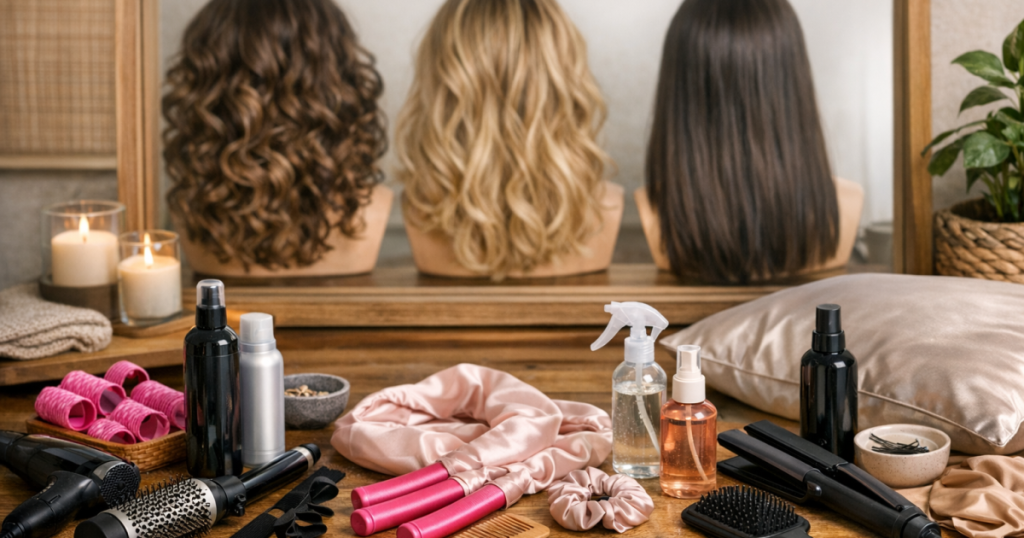
It helps to put your desired finish into one of five practical groups:
- Sleek and polished: minimal frizz, smooth surface, controlled ends and a flatter silhouette.
- Bouncy and lifted: movement through the lengths, volume at the roots and a rounded shape.
- Soft waves: loose bends, touchable texture and enough hold to stop the shape dropping too quickly.
- Defined curls or coils: visible curl pattern, controlled frizz and enough moisture to keep the shape supple.
- Lived-in texture: airy, undone movement with intentional separation rather than a perfectly uniform shape.
If you are still deciding between polish, bounce and texture, the guide to choosing the right styling method is a useful next step before changing your whole routine.
Build the steps backwards from the result
Once the finish is clear, the order becomes much easier: cleanse and condition for the right level of slip, remove water in a way that protects the shape, create the form, set it, then finish lightly. A good styling routine is less about adding more steps and more about making sure each step has a job.
For a sleek finish
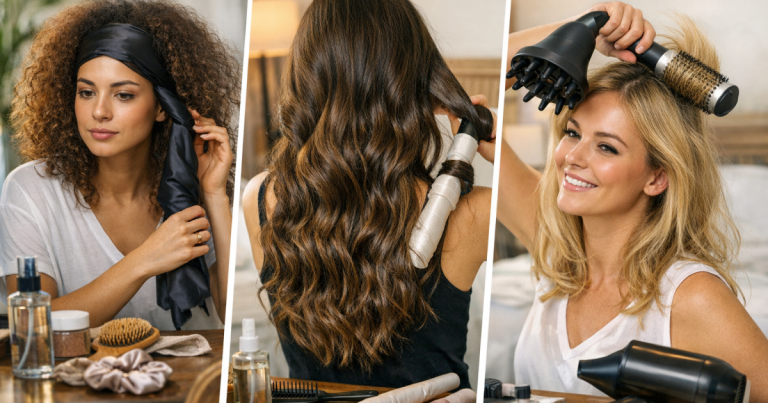
Start by reducing anything that encourages puffiness. Use a conditioning step that gives slip without leaving the roots greasy, detangle gently, and remove excess water with a soft towel or hair wrap rather than rough rubbing. When drying, work in controlled sections and direct the hair downwards if you are using airflow. The finish usually needs a small amount of serum, cream or oil through the mid-lengths and ends, not a heavy layer near the scalp.
Fine hair should keep smoothing products light and concentrated on the ends. Thick or coarse hair can usually take richer products, but the key is still distribution: too much in one area can make the surface look coated rather than polished.
For bounce and volume
Volume starts before the brush comes out. Heavy masks, oils close to the scalp and too much leave-in product can make roots collapse before the style has a chance to set. Focus conditioner on the lengths, keep the root area clean and use a light volumising product only where lift is needed.
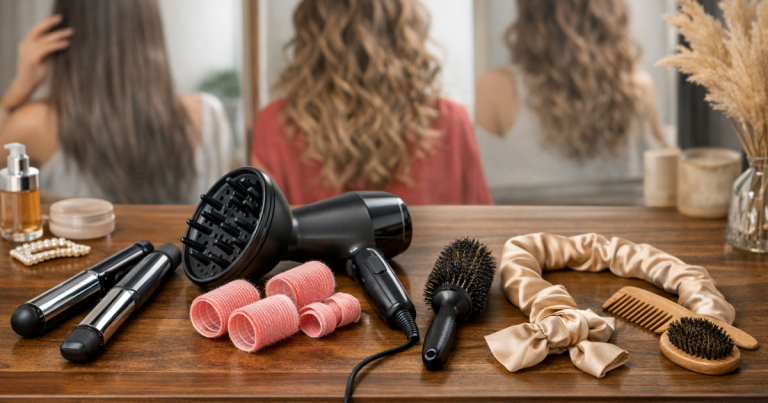
For the shape itself, think upward direction and cooling time. Round brushing, root lifting, Velcro rollers and clipped sections can all help, but the shape lasts better when the hair cools or sets in the position you want it to keep. If your ends are dry, add softness there separately rather than applying a rich product all over.
For soft waves
Waves need a balance of moisture, grip and restraint. If the hair is too slippery, the bends may fall out; if it is too dry, the result can look fluffy rather than soft. A light mousse, curl cream or styling spray can help depending on your texture, followed by braids, twists, a satin heatless curling rod or loose wrapped sections.
Let the hair become fully dry before taking the shape down. Separating too early is one of the quickest ways to lose definition and create frizz. When you release the waves, use fingers rather than a brush unless you specifically want a softer, brushed-out finish.
For defined curls and coils
Curl definition depends on water, product distribution and leaving the shape alone while it sets. Apply leave-in, cream or gel in sections so the product reaches the inner layers, not just the visible canopy. Scrunching, finger-coiling, brush styling or twisting can all work, but the method should suit your natural pattern and how much definition you want.
For coily or very dense hair, smaller sections often give more reliable results. For loose curls or waves, too much product can stretch the pattern, so a lighter hand may give a better spring. If you are unsure where your hair sits, matching tools to your real hair type can help you decide how much tension, product and drying support makes sense.
Adjust for texture, density and condition
Hair type is not just straight, wavy, curly or coily. Density, strand thickness and condition change how a finish behaves. Two people can both have wavy hair, yet one needs barely any product while the other needs sectioning, stronger hold and a longer set time.
- Fine hair: build shape with lighter products, root lift and minimal oil. Too much cream can make the finish look flat even if the tool technique is good.
- Thick or dense hair: sectioning matters. Large sections may look styled on the outside while the inner layers remain damp, puffy or uneven.
- Dry or colour-treated hair: prioritise moisture and gentle handling before asking for shine or definition. A polished finish is harder to achieve when the ends are rough.
- Low-porosity hair: avoid layering too many rich products at once. Build slowly and check whether the hair feels coated.
- High-porosity hair: use products that help seal in moisture and give hold, especially if frizz appears soon after drying.
Choose heatless, heated or a mix
The desired finish should decide how much heat you use, not habit. Heatless methods are excellent for soft waves, overnight bend, gentle volume and reducing repeated heat exposure. Heated tools can be useful when you need a smoother surface, faster drying or more controlled root direction.
A blended approach often works well at home. For example, you might rough-dry roots only, then set the lengths in rollers. Or you might use a heatless curling rod overnight and polish the front pieces in the morning. The point is not to avoid heat at all costs, but to use it where it gives a clear benefit.
If your main aim is to reduce heat without losing shape, the site’s heatless routines for fine, thick and curly hair give more targeted starting points.
Common finish problems and what they usually mean
- The style drops within an hour: the hair may be too soft, too damp when released, or lacking enough hold for your texture.
- The roots go flat but the ends look styled: the prep may be too heavy near the scalp, or the roots may not have been lifted while drying or setting.
- The hair looks frizzy rather than textured: it may need more water during product application, gentler drying or a stronger setting product.
- The finish feels stiff: the hold product may be too strong, applied unevenly or not softened once dry.
- The ends look dry after styling: the routine may need more conditioning before styling, a small finishing oil on the ends, or less repeated brushing.
Things readers ask
Can one routine give both sleekness and volume?
Yes, but it needs a split approach: keep the roots light and lifted, then smooth the mid-lengths and ends. Heavy smoothing products all over usually reduce volume.
Should products or tools come first?
Products set the foundation, tools create or refine the shape. If the prep is wrong for the finish, even a good tool can struggle to make the style last.
Why does my hair look good at first and frizz later?
The hair may not have been fully dry, the product may not suit your porosity, or the finish may need more hold. Humid weather can also expose weak points in the routine.
Are heatless methods enough for thick hair?
They can be, but dense hair usually needs smaller sections, more drying time and enough tension while setting. Taking down heatless styles too early often leads to puffiness.
How often should I change my routine?
Change one part at a time. Adjust prep, drying or hold separately so you can see what actually improves the finish.
Why it matters
A reliable finish is rarely about copying someone else’s exact steps. It comes from understanding what your hair needs to do: lie flatter, lift at the roots, hold a bend, form a curl or keep texture without frizz. Once you know that, every product and technique has a clearer purpose.
The most useful styling routine is the one that works with your real hair on an ordinary morning, not just under perfect conditions. Start with the finish, adapt for your texture and density, then refine the smallest step that is stopping the result from lasting.