Simple tools can make the biggest difference when your hair is damp, swollen and easy to snag. This Cricket Ultra Smooth Wide Tooth Comb review looks at whether a low-fuss comb deserves a place beside your brush, mask and heatless styling kit, rather than being another bathroom-drawer extra.
The short version: this is a sensible buy if you want gentler detangling, easier conditioner distribution and less disruption to waves, curls or coils. It is not a miracle tool for severe knots, and it will not give the tension or polish of a styling brush, but for everyday use it does its job well.
Product overview
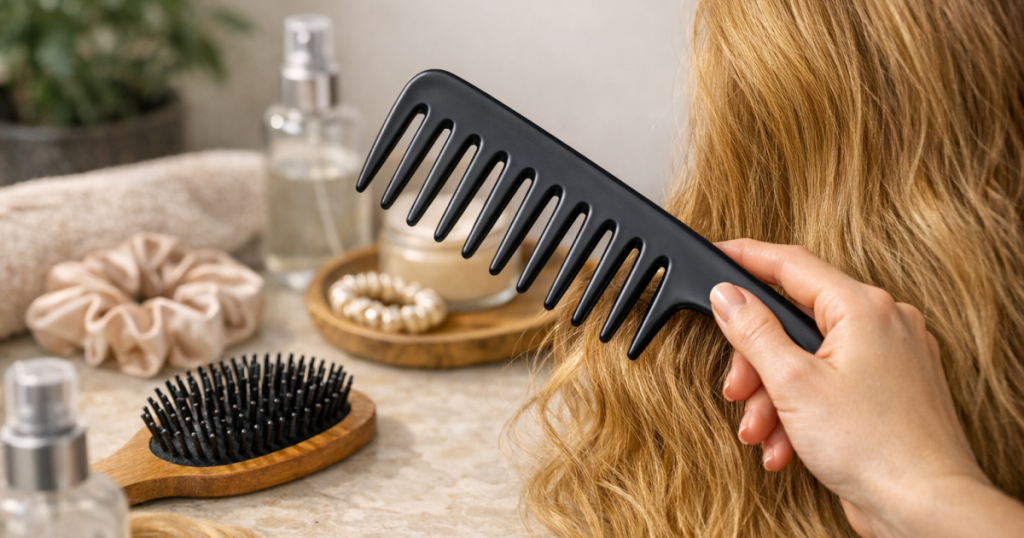
The Cricket Ultra Smooth Wide Tooth Comb is a wide-tooth comb designed for detangling, sectioning and working product through the hair without the close tooth spacing of a fine comb. That makes it most relevant for people who find ordinary combs too grabby, or who want to preserve natural texture rather than brushing it out.
Its main appeal is simplicity. There are no settings to learn, no heated plates to manage and no styling technique that needs salon-level confidence. You use it where a brush might be too aggressive: after conditioning, before heatless styling, when separating curls, or when loosening a set that has gone a little too uniform.
For a UK at-home routine, it sits neatly between wash-day care and styling. It can help you prep hair before a silk wrap, satin heatless curling rod or Velcro rollers, but it is not the tool that creates volume, waves or hold on its own. Think of it as a preparation and finishing tool rather than the star of the finished style.
Key specs
- Product type: wide-tooth comb for detangling, sectioning and product distribution.
- Best use cases: damp detangling with conditioner, working through masks or leave-in products, separating curls and smoothing hair before heatless styling.
- Hair-type fit: especially useful for wavy, curly, coily, thick or easily tangled hair; still usable on straight hair if you prefer a gentler comb.
- Finish goal: lower-friction detangling and texture preservation rather than high shine, blow-dry tension or sleek straightening.
- What to verify before buying: current size, exact colour, handle style and retailer listing details, as comb variations can change between stockists.
- Maintenance: rinse away conditioner or styling residue regularly and dry before storing to keep the teeth clean and easy to use.
Pros and cons
Pros
- Wide teeth make it more forgiving on textured, fragile or damp hair than a narrow fine-tooth comb.
- Useful for distributing conditioner, masks, leave-in cream or lightweight oil through mid-lengths and ends.
- Helps preserve wave and curl clumps better than heavy brushing for many hair types.
- Easy to clean, easy to store and simple enough to use in almost any routine.
- Works well as a supporting tool for heatless styling, especially when you need neat sections before wrapping or rolling.
Cons
- Not the right tool for creating strong tension, a smooth blow-dry shape or polished root lift.
- May feel too minimal if you want a brush that detangles large sections quickly.
- Can still pull if you start at the roots on tangled hair rather than working from the ends upwards.
- Does not replace a dedicated styling brush, round brush or roller set for shape and volume.
- Buyers should check current retailer details carefully if colour, size or handle shape matters to them.
Performance in real use
Detangling on damp hair
This is where the comb makes the most sense. Used after conditioner or a slip-giving mask, the wide teeth help separate strands without compacting the hair into a brushed-out cloud. It is still important to work slowly from the ends, then move upwards in sections. On dense or very knot-prone hair, smaller sections will make a bigger difference than forcing the comb through one large mass.
It is better for gentle control than speed. If your main issue is a few knots around the nape, tangles after washing or clumped ends after a product-heavy routine, the comb feels practical. If your hair mats easily or has significant tangling after protective styles, you may need more patience, more slip and a staged detangling routine rather than expecting one comb to do all the work.
Texture preservation
For wavy, curly and coily hair, the biggest benefit is that it does less to disturb the natural pattern than a dense brush. You can use it in the shower to align strands with conditioner, then avoid aggressive brushing once hair starts drying. That matters because many people create frizz not with the wrong styler, but with the wrong prep tool.
Porosity changes the experience too. Low-porosity hair may need more water and a lighter product layer so the comb glides instead of dragging over coated strands. High-porosity hair may benefit from richer slip and slower sectioning because raised or damaged cuticles can catch more readily. For a deeper tool-matching approach, see how porosity affects styling-tool choice.
Product distribution
The comb is particularly useful with conditioner, hair masks and leave-in products because it helps spread product more evenly than fingers alone. It can also help prevent the classic problem of heavy product sitting at the surface while the inner layers stay dry or tangled.
With oils, use a lighter hand. A comb can carry oil down the hair shaft effectively, but too much product may make fine hair look flat or separated. For thicker curls and coils, combing a small amount through damp ends can help with softness before a wrap or set, as long as the chosen product suits your hair’s weight tolerance.
Styling support
As a styling tool, it is best in supporting roles. Use it to part sections before heatless curls, to loosen waves after rollers, or to soften a style that looks too perfect. It will not create the tension of a paddle brush, the bounce of a round brush or the set of Velcro rollers, but it can make those methods look less forced.
For straight hair, the comb is useful when you want to detangle without over-polishing or creating static. For fine hair, it is best used sparingly through the ends rather than repeatedly through the roots. For thick hair, the key is sectioning: the comb performs better when it is allowed to move through manageable panels rather than being used like a rake.
Comfort, durability and upkeep
A wide-tooth comb should feel smooth against the scalp and not sharp along the teeth. With any comb, check the edges when it arrives: you want clean, even teeth with no rough seams that could catch. That is a practical quality check rather than a luxury detail, because rough edges can undo the whole point of gentler detangling.
Maintenance is straightforward. Rinse away conditioner, gels or creams, wipe the comb dry and avoid leaving it buried under heated tools or heavy bottles where teeth could be bent or damaged. If you use styling creams regularly, a quick clean stops residue transferring back onto freshly washed hair.
Who it’s best for / who should skip it
The Cricket Ultra Smooth Wide Tooth Comb is best for people who want a gentler detangling step without turning wash day into a complicated routine. It suits wavy hair that loses definition when brushed, curly hair that needs slip and sectioning, coily hair that benefits from careful product distribution, and thicker hair that requires controlled detangling before styling.
It is also a good fit if you are building a more heatless routine. Before wrapping hair, using rollers or setting bends overnight, a wide-tooth comb can help you remove tangles and create cleaner sections without making hair too fluffy. That is particularly helpful when the aim is soft movement rather than a perfectly blown-out finish.
You should skip it if you mainly want root lift, a sleek blow-dry shape or fast detangling through heavy knots. A comb is not a substitute for a styling brush, and it will not add hold or structure. If your hair is very fine and rarely tangles, you may only need it occasionally for masks or gentle wet-combing rather than daily use.
Alternatives
If you need more tension, a flexible detangling brush may suit you better than a wide-tooth comb, particularly if your hair is thick and you want to work through larger sections. If your main goal is volume, bend or a smoother finish, the better alternative is not another comb but a styling method that matches your desired result.
For choosing between brushes, dryers and rollers by real hair behaviour rather than wishful thinking, read how hair texture and density affect tool choice. That is the more useful next step if you are unsure whether your issue is tangling, lack of volume, frizz, density or the wrong styling method.
Within a routine, the closest alternatives are a shower detangling brush for faster slip-based detangling, or finger-detangling for the most delicate curl preservation. The Cricket option sits in the middle: more control than fingers alone, but less disruption than many brushes.
FAQ
Can I use the Cricket Ultra Smooth Wide Tooth Comb on wet hair?
Yes, but use it carefully with conditioner or enough slip, and start at the ends before moving upwards. Hair is more vulnerable when wet, so slow sectioning matters.
Is it good for curly hair?
It is a strong fit for many curl routines because the wide teeth can detangle and distribute product without breaking up the curl pattern as much as dense brushing.
Will it help with frizz?
It can help reduce avoidable frizz caused by rough detangling. It will not fix frizz caused by humidity, dryness, damage or a styling product that does not suit your hair.
Can it replace a brush?
Not completely. It can replace a brush for gentle detangling or curl separation, but a brush is still better when you need tension, smoothing or faster work through large sections.
Should fine hair use a wide-tooth comb?
Fine hair can use one, especially on damp ends or with masks, but avoid over-combing at the roots if your hair becomes flat easily.
Verdict + score
The Cricket Ultra Smooth Wide Tooth Comb is a worthwhile, uncomplicated tool for detangling, product distribution and texture-friendly prep. Its strength is not dramatic transformation; it is making the steps around washing and heatless styling feel smoother, calmer and less damaging when used with patience.
It is most convincing for wavy, curly, coily, thick or tangle-prone hair, and less essential for people who need lift, tension or fast styling control. Check the current retailer listing for the exact version you are buying, then judge it as a practical support tool rather than a full styling solution. Score: 8.2/10.
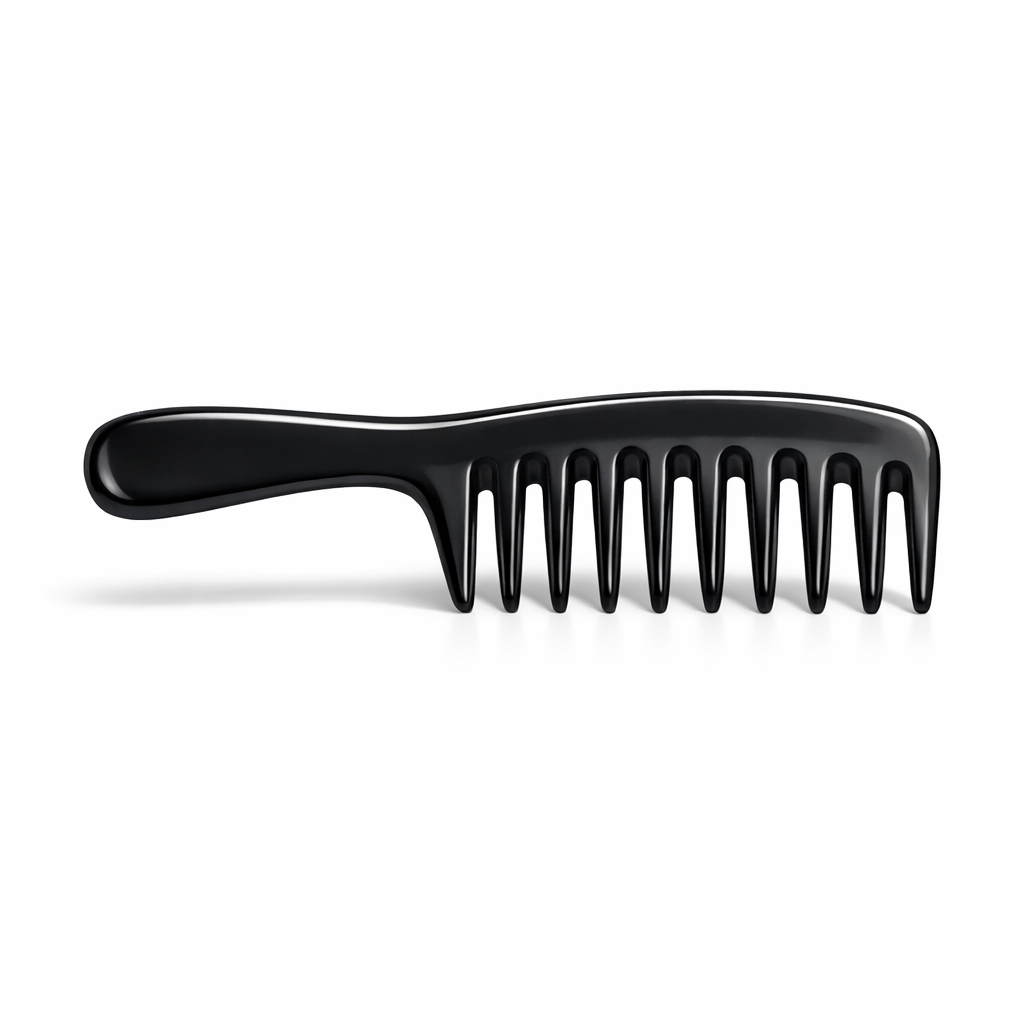
Cricket Ultra Smooth Wide Tooth Comb
Check the current retailer listing for the exact version you are buying, then judge it as a practical support tool rather than a full styling solution.
You might also like: Hair Styling Goals Explained: Tools for Volume, Smoothness and Hold.