A good routine should work with your hair’s natural behaviour, not ask it to become something else overnight. The most reliable heatless styling routines start with the right level of dampness, enough tension to shape the hair, and a realistic plan for your texture, density and drying time.
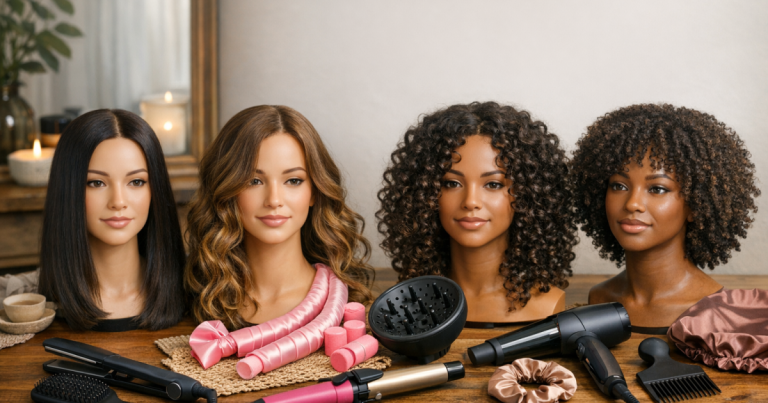
Fine hair usually needs light prep and soft tension so it does not collapse. Thick hair needs sectioning, longer setting time and stronger anchoring. Curly hair needs curl-pattern respect: the aim is definition, stretch or volume without roughing up the cuticle. The same satin rod, roller or wrap can behave very differently across these hair types, so the routine matters as much as the tool.
Main points
- Fine hair sets quickly but can lose shape if overloaded with product or wound too tightly.
- Thick hair benefits from smaller sections, secure clips and more time to dry fully before release.
- Curly hair responds best when the routine supports clumps rather than brushing them apart dry.
- Heatless styling works best on hair that is slightly damp, not wet, unless your hair dries very quickly.
- A silk or satin surface can reduce friction, but it will not replace good sectioning, prep and timing.
Why hair type changes the routine
Heatless styling relies on moisture, shape and time. When hair is damp, hydrogen bonds inside the hair fibre temporarily shift; as the hair dries, it takes on the shape it has been held in. That is why a loose wrap can create soft bends, a narrow rod can create a stronger curl, and large rollers can add lift at the root.
The catch is that different hair types release moisture at different speeds. Fine hair can go from damp to dry quickly, then drop if the curl is too heavy. Thick hair may feel dry on the outside while the inner layers are still damp, which is one of the main reasons curls fall flat after removal. Curly hair may already have a defined pattern, so aggressive wrapping or brushing can create frizz instead of polish.
If you are deciding whether to avoid heat entirely or mix methods, it is worth reading the wider guide to choosing between heatless and heated styling for curls, waves and volume. The most practical answer is often not all-or-nothing; it is about using the least heat needed for the finish you want.
A fine-hair routine that keeps volume
Fine hair is usually the most responsive to heatless shaping, but also the easiest to overwhelm. The goal is airy hold: enough grip to keep the bend, not so much product that the roots turn flat or the lengths feel coated.
Prep
Start with clean or second-day hair that has a little natural grip. If the hair is freshly washed and very slippery, use a light mist of water through the mid-lengths only, then add a small amount of lightweight mousse or styling spray if your hair normally needs help holding shape. Avoid applying oils or rich creams before setting; they can make fine hair look separated by morning.
Hair should feel barely damp. If it feels wet when you press it between your fingers, wait longer. Fine hair wrapped too wet can dry into a limp, dented shape rather than a soft curl.
Setting method
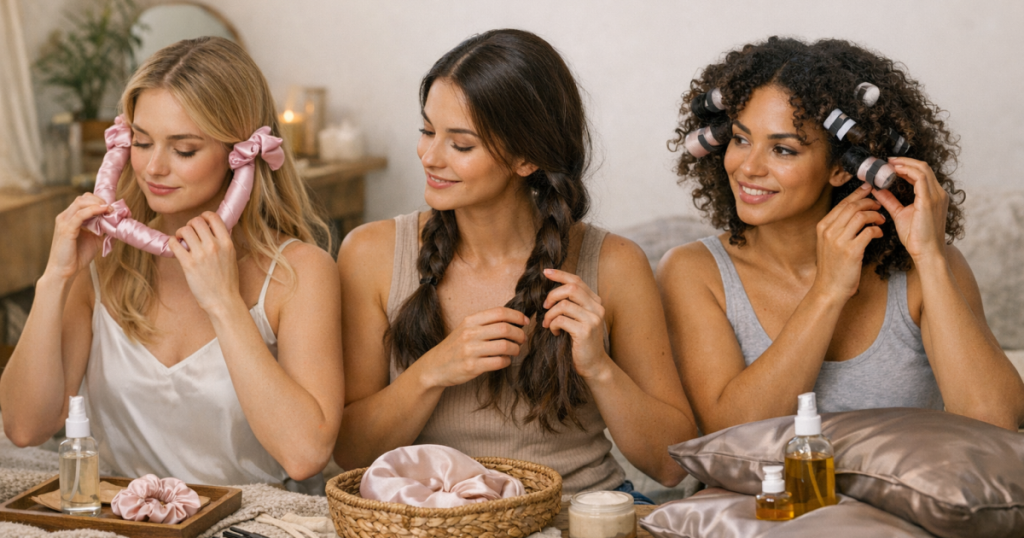
For loose waves, place a satin rod across the crown and wrap medium sections away from the face. A product such as the Kitsch Satin Heatless Curling Set is a recognisable example of this style of tool: soft, fabric-covered and designed for overnight use. The key is not to pull fine hair too tightly around the rod. Gentle tension gives shape; excessive tension can flatten the root and create a noticeable ridge near the parting.
If you prefer root lift to curls, use a few large Velcro rollers on almost-dry hair around the crown. Roll backwards from the hairline, leave the ends smooth, and remove only once the hair is fully dry. A cool blast from a hairdryer before removal can help set the shape if you are not aiming for a strictly no-heat routine.
Release and finish
Do not brush immediately. Unwrap, let the hair sit for a minute, then separate with fingers. If the curl looks too formed, shake at the roots rather than combing through the lengths. A tiny amount of dry texture spray at the crown can help, but heavy hairspray can make fine hair stiff and then cause it to drop as the day goes on.
A thick-hair routine that actually dries
Thick hair can produce beautiful heatless waves, but it needs a more deliberate setup. The most common mistake is using sections that are too large. The outside dries, the inside stays damp, and the whole style softens within an hour.
Prep
Begin earlier than you think. After washing, towel-dry with a smooth towel or microfibre towel until the hair is no longer dripping. Thick hair should be around mostly dry before wrapping; the roots can hold moisture for a long time, so focus on getting the scalp area dry first.
Detangle thoroughly before setting. A good detangling brush can reduce snagging, but use it before styling rather than after release. If your hair is prone to puffiness, apply a light smoothing cream or a few drops of argan oil treatment through the ends only. Avoid saturating the mid-lengths, because product plus moisture can extend drying time.
Sectioning and securing
Work in smaller, cleaner sections than you would for fine hair. Four to six sections usually behave better than two large ones. Twist each section smoothly around the rod or wrap, keeping the ends tucked so they do not dry straight. Secure without crushing the curl pattern; strong clips help here, and the Scunci No-Slip Grip Hair Clips Review is useful if your main issue is clips sliding out of dense hair.
For thick hair, a silk hair wrap or bonnet over the set can help reduce friction while you sleep. It also keeps the sections in place, which matters if your hair is heavy enough to loosen softer scrunchies overnight.
Morning release
Check that the inner layers are dry before unwrapping everything. If the underneath still feels cool or damp, leave the style in longer while you get ready. Once released, separate from the ends upwards with your fingers. Thick hair often expands after brushing, so save a wide-tooth comb for the very ends or skip it entirely if you want a more defined wave.
A curly-hair routine that respects the curl pattern
Curly hair does not always need a heatless curling tool to create curl; it often needs a method that preserves definition, reduces frizz and controls shape overnight. The right routine depends on whether you want to enhance your natural pattern, stretch it into softer waves, or add volume at the roots.
For definition
Style on freshly washed or refreshed hair while the curl clumps are still intact. Apply your usual leave-in or curl cream, then use a microfibre towel to remove excess water without roughing up the surface. The Only Curls Microfibre Hair Towel is a named example of the kind of smooth, absorbent towel many curly-haired readers use to reduce friction compared with standard towelling.
Instead of wrapping curls tightly around a rod, try loose finger-coiling in areas that need help, then plop into a T-shirt or microfibre towel for a short period. Once the hair is no longer wet, switch to a silk hair wrap or satin bonnet to let the shape settle without compression.
For stretched waves
If you want to soften curls into waves, use larger sections and a loose robe-belt or satin-rod wrap once the hair is partly dry. Keep the wrap smooth but not tight. Curly hair can frizz if forced against its natural direction, so follow the way your curls already turn where possible. For tighter curl patterns, banding with soft hair ties along the length can create gentle stretch without direct heat.
For volume
Root volume comes from lift while drying, not from disturbing dry curls later. Place small clips at the roots while the hair is damp, lifting curls away from the scalp. A curl-friendly brush such as the Denman D3 Original Styler can help define wet curls for some textures, but it should be used with slip and care; dry brushing curls usually creates expansion rather than definition.
Where routines overlap across hair types
Although the details change, the most reliable habits are shared. Hair should be detangled before it is set. The tool should feel secure but not painful. Ends need attention because they reveal the quality of the set: tucked ends look polished, while loose ends can dry straight or crimped.
Fabric choice matters too. Satin and silk reduce friction compared with rougher materials, which is helpful for fine hair that dents easily, thick hair that tangles overnight and curly hair that frizzes. An accessory such as an Invisibobble Original can be useful for securing sections without a harsh crease, although placement and tension still matter more than the accessory alone.
Drying time is the other shared factor. If your style keeps failing, the issue may not be the technique; it may simply be that the hair is too wet when wrapped or not fully dry when released. This is particularly common in cooler UK homes, where overnight drying can be slower in winter or in rooms with less airflow.
When heatless is not the most practical route
Heatless styling is gentle and convenient when the routine suits your hair, but it is not automatically the right answer for every finish. If you want glassy straight hair, a highly polished blowout or very uniform curls on resistant hair, a low-heat or controlled-heat tool may be more predictable. The practical aim is not to reject heat entirely; it is to use it intentionally and avoid daily high-temperature styling when a lower-effort method would do the job.
For fine hair, that might mean heatless waves most days and a brief root-lift tool when you need extra polish. For thick hair, it might mean rough-drying the roots before wrapping lengths. For curly hair, it might mean diffusing on a low or medium setting to set the cast, then using a silk wrap overnight to preserve the result.
If you want a broader view of which tool types make sense for different textures, the guide to at-home styling tools for every hair type is a useful next step.
Common routine fixes
- Curls drop quickly: start with slightly drier hair, use smaller sections, and avoid rich prep products before setting.
- Hair feels frizzy after release: reduce friction overnight, remove the tool more slowly, and separate with oiled or product-smoothed fingertips.
- Ends look straight: wrap the ends neatly around the tool and secure them flat rather than leaving them loose.
- Roots look flat: avoid pulling the first wrap too tightly and add lift with rollers or clips at the crown.
- The style feels uneven: match section sizes on both sides of the head and keep the wrapping direction consistent.
- Hair is still damp in the morning: begin with drier hair, use fewer heavy products and allow more airflow around the set.
Final thoughts
The best heatless styling routines are not complicated, but they are specific. Fine hair needs lightness and root freedom. Thick hair needs section control and full drying time. Curly hair needs methods that protect clumps, reduce friction and shape the hair without fighting its pattern.
Once you understand those differences, heatless styling becomes less of a gamble. The same tool can create soft fine-hair volume, long-lasting thick-hair waves or curl-preserving overnight control, provided the prep and release suit the hair in front of you.