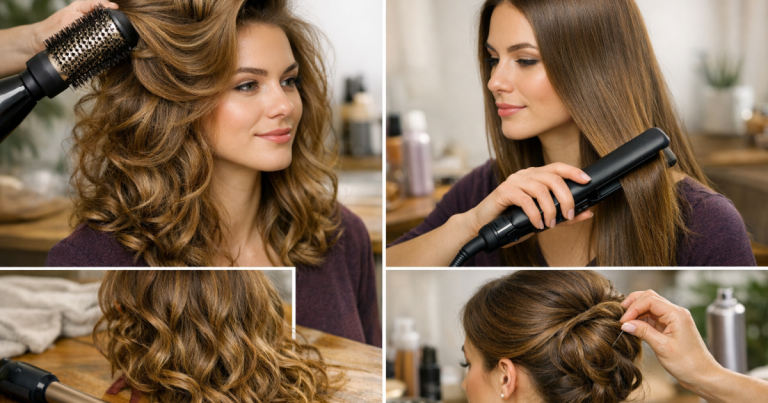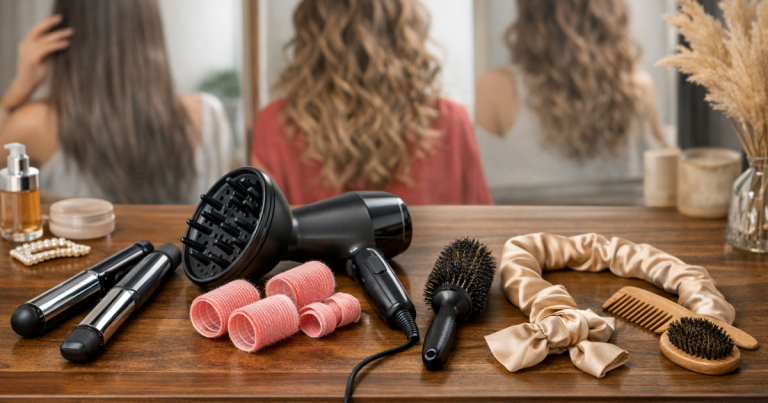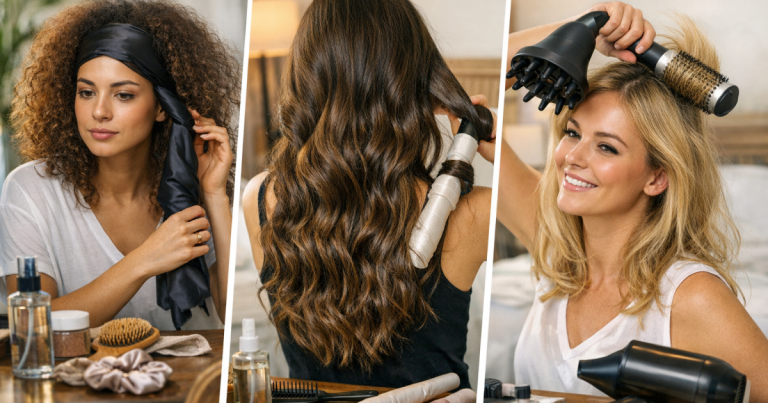
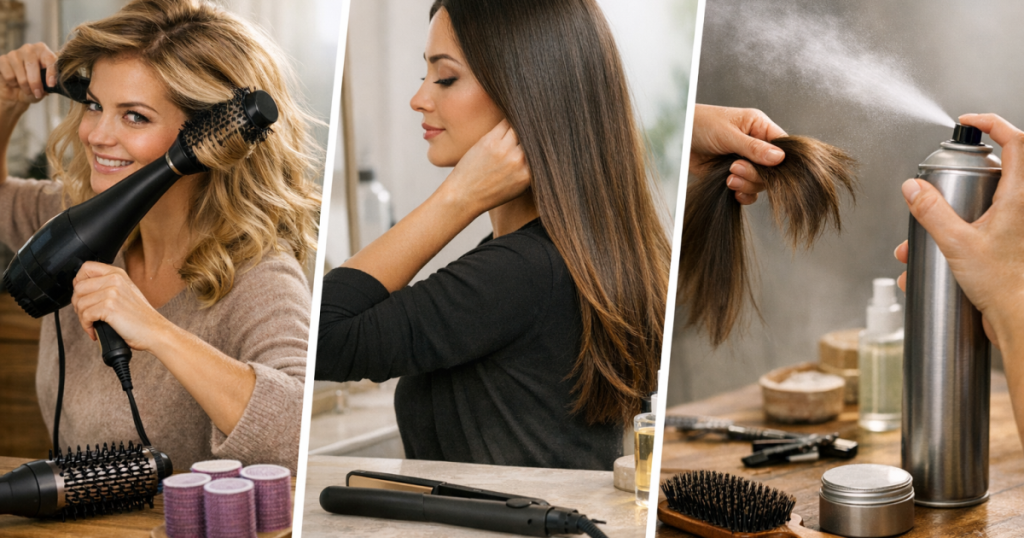
Good styling gets easier when you stop choosing tools by trend and start choosing them by finish. The three hair styling goals most at-home routines revolve around are volume, smoothness and hold, but each one asks something different of your brush, dryer, rollers, products and prep. Fine hair can lose lift quickly, coarse hair can resist a smooth finish, and curls may need definition without being stretched out. The aim is not to own every tool; it is to understand which method supports the result you actually want.
In brief
- For volume, focus on lift at the roots, airflow control, lightweight prep and tools that create shape without flattening the lengths.
- For smoothness, prioritise detangling, tension, controlled drying, surface polish and moisture balance rather than simply adding more heat.
- For hold, choose methods that set the hair into shape, then support that shape with the right level of product and minimal disruption.
- Your hair type, density and porosity affect the result as much as the tool itself.
- Heatless methods can be excellent for shape and hold, but they need enough drying or setting time to work properly.
Why the finish should decide the tool
A tool is only “right” when it helps the hair behave in the way you want. A round brush that gives fine hair bounce may feel slow and tiring on very dense hair. A smoothing brush that tames frizz on straight hair may disturb a curly pattern. Velcro rollers can give airy lift, but they will not create the same sleek tension as a paddle brush and dryer combination.
Once the main hair styling goals are separated, the routine becomes more logical. Volume needs elevation and a bit of grip. Smoothness needs alignment and controlled finish. Hold needs memory: the hair must cool, dry or set in the shape you want it to keep. That is why the same person might use rollers at the crown, a detangling brush through the mids, and pins or a satin wrap at night. The goal changes by zone as well as by day.
Goal one: volume without puffiness
Volume is not just “bigger hair”. Good volume looks intentional: lifted at the roots, balanced through the sides and still touchable. The most common mistake is trying to create volume only at the ends, which can make hair look wide rather than lifted. Root direction matters more.
Tools and methods that usually help
- Velcro rollers: useful for crown lift, fringe shaping and soft bounce. They work best when hair is slightly warm or barely damp, then allowed to cool or dry in position.
- Round brushes: good for controlled lift while drying, especially around the face and crown. Smaller barrels create more curve; larger barrels give softer movement.
- Diffusers: helpful for wavy, curly and coily hair when the aim is fullness without stretching the pattern too much.
- Root clips: useful for curls and waves that collapse at the scalp while drying.
- Heatless curling rods or soft rollers: better for overnight bend and body through the lengths than for sharp root lift.
Fine hair usually needs less product and more placement. Too much cream, oil or heavy conditioner can make the roots drop before you have even styled. Medium and thick hair may need sectioning so the root area dries properly; otherwise the top layer can look finished while underneath remains heavy and flat.
For curly and coily textures, volume often comes from drying position, root separation and careful picking rather than brushing. A wide-tooth comb or hair pick can open the shape once the hair is fully dry, but using it too early can cause frizz and weaken definition.
Goal two: smoothness without a stiff finish
Smoothness is about the cuticle lying more evenly and the hair sitting in a consistent direction. It does not always mean poker-straight hair. Smooth waves, polished curls and sleek ponytails all rely on control, but they use different methods.
The most reliable starting point is detangling. A brush or comb should glide through prepared hair without dragging. If the hair snags, the styling tool has to work harder and the finish often looks rougher. For many people, smoothness also depends on wash-day choices: a conditioner that gives slip without leaving a coated feel, enough rinse time, and a towel-drying method that does not rough up the surface.
Porosity can change how smoothness products behave. Low-porosity hair may reject heavier layers and look coated, while high-porosity hair may drink up moisture and still feel rough if it is not sealed in some way. For a deeper explanation, see the guide to low porosity vs high porosity hair and how that affects styling tools.
Tools and methods that usually help
- Paddle brushes: useful for smoothing straight and slightly wavy hair, particularly when paired with controlled airflow.
- Boar-bristle or mixed-bristle brushes: can help distribute natural oils and polish the surface, though they may not detangle dense or curly hair well on their own.
- Microfibre towels or cotton T-shirts: reduce friction during drying compared with rough towel rubbing.
- Silk or satin wraps: help preserve a smoother finish overnight by reducing friction against bedding.
- Lightweight oils or serums: can add surface polish, but they should be used sparingly on fine or low-density hair.
If you use heat, smoothness normally comes from moderate tension and steady movement rather than repeatedly going over the same section. If you prefer heatless styling, wrapping, setting, braiding or using soft rollers can encourage a neater surface, but the hair must be properly detangled first.
Goal three: hold that still moves
Hold is the difference between hair that looks good for ten minutes and hair that keeps its shape through a commute, a damp school run or a long day at work. It is not always about using a stronger hairspray. Often, hold improves when the hair is set correctly before product is added.
For heatless curls, hold depends on starting moisture level, wrapping tension and time. Hair that is too wet may not dry by morning; hair that is completely dry and very slippery may not take enough shape. Slightly damp hair, or dry hair with a light styling mist, often gives a better balance. For rollers, clips and pins, the set should be left alone until the hair has cooled or dried fully.
Tools and methods that usually help
- Bobby pins and sectioning clips: create structure for updos, pin curls, fringe setting and root control.
- Soft hair ties: hold ponytails, buns and overnight styles with less obvious creasing than tight elastics.
- Foam, mousse or styling lotion: adds light grip before setting, especially useful for fine or very silky hair.
- Flexible hairspray: supports movement without making hair feel lacquered.
- Satin scrunchies or wraps: help preserve the style overnight without roughening the surface too much.
High-density hair often needs stronger sectioning and more drying time to hold a shape. Fine hair may hold a bend quickly but lose it if overloaded with finishing products. Curly and coily hair usually benefits from hold products that support clumping and definition, then gentle drying without too much touching.
How hair type changes the goal
The same finish can require a different route depending on pattern, texture and density. Straight hair may show oil and product build-up quickly, so lightweight prep matters. Wavy hair can swing between flat roots and frizzy ends, so it often needs root lift plus gentle definition. Curly hair needs hold without disrupting clumps. Coily hair may need moisture, stretch control and protective shaping rather than aggressive smoothing.
Density is just as important. Low-density hair can look overwhelmed by wide brushes, heavy oils or large amounts of mousse. High-density hair may need stronger sectioning, more drying time and tools that can reach the inner layers. If you are not sure where your hair sits, the broader guide to matching tools to your real hair type is a useful next step.
Matching tools to the result you want
Use the finish as the first filter, then adjust for hair type. This keeps the routine practical rather than crowded with tools that duplicate each other.
When you want lift and bounce
- Choose rollers, round brushes, root clips or a diffuser depending on your texture.
- Keep conditioners and oils away from the root area if your hair collapses easily.
- Dry or set the roots in the opposite direction to where they naturally fall for more lift.
- Let the hair cool or dry before brushing out; disturbing it too early reduces bounce.
When you want a smooth, polished finish
- Start with slip: detangle gently before expecting a smooth result from any brush or dryer.
- Use steady tension rather than force. Pulling hard can create breakage and frizz.
- Choose satin or silk overnight protection if your hair roughens while you sleep.
- Use finishing oil lightly, concentrating on mids and ends rather than the scalp.
When you want longer-lasting shape
- Build hold into the prep stage with mousse, styling lotion or a light setting spray.
- Use clips, pins, rods or rollers to hold hair in the desired shape while it sets.
- Avoid brushing out curls or waves until the hair is completely dry and settled.
- Refresh with a small amount of water or mist rather than layering on too much product.
Where heatless methods fit
Heatless styling is strongest when the goal is shape, softness and reduced reliance on hot tools. Satin rods, foam rollers, braids, buns, pin curls and wraps can all create movement, but they are not identical. A robe-tie or satin rod gives elongated waves. Foam rollers can create a more traditional curl set. Braids give texture and bend. A wrap can preserve smoothness more than create volume.
The trade-off is time. Heatless methods need the hair to dry or settle in position, so they are less reliable when rushed. They also work best when matched to hair behaviour: slippery fine hair may need light mousse, while thick hair may need smaller sections. For finish-led planning across wash day, drying, setting and refreshing, see how to build a styling routine around your desired finish.
Common styling conflicts
Many styling frustrations come from trying to chase two finishes that fight each other. Maximum smoothness can reduce volume because tension and polish flatten the surface. Maximum volume can reduce smoothness because lifting and separating the hair creates more texture. Strong hold can reduce softness if the product is too rigid.
The answer is usually to prioritise by area. You might want smooth mids and ends but lift at the crown. You might want curly definition through the lengths but more volume at the roots. You might want a sleek front section with a textured bun. Thinking in zones makes at-home styling much more achievable.
- Flat but frizzy hair: use less heavy product at the roots, improve detangling, and set lift only where needed.
- Big but shapeless hair: add hold during prep, use more deliberate sectioning, and avoid over-brushing after styling.
- Smooth but limp hair: switch to lighter conditioning near the scalp and use rollers or clips at the crown.
- Curls that drop quickly: reduce section size, add light hold before setting, and allow more drying time.
FAQ
Should I choose tools by hair type or by styling goal first?
Start with the styling goal, then filter by hair type. The finish tells you what the tool must do; your texture, density and porosity tell you which version of that method is realistic.
Can one tool give volume, smoothness and hold?
Sometimes, but usually with compromises. A round brush can add lift and smoothness, but hold still depends on prep, cooling time and finishing product. Heatless rollers can create shape and hold, but may not give the sleekest surface.
Why does my hair look good at home but drop outside?
It may not be fully dry or cooled when you finish styling, or the prep may be too heavy for your hair. Damp weather in the UK can also soften styles quickly, so light hold and anti-frizz finishing can help.
Are heatless tools better for fine hair?
They can be, because they reduce heat exposure and can create soft body. Fine hair still needs careful product control: too much oil, cream or leave-in can make heatless volume fall flat.
What matters most for a sleek finish on curly or coily hair?
Gentle detangling, moisture balance, section control and low-friction finishing matter most. Sleekness should not require harsh brushing through dry curls or repeated high-tension styling.
Main lessons
Volume, smoothness and hold are not separate from hair type; they are shaped by it. Fine hair often needs lift without weight. Thick hair needs sectioning and time. Wavy hair needs balance between root volume and frizz control. Curly and coily hair need definition, moisture and hold without unnecessary disruption.
The most useful at-home styling kit is not the biggest one. It is the one that supports the finish you wear most often: perhaps rollers and root clips for lift, a detangling brush and satin wrap for smoothness, or pins and light hold products for longer-lasting shape. Once the goal is clear, the tool choice becomes much simpler.