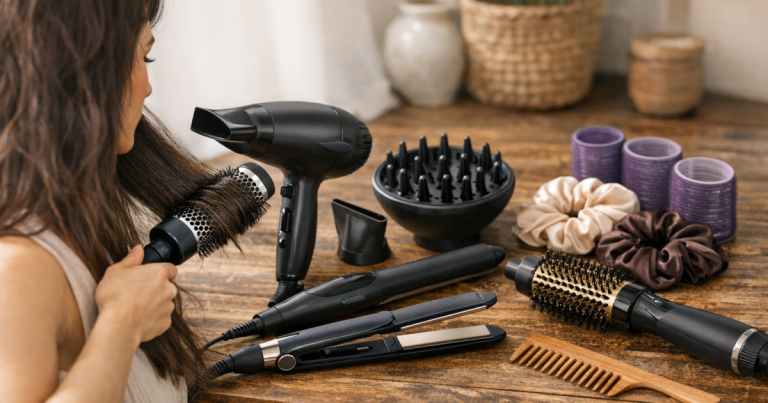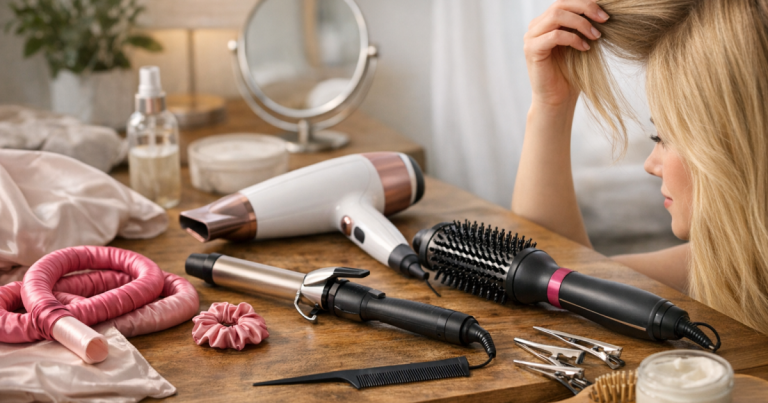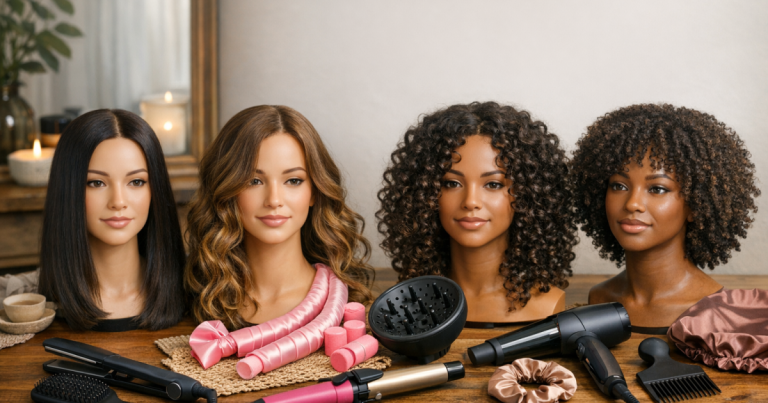
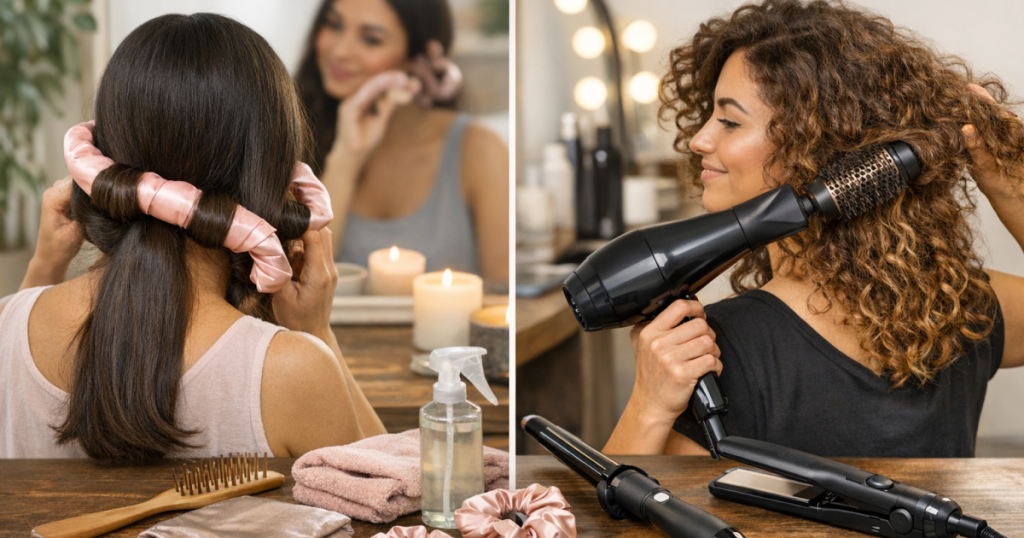
When hair refuses to hold a curl, takes forever to dry or turns fluffy minutes after styling, porosity is often part of the story. Understanding low porosity vs high porosity hair makes your tool choices more logical: it explains why one person gets glossy waves from rollers while another gets frizz, limp roots or curls that collapse before lunchtime.
The big picture
Porosity describes how readily hair lets water and styling products in and out. It is not the same as curl pattern, thickness or damage level, although all of those can overlap. Low-porosity hair has a tighter, more resistant cuticle, so moisture and product can sit on the surface before slowly absorbing. High-porosity hair has a more open or raised cuticle, so it may soak up water quickly but lose it quickly too.
That difference changes how tools behave. A hot brush, diffuser, roller set or heatless curler is not working on hair in isolation; it is working on hair that may either resist moisture or release it too fast. For a fuller tool match, porosity should sit alongside curl pattern, texture and density, much like the broader approach in matching tools to your real hair type.
How to recognise the styling clues
Porosity tests can be inconsistent, so the most useful signs usually come from day-to-day styling. Watch how your hair behaves when freshly washed, when product is applied and when you try to set a shape.
- Low-porosity clues: hair takes a long time to get fully wet, products can feel coated or waxy, roots become flat easily, and heatless curls may need more setting time.
- High-porosity clues: hair wets quickly, dries quickly, frizzes in damp weather, loses shine easily, and styled sections may feel rough or puffy by the end of the day.
- Mixed porosity clues: roots may feel resistant while older ends drink up product. This is common on coloured, highlighted, heat-styled or longer hair.
The same person can have more than one porosity pattern, so tool choices often need to be section-specific rather than one-size-fits-all.
Where low porosity vs high porosity hair changes your tool kit
For low-porosity hair, the aim is controlled opening, light product distribution and enough drying or setting time for the style to form. For high-porosity hair, the aim is gentle handling, moisture retention and less cuticle disruption. That means the most suitable tool is not always the most powerful or the most expensive; it is the one that works with how your hair absorbs and releases water.
Dryers and diffusers
Low-porosity hair often benefits from steady airflow and careful sectioning because moisture can linger beneath the surface. A dryer with adjustable heat and speed is useful because you can start with enough warmth to move water through the hair, then reduce heat as the hair approaches dry. Concentrator nozzles can help smooth straight or wavy hair, while diffusers can help curls dry without too much disturbance.
High-porosity hair usually needs a gentler drying approach. Lower heat, lower airflow and a diffuser can reduce frizz and help curls keep their shape. If your ends dry much faster than your roots, focus airflow at the root area first and avoid repeatedly blasting already-dry lengths.
Brushes, combs and tension tools
Low-porosity hair can become overloaded if product is not evenly spread. A flexible detangling brush such as Tangle Teezer The Ultimate Detangler can be useful for distributing conditioner or leave-in through wet hair, provided you work gently from ends upwards. For straight or wavy low-porosity hair, vented brushes can help reduce drying time without packing hair down with too much product.
High-porosity hair is more vulnerable to rough handling, especially when wet. Wide-tooth combs, soft bristles and low-tension brushing are usually kinder than repeated pulling. Curl-focused tools such as Denman D3 Original Styler can help shape clumps, but they work best when hair has enough slip and you are not dragging through dry, fragile ends.
Rollers and heatless curlers
Low-porosity hair may resist roller sets if it is too wet, too coated or removed too soon. Velcro rollers, foam rollers and satin curling rods usually work better when hair is lightly damp or almost dry rather than saturated. A light mist, small sections and longer setting time are often more effective than adding heavier cream.
High-porosity hair can take a set quickly but may frizz during removal. Smooth the section before wrapping, use a small amount of moisturising styler or gel if your hair likes hold, and unwind carefully. Satin-covered options such as Kitsch Satin Heatless Curling Set are worth considering because the surface is less grabby than rough fabric, though the final result still depends on prep, section size and drying time.
Matching tools to hair type, not just porosity
Porosity gives you the moisture behaviour, but hair texture and density decide how much tool control you need. Fine low-porosity hair can look greasy or flat with too much product, so lightweight prep, root-focused drying and larger rollers may work better than rich creams. Thick low-porosity hair usually needs smaller sections and patience; otherwise the outside looks dry while the inside stays damp.
Fine high-porosity hair can be tricky because it may need moisture without weight. Soft towels, light leave-ins and low heat are helpful, while heavy masks before styling can make roots collapse. Thick high-porosity hair often needs more deliberate smoothing: sectioned detangling, a diffuser, a silk or satin wrap overnight and enough styling product to keep the cuticle feeling calm.
If your results are inconsistent, look at hair texture and density as well as porosity. A dense head of fine strands behaves differently from a lower-density head of coarse strands, even when both are labelled as wavy or curly.
Low-porosity styling patterns that tend to work
- Use lighter layers: water-based leave-ins, light foams and small amounts of oil are usually easier to style than heavy butters.
- Give tools enough time: heatless curls, rollers and wrapped styles often need longer to set because the hair can hold internal moisture.
- Avoid overloading before heatless styling: too much conditioner, cream or oil can stop the hair forming a clean shape.
- Work in smaller sections: this helps dryers, brushes and rollers reach the hair evenly.
The common mistake is trying to force low-porosity hair with more product. In many cases, better sectioning and lighter prep make a bigger difference.
High-porosity styling patterns that tend to work
- Reduce friction: use microfibre, cotton jersey or silk-feel materials instead of rough towel-drying.
- Style before hair gets too dry: curls and waves often define better while the hair still has moisture to work with.
- Use lower heat more patiently: high heat can make already-rough-feeling lengths puffier, especially on damaged ends.
- Protect the style overnight: a silk wrap, satin bonnet or loose pineapple can help reduce moisture loss and surface frizz.
The common mistake here is chasing smoothness with more tension and heat. High-porosity hair usually responds better to careful prep, gentler drying and less touching once the shape has formed.
What the evidence suggests in real routines
Porosity is useful because it explains repeated styling patterns, but it should not replace observation. If a tool gives you lasting shape, comfortable roots and manageable frizz, it is probably working for your hair even if it does not match a textbook porosity rule. If a tool always leaves your hair flat, sticky, rough or half-dry, change the prep and technique before assuming the tool itself is wrong.
For heatless styling, the biggest variables are moisture level, section size, fabric surface and setting time. Low-porosity hair usually needs more time and less product. High-porosity hair usually needs smoother prep and gentler removal. Readers building a no-heat routine can use heatless routines for fine, thick and curly hair as a practical next step once porosity is clearer.
Straight answers
Can low-porosity hair use heatless curlers?
Yes, but it often needs hair to be only lightly damp and left to set for longer. If the hair is too wet or too product-heavy, curls may drop quickly.
Is high-porosity hair always damaged?
No. Some hair is naturally more porous, although colouring, bleaching, frequent heat and weathering can increase porosity, especially on the ends.
Should I use a hair dryer on low-porosity hair?
You can. Adjustable heat and airflow are helpful because low-porosity hair can dry slowly. Use sections and reduce heat as the hair gets close to dry.
Do silk wraps help both porosity types?
They can. Low-porosity hair may benefit from reduced surface friction, while high-porosity hair may find silk or satin helps limit overnight frizz and moisture loss.
What if my roots are low porosity and my ends are high porosity?
Treat them differently. Keep roots lighter and focus moisture, smoothing and gentler handling on the older ends.
What stands out
Low-porosity hair usually needs lighter prep, even sectioning and more time for tools to do their work. High-porosity hair usually needs less friction, lower heat, smoother materials and better moisture retention. The most reliable styling routine is not built around one label, but around how your hair behaves when wet, drying, wrapped, brushed and worn through a normal day.
Quick Buying Links
Low Porosity
Understanding low porosity vs high porosity hair makes your tool choices more logical: it explains why one person gets glossy waves from rollers while another gets frizz, limp roots or curls that collapse before lunchtime.
High Porosity Hair Styling Tools
Worth considering if its strengths better match your needs.