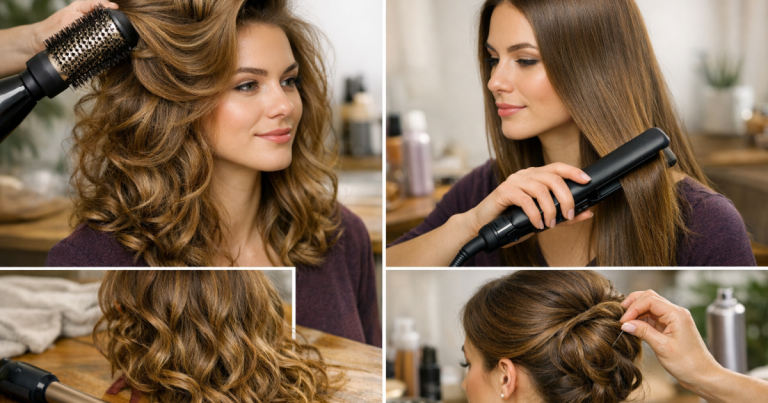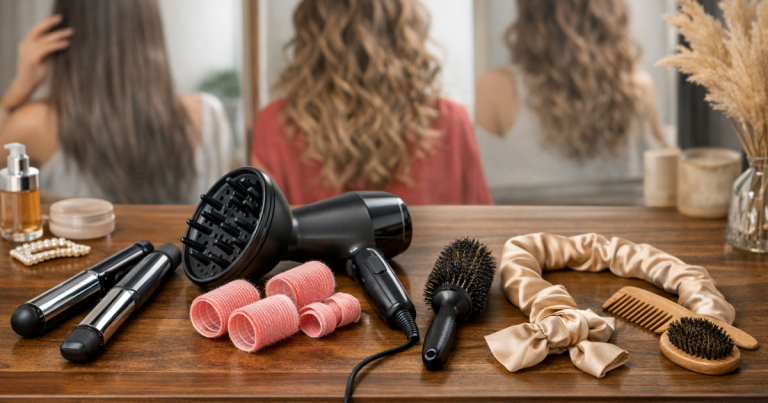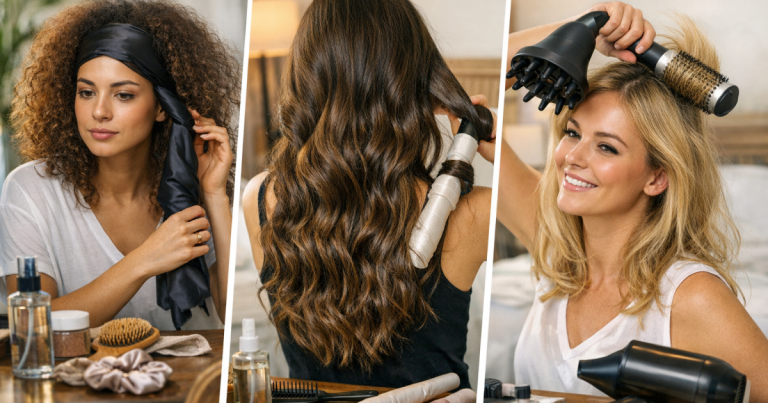
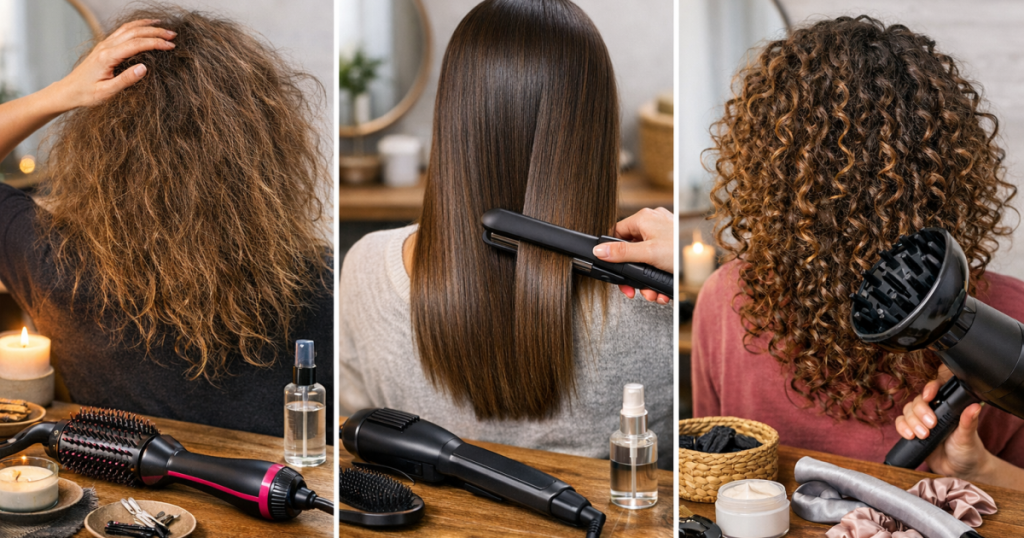
When hair looks puffy, dull or undefined, the problem is not always the product sitting on your lengths. The right frizz styling tools only help when they match your hair type, texture, porosity and the finish you actually want.
Think of tools as finish-shapers: some smooth the surface, some encourage clumps and curves, and some build polish by controlling how hair dries. Choosing between them is much easier when you separate frizz, shine and definition instead of trying to fix everything with one brush.
What to know first
- Frizz needs control and gentleness. Look for tools that detangle without roughening the cuticle, reduce friction and help hair dry in a more controlled shape.
- Shine needs surface alignment. Smooth brushes, tension-based blow-drying, silk or satin finishes and careful heat use can help hair reflect light more evenly.
- Definition needs shape support. Curls, coils and waves usually need tools that preserve clumps rather than pulling them apart.
- Your real hair type matters more than the trend. A tool that gives one person sleek gloss may leave another person flat, fluffy or stretched out.
If you are not sure whether your hair is fine, coarse, straight, wavy, curly or coily, start with this guide to identify your hair type before buying styling tools. It makes the rest of the decision much easier.
Match the tool to the problem you can actually see
Frizz, lack of shine and poor definition can overlap, but they are not the same styling issue. A halo of fluff around the crown needs a different approach from curls that will not clump or lengths that look matte after drying.
When the main issue is frizz
Frizz usually shows up when hair fibres lift, separate or dry in different directions. The most helpful tools are the ones that reduce rough handling and guide the hair into a smoother pattern.
- Wide-tooth comb: useful for detangling wet or conditioned hair with less disruption, especially on waves, curls and coils.
- Flexible detangling brush: better for working through knots when hair is damp and supported with slip, rather than dragging from the roots.
- Microfibre towel or cotton T-shirt: helps remove water with less friction than rough towel-drying.
- Satin or silk wrap: helps preserve a smoother finish overnight, particularly around the hairline and crown.
- Diffuser attachment: useful for curly or wavy hair when air-drying leaves the surface fluffy or the roots limp.
For straight or slightly wavy hair, a smoothing brush and controlled drying direction often matter more than heavy product. For curly and coily hair, preserving the curl pattern is usually the key; too much brushing after styling can create more visible frizz, even when the hair is healthy.
When the main issue is shine
Shine comes from light reflecting off a smoother surface. That does not mean every head of hair needs to be straightened. It means the fibres need enough alignment, moisture balance and finish control to avoid a dull, scattered look.
- Mixed-bristle or smoothing brush: can help polish straighter and looser wave patterns, especially on dry hair when used gently.
- Round brush with a dryer nozzle: helps create a smoother bend and more reflective finish when blow-drying suits your routine.
- Flat iron: can create high shine on suitable hair, but it is best treated as an occasional finishing tool rather than the only route to polish.
- Velcro rollers: can add lift and a smoother curve through the crown and ends without clamping the hair flat.
- Satin pillowcase or wrap: helps reduce friction that can make freshly styled hair look dull by morning.
Fine hair often needs lightweight shine support because oils and rich creams can collapse volume. Thick, coarse or high-density hair may need stronger smoothing control, but heavy tension or repeated heat can still make the finish look tired over time.
When the main issue is definition
Definition is about grouping hair into a deliberate shape: waves that look intentional, curls that clump, coils that keep their pattern or straight styles that hold a clean bend. The wrong tool can break that shape before it has a chance to set.
- Wide-tooth comb in the shower: helps distribute conditioner and separate knots without dismantling curl groups later.
- Styling brush used on wet hair: can encourage ribbon-like curl clumps when used with tension and enough slip.
- Diffuser: helps support curls and waves while they dry, reducing the stretching that can happen with direct airflow.
- Heatless curling rod: works well for soft, uniform bends on longer hair when you want shape without hot-tool styling.
- Small clips at the roots: help curls and waves dry with lift instead of flattening at the scalp.
For wavy hair, definition often comes from scrunching, careful drying and avoiding brushes once the pattern has formed. For tighter curls and coils, definition usually depends on moisture, sectioning and tools that respect the natural pattern instead of forcing it into a looser shape.
Porosity changes how the same tool behaves
Two people can use the same brush, dryer attachment or heatless curler and get completely different results because porosity affects how hair takes in water, product and styling tension.
Low porosity hair often takes longer to absorb water and product, so heavy creams plus dense brushing can leave the finish coated rather than shiny. Lighter layering, thorough wetting and patient drying usually work better. High porosity hair can lose moisture quickly, so friction and rough detangling may make frizz more visible. It often benefits from gentler handling, conditioning support and tools that reduce repeated manipulation.
For a deeper breakdown, the guide to porosity-led tool choices explains why the same method can feel smoothing on one head of hair and ineffective on another.
Use the finish goal to choose the tool family
A good routine usually has one main finish goal, then a secondary goal. For example, you might want smoothness first and volume second, or definition first and shine second. Trying to maximise every goal at once can lead to a crowded routine and unpredictable results.
- Sleek with low frizz: choose a smoothing brush, controlled drying direction, satin overnight protection and occasional hot-tool finishing if your hair tolerates it well.
- Shiny but not flat: use rollers, a round brush or a loose heatless shaping tool to create polish with movement rather than pressing everything straight.
- Defined waves: use a wide-tooth comb before styling, scrunch with care, diffuse or air-dry with minimal touching, then soften only when fully dry.
- Defined curls or coils: detangle in sections, style while wet or damp, use a brush only when it helps clumping, and avoid dry brushing unless you want volume over definition.
- Soft texture with less heat: use a satin heatless curling rod, Velcro rollers or braiding methods, then separate gently with fingers rather than a dense brush.
If your goals change from day to day, it helps to think in terms of volume, smoothness and hold rather than collecting tools that all promise a similar result.
Common mismatches that make hair harder to style
The most frustrating styling problems often come from a mismatch between the tool and the finish, not from a lack of effort. A dense smoothing brush on fragile curls can turn definition into fluff. A tiny-toothed comb on thick, wet hair can create breakage and uneven tension. A hot tool used to force shine onto under-conditioned hair can leave the surface looking polished for a short time but drier later.
Another common mismatch is using volume tools when the real goal is definition. Brushing out curls, flipping the head repeatedly or over-separating waves can create impressive size, but it also reduces clumping. That may be perfect for a soft, lived-in look, but it will disappoint if your goal is crisp definition.
The reverse is also true. Definition-focused routines can make fine hair look too compact if every step encourages clumping and weight. Fine waves often need a lighter touch: less product, less brushing, more root lift and a tool that sets shape without dragging the hair down.
Helpful questions
Can one tool reduce frizz and improve shine?
Yes, but only when the cause is surface roughness or poor drying direction. A smoothing brush, satin wrap or controlled blow-dry can help both, while curl frizz may need definition-focused tools instead.
Should curly hair be brushed for shine?
Usually not once it is dry and styled, unless you deliberately want a softer, fuller shape. For curls, shine is often better supported through wet detangling, clump-friendly styling and gentle drying.
Are heatless tools better for frizz?
They can be, especially if heat or repeated straightening makes your hair feel rough. Heatless tools still need smooth sectioning, low friction and enough drying time to give a polished result.
Why does my hair look shiny at the top but frizzy at the ends?
The ends are older and usually more porous, so they may need gentler detangling, more conditioning support and less friction. A tool that works at the roots can be too harsh for the lengths.
What to remember
Start by naming the main issue: frizz, shine or definition. Then choose a tool that changes the way your hair is handled, dried or shaped. Smooth finishes need alignment, defined finishes need pattern support, and frizz control needs less friction plus better drying control.
The best routine is not the one with the most tools. It is the one where each brush, comb, roller, wrap or dryer attachment has a clear job and suits the hair you actually have.