Knots after washing can make the rest of your styling routine harder than it needs to be, and this Tangle Teezer Detangling Hair Brush review looks at whether the tool earns its place before rollers, heatless curls, blow-drying or smoothing. The quick verdict: the Tangle Teezer Detangling Hair Brush is a strong everyday detangler for most hair types, particularly if you want less pulling and a neater base before styling, but it is not a magic fix for very dense matting or a replacement for a finishing brush.
In brief
The Tangle Teezer Detangling Hair Brush is best understood as a prep tool. It helps separate strands, loosen everyday tangles and make product distribution feel more even before you move on to styling. It is not designed to create a polished blow-dry shape, add root lift or smooth hair in the same way as a round brush, straightener or boar-bristle finishing brush.
For an at-home routine, that distinction matters. If your main frustration is that your hair snags before you can style it, this brush is useful. If your concern is lasting volume, bend, frizz control or shine, you will still need to match it with the right styling method and finish. Readers still working out their texture, density and porosity may find it helpful to check how to identify your hair type before buying styling tools before choosing any brush.
Product overview
The Tangle Teezer Detangling Hair Brush sits in the practical end of the hair-tool drawer: the tool you reach for before the styling starts. Its role is to work through tangles with flexible teeth, reduce the need for aggressive tugging and help hair lie in a more manageable pattern. That makes it particularly relevant for wash-day routines, children’s hair, fine hair that tangles easily, and medium to thick hair that needs sectioning before styling.
The biggest appeal is convenience. It is simple, quick to use and does not require heat, power or a complicated technique. For heatless styling fans, it can prepare hair before satin rods, rollers, wraps or braids. For those who still use a dryer or straightener, it can make the first pass through the hair feel more controlled.
There are limits. A detangling brush cannot undo poor brushing habits, rough towel-drying or lack of slip from conditioner. It also will not replace a comb for precise partings or a smoothing brush for a sleek finish. Think of it as the first tidy-up step, not the entire styling routine.
Key specs
- Brand: Tangle Teezer.
- Product type: Detangling hair brush.
- Main purpose: Loosening knots and separating strands before styling.
- Heat use: No heat required; use it as preparation before heatless or heated styling.
- Hair-type fit: Most useful for tangle-prone fine, medium, wavy, curly and moderately thick hair.
- What to verify before buying: The exact version, size, handle shape and wet-hair guidance, as Tangle Teezer sells several detangling brush styles.
- Best routine position: After conditioning, before styling product, or before sectioning hair for rollers, drying or smoothing.
Pros and cons
Pros
- Good for easing everyday tangles without needing a heated tool.
- Works well as a first step before heatless curls, rollers, wrapping or blow-drying.
- Helpful for fine hair that knots easily but can be overwhelmed by heavy brushes.
- Can make thick or wavy hair easier to section when used patiently in layers.
- Simple to clean compared with dense bristle brushes, provided hair is removed regularly.
Cons
- Not the best tool for creating polished shape, tension or root lift.
- Very dense, tightly coiled or matted hair may still need careful finger-detangling and a wide-tooth comb first.
- May feel too flexible for people who prefer a firm brush with more grip through the hair.
- The range includes different versions, so buyers need to check the exact model rather than assuming every Tangle Teezer brush feels identical.
- It will not solve frizz on its own if the hair is dry, damaged or brushed too roughly.
Performance in real use
On fine hair, the Tangle Teezer Detangling Hair Brush is at its best when used lightly from the ends upwards. Fine strands can look flat quickly, so the aim is not to over-brush until the hair loses movement. A few controlled passes are usually enough to remove snags before styling. It is particularly useful before Velcro rollers or a loose heatless curl set, where tangled ends can spoil the finished shape.
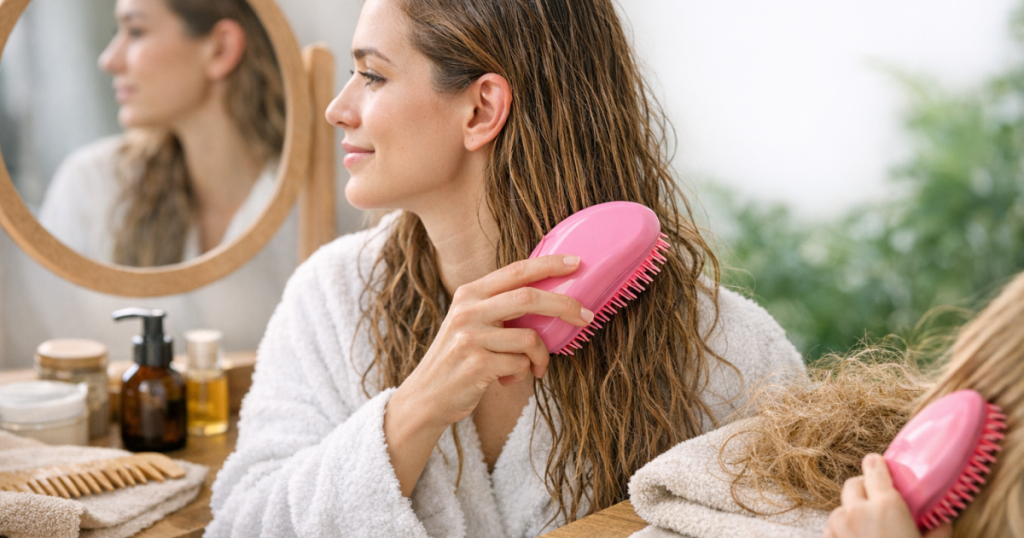
On medium and wavy hair, it works well as a wash-day organiser. After conditioner or leave-in product has added slip, the brush can help distribute product more evenly and separate clumps without ripping through the hair. Wavy hair owners should avoid brushing repeatedly once the hair has started to dry, as that can disturb definition and encourage puffiness.
On thick hair, patience matters more than pressure. The brush performs better when hair is divided into sections rather than tackled as one heavy mass. Start at the ends, support the section with your hand and move upwards gradually. If your main issue is drying time, bulk and control after detangling, the next styling decision may matter more than the brush itself; our guide to thick hair styling tools for drying time, smoothing and control goes deeper into that routine.
For curly hair, the result depends on when you use it. Used on conditioned wet hair, it can help remove knots and distribute curl cream or leave-in product. Used on dry curls, it can break up curl pattern and create frizz. If definition is the goal, use it during the detangling stage only, then switch to hands, a wide-tooth comb or a styling technique that keeps curl groups intact.
For comfort, the main benefit is reduced tugging when used correctly. That does not mean you should drag it straight from roots to ends. The gentler technique is still to start low, detangle the ends first and work upwards. This protects fragile ends and makes the brush feel more effective, especially around the nape and behind the ears where knots often build up.
For durability and maintenance, the key is regular cleaning. Pull out trapped hair after use and rinse away product build-up when needed. Avoid leaving styling creams and oils to collect at the base of the teeth, as residue can make any brush feel less fresh and less smooth through the hair.
Who it’s best for / who should skip it
The Tangle Teezer Detangling Hair Brush is best for people who want a quick, low-effort detangling step before styling. It suits fine hair that tangles after washing, wavy hair that needs gentle separation, and medium to thick hair when used in sections. It is also a sensible option if you are trying to reduce unnecessary heat because it improves manageability before heatless styling.
It is less ideal if you want one brush to do everything. It will not create the tension of a round brush for a blow-dry, the shine of a dedicated finishing brush, or the precision of a tail comb. Those with very tight coils, heavy matting, extensions or a sensitive scalp should be more selective and check the exact brush version, hairdresser guidance and product instructions before using it as their main detangler.
If you brush quickly and forcefully, you may also be disappointed. The tool rewards a patient technique. Used roughly, it can still pull, disrupt texture and make the hair look fluffy rather than smooth.
Alternatives
If the Tangle Teezer Detangling Hair Brush feels too flexible for your routine, the most obvious alternative is a wide-tooth comb. A comb gives more control through dense curls and coils, especially when you want to preserve curl grouping or work conditioner through small sections. It is slower, but often more precise.
If your hair is already detangled and you mainly want shine or a smoother surface, a finishing brush may make more sense. It will not replace detangling on wet hair, but it can be useful on dry hair before a sleek ponytail, bun or wrap. For a closer look at those two routes, compare the differences in this wide-tooth comb versus boar-bristle brush comparison.
Things readers ask
Can you use the Tangle Teezer Detangling Hair Brush on wet hair?
Many detangling brushes are bought for wash-day use, but check the exact Tangle Teezer version you are buying. Wet hair is more fragile, so use conditioner or leave-in slip and detangle from the ends upwards.
Is it good for fine hair?
Yes, it can suit fine hair because it detangles without the heavy feel of some dense brushes. Use light pressure and avoid repeated brushing if your hair loses volume quickly.
Will it stop frizz?
Not by itself. It can reduce rough tugging, which helps, but frizz control also depends on hydration, styling product, drying method and whether you brush waves or curls after they start to set.
Can it replace a wide-tooth comb?
For some straight, wavy and lightly tangled hair, yes. For very thick curls, coils or knot-prone sections, a wide-tooth comb may still offer better control and less disruption.
Verdict + score
The Tangle Teezer Detangling Hair Brush is a genuinely useful prep tool rather than a do-everything styler. It earns its place if your routine starts with knots, snagging or uneven product distribution, and it pairs especially well with heatless styling because it gives hair a cleaner starting point. It is not the right buy if you need strong smoothing tension, polished shape or a specialist curl tool, but for everyday detangling it is easy to recommend. Score: 8.4/10.
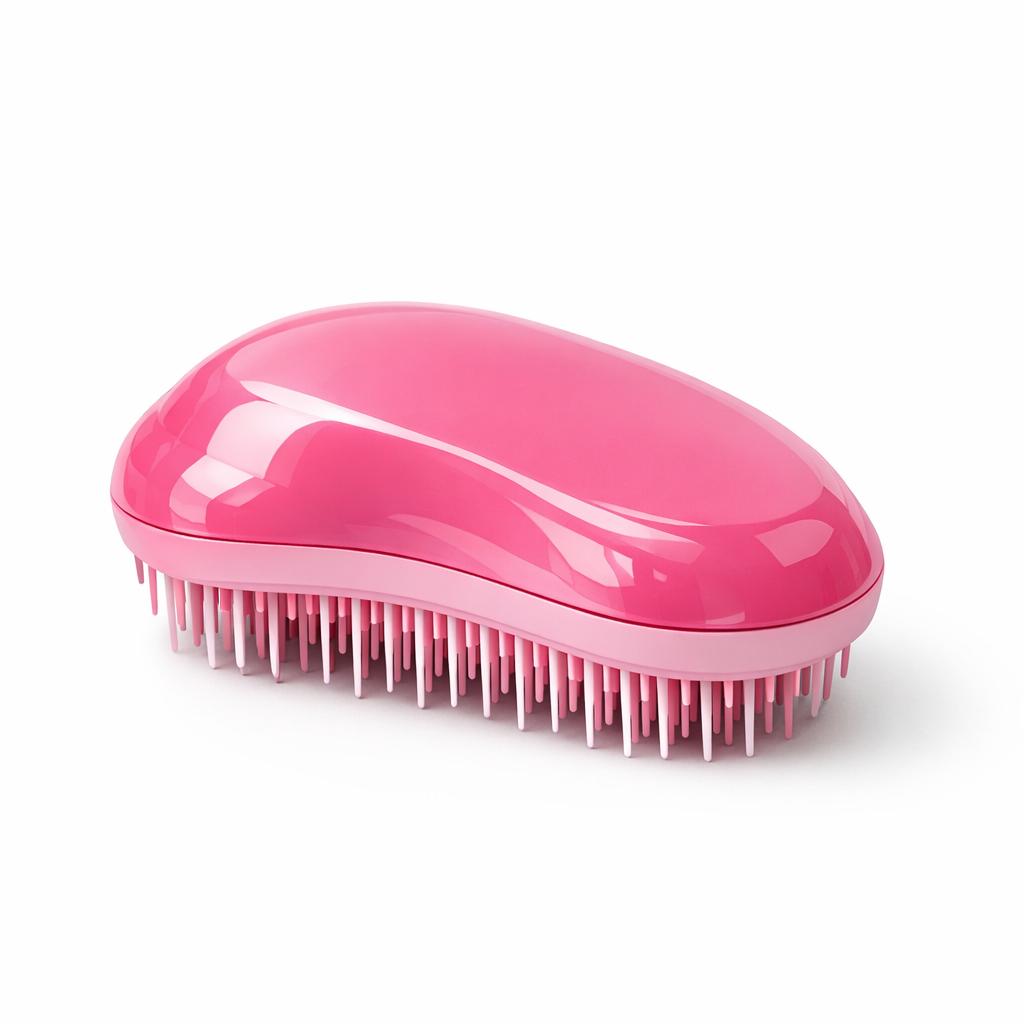
Detangling Hair Brush
It is not the right buy if you need strong smoothing tension, polished shape or a specialist curl tool, but for everyday detangling it is easy to recommend.