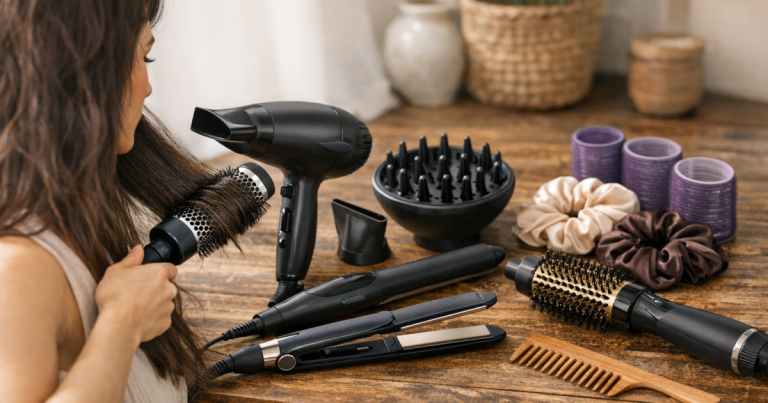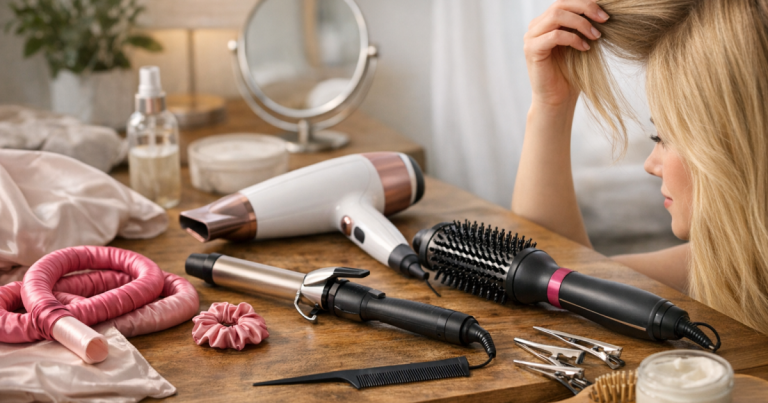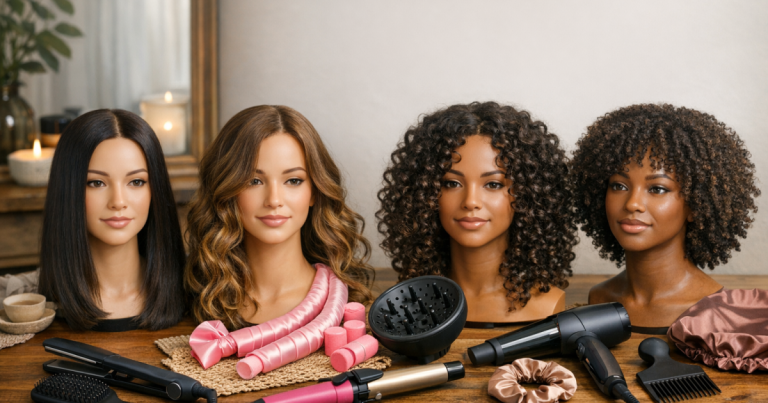
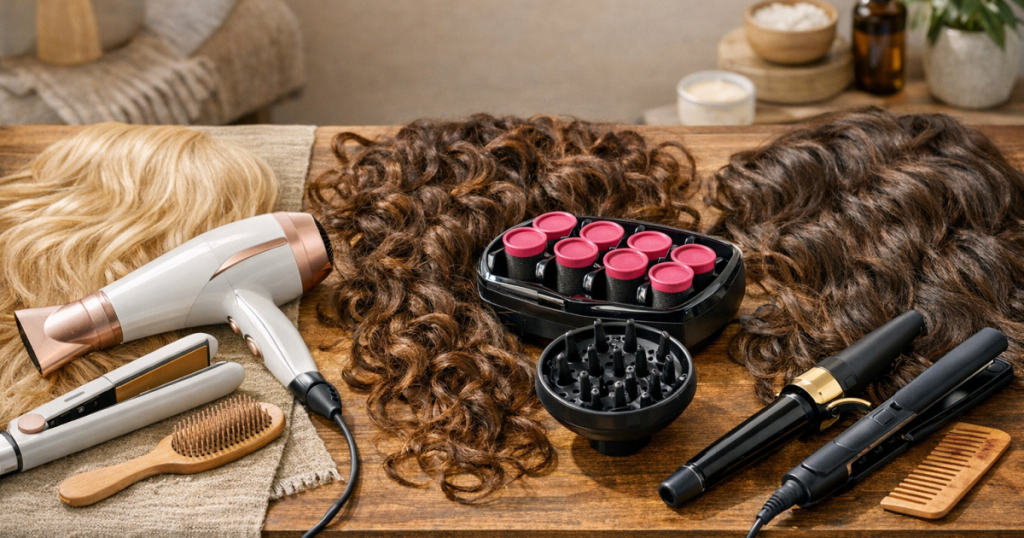
Choosing styling tools by hair type is less about owning every gadget and more about matching the tool to your texture, finish goal and tolerance for heat. The same dryer brush that gives one person bounce can flatten fine hair, roughen curls or make thick hair take longer than it should. Start with your hair’s natural behaviour, then decide whether you want lift, smoothness, shape, definition or low-damage styling.
What to know first
Hair tools work best when they support what your hair already does. Fine hair usually needs lightness and lift. Thick hair often needs sectioning, control and enough airflow. Wavy hair needs definition without disturbing the pattern. Curly and coily hair need moisture retention, gentle drying and minimal friction. Straight hair may need shape, polish or root movement without looking overworked.
The finish matters just as much as the hair type. A sleek, glassy finish usually involves tension, smoothing and sometimes direct heat. A soft, undone bend can often be created with heatless rollers or a satin curling rod. Volume needs lift at the roots, not just curls at the ends. Definition needs even product distribution and a tool that does not blast the pattern apart.
If you are deciding between broad tool families, it helps to understand the role of each one. A dryer supports drying, root lift and shaping. A straightener creates a compressed, polished finish. A tong or wand gives more deliberate curl placement. Rollers create lift, bend and softness. For a fuller breakdown, the guide to choosing between straighteners, curlers, rollers and dryers is a useful next step.
Match the tool to the hair, not the trend
Fine hair: lift, low weight and gentle heat
Fine hair can look styled quickly, but it can also collapse quickly. Heavy brushes, oversized barrels and rich finishing products may remove the very volume you are trying to create. A lightweight dryer, Velcro hair rollers, a small to medium round brush or soft heatless curling rod often makes more sense than a tool that relies on high heat and heavy tension.
For fine hair, the main damage risks are repeated heat exposure, rough brushing and over-styling the same front sections. Use tools that give shape efficiently, then leave the hair alone once it has cooled or set. If your roots go flat by lunchtime, focus on lift at the crown and fringe area rather than adding more curl through the lengths. The fine hair tool guide goes deeper into volume, hold and heat control.
Thick hair: airflow, sectioning and control
Thick hair often needs tools that reduce effort rather than simply add polish. A weak airflow dryer can make styling feel endless, while a small brush may only smooth the surface and leave the underneath bulky. Sectioning clips, a paddle brush, a vented brush, a diffuser for textured thick hair or larger rollers can all help create a more even result.
The key is to avoid rushing. Large, damp sections make straighteners and curling tools work harder, which can increase heat exposure without improving the finish. Dry the roots properly, split the hair into manageable sections and choose tools that can reach the density of the hair rather than just the top layer. For thick hair, damage often comes from repeated passes, excessive tension and trying to force a sleek finish before the hair is dry enough.
Wavy hair: definition before polish
Wavy hair sits in the tricky middle ground. It can look frizzy if treated like straight hair, but it may feel weighed down if treated like tight curls. A diffuser, wide-tooth comb, microfibre towel, satin heatless curling rod or soft rollers can help encourage shape without breaking the wave pattern.
If your waves disappear after brushing, switch the order of styling. Detangle before styling, encourage the pattern while damp, then avoid aggressive brushing once the hair has dried. For looser waves, rollers can add structure around the face. For stronger waves, diffusing on a lower speed can preserve clumps and reduce puffiness. The wavy hair styling tools guide is especially helpful if your main battle is definition versus frizz.
Curly and coily hair: shape without disruption
Curly and coily hair usually needs gentler handling because the curl pattern can be disrupted by friction, brushing and high airflow. A diffuser, wide-tooth comb, detangling brush used at the right stage, silk hair wrap and soft scrunching towel are often more useful than a line-up of hot tools. The aim is not just to create shape, but to keep the shape intact while the hair dries.
Direct heat can still be part of a routine, but it should have a clear purpose. If you want a stretched blow-dry, use careful sectioning and controlled tension. If you want defined curls, avoid tools that pull the pattern straight before it has set. For low-damage routines, overnight protection and heatless shaping can make a visible difference to next-day frizz and curl retention.
Choose by finish: smooth, voluminous, defined or soft
Once you know your hair type, choose the finish you actually want. Many disappointing tool purchases happen because the tool is designed for a different finish from the one the person has in mind.
- Smooth and sleek: Look for tools that create tension and polish, such as a straightener, paddle brush and concentrator nozzle. This finish needs controlled sectioning and dry hair rather than rushed passes.
- Root volume: Rollers, round brushes and root-focused drying are usually more effective than curling the ends. Lift must be created where the hair grows, then allowed to cool or set.
- Soft waves: Heatless curling rods, loose rollers and large-barrel styling methods create a relaxed bend. They suit hair that holds shape without needing a very crisp curl.
- Defined curls or waves: Diffusers, wide-tooth combs and gentle drying methods help preserve the pattern. Avoid tools that over-separate the strands before the style has formed.
- Polished ends: A round brush, smoothing brush or careful straightener pass through the final few centimetres can make the hair look more finished without restyling the whole head.
Damage risk: what really changes the equation
Damage risk is not only about whether a tool gets hot. It is about how often you use it, how many passes you make, how wet or fragile the hair is and how much tension you apply. A hot tool used carefully once may be less of a problem than a lower-heat tool dragged repeatedly through tangled hair.
The highest-risk habits are styling soaking-wet hair with direct heat tools not intended for that use, clamping the same face-framing pieces every day, brushing curls dry until they frizz, and using tight tension on fragile or colour-treated lengths. If your hair feels rough, tangles more than usual or looks dull at the ends, reduce repeated heat and friction before adding more styling products.
Heatless tools are not automatically damage-free, but they often reduce the biggest pressure point: frequent high heat. A satin heatless curling rod, soft rollers or a silk hair wrap can be useful when your goal is bend, overnight shape or smoother second-day hair. Keep the wrapping comfortable, avoid pulling tightly at the roots and make sure the hair is not left in a damp, compressed state for too long.
Tool choices by common hair scenarios
Use these scenarios to narrow the decision quickly:
- Fine, straight hair that falls flat: Prioritise root lift with Velcro rollers, a lightweight dryer and a small round brush. Avoid heavy oils near the roots.
- Fine, wavy hair that frizzes: Use gentle detangling, light styling product and diffused drying or heatless shaping. Avoid brushing once dry unless you want a softer, fuller finish.
- Thick, straight hair that takes ages to dry: Focus on airflow, sectioning clips and smoothing tools that can handle density. Do not rely on a straightener to finish hair that is still damp inside.
- Thick, wavy hair that expands: Define while damp, dry in controlled sections and use a silk wrap or loose protective style overnight to reduce friction.
- Curly hair that loses shape overnight: Use a silk hair wrap, gentle refresh misting and targeted diffusing rather than restyling everything from scratch.
- Colour-treated or fragile hair: Reduce direct heat frequency, use lower-tension styling and choose tools that create shape with setting time rather than force.
Questions people ask
Is a heatless tool always better for damaged hair?
Not always, but it can reduce repeated heat exposure. The tool still needs to be gentle: avoid tight wrapping, rough removal and sleeping in anything that pulls at the roots.
Should I choose a dryer or rollers for volume?
Use a dryer to create lift while the roots dry, then rollers to help that lift set. Rollers alone work best when the hair already has some dryness and shape.
What is the safest tool for fine hair?
Fine hair usually responds well to lightweight dryers, soft rollers and controlled heat settings. The safest choice is the one that gives shape with the fewest passes and least tension.
Why does my hair look worse after using a straightener?
It may be too damp, tangled, overworked or lacking tension control. Straighteners polish best on properly dried, sectioned hair; repeated passes can make ends look tired.
Can one tool suit every hair type in a household?
A dryer with suitable attachments may be the most flexible, but brushes, rollers and heat settings still need adjusting for each person’s texture, density and finish goal.
What to remember
The right tool is the one that matches your hair’s texture, your preferred finish and your realistic damage tolerance. Fine hair needs lift without weight. Thick hair needs control and enough drying power. Wavy hair needs definition without disruption. Curly and coily hair need tools that respect the pattern and reduce friction. When in doubt, choose the method that gets you the finish you want with fewer passes, less tension and less unnecessary heat.