Choosing styling tools for everyday occasion and overnight results is less about owning every gadget and more about matching time, finish and hair behaviour to the right method. The same hair can need a gentle weekday routine, a more polished event finish and a sleep-friendly set that does the work overnight.
A good routine usually has one dependable everyday tool, one option for extra shape or smoothness, and one low-effort overnight method. The right mix depends on your hair type, how long your style needs to last and how much heat your hair can comfortably tolerate.
Main points
- Everyday styling works best with quick, repeatable tools that do not overwork the hair.
- Occasion styling usually needs more control, stronger shaping and a finish that can survive weather, movement and several hours of wear.
- Overnight styling favours soft, secure, heatless tools that are comfortable enough to sleep in.
- Fine hair often needs lift and light tension; thick hair needs sectioning and control; wavy and curly hair need definition without roughing up the pattern.
- The more often you style, the more important damage risk becomes, especially with repeated heat, tight tension or aggressive brushing.
If your starting point is hair type rather than the event, it helps to choose by hair type, finish and damage risk before narrowing down your daily, occasion and overnight routine.
Start with the result, not the tool
The most common mistake is buying a tool because it looks versatile, then trying to make it fit every situation. A better approach is to name the result first: soft volume, smooth ends, defined waves, stretched curls, glossy straightness, root lift or a style that lasts until the next morning.
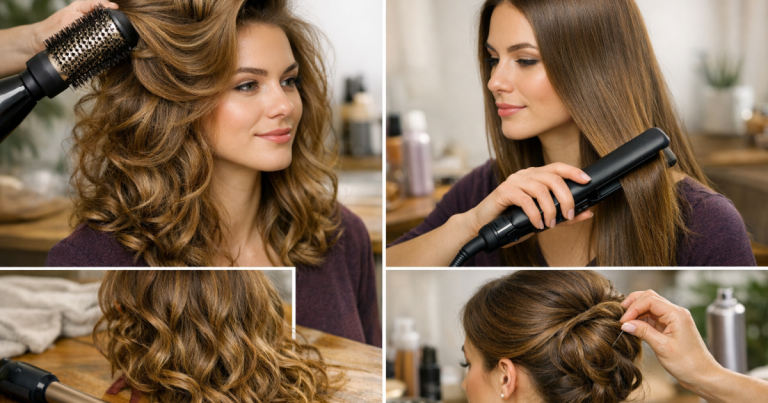
Everyday results are usually about being presentable without spending too long in the mirror. That might mean smoothing a fringe, refreshing bends around the face, diffusing curls until they are mostly dry, or using a brush to bring shape back into second-day hair.
Occasion results are more demanding. Hair may need to look deliberate in photos, hold through a commute or an evening out, and feel balanced with make-up, clothing and accessories. This is where sectioning, styling prep and a tool with more shaping power can matter.
Overnight results are different again. They rely on setting the hair while you sleep, so comfort and placement are as important as the curl or wave pattern. A satin heatless curling rod, soft rollers, a silk hair wrap or loose braids can work beautifully, but only when the method suits your length, layers and sleeping style.
Everyday styling: keep it fast, gentle and repeatable
For everyday hair, the best tool is the one you can use consistently without creating unnecessary dryness, frizz or breakage. If you have straight or lightly wavy hair, that might be a paddle brush, round brush, low-heat dryer routine or a quick pass with straighteners only where needed. For fine hair, focus on root lift and airy movement rather than heavy smoothing.
Wavy hair often looks better when the tool supports the natural pattern instead of flattening it. A diffuser, wide-tooth comb, microfibre towel and lightweight styling product can help waves form without needing daily tonging. If the main issue is frizz, avoid rough brushing once the hair is dry; refresh with mist, a small amount of styling cream or selective smoothing around the halo.
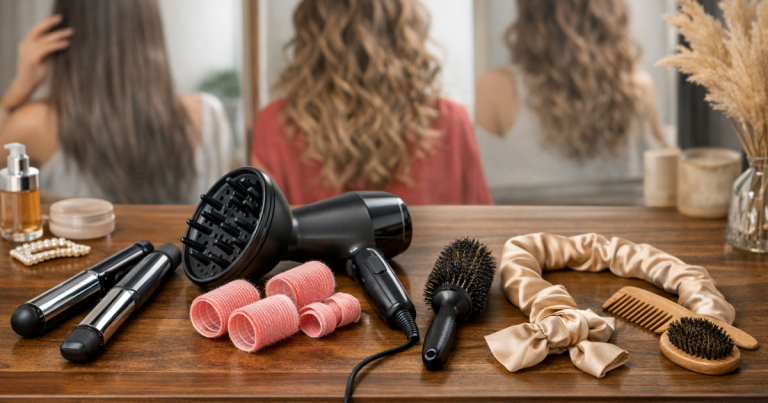
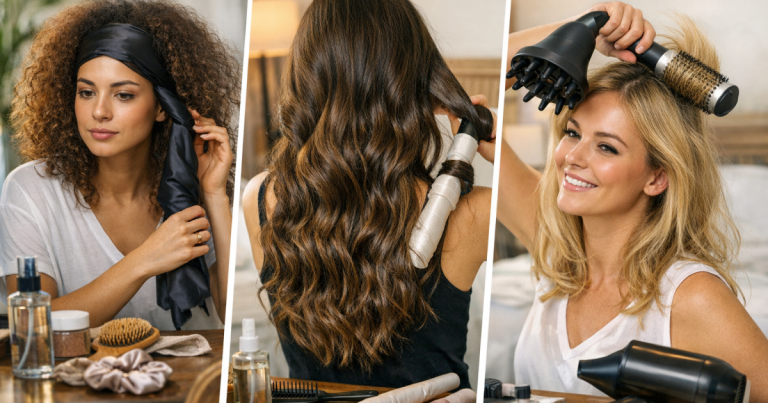
Curly hair needs a tool routine that protects definition. A diffuser can help dry curls with less disruption than blasting the hair with a concentrator nozzle, while a styling brush such as Denman D3 Original Styler can be useful for clumping and shaping when used on wet, product-coated hair. The key is not the brush alone; it is using it with enough slip and not dragging through dry curls.
Thick hair usually needs time management. A powerful dryer, larger sections only once the hair is partly dry, and clips for controlled sectioning can make the routine feel less exhausting. If you rely on straighteners every morning, consider whether a smoother drying routine could reduce how many heated passes you need.
Occasion styling: add structure where it will be seen
Occasion hair does not always mean a completely different style. Often, it means taking your everyday look and making it more intentional. For sleek hair, that could mean cleaner sections, smoother roots and polished ends. For waves, it might mean more uniform bends around the face and softer texture through the back. For curls, it could be extra definition at the crown and front pieces, with volume controlled where you want it.
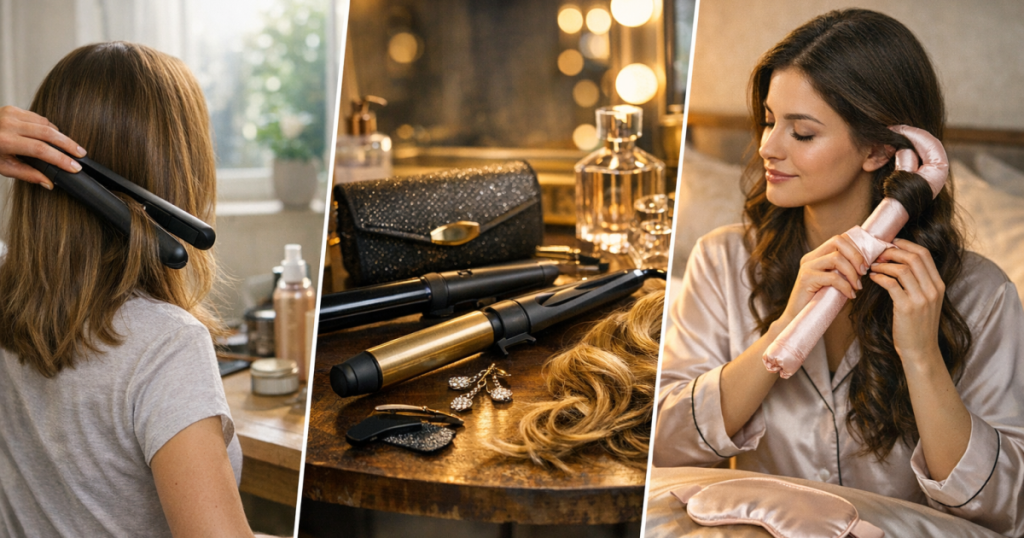
Heated tools can be useful for event styling because they shape hair quickly and predictably. Curling wands, straighteners, hot brushes and dryer brushes all have a place, but they are not interchangeable. A straightener is better for sleekness and sharp bends; a curler is better for repeated wave shape; a round brush and dryer are better for lift and a bouncy finish; a diffuser is better for preserving curls and waves.
For a more detailed way to match finish to tool type, use the site’s guide to identify the tool for your desired look. It is especially helpful when you know the outcome you want but are unsure whether a dryer, straightener, curler or roller set makes more sense.
Hair type changes the event routine. Fine hair can collapse if overloaded, so lighter prep and targeted root lift are usually better than heavy oils or dense creams. Thick hair benefits from smaller sections and enough cooling time before brushing out. Wavy hair often needs frizz control before shaping, not after. Curly hair may need a hybrid approach: diffuse the natural pattern, then refine only the pieces that need extra polish.
Occasion styling also asks one practical question: how long does the result need to last? If you need all-day hold, let heated curls cool fully before loosening them, use clips to set volume, and avoid touching the shape too soon. If the event is short and relaxed, a softer heatless or low-heat finish may be enough.
Overnight styling: choose comfort before curl shape
Overnight styling is ideal when you want results without morning heat, but it only works if you can actually sleep. Tools that feel fine for ten minutes can become irritating at 2am, so softness, placement and security matter.
A satin curling rod, such as Kitsch Satin Heatless Curling Set, suits many medium to long hair lengths when the goal is soft bends or loose curls. The finish depends on how damp the hair is, how tightly it is wrapped and whether the ends are secured smoothly. Hair should not be soaking wet at bedtime; slightly damp or nearly dry hair is usually more comfortable and less likely to wake up flat at the roots.
Soft rollers can create more lift and a rounder shape, especially around the crown and fringe. They can be excellent for layered hair, but bulky placement may bother side sleepers. Velcro rollers are useful for volume while getting ready, though they are not always the most comfortable overnight choice and can snag if removed carelessly.
Silk hair wraps and bonnets are less about creating a new shape and more about preserving one. They can reduce friction, help maintain a blow-dry or curls, and keep hair smoother between wash days. For textured, curly or frizz-prone hair, preservation can be just as valuable as styling from scratch.
Match the tool to your hair type
Fine or flat hair
Prioritise lift, lightness and cooling time. Everyday tools should avoid flattening the roots, so consider a vented brush, round brush technique, root clips or large rollers used while the hair cools. For occasions, create shape in smaller sections and use products sparingly. Overnight, loose heatless curls can work, but overly tight wrapping may make the ends look thin.
Thick or dense hair
Choose tools that help you work in sections. Everyday styling may need a dryer routine that removes moisture efficiently before smoothing. Occasion styling benefits from clips, patient sectioning and allowing each section to set. Overnight methods need secure placement; too much hair wrapped around one rod or roller can leave the middle under-shaped.
Wavy hair
Think definition first, then polish. Everyday, a diffuser or air-dry routine with minimal touching may give better results than brushing waves straight. For occasions, refine visible sections with a curler or heatless wrap while keeping natural movement. Overnight, braids, satin rods or loose buns can enhance waves, but tight methods may create uneven bends.
Curly and coily hair
Protect the pattern and avoid unnecessary tension. Everyday tools should support detangling, clumping, drying and preservation. Occasion styling may involve diffusing, stretching, setting or refining selected pieces rather than reshaping the whole head. Overnight, silk or satin protection is often the most useful starting point, with heatless sets chosen according to length, density and desired stretch.
Build a small routine around timing
A simple way to organise your tools is to give each one a job. Your everyday tool should solve your most frequent problem: frizz, flat roots, undefined waves, rough ends or long drying time. Your occasion tool should create the finish you cannot reliably get from your daily routine. Your overnight method should either create shape while you sleep or preserve work you have already done.
The site’s styling goal matrix is a useful next step if you are balancing lift, shape, smoothness and hold rather than choosing by tool category alone.
Be realistic about your mornings. If you have ten minutes, a full blow-dry routine is unlikely to become your everyday answer. If you dislike sleeping with anything around your head, overnight curls may be better as an occasional option than a nightly habit. If your hair is colour-treated, dry or prone to snapping, reserve high heat for moments when the finish genuinely matters.
Common questions
Can one tool cover everyday, occasion and overnight styling?
Sometimes, but not perfectly. A versatile heated tool may cover daily smoothing and event styling, but it will not give true overnight heatless results. Most people do better with one main styling tool and one gentle setting or preservation method.
Are heatless tools only for long hair?
No, but length affects the result. Medium and long hair usually wraps more easily around rods and rollers, while shorter layers may need smaller rollers, clips or targeted setting around the face and crown.
Should I style wet or dry hair overnight?
Slightly damp or nearly dry hair is usually the safest practical middle ground for heatless setting. Very wet hair can feel uncomfortable, take too long to dry and leave the roots flat by morning.
What matters most for hair that drops curls quickly?
Use smaller sections, let the shape set fully before brushing out, and avoid heavy smoothing products before styling. Fine, silky or very long hair may need more structure than soft wrapping alone can provide.
How do I reduce damage if I style most days?
Rotate your methods. Use heatless setting, preservation wraps and lower-tension brushing between heated styles, and keep high-heat shaping for the days when you need a more polished or longer-lasting finish.
What stands out
The right styling routine is not defined by the most expensive tool or the biggest collection. It is defined by timing, finish and hair behaviour. Everyday styling should be quick and kind to the hair; occasion styling should add structure where it counts; overnight styling should be comfortable enough to repeat.
Once you separate those three needs, choices become clearer. Fine hair needs lift without weight, thick hair needs control without endless passes, wavy hair needs definition without frizz, and curly or coily hair needs tools that respect pattern, moisture and preservation. Start with the result you want, then choose the least disruptive method that can realistically deliver it.