Choosing multi-styler attachments is less about collecting every possible head and more about matching airflow, tension and shape to your hair’s behaviour. The right combination should make styling easier, not longer.
Start with your hair type, then work backwards from the result you actually wear most: lift, smoothness, waves, curls, stretch, or a polished fringe. That keeps the kit practical and helps you avoid add-ons that look useful but rarely leave the drawer.
The short version
- Fine or flat hair: prioritise root-lift tools, smaller round brushes, lightweight barrels and accessories that help hold shape without crushing volume.
- Thick or coarse hair: look for firm smoothing brushes, wider airflow heads and attachments that help pre-dry before shaping.
- Wavy hair: choose tools that define without over-stretching, such as diffuser-style heads, medium barrels and gentle smoothing brushes.
- Curly and coily hair: favour controlled airflow, diffuser or pick-style options, and avoid attachment choices that rely on excessive brushing through dry curls.
- Short layers, fringes and curtain bangs: smaller barrels, narrow brushes, clips and Velcro rollers usually matter more than oversized heads.
- Everyday styling: fewer, better-matched attachments are more useful than a large kit with duplicate shapes.
Step 1: match multi-styler attachments to your hair pattern
Fine hair that drops quickly
Fine hair usually needs lift first and polish second. Oversized brush heads can make the hair look smooth at the ends while leaving the roots flat, so smaller round brushes, narrow volumising brushes and Velcro rollers are often more useful than the biggest barrel in the box. If root height is your main frustration, the method matters as much as the attachment: this guide to using a hot brush without losing root volume explains why direction, section size and cooling time make such a difference.
For fine hair, avoid using too much tension at the roots and do not overload the hair with heavy creams before styling. A detangling brush, sectioning clips and a light hold product can make a bigger difference than adding another curl barrel.
Thick, dense or coarse hair
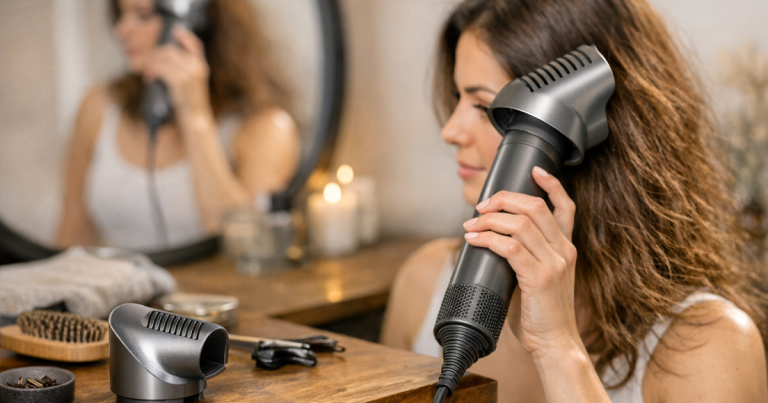
Thick hair often needs a stronger preparation stage before any shaping attachment can do its job. A pre-drying nozzle, concentrator-style head or smoothing brush can help remove excess moisture and align the hair before you curl, bend or flick the ends. If the hair is dense, look for attachments that can handle smaller sections cleanly rather than relying on one large brush to do everything.
Coarse hair usually benefits from firm but controlled tension. Paddle-style smoothing brushes can be useful for a sleeker finish, while round brushes help add bevel and movement. The trade-off is time: larger sections may feel quicker, but smaller sections often give a more even result.
Wavy hair that frizzes or loses definition
Wavy hair sits in the middle: it can usually be smoothed, curled or diffused, but the wrong head can make it fluffy. A diffuser-style attachment helps preserve natural bend, while medium barrels can neaten waves without turning them into tight curls. A gentle smoothing brush can work well around the crown and face, but over-brushing can reduce definition.
If you want to refine your tool choice for waves specifically, the guide to wavy hair styling tools for definition, frizz and volume is a useful next step.
Curly and coily hair
Curly and coily hair needs attachment choices that respect curl pattern and shrinkage. Diffuser heads, pick-style attachments and controlled airflow tools are usually more curl-friendly than brush heads used aggressively through dry hair. If your goal is stretch, choose an attachment that lets you work in sections with steady tension rather than pulling randomly from root to tip.
For defined curls, think about drying and setting rather than forcing the hair into a new shape. Clips for root lift, a silk hair wrap for overnight protection and a small amount of oil on finished ends can support the style without disturbing the pattern.
Step 2: choose by the finish you actually want
Hair type narrows the field, but your preferred finish decides the final selection. A person with fine hair who wants loose bends needs a different set-up from someone with fine hair who wants a smooth blow-dry shape.
- Lift: use a small round brush, root-lift brush, clips or Velcro rollers. Let sections cool before touching them.
- Smoothness: use a smoothing brush, concentrator-style head or paddle attachment, then finish with a small amount of lightweight serum or oil if your hair tolerates it.
- Curls and bends: use barrels that suit your hair length. Short layers need smaller barrels; long hair may need longer or wider barrels for even wrapping.
- Natural curl definition: use a diffuser-style attachment and avoid pulling the curl pattern straight while drying.
- Fringe shaping: use a narrow round brush, small barrel or Velcro roller rather than a full-size brush head.
If you are not sure whether lift, shape, smoothness or hold should come first, the Styling Goal Matrix is a helpful way to prioritise the result before choosing attachments.
Step 3: understand what each attachment is really for
Round brush heads
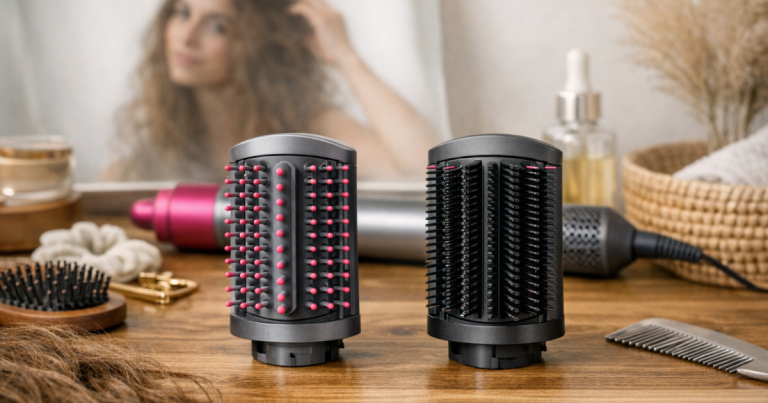
Round brush heads are best for bounce, curved ends, face-framing layers and root lift. Smaller heads suit fringes, bobs and fine hair; larger heads suit longer lengths and a softer blow-dry finish. They are not automatically the best choice for very curly hair unless your aim is to stretch or smooth.
Smoothing brushes
Smoothing brushes help align the hair and reduce the look of frizz. Softer bristles tend to feel gentler on fine or fragile hair, while firmer brush heads may be more useful on dense or coarse hair. Check how much tension the brush creates; too much can flatten fine roots or disturb natural curls.
Curling barrels
Barrels create shape, but the result depends on hair length, section size and how long the curl is allowed to cool. Short hair and layered cuts need enough barrel control to catch the ends. Long hair needs enough usable barrel length so sections are not wrapped unevenly. Directional barrels can help with face-framing symmetry, but they are only useful if you actually style both sides with intention.
Diffusers and curl-friendly heads
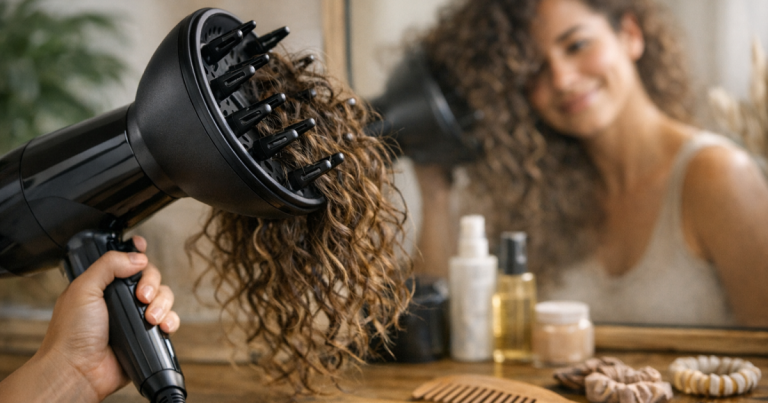
A diffuser is most useful for waves, curls and coils that need airflow without being blown apart. Look for a head shape that lets curls sit in place while drying. For volume, lift from underneath; for definition, keep movement minimal and let the curl pattern form before touching it.
Accessory pieces that make attachments work better
Do not overlook the supporting kit. Sectioning clips make dense hair manageable, Velcro rollers help fine or layered hair cool into shape, a detangling hair brush reduces snagging before styling, and a silk hair wrap can protect overnight results. These are not glamorous extras, but they often decide whether the main attachment performs well.
Step 4: check compatibility before you commit
Attachment compatibility can be confusing because brands often sell different kits, editions and add-on sets. When looking at recognisable systems such as the Dyson Airwrap Complete Long or the Shark FlexStyle 5-in-1 Air Styler and Hair Dryer, check which heads are included in the exact bundle available in the UK, not just the marketing image.
- Fit: confirm the attachment is made for your specific styler body or edition.
- Hair length: check whether barrels and brushes suit short, shoulder-length or long hair.
- Hair density: dense hair may need section-friendly brushes rather than one oversized smoothing head.
- Routine: if you style quickly before work, choose the two or three heads you can use confidently, not the most complex set.
- Maintenance: removable hair, product build-up and filter care can affect performance, so follow the maker’s cleaning guidance.
Step 5: build a simple attachment wardrobe
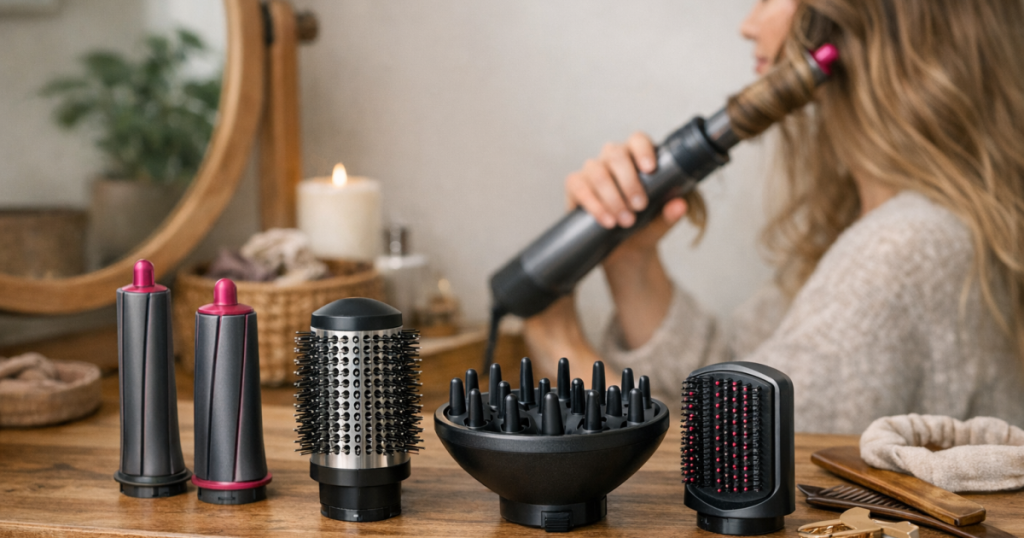
A balanced set usually covers preparation, shaping and setting. For fine hair, that might mean a pre-dry head, a small round brush, a medium barrel and Velcro rollers. For thick hair, it might be a pre-dry head, a firm smoothing brush, a larger round brush and clips. For wavy hair, a diffuser, medium barrel and gentle smoothing brush may be enough. For curly or coily hair, a diffuser, pick-style option, clips and a silk wrap can be more useful than multiple barrels.
If you are deciding whether a heated multi-styler is even the right upgrade, compare it with a lower-heat or overnight routine. The article on Sleep Styler rollers versus a Dyson Airwrap routine is useful if your main question is whether convenience, finish or heat reduction matters most.
Questions people ask
Do I need every attachment in a multi-styler kit?
No. Most people regularly use two or three heads. Choose one for preparation, one for your main shape and one for setting or finishing.
Which attachment is best for fine hair?
A smaller round brush or root-lift brush is usually more helpful than a large smoothing head. Add Velcro rollers if your style drops quickly after cooling.
Are diffusers only for curly hair?
No. Diffusers can also help wavy hair keep definition and reduce blown-out frizz, especially when you want texture rather than a smooth blow-dry finish.
Can one attachment work for both smoothing and volume?
Sometimes. A round brush can smooth and lift, but technique matters: lift at the root, keep tension controlled and let the section cool before brushing out.
How often should I clean styling attachments?
Remove trapped hair and visible product build-up regularly. If the styler has airflow filters or removable parts, follow the manufacturer’s cleaning instructions.
Main lessons
The best attachment set is the one that suits your hair’s texture, density, length and daily routine. Fine hair needs lift and hold, thick hair needs preparation and control, wavy hair needs definition without fluff, and curly or coily hair needs airflow that protects pattern. Choose attachments by job, not by quantity, and let accessories such as clips, rollers, detangling brushes and wraps do the quiet work that makes the finished style last.