If your curls look good when you first unwrap them but turn fluffy, flat or dented by lunchtime, the material of the curler is probably part of the problem. The difference between silk vs satin heatless curlers comes down to friction, grip, maintenance and how much structure your hair needs overnight. Both can work beautifully, but they behave differently on fine, thick, curly, coily, bleached and frizz-prone hair.
The short answer
Choose silk if your priority is reducing friction, protecting fragile lengths and keeping the finish soft rather than overly grippy. Choose satin if you want a smoother-than-cotton surface with a little more structure, easier care and usually a more accessible price point.
The important detail is that silk and satin are not quite the same kind of comparison. Silk is a natural fibre. Satin is a weave, and in heatless curlers it is commonly made from polyester unless the label clearly says silk satin. That means two products can both feel glossy but behave differently once wrapped into hair for several hours.
For most people, the better choice is not simply the most luxurious fabric. It is the one that matches your hair’s texture, porosity, styling product routine and sleeping habits. The filling, rod thickness, tie design and how tightly you wrap your sections can matter just as much as the outer fabric.
How silk behaves on hair
Silk has a naturally smooth feel, which is why it is often used for pillowcases, scrunchies and wraps aimed at reducing friction. On hair that tangles easily, has lightened ends or becomes rough after styling, a silk heatless curler can feel gentler during both wrapping and removal.
It is particularly useful when your main problem is frizz around the surface rather than lack of curl formation. Fine hair that shows every crease, bleached hair that feels dry at the ends, and waves that lose polish overnight can all benefit from a lower-friction wrap.
The trade-off is grip. Very silky surfaces can slide on freshly washed, very straight or ultra-smooth hair, especially if the hair is not prepped with a little styling cream, mousse or texture spray. If the rod shifts while you sleep, the curl pattern can become uneven at the front or looser on one side.
Care is another consideration. Silk products usually need more careful washing than synthetic satin. Always check the care label before soaking, machine washing or using strong detergents. If you use oils, leave-in creams or setting products regularly, product build-up can affect how cleanly the curler glides through the hair.
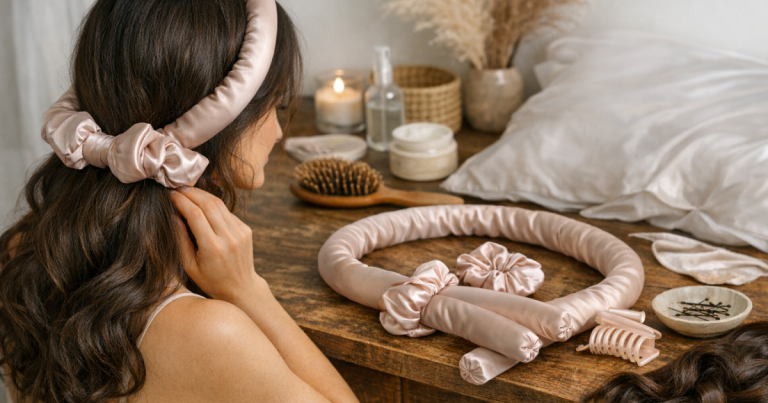
For a recognisable silk example, Slip Silk Heatless Curlers are the type of product to assess for fabric claim, fastening method, rod shape and whether the surface feels too slippery or just smooth enough for your hair.
How satin behaves on hair
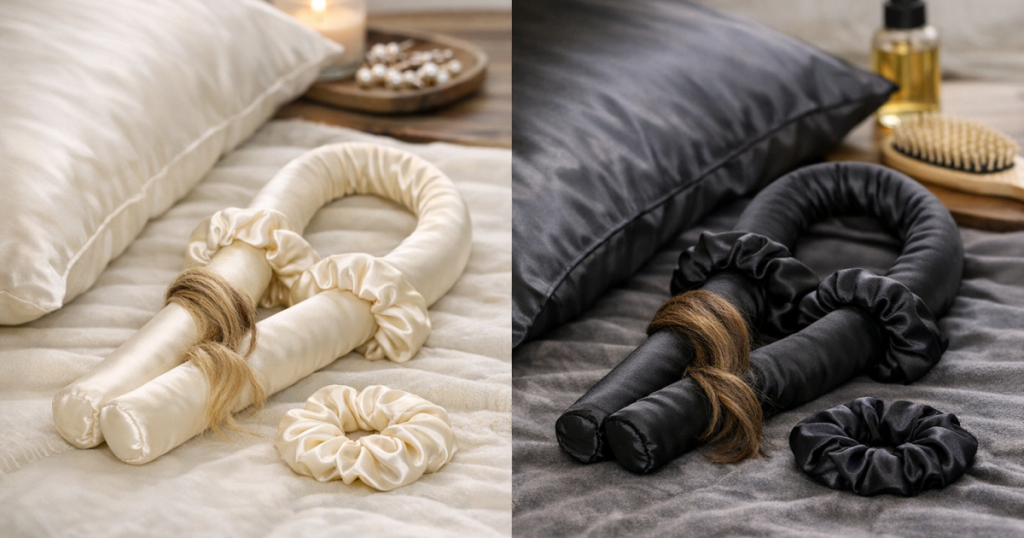
Satin heatless curlers are popular because they give a smooth, glossy surface without necessarily being as delicate as silk. In most mainstream curlers, satin means a synthetic satin fabric. It still reduces rubbing compared with rougher fabrics, but it can have slightly more hold against the hair.
That extra grip is helpful if your hair is straight, medium to thick, or tends to drop curls quickly. Satin can keep sections in place more easily, particularly when you wrap with even tension and secure the ends neatly. It is also practical for beginners because the fabric is less intimidating to care for and often more forgiving in regular use.
Satin is not automatically frizz-proof, though. If the filling is bulky, the seam is raised or the ends are tied too tightly, you can still wake up with dents, stretched roots or flattened sections. The smooth outer layer helps, but technique does most of the heavy lifting.
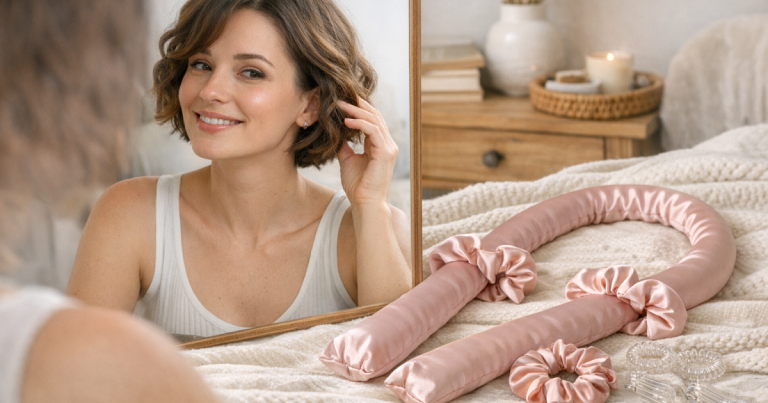
A satin-style wrap such as the Mermade Hair Heatless Curls Kit is useful to think about as a structured overnight tool rather than just a soft accessory. If you want more detail on how this type of wrap behaves in real use, the Mermade Hair Wrap review breaks down how it compares with a simpler curling ribbon.
Match the fabric to your hair type
Fine or low-density hair
Fine hair often needs a curler that will not crush the root area or create heavy, rope-like curls. Silk can be lovely if your fine hair is frizz-prone or colour-treated, but it may slip if your hair is very smooth. Satin can give a little more hold, as long as you avoid wrapping sections too tightly.
- Use smaller, even sections rather than one thick wrap on each side.
- Start with barely damp hair or dry hair with a light setting product.
- Keep the ends smooth to avoid wispy, bent tips.
Thick or dense hair
Thick hair usually needs structure. Satin often feels more secure because it can hold heavier sections in place, but silk can work well if the curler has enough padding and you section carefully. The main issue is drying and setting time: if thick hair is too damp at bedtime, it may still feel cool or limp in the morning.
- Divide hair into more sections before wrapping around the main rod.
- Use a light hold product through the mid-lengths, not just at the ends.
- Let hair air-dry most of the way before wrapping.
Curly, wavy or frizz-prone hair
For waves and loose curls, silk can help preserve softness and reduce the roughened look that appears after sleeping. Satin is still a good option if you need more hold or if your curl pattern stretches out too easily. The key is not to brush the hair aggressively before wrapping; smooth with fingers or a gentle brush only where needed.
If your main challenge is choosing a shape before you start, it is worth reading how to plan your style before choosing a hair tool. Heatless curlers work better when the wrap direction, parting and desired finish are decided before bedtime.
Coily or tightly textured hair
Coily hair can benefit from both silk and satin because friction control matters, but the curler must work with the hair’s existing texture rather than forcing a loose pattern that will not set evenly. Silk is helpful for fragile ends and dryness-prone lengths. Satin may be easier to secure if the hair is stretched first.
- Consider wrapping on stretched, moisturised hair rather than wet hair.
- Keep tension gentle at the roots and firmer through the mid-lengths.
- Protect the set with a bonnet or wrap if the curler shifts during sleep.
Step-by-step: getting better results from either fabric
1. Start with the finish you want
Big, brushed-out bends need wider, looser sections. More defined curls need smaller sections and consistent tension. If you want root lift, avoid pulling the front pieces flat against your scalp. If you want a smooth blow-dry effect, wrap the front away from the face and keep the crown neat.
2. Prep the hair, not the curler
The fabric can reduce friction, but it cannot replace prep. Hair should usually be dry or only slightly damp. Wet hair wrapped tightly for hours can feel uncomfortable and may not set evenly. Use a light hold product if your hair drops shape quickly, or a smoothing cream if frizz is the main issue.
3. Wrap with even tension
Loose sections create soft waves; tighter sections create more obvious curls but can also leave dents. Keep the fabric flat against the hair and avoid twisting the ends into a knot. If one side always looks better, check whether you are wrapping one side forwards and the other backwards by accident.
4. Secure without crushing
The tie or scrunchie should hold the section, not clamp it. Silk may need a slightly more secure fastening because it can slide. Satin may stay put more easily, but it can still mark the hair if tied too firmly. A soft scrunchie is usually kinder than a narrow elastic.
5. Unwrap slowly
Do not pull the curler straight out. Release the fastening, unwind the hair in the opposite direction and let the curl drop. Separate with fingers first, then use a brush only if you want a softer, fuller finish.
Key checks before you rely on one overnight
- Fabric wording: “Silk” should be clearly described, often as mulberry silk or silk satin. “Satin” alone usually refers to the weave and may be synthetic.
- Seams: Raised seams can leave marks, especially on fine or straight hair.
- Padding: Firmer padding gives structure; softer padding can feel more comfortable but may flatten under dense hair.
- Fastening: Long ties, clips and scrunchies all create different levels of hold and potential dents.
- Care routine: If you use oils or styling creams often, choose a curler you are happy to wash according to its label.
If your aim is a smooth slept-in finish rather than a curl set, the technique in wrapping hair overnight for a smooth blow-dry finish may suit you better than a padded curling rod.
The big picture
Silk is the more delicate, low-friction choice for fragile, dry, colour-treated or frizz-prone hair. Satin is the practical, grippier choice for many straight, thick or curl-resistant hair types. Neither fabric guarantees perfect curls on its own; the result depends on hair dryness, section size, tension, fastening and how much movement happens while you sleep.
If your current heatless curls are nearly right but not quite polished, do not change everything at once. Adjust one variable first: use drier hair, wrap smaller sections, change the direction at the front, or switch from satin to silk if friction is the obvious problem. If the set keeps sliding or falling out, satin or a more structured curler may be the better move.
FAQ
Is silk always better than satin for frizz?
Not always. Silk usually creates less friction, but a well-made satin curler with smooth seams can still work well. Frizz also depends on hair dryness, product choice and how gently you unwrap the curls.
Will satin damage my hair?
Satin is generally gentler than rough cotton or uncovered foam, but poor technique can still cause tangles or dents. Avoid tight fastening, wet wrapping and dragging the curler out of the hair.
Which fabric is better for curls that drop quickly?
Satin often gives a little more grip, which can help curl-resistant hair stay wrapped overnight. You may also need a light hold product and smaller sections to make the shape last.
Can I use a silk or satin curler on short hair?
Yes, if your hair is long enough to wrap securely around the rod. Short layers may need smaller sections, clips at the front, or a narrower curler shape to stop pieces from springing out.
Should I wrap my hair wet or dry?
Usually, dry or very slightly damp hair works best. Hair that is too wet can dry unevenly, feel uncomfortable overnight and leave curls limp rather than bouncy.