Most disappointing styling tools fail for a simple reason: they were chosen for the result on the box, not the reality of your hair. When planning a hairstyle comes first, the tool becomes easier to judge because you know the finish, time, hold and hair-type needs you are asking it to deliver.
That means starting with the look you want, then working backwards through texture, length, density, weather, drying time and damage tolerance. A curler, roller, brush, wrap or dryer attachment can only help if it matches the job.
The short version
Before choosing any styling tool, decide four things: the shape you want, the finish you want, how long you need it to last, and how much heat or tension your hair can comfortably take. Those answers narrow the field quickly.
- For lift and bounce: think roots first, not just ends. Round brushes, Velcro rollers and heated rollers work differently depending on density and drying time.
- For waves or curls: decide whether you want uniform shape, loose bends, soft overnight texture or defined ringlets.
- For sleekness: focus on smoothing the surface, controlling water in the hair and setting the shape, not simply flattening it.
- For frizz control: match the tool to your porosity, humidity level and finishing routine.
- For low-damage styling: heatless methods and lower-tension tools may suit repeat styling better than high-heat shortcuts.
Start with the finish, not the tool
Many people start with the tool they have seen online: a curling ribbon, hot brush, automatic curler, straightener, diffuser, roller set or smoothing brush. The better question is: what should your hair look and feel like when you are done?
A polished bouncy blow-dry is not the same goal as soft second-day waves. Smooth hair with movement is not the same as pin-straight hair. Root volume for fine hair needs a different approach from crown lift on thick, heavy hair. A tool can be brilliant for one version of a style and frustrating for another.
Use these finish categories to clarify the goal:
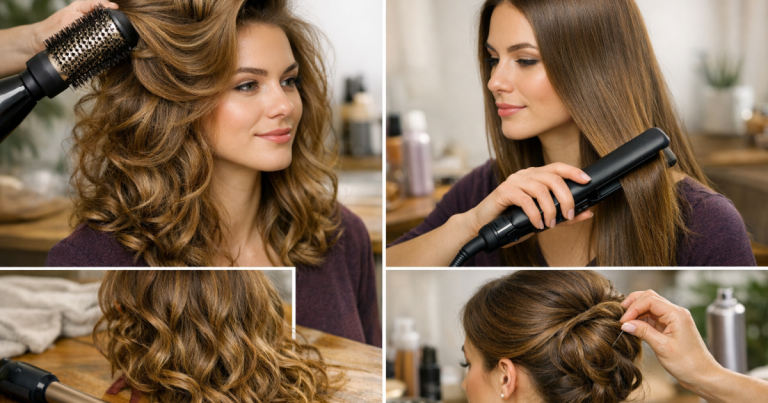
- Airy volume: lift at the roots, movement through the mid-lengths and a soft finish. This usually needs root direction, drying control and a setting stage.
- Glossy sleekness: a smooth cuticle appearance, controlled flyaways and a neat outline. This often depends on drying technique before any straightening.
- Defined curls: consistent curl formation, controlled sections and enough hold to stop the pattern dropping.
- Loose waves: bend rather than curl, often with less precision and more softness.
- Fringe control: direction, root behaviour and face-framing shape matter more than the rest of the hair.
- Heatless shape: comfort, setting time and hair dampness are usually more important than speed.
Map the style to your hair type
The same tool behaves very differently on fine, thick, curly, coily, bleached, long or layered hair. Hair type affects grip, drying time, shape retention, tension tolerance and how much product the finished style can handle.
Fine or flat hair
Fine hair usually needs lift without overloading. Large barrels, oversized rollers or heavy styling creams can make the finish collapse, even if they look right for volume. Root-focused drying, lighter rollers and a setting spray used sparingly often work better than tools designed for very dense hair.
If the goal is body, avoid planning only around the ends. A curled end with a flat root still reads as flat hair. The key is directing the root while the hair cools or sets.
Thick or dense hair
Thick hair often needs sectioning more than extra force. A tool that looks convenient may struggle if it cannot work through the hair evenly. Rollers need enough grip, brushes need enough tension, and heatless wraps need sections that are not too bulky.
For dense hair, the plan should include how long the style will take, whether the underneath layers need the same finish as the surface, and whether the chosen method can hold the hair while it sets.
Curly and coily hair
Curly and coily hair needs planning around shape preservation, shrinkage, moisture balance and tension. Some goals involve stretching the hair first; others work with the natural pattern. A comb attachment, diffuser, brush, wrap or roller can all be useful, but they solve different problems.
If your main frustration is choosing tools that look promising but do not suit your texture, the guide to hair-type styling problems is a useful next step because it separates issues such as frizz, flat roots, puffiness and uneven curl formation.
Damaged, colour-treated or fragile hair
Fragile hair benefits from a slower plan. That may mean using heatless shaping more often, reducing repeated passes with hot tools, styling on properly detangled sections and choosing finishes that do not require aggressive tension. The aim is not to avoid all styling; it is to avoid choosing a tool that needs your hair to behave like stronger, smoother hair than it currently is.
Match the method to the result
Once the finish and hair type are clear, it becomes easier to choose a styling method. This is where planning a hairstyle turns into a practical decision rather than a shopping guess.
If you want volume
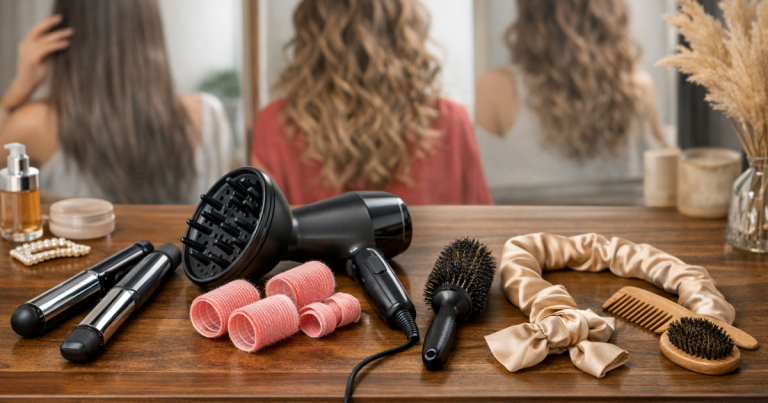
Volume can come from root lift, overall expansion, curl support or shape memory. Velcro rollers are good for setting lift and bend once the hair has been dried into position. Heated rollers can create more obvious bounce on hair that needs extra encouragement to hold shape. A round brush can build direction and smoothness, but it takes coordination and section control.
For fine hair, plan smaller, lighter sections and avoid too much product near the roots. For thick hair, plan enough time for the roots to dry properly; otherwise the lift will drop even if the surface looks styled.
If you want waves
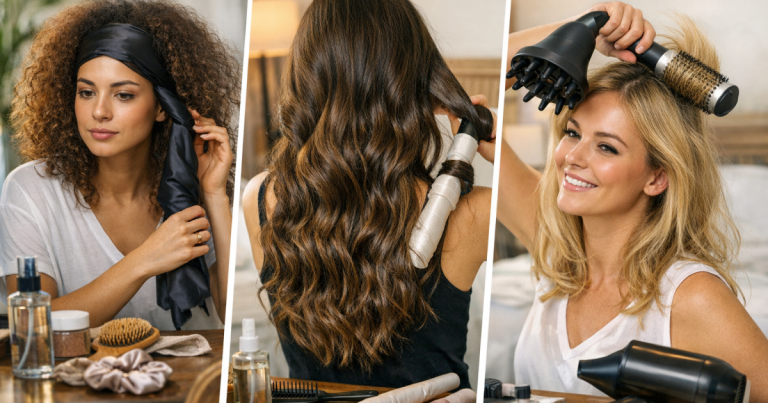
Waves are about pattern size and softness. A heatless curling rod or satin wrap tends to give a softer, more relaxed shape, especially when used on slightly damp or pre-smoothed hair. A curling wand gives a more controlled result but asks for more heat exposure and more active styling time.
Layered hair may need face-framing pieces wrapped separately so they do not spring out at odd angles. Very long hair may need a method that supports the full length, otherwise the ends curl while the mid-lengths stay slack.
If you want sleek hair
Sleekness starts during drying. If the hair dries rough, puffy or in the wrong direction, a straightener has to do more work afterwards. Plan for detangling, tension, airflow direction and cooling time before deciding whether a straightener is even the main tool.
For wavy hair, a paddle brush and controlled blow-dry may be enough for smooth movement. For curly or coily hair, stretching tools and nozzle control may be more relevant. For humid weather, the plan should include finishing products and whether the style needs to survive damp air, commuting or rain rather than just looking good indoors.
If you want a fringe to behave
A fringe is a separate styling project. Cowlicks, parting habits, face shape, root direction and humidity all matter. A large hot brush may be too clumsy, while a nozzle and small brush can give better control. If the issue is splitting, puffing up or sitting flat, read the step-by-step guide to styling a fringe with a hair dryer before buying another tool for the whole head.
Plan around your real routine
A tool is only useful if it fits the way you actually get ready. A perfect finish that takes 45 minutes is not a practical everyday style if you usually have 12 minutes before leaving the house. Equally, an overnight method is only useful if it is comfortable enough to sleep in and does not disturb your hairline or layers.
Ask these routine questions before choosing:
- When will you style? Morning styling favours faster tools; evening styling suits wraps, rollers and setting methods.
- How dry is your hair at the start? Some methods need damp hair, some need fully dry hair and some work best after a blow-dry.
- How long must the result last? A soft wave for one evening is a different target from a smooth finish that needs to last through work and travel.
- How much effort can you repeat? A tool that works only when you section perfectly may not be the best daily option.
- What usually ruins the style? Flat roots, frizz, dropped curls and puffy ends each point to a different solution.
If you like a smooth blow-dry finish but lose it overnight, the tool choice may not be the issue. The missing step could be how the hair is protected while you sleep; the tutorial on wrapping hair overnight for a smooth blow-dry finish explains how to preserve shape without restyling from scratch.
Choose by styling problem, not trend
Trends often show the finished look without showing the hair type, prep, products, weather or time involved. Before following a tool trend, identify the styling problem you are trying to fix.
- Flat crown: choose a method that sets root lift, such as directional drying or rollers placed at the crown.
- Puffy lengths: prioritise smoothing during drying, controlled tension and a finishing step that suits your texture.
- Dropped curls: use smaller sections, let the hair cool or set fully, and avoid tools that create a curl too large for your hair to hold.
- Uneven waves: check section size, wrap direction and whether your layers need a different approach around the face.
- Frizzy ends: review dryness, damage, product weight and whether the tool is roughening the hair surface.
- Roots that revert quickly: plan for weather, scalp oil, drying time and whether the root was fully set.
A simple pre-tool checklist
Use this checklist before buying or reaching for a tool you already own. It helps separate a genuine tool mismatch from a technique issue.
- Desired shape: straight, smooth, bouncy, curled, waved, stretched, lifted or softly bent.
- Finish: polished, fluffy, glossy, beachy, defined, brushed-out or natural-looking.
- Hair condition: strong, fragile, bleached, dry, oily at the roots, frizz-prone or recently trimmed.
- Hair structure: fine, medium, thick, low density, high density, layered, blunt, curly or coily.
- Time available: quick refresh, full wash-day style, overnight set or event styling.
- Heat tolerance: frequent heat, occasional heat, low heat only or heatless preferred.
- Hold needs: one evening, all day, multiple days or just enough shape for a soft finish.
- Maintenance: whether the tool needs cleaning, detangling, roller care or product build-up removal.
If several answers point in different directions, prioritise the thing that usually bothers you most. For example, if you want waves but your biggest issue is flat roots, choose a method that gives lift first and wave second. If you want sleek hair but your ends are fragile, choose a smoother drying routine before adding more straightening.
FAQ
Should I choose a tool based on my haircut or my hair type?
Use both, but start with hair type. Texture, density and condition decide how much grip, heat, tension and setting time you need. The haircut then affects sectioning, face-framing pieces and where volume or curl should sit.
Is heatless styling always better than heated tools?
Not always. Heatless styling is useful for reducing heat exposure and creating softer shape, but heated tools can be more precise, faster or longer-lasting for some hair types. The better choice depends on your finish, routine and hair condition.
Why does my tool work once and then fail the next time?
Small changes can alter the result: hair dampness, product amount, section size, weather, cleanliness of the tool and whether the hair cooled or set fully. Repeat the same prep before blaming the tool.
Can one tool cover volume, waves and sleekness?
Some tools are versatile, but one tool rarely does every goal equally well. A hot brush may smooth and add bend, while rollers may lift and shape, but neither replaces every curling, smoothing or heatless method.
What should I do if I keep buying the wrong tools?
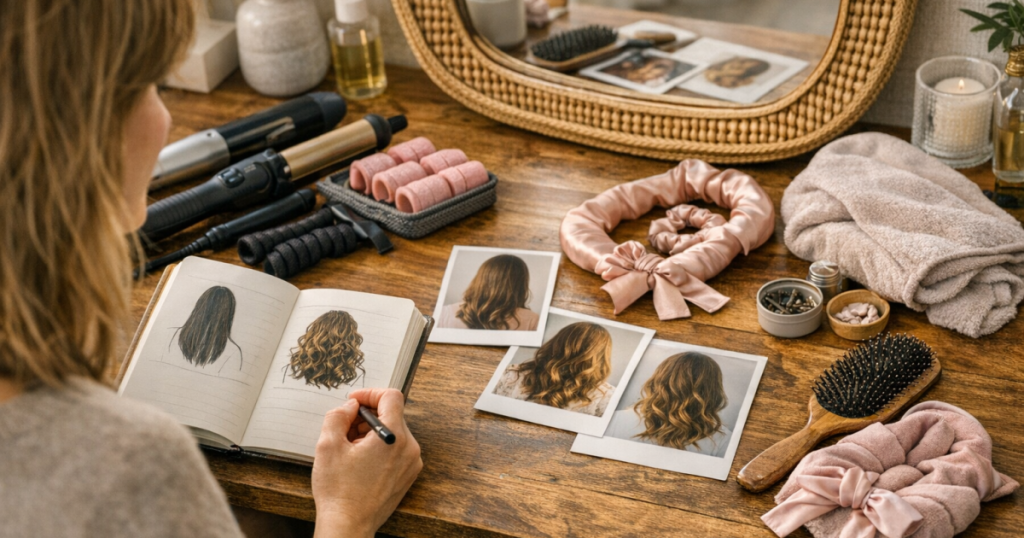
Write down the exact result you want and the exact point where your current style fails. That usually reveals whether you need more lift, more smoothing, stronger hold, gentler styling or simply a better technique.
Final thoughts
The right tool is the one that supports your intended finish, hair type and routine without asking your hair to behave unrealistically. Start with the style plan, then choose the method: lift for volume, controlled drying for sleekness, section discipline for curls, comfort for overnight styling and protection for fragile hair.
Once you make that shift, styling tools become easier to judge. You stop chasing whatever looks impressive in a quick demonstration and start choosing the option that solves your actual hair problem at home.