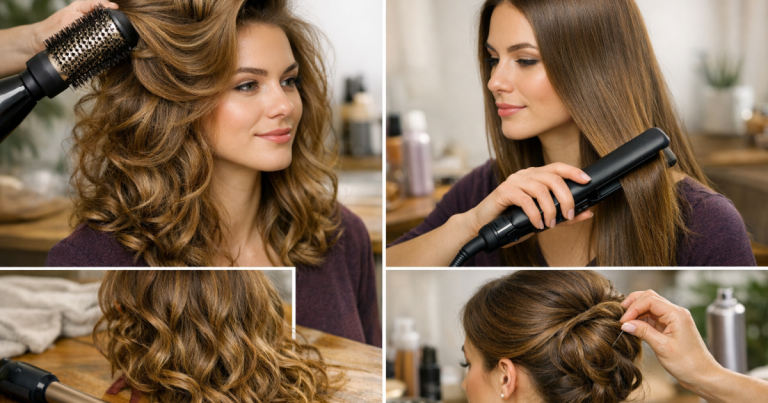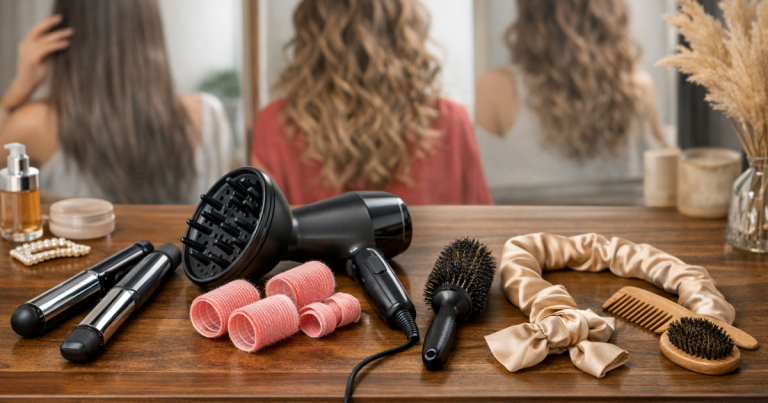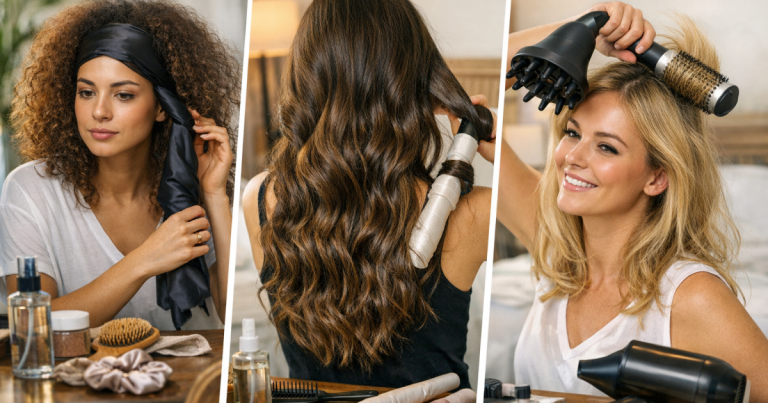
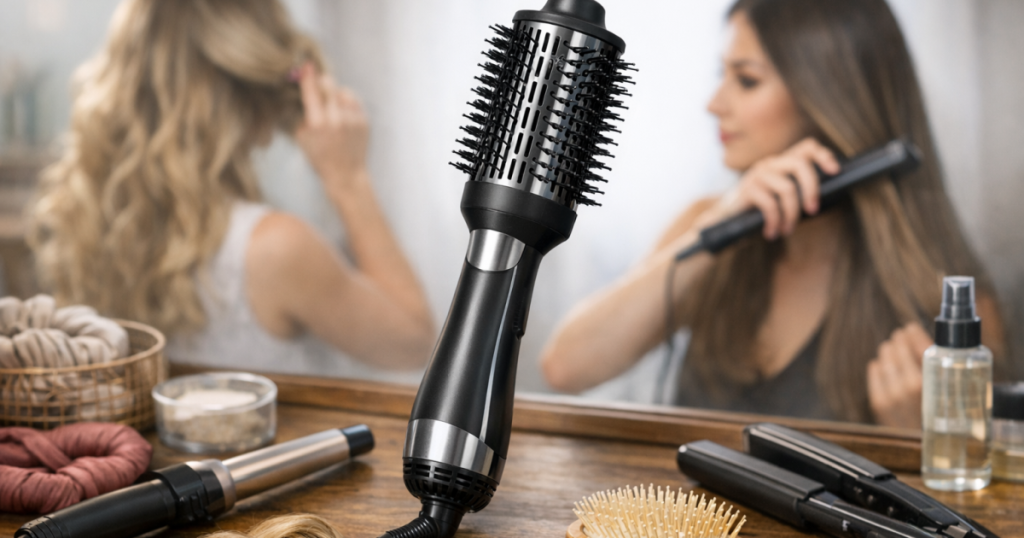
Most at-home styling disappointments start with a mismatch: expecting one hair tool to deliver salon-level volume, polished waves, glassy smoothness and long-lasting curl on every hair type. A single tool can do more than its packaging suggests, but only when the goal, hair texture, starting condition and finish all line up.
The useful question is not whether a styler is “versatile”. It is whether it can create the specific movement, root behaviour and finish you actually want. A tool that gives soft bend on fine hair may barely reshape coarse hair. A tool that smooths fluffy lengths may flatten roots. The right answer depends on the result you are prioritising.
The short answer
A single hair tool can usually achieve two or three related styling goals well, but not every goal equally. The most realistic combinations are:
- Volume, drying and soft bend: a hot air brush or dryer-and-round-brush setup.
- Sleekness, frizz control and gentle shaping: a straightening brush or flat iron, depending on the finish.
- Waves, curls and body: a tong, wand, air styler or heatless curling method.
- Lift, bend and low-heat shape: rollers, heatless rods or wrap methods.
The less realistic expectation is asking the same tool to dry wet hair, smooth dense texture, create tight curls, add root lift and protect fragile ends with no compromise. That is where technique, prep products, drying stage and hair type matter as much as the tool itself.
Start with the styling goal, not the tool
Before choosing a styler, define the finish in plain language. “I want my hair done” is too vague. “I want lift at the crown with soft flicked ends” points to a very different setup from “I want stretched curls with less shrinkage” or “I want polished, straight hair that does not puff up outside”.
If you tend to buy tools and then work out what to do with them, it helps to reverse the order. Planning the end result first makes it easier to decide whether you need airflow, heat, tension, compression, wrapping, drying time or a heatless set. For a deeper process, read how to plan your style before choosing a hair tool.
What different tool types can realistically cover
Hot air brushes: volume, drying and rounded ends
A hot air brush is strongest when your goal is a bouncy blow-dry effect: root lift, smoother lengths and a rounded-under or flicked-out finish. It is useful on fine to medium hair that collapses quickly because the brush shape encourages lift while the airflow dries and shapes.
Its limits show on very wet, very dense or coarse hair. Many people get better results by rough-drying first, then using the brush to finish. On curly or coily hair, a hot air brush may stretch and smooth, but it is unlikely to create a glass-straight result unless paired with strong tension, careful sectioning and enough drying time.
Examples such as the Revlon One-Step Volumiser sit in this category, but the key checks are the barrel size, grip, heat control, weight and whether the tool suits your hair density rather than the name alone.
Air stylers: soft waves, bend and blow-dry shaping
Air stylers and multi-stylers can cover more styling goals than a basic brush because they usually pair drying airflow with interchangeable shaping attachments. They are most realistic for loose curls, soft waves, lifted roots, curtain-fringe shaping and smooth blow-dry movement.
They are less reliable if your main goal is tight, long-lasting curls on resistant hair, or very sleek straightening on coarse texture. Air shaping works best when hair is at the right dampness level and section size. Too wet, and the shape drops. Too dry, and the tool may not reset the hair enough.
A recognisable example is the Dyson Airwrap. It can be genuinely flexible, but readers should still check which attachments come with the current UK kit and whether those attachments match their everyday goal: smoothing, curling, volumising or fringe control.
Flat irons: sleekness, bends and controlled waves
A flat iron is excellent for sleek, smooth results because it compresses the hair between heated plates. It can also create bends, flicks and waves with the right wrist movement. That makes it versatile for polished finishes on many hair types.
The trade-off is that it is not a natural volume tool. It can make roots look flatter if used too close to the scalp or with too much downward tension. On fine or fragile hair, repeated passes can leave ends feeling tired. On coarse hair, too little sectioning can cause a smooth top layer with puffiness underneath.
Heat choice matters here. Fine hair usually needs less heat and fewer passes than coarse or resistant hair. If you are unsure how much is reasonable for your texture, use this guide to how much heat each hair type needs as a starting point.
Straightening brushes: soft smoothing without poker-straight compression
A straightening brush is useful when the goal is smoother, neater hair that still has some body. It can calm surface frizz, loosen bends and make thick hair look more arranged. It usually gives a softer finish than a flat iron because it brushes through rather than clamping.
That softness is also its limitation. If you want a sharp, glassy finish, a brush may not give enough compression. If your roots are very curly, dense or resistant, you will need small sections and patient tension. For coarse hair, the most realistic expectation is controlled smoothness rather than a completely flat ironed look.
Curling wands and tongs: defined curl, bend and wave control
Curling wands and tongs are reliable for creating shape where there was none, or for refining uneven natural waves. They are useful for face-framing pieces, soft bends through layers and more defined curls.
The main limit is that they do not dry hair, detangle, smooth roots or create root volume on their own. The curl may also drop quickly on silky, fine or very heavy hair unless the sections are small enough and the hair is allowed to cool fully before brushing out.
Heatless curlers and rollers: shape with less heat, but more time
Heatless tools are realistic for waves, soft curls, bend, volume and overnight styling. They suit readers who want to reduce heat exposure or style while doing something else. Satin and silk-covered curlers can be gentler than rougher materials, but the result depends heavily on dampness level, tension, sectioning and how long the hair is left to set.
They are not a shortcut for drying wet hair, and they will not usually create a freshly blow-dried smoothness on their own. If you are choosing between fabric finishes, silk vs satin heatless curlers explains how slip, cost and hair texture affect the choice.
A satin rod, soft rollers or foam rollers can all work, but the goal should be bend and set rather than instant transformation. For short hair, smaller rollers are often more practical than a long curling rod because they can sit closer to the head and create lift.
Hair type changes what “versatile” means
Fine or low-density hair
Fine hair often needs lift more than power. A tool that is too heavy, too hot or too smoothing can make the hair look flatter, even if the finish is shiny. Hot air brushes, Velcro rollers, lightweight curling tools and heatless sets can all work well, but the best results usually come from root direction, light tension and cooling time.
For fine hair, the most realistic multi-goal tool is often one that adds volume and bend rather than one that promises intense smoothing. If the ends are fragile, avoid relying on repeated heat passes to fix shape that could be created with rollers or a lower-heat set.
Thick, coarse or high-density hair
Thicker hair usually needs stronger sectioning discipline. A tool may be capable, but only if it can reach the inner layers. For smoothing, that often means smaller sections and enough tension. For curls, it means allowing each section to cool before disturbing it. For heatless styling, it may mean starting with barely damp rather than wet hair so the set actually dries.
Coarse hair is where a single tool’s limits become obvious. A hot air brush may give polish and shape, but not a glass finish. A straightening brush may reduce puffiness, but not replace a flat iron if the goal is very sleek hair. A heatless rod may create waves, but it will not smooth the cuticle in the same way heat and tension can.
Curly and coily hair
For curly and coily textures, the key question is whether the goal is to define, stretch, smooth or reshape. A diffuser supports curl definition and volume, but it will not straighten. Banding or heatless stretching can reduce shrinkage, but it will not give the same polish as a heat tool. A straightening brush can stretch and smooth, but may not preserve curl pattern.
This is why one hair tool can feel brilliant for one curly-haired person and disappointing for another. The goal may sound similar, but “less shrinkage”, “soft blowout”, “defined curls” and “sleek finish” are different styling outcomes.
Where a single tool starts to struggle
Most tools struggle when you ask them to solve conflicting goals at once. Volume and glassy sleekness often pull in opposite directions. Tight curl and loose effortless wave need different wrapping and cooling. Low heat and very fast reshaping may not be compatible on resistant hair.
Watch for these signs that the tool is being pushed beyond its realistic role:
- The roots look flat but the ends are curled, suggesting the tool shapes length better than it lifts.
- The top layer looks smooth while underneath stays puffy, suggesting sections are too large or the tool lacks enough tension for your density.
- The curl looks good for ten minutes, then drops, suggesting the hair did not cool in shape or the tool is better for soft bend than defined curl.
- The hair feels dry after styling, suggesting the goal may need lower heat, fewer passes or a heatless alternative.
- The finish takes longer than using two simpler tools, which means “all-in-one” is not saving effort in practice.
Practical examples of realistic tool-to-goal matches
- Everyday office smoothness on medium hair: a straightening brush can neaten texture while keeping movement. A flat iron is better if the desired finish is very sleek.
- Soft volume on shoulder-length fine hair: a hot air brush or Velcro rollers are more realistic than a flat iron because they encourage root lift.
- Loose weekend waves with less heat: a satin heatless curling rod or soft rollers can work well if hair is not too wet and the set has enough time.
- Polished curls on long, heavy hair: a tong or wand may hold shape more predictably than a heatless method, but cooling time and section size matter.
- Stretched curly hair without a sleek finish: banding, large braids or a gentle blow-dry method can reduce shrinkage, but they are not the same as straightening.
- Fringe shaping and face-framing bend: a small round brush, compact hot brush or air styler attachment can be more useful than a full-size tool.
What to check before relying on one styler
Instead of asking whether a tool does “everything”, check whether it supports your most repeated styling routine. The right questions are practical:
- Does it work on your usual starting point? Some tools suit damp hair, others need dry hair. Using them at the wrong stage affects hold and finish.
- Does it create your priority at the roots? If roots matter, barrel size, airflow direction and section lifting are crucial.
- Does it suit your density? Dense hair needs tools and techniques that can reach inner layers without endless passes.
- Can you control the finish? Sleek, fluffy, airy, defined and undone finishes need different levels of tension and brushing out.
- Will it fit your routine? A heatless set may be gentle, but it is only useful if you can leave it in long enough. A hot tool may be quick, but only if your hair responds well to it.
FAQ
Can one hair tool replace a full styling routine?
Sometimes, but only if your goals are closely related. For example, a hot air brush can dry, smooth and add bend. It is less realistic if you also want tight curls, strong root lift and a pin-straight finish.
Which styling goal is hardest for one tool to cover?
Combining lasting volume with very sleek smoothness is difficult because the techniques often conflict. Volume needs lift and airflow; sleekness usually needs tension, compression or downward smoothing.
Are heatless tools versatile enough for everyday styling?
They can be, especially for waves, bend and gentle volume. They are less versatile if you need fast drying, root smoothing or a highly polished finish before leaving the house.
Is a multi-styler better than separate tools?
It depends on your routine. A multi-styler can be convenient if you regularly switch between blow-dry shape, soft waves and smoothing. Separate tools may be easier if you only want one very specific finish.
Why does the same tool work for someone else but not for me?
Hair density, texture, length, layering, product use and drying stage all change the outcome. Technique matters too: section size, tension and cooling time can completely alter the result.
The big picture
A single styler is most useful when it is chosen around one main goal and one or two supporting goals. Volume plus bend is realistic. Smoothness plus soft shape is realistic. Heatless waves plus reduced heat exposure is realistic. Expecting the same tool to dry, straighten, curl, volumise and repair the hair is where disappointment starts.
The more specific you are about the finish, the easier the decision becomes. Decide whether you need lift, smoothness, curl, stretch, definition or low-heat shaping first. Then choose the tool type that naturally creates that result, rather than expecting versatility to solve every styling problem.