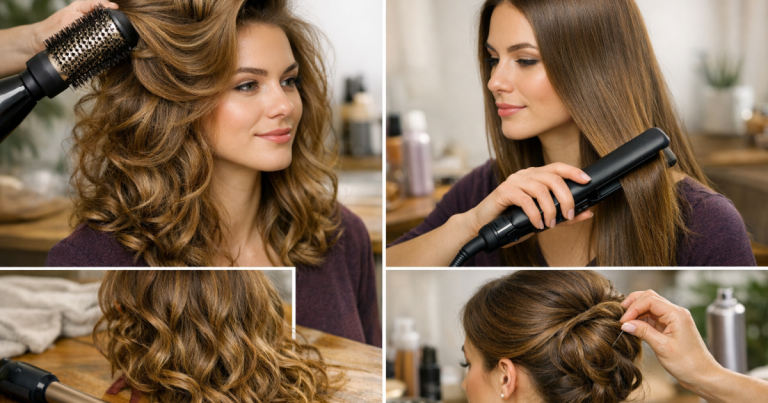
Good hair days get easier when you stop treating volume, waves and sleekness as equal priorities. Your styling goal should decide the order: lift the roots, shape the lengths or polish the surface first, then choose tools and finishing steps around that decision. The right order changes with texture, density, length and how long you need the result to last.
What to know first
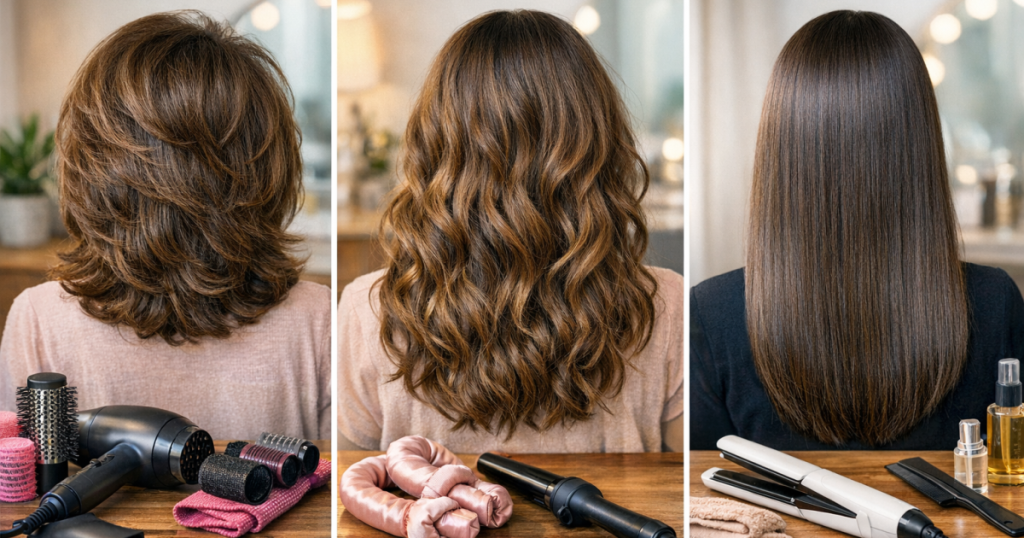
Most styling disappointment comes from asking one routine to do three conflicting things. Big root lift needs lightness and grip. Defined waves need controlled shape and enough hold. Sleekness needs alignment, smoothing and reduced frizz. Those aims can overlap, but they do not always like the same prep.
- Choose volume first if your hair goes flat quickly, your roots separate, or your shape disappears at the crown.
- Choose waves first if movement and curl pattern matter more than a perfectly smooth surface.
- Choose sleekness first if frizz, puffiness or uneven texture is what makes the finished style feel unfinished.
- Choose preservation first if you are styling at night and need the result to survive sleep, commuting or damp British weather.
The aim is not to ignore the other two finishes. It is to decide which one gets protected from the start. Once that is clear, the rest of the routine becomes much less random.
Why the order matters more than the number of tools
Hair styling is a sequence. If you flatten the roots while smoothing, you will struggle to add believable volume afterwards. If you brush through newly formed waves to chase sleekness, you may lose the shape you spent time creating. If you overload fine hair with oils before trying to build lift, the roots may collapse before you leave the house.
This is why the most useful question is not always “which tool does everything?” It is “which finish should the first step protect?” For a wider view on tool limits, it is worth reading how much one hair tool can realistically achieve, because even versatile tools usually favour one result more than another.
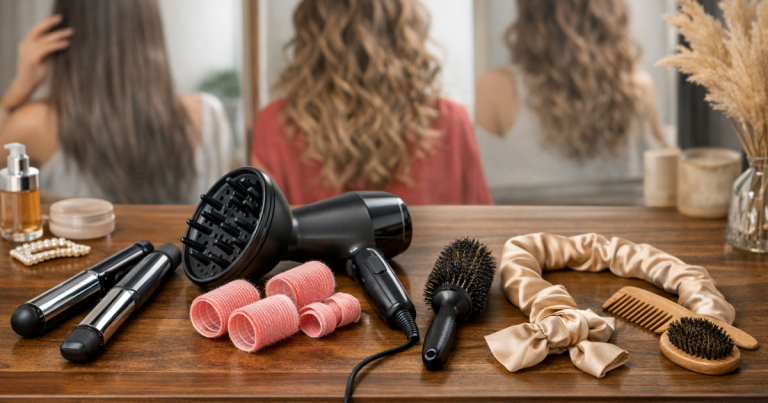
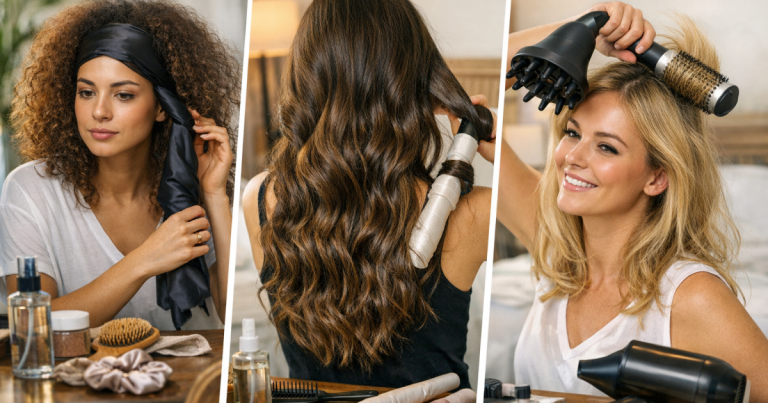
Your styling goal becomes the anchor. A heatless curling rod, rollers, a smoothing brush, a diffuser, a silk wrap or a root-lifting tool can all be useful, but none of them can fully undo a routine that starts in the wrong direction.
When volume should come first
Volume should lead when your hair loses height at the roots before the ends lose shape. This is common with fine hair, low-density hair, long hair with heavy ends, silky straight hair and hair that has been conditioned very generously. It can also happen on thick hair if the top layer is dense and weighs down the crown.
For volume-led styling, start with the roots. That might mean drying the root area fully before shaping the lengths, placing rollers where you need lift, clipping the crown while hair cools or sets, or keeping heavier finishing products away from the scalp. Heatless routines can work well here, but they need tension and placement: a soft wave through the ends will not compensate for roots that dried flat against the head.
Hair-type notes for volume
- Fine straight hair: keep prep light and focus on root direction. Too much smoothing cream can make the finish look clean but limp.
- Fine wavy hair: encourage the natural bend, but lift the crown before scrunching or setting the lengths.
- Thick straight hair: volume may need sectioning, not more product. Large sections tend to sit heavy and flat.
- Curly hair: root volume is often about drying position and avoiding product build-up at the scalp, rather than brushing or backcombing.
If your hair is shoulder-length or longer, length can change the whole decision. Longer lengths pull down root lift, while very short hair may need smaller tools or more precise placement. The guide to how hair length changes tool choice by hair type is a useful next step if your usual method works at one haircut but not another.
When waves should come first
Waves should come first when shape is the part people notice, or the part that makes your hair feel styled rather than just tidy. This includes loose heatless curls, soft bends, beachy texture, brushed-out waves and curl-enhancing routines where the pattern needs to set before you touch the surface.
The main risk is over-polishing too early. If you smooth every section flat before wrapping, rolling or setting, the hair may look glossy but reluctant to hold a bend. If you apply too much oil before wave formation, the lengths can slip out of shape. With waves, the priority is controlled grip: hair should be smooth enough not to frizz, but not so slippery that the pattern drops.
Hair-type notes for waves
- Fine hair: smaller sections usually hold better than oversized wraps. Keep the roots light and avoid heavy finishing layers.
- Medium-density wavy hair: define the wave first, then soften the surface with hands rather than brushing from root to tip.
- Thick hair: sectioning matters. If the inner layers are not shaped, the outer layer can look styled while the overall silhouette turns bulky.
- Coily or very curly hair: waves may mean stretching, setting or shaping rather than creating curl from scratch. Moisture balance and gentle handling matter more than aggressive brushing.
Wave-first routines are often the most sensitive to sleep and weather. A style can look beautiful at bedtime but lose definition if the hair is compressed, pulled into a tight elastic or brushed hard the next morning. Loose containment, a smooth fabric surface and minimal disturbance usually protect the pattern better than trying to rebuild it from the beginning.
When sleekness should come first
Sleekness should lead when the main problem is frizz, puffiness, rough texture or uneven alignment. This does not always mean poker-straight hair. Sleek waves, smooth curls and polished ponytails all start with surface control. The difference is that you are managing the cuticle and flyaways before chasing lift or movement.
For sleekness-led styling, the order usually shifts towards detangling, controlled drying or setting, and careful finishing. A detangling brush, smoothing serum, hair oil used sparingly on the ends, a silk wrap or a low-friction sleep setup can all help, but the amount matters. Too much smoothing can turn fine hair flat; too little can leave thick or porous hair looking expanded rather than polished.
Hair-type notes for sleekness
- Fine hair: apply smoothing products from mid-lengths down and use the smallest amount first. Shine should not cost you all your lift.
- Thick hair: work in sections so the underneath is controlled too. Surface-only smoothing can leave the shape wide or uneven.
- Porous or colour-treated hair: sleekness often depends on hydration and gentle handling, not just finishing spray.
- Curly hair: sleekness should not mean breaking up the curl pattern. Smooth the surface with palms, targeted product and careful drying or wrapping.
If your main frustration is the halo that appears after heatless curls or waves have set, tackle it without brushing through the shape. The method for smoothing flyaways after heatless curls without brushing them out explains why targeted finishing is usually safer than trying to restyle the whole head.
Where the advice can conflict
Hair advice often sounds contradictory because it is aimed at different priorities. One routine says to use oil before styling; another says to avoid it until the end. One person gets volume from rollers; another finds rollers make the crown too polished and flat. Both can be true when the first person wants lift and the second needs texture or grip.
The same applies to brushing. Brushing can make sleek hair look expensive, but it can also blur waves. Scrunching can revive movement, but it may disrupt a smooth surface. Root clipping can create lift, but if placed carelessly on very sleek styles it can leave dents. The right move depends on which result you are protecting.
There is also a timing issue. Heatless styling done overnight rewards comfort and preservation, while morning styling rewards speed and visible control. If you have only ten minutes, sleekness may be the easiest finish to improve quickly. If you can set hair while it dries, waves or volume may be more realistic.
A simple priority order by common scenario
- Flat roots with decent ends: volume first, then light smoothing. Avoid starting with heavy oils near the scalp.
- Frizzy lengths with no clear shape: sleekness first, then waves if you still want movement. Detangle and control the surface before setting.
- Defined natural waves that turn fluffy: waves first, then targeted sleekness. Do not brush through once the pattern is formed.
- Long fine hair that drops quickly: volume first at the crown, waves second through smaller sections, minimal shine product at the end.
- Thick hair that expands outwards: sleekness first through sectioning and surface control, then add waves only where they will not create extra width.
- Short hair needing shape: volume and direction usually come before wave definition. Smaller sections give more control.
How to combine all three without fighting your hair
The most reliable approach is to choose a lead finish, then add the other two in smaller doses. For example, a volume-led routine might use root lift first, soft waves through the mid-lengths, then a tiny amount of smoothing on the ends. A wave-led routine might set the lengths first, loosen with fingers, then polish only the visible surface. A sleekness-led routine might smooth and align first, then add a gentle bend at the ends rather than full waves.
Think of it as a hierarchy: one finish leads, one supports, one stays subtle. That hierarchy keeps the style coherent. Hair that is extremely voluminous, very wavy and ultra-sleek all at once is rare outside controlled salon conditions, and at home it can take more effort than the result is worth.
Your styling goal can also change by day. Work hair might prioritise sleekness because it needs to stay tidy. Weekend hair might prioritise waves. Second-day hair might prioritise volume at the roots because the lengths already have movement. You do not need one permanent routine; you need a clear first decision each time you style.
FAQ
Can I get volume and sleekness at the same time?
Yes, but keep the sleekness targeted. Build lift at the roots first, then smooth the surface and ends lightly. Heavy smoothing from root to tip usually reduces volume.
Should I style waves before or after using oil?
For most hair, shape the waves first and use oil sparingly afterwards. Very dry or porous hair may need a tiny amount before styling, but too much can make waves drop.
Why do my heatless curls look good at night but flat in the morning?
The set may be too loose, the roots may be drying flat, or the curls may be compressed while you sleep. Secure the shape gently and avoid tight elastics that squash the pattern.
Is sleek hair always the opposite of textured hair?
No. Sleekness is about surface polish, not removing all movement. You can have smooth waves, glossy curls or a polished textured ponytail.
Which goal should fine hair prioritise?
Fine hair usually benefits from volume first, unless frizz is the main issue. Keep products light, protect the roots, then add waves or smoothing in small amounts.
Key takeaways
Volume, waves and sleekness are not just different finishes; they ask different things from your hair. Volume needs lightness and root direction. Waves need shape and enough grip. Sleekness needs surface control and careful finishing. When you decide which one comes first, the tools and techniques become easier to judge.
If your style keeps failing, do not immediately assume you need a completely new routine. Change the order. Protect the finish that matters most, add the others gently, and let your hair type decide how much control, lift or polish it can comfortably hold.