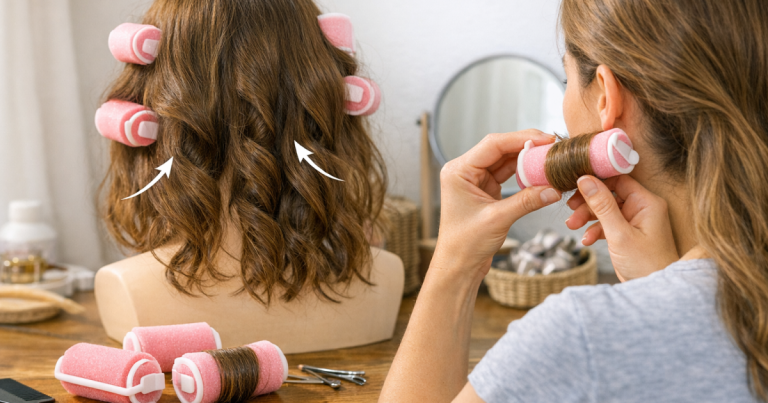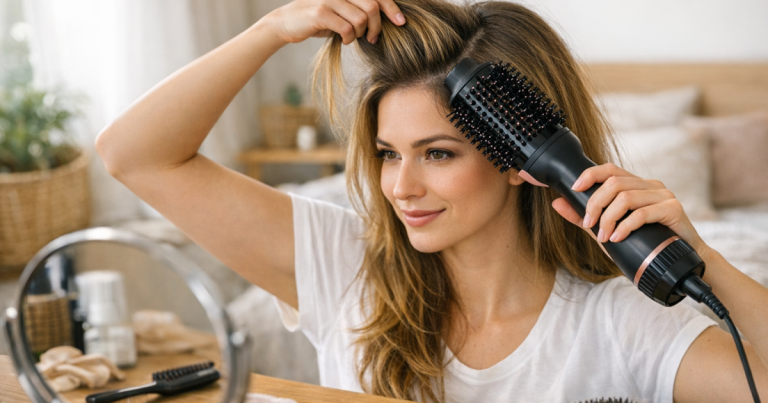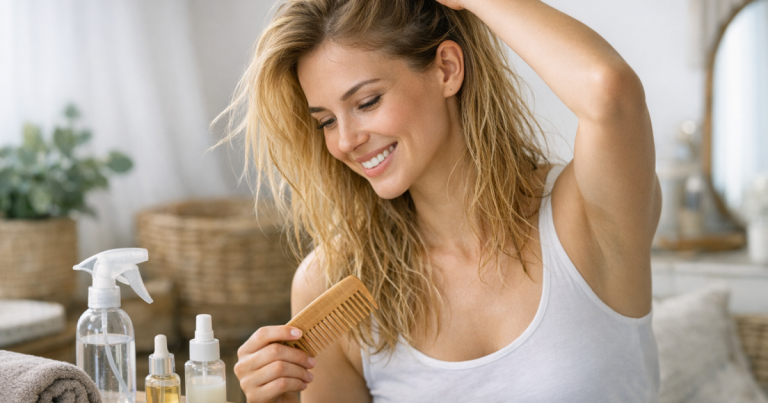
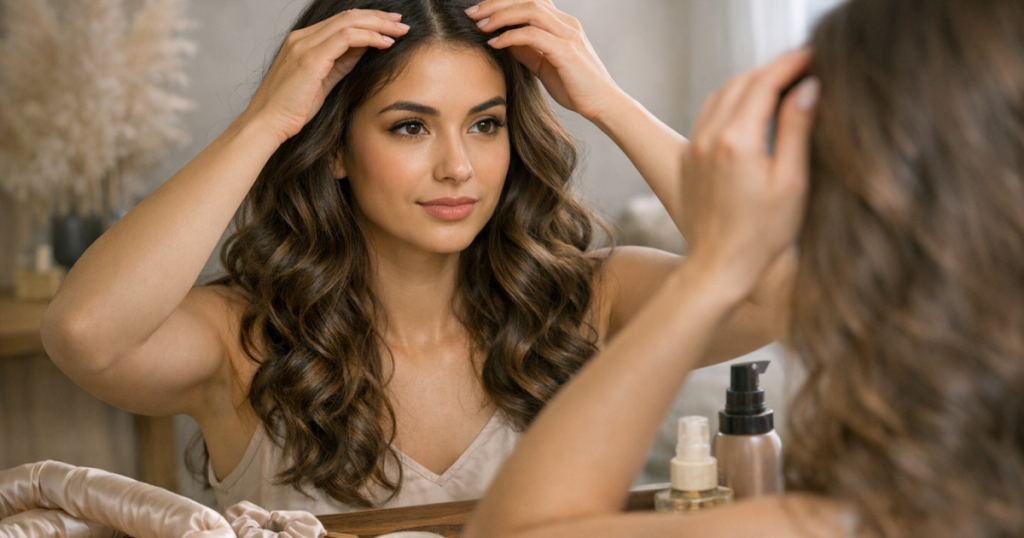
The trick is to calm the surface without disturbing the curl pattern underneath. To smooth flyaways after heatless curls, work in small sections, add slip only where the hair is frizzy, and use your fingers rather than a brush. The goal is not poker-sleek hair; it is a softer halo, cleaner parting and more intentional curl shape.
Brushing is usually what turns a good overnight set into a fluffy cloud, especially on fine, wavy, highlighted or naturally porous hair. A better approach is to treat flyaways as a finishing problem, not a full restyle.
The curl-safe fix in brief
- Wait until the hair is completely dry before touching the curls.
- Use damp fingers, a tiny amount of oil, serum, cream or gel, depending on your hair type.
- Glide over the surface rather than raking through the curl.
- Retwist only the fuzzy pieces that need help.
- Set the front and crown for a few minutes with your hands, a satin scarf or lightweight clips.
Why flyaways show up after heatless curls
Heatless curls are shaped by tension, drying time and the way the hair is wrapped. That makes them gentler than hot tools, but it also means the top layer can escape more easily, particularly around the crown, hairline and ends. If your hair was slightly damp at bedtime, slept against cotton bedding, or was wrapped with uneven tension, the surface may dry with little lifted strands.
Hair condition matters too. Dry ends, colour-treated lengths and high-porosity curls tend to grab moisture from the air, so the halo can appear even when the curl pattern underneath looks good. If your ends feel rough rather than simply fluffy, a lightweight finishing oil can help add slip. For an example of how an oil can smooth shine without making ends feel heavy, see the L’Oreal Elvive Extraordinary Oil review.
Step 1: let the curls settle before fixing the surface
Do not start smoothing the moment you remove your curling rod, rollers or wrap. Let the curls fall for a few minutes first. This gives you a clearer view of what is actually frizz and what is just curl volume.
Use your fingers to lift the roots gently, then shake the curls from underneath rather than combing from the top. If a curl clump looks defined, leave it alone. The fewer pieces you disturb, the easier it is to keep the shape polished.
Step 2: choose the lightest smoother that will work
Your hair type should decide the product, not the amount of flyaway you can see in the mirror. Too much product can flatten heatless curls faster than a brush would.
For fine or easily weighed-down hair
Start with plain water on your fingertips. Rub your hands together, then skim over the top layer and parting. If you need product, choose a very light serum or a tiny touch of oil, pressed into your palms first so there is no visible blob. Avoid applying product directly to the roots unless the crown is very wiry.
For medium, wavy or normal-density hair
A light leave-in cream, serum or flexible styling cream usually gives better control than water alone. Smooth over the surface using flat palms, then scrunch the ends upwards once to bring back bounce. If the frizz is mostly around the face, use the leftover product on your fingers rather than adding more.
For thick, curly or coily hair
Use a mist of water first, then a small amount of cream, oil or gel depending on your usual routine. Work in sections rather than trying to flatten the whole canopy at once. For curls and coils, glazing and retwisting are usually more successful than finger-combing, because they keep the curl family together.
Step 3: smooth with the right hand movement
The movement matters as much as the product. Raking separates the curl; glazing refines it. Place your palms on either side of a section and slide lightly down the outside, almost as if you are smoothing fabric rather than detangling hair.
- For a fuzzy parting, tap damp fingertips along the part, then press the hair down for a few seconds.
- For halo frizz at the crown, skim your palms over the surface from back to front, then front to back.
- For fluffy ends, twist the last few centimetres around your finger with a hint of product.
- For face-framing pieces, wrap each section around a finger in the original curl direction and let it sit while you finish make-up or skincare.
If you cannot tell which direction the curl wants to go, look at the bend nearest the mid-length. Twisting against that direction often creates a kink; following it makes the repair look intentional.
Step 4: set the polished top layer for a few minutes
Once the flyaways are smoothed, give the hair a moment to remember the shape. You do not need heat. Press the top layer with your hands, use a satin scarf for five to ten minutes, or clip stubborn face-framing pieces loosely while they dry from the light mist.
If flyaways are worse after sleeping, the issue may be friction rather than your morning technique. A satin or silk pillowcase, bonnet, scarf or curl-preserving wrap can reduce the amount of repair needed. The Sleepy Tie review is useful if your main problem is keeping heatless curls intact overnight rather than recreating them each morning.
What to avoid when the curls look fluffy
- Do not brush from root to tip unless you are happy to turn curls into waves.
- Do not spray the whole head heavily with water; it can collapse the curl set.
- Do not keep adding oil to the same patch, as it can create a greasy-looking crown.
- Do not pull tight sections flat against the head, especially on fine hair.
- Do not use a towel to rub the surface. If you need to blot, use a smooth microfibre towel or soft cotton T-shirt and press only.
A brush is not banned forever; it is just the wrong tool for preserving a finished heatless curl set. Save proper detangling for wash day or before you wrap the hair again. If you are deciding whether your current brush is helping or roughing up your lengths, the Tangle Teezer Original Detangling Brush review explains the difference between fine and thick hair use.
Quick fixes by flyaway location
Parting looks fuzzy
Mist your fingertips, trace along the parting, then press down with flat fingers. If needed, use the tiniest amount of serum on the very top layer only. Keep product away from the scalp if your roots get oily quickly.
Crown has a halo
Flip the ends away from the crown so you can see the lifted surface hairs. Glide over them with lightly coated palms, then let the curls fall back into place. This keeps the volume underneath while calming the top.
Ends look dry and scattered
Add slip to your fingertips and twist the ends in small groups. Do not coat every curl. Target the pieces that look frayed, then scrunch once from below to blend them into the rest of the style.
Fringe or front pieces have gone airy
Use a clean spoolie or your fingertips with a trace of product, then reshape the front pieces around your finger. Let them sit while they dry fully before touching them again.
Questions people ask
What is the fastest way to smooth flyaways after heatless curls?
Dampen your fingertips, rub them together, and skim over the fuzzy areas only. Add a tiny amount of serum or cream if water alone does not hold the surface down.
Can I use hairspray without making the curls crunchy?
Yes, but spray it onto your hands or a clean spoolie first, then smooth the flyaways. Spraying directly over the whole head can make soft heatless curls feel stiff.
Should I brush heatless curls at all?
Only if you want a softer wave rather than defined curls. For curl preservation, separate with fingers and smooth the surface instead of brushing through the lengths.
Why do my flyaways come back after an hour?
Your hair may need more hold, less friction, or better moisture balance. Try a light gel or styling cream on the top layer, and protect the curls from collars, scarves and damp weather.
Is oil or water better for flyaways?
Water is better for light reshaping; oil is better for dry, rough-looking ends. Fine hair often needs water first, while thicker or porous hair may need a little product layered over it.
Final thoughts
Flyaways after heatless curls are usually fixable without sacrificing the style. Work lightly, target only the frizzy areas, and match the smoother to your hair type: water for fine hair, serum for light polish, cream for softness, and gel for extra hold on curls and coils. The best result still looks like your original heatless set, just cleaner, softer and more deliberate.