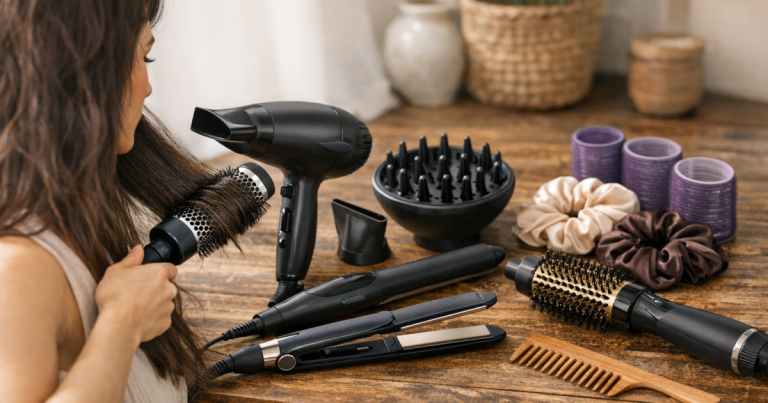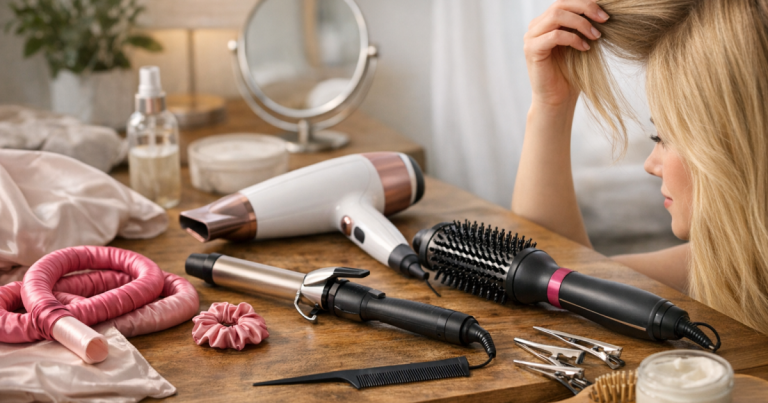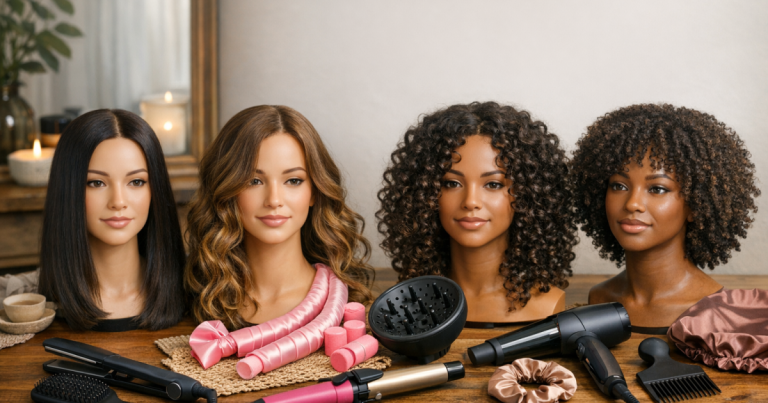
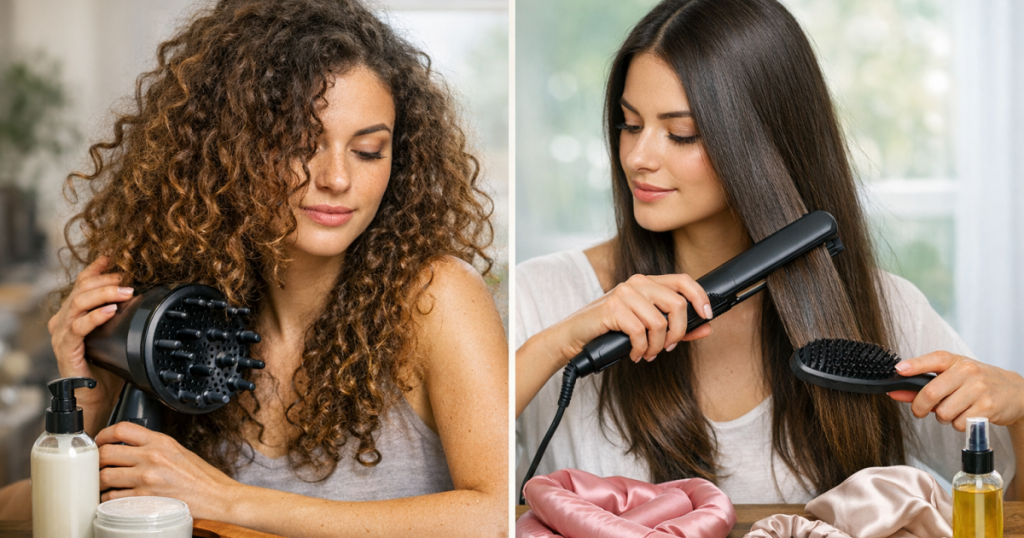
Porosity changes how hair takes in water, product and styling tension, so understanding high vs low porosity hair helps you choose tools that work with your strands rather than against them. If your curls collapse before lunchtime, your rollers never fully set, or your smooth blow-dry turns fluffy in damp weather, porosity may be part of the reason.
It is not the same as thickness, density or curl pattern. Fine hair can be high porosity, thick hair can be low porosity, and curly hair can sit anywhere on the scale. The most useful approach is to match porosity with your actual hair type, then choose tools, drying methods and prep that suit both.
The short version
- Low-porosity hair has a more compact cuticle, so water and product can sit on the surface. It often needs lighter prep, smaller sections and more drying time.
- High-porosity hair absorbs moisture quickly but can lose it quickly too. It usually benefits from gentler tools, smoother materials and lower-friction styling.
- Fine hair needs restraint, whatever its porosity: too much product or tool tension can flatten it.
- Thick, curly or coily hair usually needs better sectioning and more controlled drying, but the right level of tension depends on porosity.
- Heatless tools can suit both porosity types, but the starting dampness, product amount and set time need adjusting.
For a broader hair-type overview, the site’s guide to styling tools by hair type is a helpful next step once you know where porosity fits in.
What porosity changes when you style
Low-porosity hair tends to repel water at first. You may notice droplets sitting on the hair, styling cream feeling coated rather than absorbed, or damp sets taking far longer to dry than expected. This does not mean the hair cannot be styled; it means tool choice and timing matter. Heavy creams, dense oils and very wet heatless sets can leave the hair limp, sticky or half-dry underneath.
High-porosity hair behaves differently. It can soak up water and leave-in products quickly, but the finish may become rough, puffy or dry-looking as moisture escapes. This is common on colour-treated, lightened, frequently heat-styled or naturally fragile textures, though it is not limited to them. Styling tools that drag, snag or over-stretch the hair can make the surface look frizzier.
The practical difference is simple: low-porosity hair usually needs help letting the style set; high-porosity hair usually needs help keeping the surface smooth and the shape protected.
Tool choices for low-porosity hair
With low-porosity hair, the biggest styling mistake is assuming more product will create more hold. Often, it does the opposite. The hair becomes coated, takes longer to dry and loses bounce. Tools that work well tend to encourage airflow, even tension and full drying without needing a heavy product layer.
- Velcro rollers: Useful for volume on straight, wavy or fine low-porosity hair, especially when the hair is almost dry rather than wet. Use moderate section sizes so the inner layers dry properly.
- Satin heatless curling rod: Better used on slightly damp or nearly dry hair with a light styling mist or mousse. If the hair is too wet, the outer layer may dry while the wrapped inner layer stays damp.
- Hooded dryer attachment: Helpful for low-porosity curl sets because indirect warm airflow can encourage the set to dry evenly. Keep the airflow comfortable and avoid relying on high heat to force a result.
- Wide-tooth comb or flexible detangling brush: Best used when the hair has enough slip. Low-porosity hair can feel resistant when overloaded, so detangle in small sections rather than adding more product immediately.
- Sectioning clips: More important than they look. Neater sections help rollers, rods and curl tools dry evenly instead of creating a styled outer layer and damp roots.
If low-porosity hair is also fine, prioritise lift over coating. Root clips, large rollers and light-hold styling products usually work better than rich masks right before styling. If it is thick or coarse, allow more set time and use narrower sections rather than simply increasing product.
Tool choices for high-porosity hair
High-porosity hair needs tools that minimise roughness. It may style quickly, but it can also lose polish quickly, particularly in humid or rainy GB weather. The aim is to create shape without repeatedly disturbing the cuticle.
- Silk or satin wraps: Useful for protecting styled hair overnight and reducing friction against bedding. They are particularly helpful for high-porosity waves, curls and fragile ends.
- Soft heatless curlers: Good for reducing daily heat exposure, provided the hair is not wrapped too tightly. Slight tension is enough; high tension can stretch vulnerable strands.
- Detangling brushes used gently: A tool such as Tangle Teezer The Ultimate Detangler can be useful on wet hair with conditioner or leave-in slip, but technique matters more than the brush name. Work from ends upwards.
- Curl styling brushes: A brush such as Denman D3 Original Styler can help define curl clumps on suitable textures, but it should glide through hydrated hair rather than pull through dry, tangled sections.
- Low-friction clips and accessories: Avoid rough seams, tight elastics and metal edges that can catch on porous, sensitised hair.
High-porosity hair does not have to avoid heated tools completely, but it usually needs a more cautious routine: less frequent heat, controlled temperature, good prep and fewer passes. For a deeper look at when each method makes sense, read the comparison of heatless and heated styling for different finishes.
Matching porosity with hair type
Fine low-porosity hair
This hair often looks flat before it looks frizzy. Use lightweight prep, large rollers for lift, and start heatless curls on hair that is barely damp. Too much cream or oil can make the result feel heavy rather than smooth. If your main issue is curl drop, the guide on how to prep fine hair for long-lasting heatless curls covers the balance between moisture, hold and weight.
Fine high-porosity hair
This combination can be delicate: the hair may frizz easily but collapse under rich products. Choose soft rollers, gentle brushes and light leave-ins. Avoid aggressive backcombing, tight heatless wrapping and repeated brushing after the style is set. A light finishing product on the ends is usually more useful than heavy smoothing from root to tip.
Thick low-porosity hair
Thick low-porosity hair often needs patience rather than more product. Use strong sectioning, allow enough drying time and avoid wrapping large damp sections around a single tool. Heatless curls, roller sets and twist sets can all work, but they need smaller sections and a realistic set time. If roots stay damp, the style will not last.
Thick high-porosity hair
This hair can look full and styled quickly, then expand as the day goes on. Choose tools that smooth without crushing volume: satin rods, soft scrunchies, wide-tooth combs and controlled airflow. Avoid rough towel drying before styling, as friction can undo the smoothing work before tools even touch the hair.
Curly and coily hair
Porosity is especially noticeable on curls because shape, hydration and frizz are closely linked. Low-porosity curls may need lightweight layers and thorough drying. High-porosity curls often need more protection at the ends and less manipulation once styled. For both, tool tension should support curl formation, not pull the pattern straight.
Checks before changing your routine
Before replacing every styling tool, look at how your hair behaves during a normal wash-and-style day. Porosity clues are more reliable when they come from repeated behaviour, not a single test.
- How fast does your hair get wet? Slow wetting can point towards lower porosity; instant soaking can point towards higher porosity.
- How long does it take to dry? Low-porosity hair may stay damp for ages, especially in thick sections. High-porosity hair may dry quickly but feel rough or dehydrated.
- Do products sit or disappear? Products sitting on the surface suggest you may need lighter layers. Products vanishing quickly may mean you need better sealing or gentler handling.
- Does the style fail at the root or the ends? Damp roots often mean the set was not dry enough. Frizzy ends may point to friction, damage or high-porosity areas.
- Does weather change the finish? Porous hair can swell or frizz in damp conditions, so overnight protection and finishing technique matter.
Avoid relying too heavily on the popular water-glass test, where strands are dropped into a glass of water. Product residue, hair thickness and trapped air can affect the result. Your real styling pattern is more useful.
Small adjustments that make tools work better
For low-porosity hair, start with less product than you think you need. Apply in fine layers, then add hold only where the style needs it. Let heatless tools sit until the hair is fully dry, not just cool or dry on the outside. If the result feels limp, reduce moisture next time rather than increasing hold immediately.
For high-porosity hair, reduce friction at every stage. Blot rather than rub, detangle with slip, and choose smooth accessories. If using heat, keep passes minimal and avoid chasing a glassy finish at the expense of hair condition. A slightly softer style that lasts is often better than an overworked style that frizzes by evening.
For mixed-porosity hair, which is very common, treat the most fragile areas differently. Ends may need a little more protection, while roots may need less product and more lift. You do not have to use one tool or one product amount across the whole head.
Things readers ask
Can hair be both high and low porosity?
Yes. Roots can be lower porosity while older, coloured or heat-styled ends are higher porosity. Adjust product amount and tool tension by area rather than treating all sections the same.
Is low-porosity hair healthier?
Not automatically. It may have a compact surface, but it can still become dry, brittle or weighed down. The main issue is absorption, not a guarantee of condition.
Should high-porosity hair avoid rollers?
No. Soft rollers and satin-covered heatless tools can work well. Avoid rough surfaces, tight wrapping and removing rollers before the hair is fully set.
Does porosity matter more than curl pattern?
Both matter. Curl pattern affects shape and tension; porosity affects moisture, drying and frizz. The best routine considers both together.
How often should I reassess porosity?
Recheck when your hair changes: after colour, lightening, frequent heat styling, a major cut or a change in your wash routine. New growth and older ends may behave differently.
Why it matters
The right styling tool is not just about whether your hair is fine, thick, straight or curly. Porosity explains why the same roller, brush or heatless curler can give one person polished shape and another person limp roots or frizzy ends. Once you understand the difference, the fixes become more targeted: lighter prep and more drying time for low-porosity hair; smoother tools and lower friction for high-porosity hair. That makes your routine more predictable, with fewer products, fewer failed sets and less unnecessary heat.