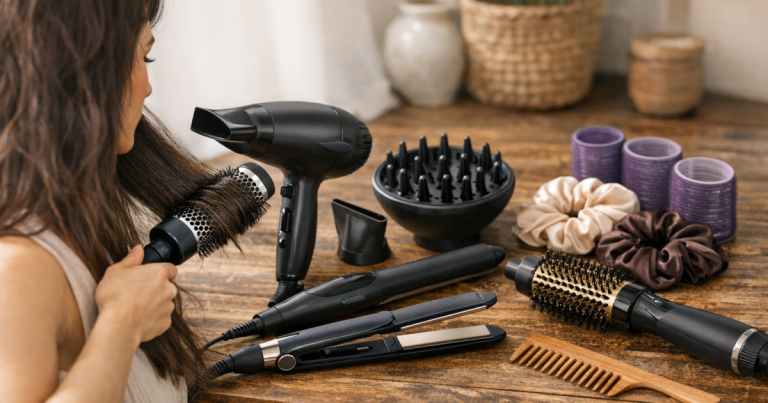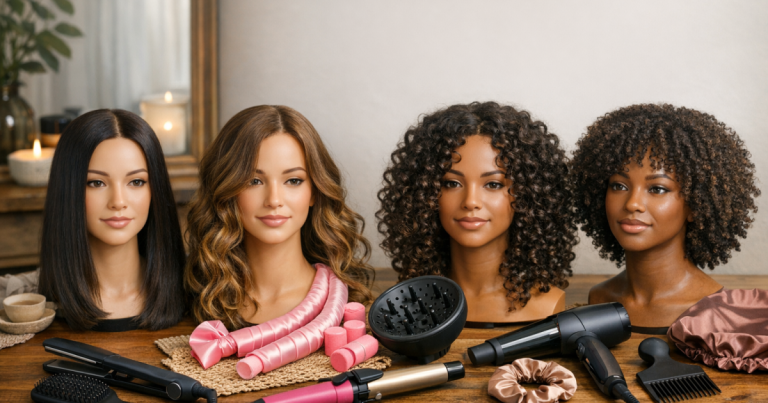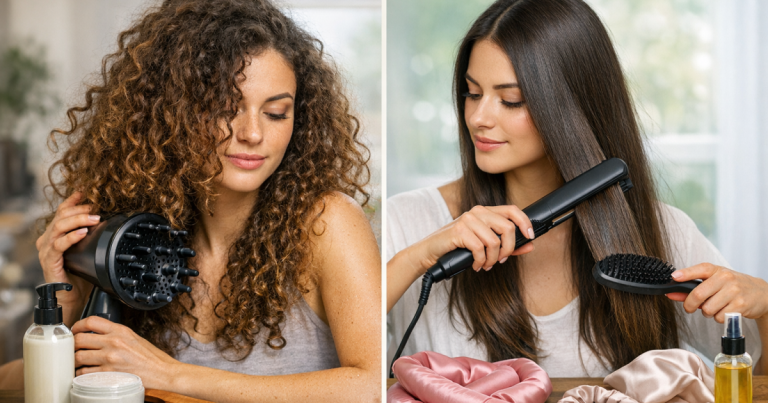
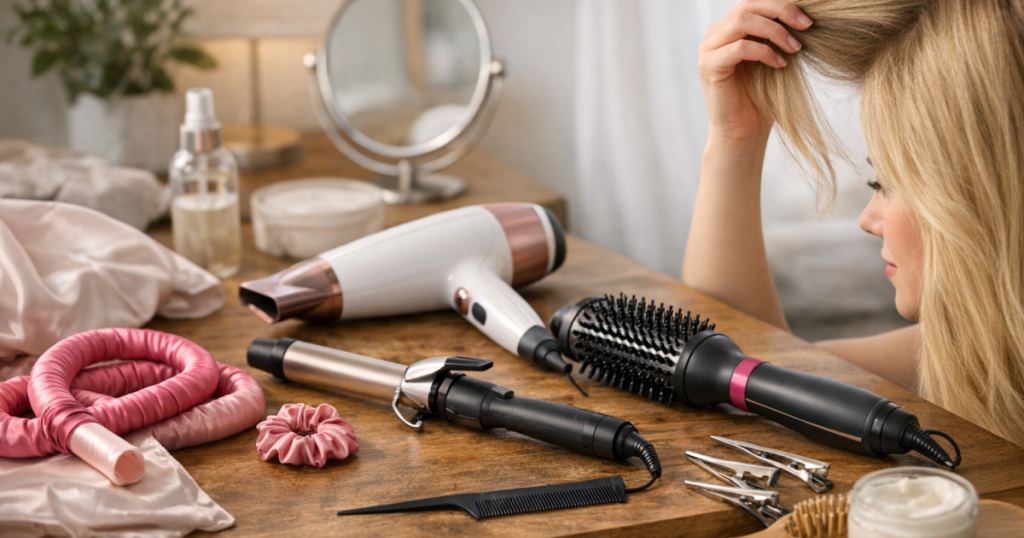
Fine hair can look glossy and soft, but it often loses shape quickly because each strand has less natural structure to support volume. The right fine hair styling tools should lift at the root, create movement without heavy tension, and help you avoid repeatedly re-styling the same section with heat.
The main aim is not to force fine hair into a style it cannot comfortably hold. It is to build shape in smaller, lighter stages: prep, lift, set, cool, then finish with minimal product.
The short version
For fine hair, prioritise root lift before curl definition or sleekness. A tool that makes the ends look polished but leaves the crown flat will usually disappoint by lunchtime.
- For volume: Velcro rollers, a round hot brush used at the roots, or a lightweight blow-dry brush can create lift without clamping the hair flat.
- For hold: Heatless curl rods, soft rollers and pin-setting methods often last better when hair is lightly misted and fully dry before release.
- For smoothness: A narrow straightener or hot brush is usually easier to control than wide plates, which can over-compress fine strands.
- For damage control: Use lower heat where your tool allows it, work in clean sections, and avoid going over the same piece again and again.
If your hair is fine as well as wavy, curly or frizz-prone, decide what you need most that day before choosing a tool. This guide to choosing between frizz control, definition and volume is a useful next step when your hair seems to want three different things at once.
Why fine hair behaves differently with styling tools
Fine hair refers to the width of each individual strand, not the amount of hair on your head. You can have fine hair that is thin in density, or fine hair that is plentiful but still easily weighed down. That distinction matters because a thick-looking head of fine hair may still collapse under heavy creams, oversized tools or too much heat.
The common styling challenges are familiar: roots fall flat, curls drop, ends become wispy, and smoothing tools can make the hair look limp rather than sleek. Fine strands also show product build-up quickly, so a tool that relies on lots of styling cream or repeated passes may not be the best everyday route.
For at-home styling, fine hair usually responds better to a lighter approach: smaller sections, moderate tension, a proper cooling period and finishing products applied sparingly. The tool should support the shape rather than bully the hair into place.
Volume tools that lift without making hair fluffy
Velcro rollers
Velcro rollers are one of the most useful low-heat or no-heat options for fine hair because they lift from the root while the hair cools or sets. Use larger rollers at the crown for body and smaller ones around the front if you want bend. The key is not to overload each roller: fine hair needs enough tension to lift, but not so much hair that the roller droops.
For a smoother finish, place the roller under the section for lift and over the section for a softer bend. Avoid dragging them out; unwind gently to reduce snagging and flyaways.
Hot brushes
A hot brush can be excellent for fine hair when used as a finishing and lifting tool, not as a high-tension straightener. Focus on the roots first, lifting the section up and away from the scalp, then let it cool before brushing through. If the brush is too large for your hair length, it can stretch the root flat, so barrel size and control matter more than a dramatic salon-style shape.
If hot brushes usually leave your crown smooth but flat, the technique may be the issue rather than the tool. The tutorial on using a hot brush without flattening your roots explains how to angle the brush, section the crown and keep lift in place.
Root-lifting sprays and light mousses
Fine hair often needs grip before it needs shine. A light root spray or mousse can help the hair remember its shape, especially if you blow-dry or set with rollers. Color Wow Raise the Root Thicken and Lift Spray is a recognisable example of a root-focused styling product, but always check the finish and application instructions rather than assuming more product equals more volume.
Apply styling product close to the root where lift is needed, then keep oils and shine sprays mostly away from the crown. If your ends are dry, use a tiny amount of serum or argan oil treatment through the last few centimetres only.
Tools for waves, curls and lasting shape
Fine hair can curl beautifully, but the curl pattern may soften quickly if the hair is too clean, too slippery or released before it has fully cooled or dried. Heatless methods are useful because they give the hair time to set without the repeated thermal stress that comes from re-curling fallen sections.
A satin heatless curling rod can work well on fine hair when the sections are neat and evenly wrapped. For looser volume, wrap larger sections away from the face. For more defined waves, use smaller sections and keep the tension even rather than tight. Sleeping in heatless tools can work, but comfort and root placement make a big difference; if the rod sits too low, the crown can still go flat.
Soft rollers, pin curls and bendy foam rollers can also help fine hair hold shape. The trick is to let the set finish completely. Removing rollers while the hair is even slightly damp is one of the quickest ways to lose the style.
For fine hair that tangles easily, detangle before setting rather than after. A brush such as Tangle Teezer The Ultimate Detangler is a common option for gentle pre-styling detangling, but use light pressure and start at the ends to avoid unnecessary stretching.
Smoothing tools: sleek without collapse
Straighteners can make fine hair look polished, but they can also remove every bit of natural body if the plates clamp the root too firmly. Narrower plates are usually easier to manoeuvre around the hairline and shorter layers. Wide plates are better suited to dense or thick hair, where the priority is controlling bulk rather than preserving airy lift.
If you use straighteners, lift the root slightly before smoothing the mid-lengths and ends. Do not press hard at the crown; a light, controlled pass is normally enough when the hair is already dry and combed through. For a softer finish, curve the tool very slightly at the ends rather than pulling everything poker straight.
A hot brush or heated smoothing brush can be a better everyday choice if you want polish with movement. It will not usually give the same glassy finish as straighteners, but that can be an advantage for fine hair because a little texture helps the style look fuller.
Damage control for fine strands
Fine hair can show heat damage quickly because the strand is smaller and often has less margin for error. That does not mean you can never use heated tools; it means you need a routine that limits unnecessary exposure.
- Start with fully dry hair for irons and wands: Using direct heat on damp hair can cause avoidable stress and poor results.
- Use the lowest effective heat: If your tool has adjustable temperature, start lower and only increase if the style genuinely does not form.
- Keep passes minimal: Slow, controlled styling usually causes less repeat work than rushing and correcting the same section several times.
- Protect before heat: A lightweight heat protectant can help reduce the impact of regular styling without making fine hair greasy.
- Build in heatless days: Rollers, wraps and loose overnight sets give fine hair a break while still creating shape.
If you are unsure whether a spray will feel too heavy before straightening, this GHD Bodyguard heat protect spray review looks at the kind of finish and suitability checks that matter for smoother heat styling.
Matching the tool to your fine hair pattern
Fine straight hair usually needs root lift and texture first. Velcro rollers, a light mousse and a hot brush used at the crown can be more useful than a straightener. If the ends flick out, smooth only the lower lengths and keep the root area airy.
Fine wavy hair often needs definition without weight. Heatless rods, soft rollers and diffuser-style drying can help, but heavy curl creams may flatten the pattern. Use lighter styling products and avoid brushing once the wave has set unless you want a softer, looser finish.
Fine curly hair needs careful balance: too little product can lead to frizz, while too much can stretch the curl. Choose tools that support drying and setting rather than aggressive smoothing. A wide-tooth comb, soft scrunching towel and lightweight gel may matter more than a new heated tool.
Fine hair with high density can be deceptive. It may look thick, but each strand still needs gentle handling. Sectioning becomes important here: smaller sections help tools work efficiently without needing high heat or heavy pressure.
Common mistakes that make fine hair fall flat
- Using oversized barrels at the root: Big tools can create soft bend, but they may not grip shorter or finer layers well enough for lift.
- Applying conditioner too close to the scalp: Fine hair often loses volume before styling even begins if the roots are coated.
- Skipping the cooling stage: Hair sets as it cools, so brushing out curls or removing rollers too soon weakens the shape.
- Chasing shine with heavy products: Glossy sprays and oils can look lovely on the ends but quickly flatten the crown.
- Over-straightening the front pieces: Fine face-framing hair can become limp and separated if it is repeatedly clamped.
FAQ
Are heatless curlers good for fine hair?
Yes, as long as the sections are not too large and the hair is completely dry before you remove them. Fine hair often holds heatless waves better with a little mousse or setting spray for grip.
Is a hot brush better than straighteners for fine hair?
For volume, often yes. A hot brush can smooth while keeping movement, whereas straighteners can make fine roots look flatter if used with too much pressure.
What size rollers work best for fine hair?
Use larger rollers for crown lift and smaller rollers where you want bend or shape. The best size depends on your hair length, but secure placement matters more than simply choosing the biggest roller.
How can I make fine hair hold a style for longer?
Prep with a light styling product, style in smaller sections, let the hair cool or dry fully, and avoid heavy finishing products. A flexible hairspray is usually better than a sticky strong-hold layer.
Should fine hair avoid heat completely?
Not necessarily. Heatless styling is useful for regular breaks, but occasional heated styling can work if you use protection, controlled passes and a temperature that suits your hair.
In brief
Fine hair styles best when you protect its lightness. Choose tools that lift before they smooth, set shape before you brush it out, and reduce the need for repeated heat. For most fine hair routines, the strongest combination is simple: a gentle detangling brush, a root-lifting method, a heatless setting option and one controlled heated tool for polished days.
The result should not feel stiff, greasy or overworked. When fine hair has enough grip at the root and enough softness through the ends, it looks fuller, moves naturally and keeps its shape for longer.