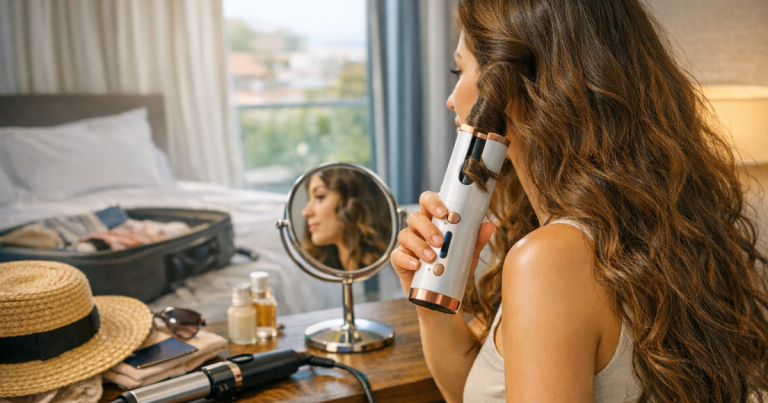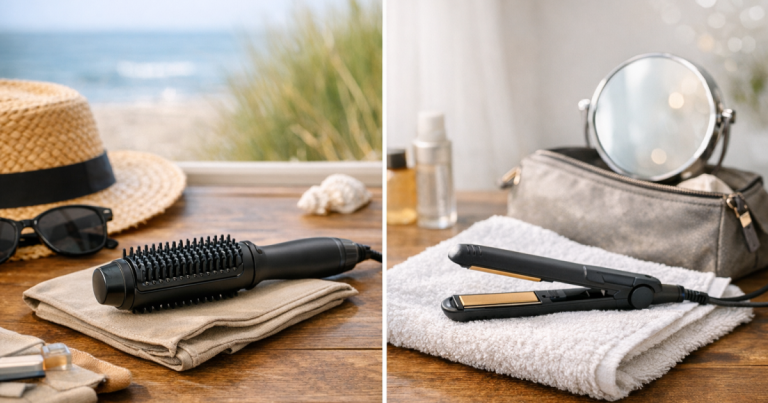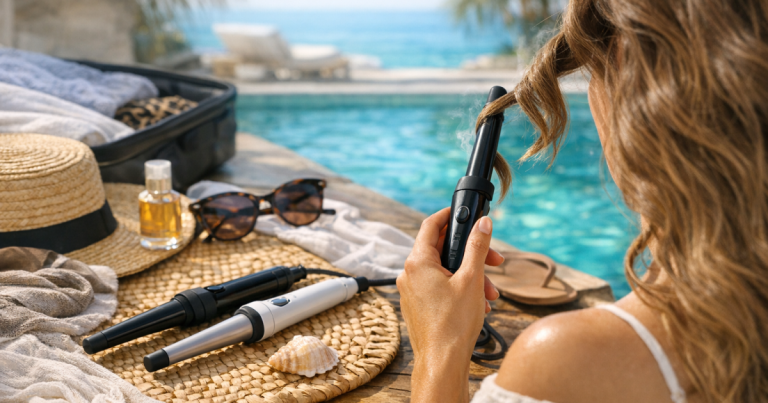
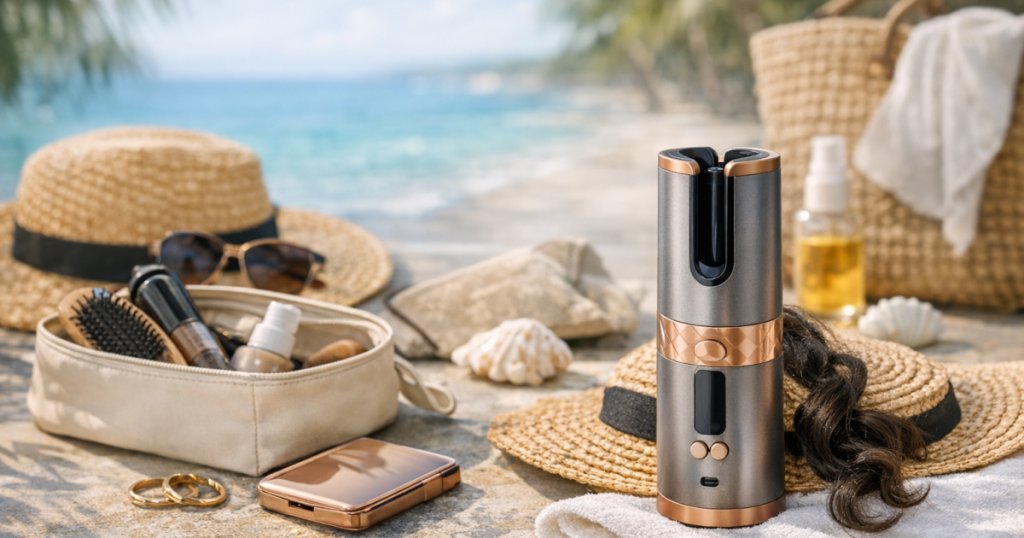
A rechargeable curler sounds like the perfect holiday shortcut: no hunting for sockets, no awkward hotel mirrors, and fewer cables in your wash bag. In reality, cordless curlers are worth packing only if your hair needs small, quick curl refreshes rather than a full restyle from damp or frizzed-out lengths.
The trick is deciding whether the tool solves your actual travel problem. For some hair types it is a neat evening touch-up tool; for others it is extra weight that loses out to heatless rollers, a silk wrap, or a compact tong.
Airline battery restrictions and airport security screening are handled by your airline and airport security team; check their published cabin-baggage rules before packing any rechargeable heated tool to comply with current transport safety requirements.
The short version
Pack one if you usually curl only the front layers, fringe area, face-framing pieces or the top section after a long day out. Skip it if you rely on heat to style your whole head from scratch, have very dense hair, or need a tool that can cope with several consecutive styling sessions without careful planning.
- Most useful for: fine to medium hair, shoulder-length cuts, soft waves, fringe shaping and second-day curl revival.
- Less useful for: very thick hair, long hair that takes ages to section, tight curl patterns that need definition all over, or hair that drops quickly in humidity.
- Best holiday role: a finishing tool, not your only styling plan.
- Best alternative: heatless prep overnight, then a small tool for polishing visible sections.
How a rechargeable curler actually fits into a holiday routine
Holiday styling is different from styling at home. You are usually dealing with hard water, sun cream transfer, humidity, swimming, hat hair, limited mirrors and less time. A rechargeable curler can help with one part of that puzzle: re-shaping dry sections when you are already close to the style you want.
It is less convincing as a full styling tool. If your usual routine involves drying the hair smooth, sectioning carefully and curling every layer, a battery-powered option may feel slower and more restrictive than a mains-powered tong. It can still be handy, but only if you treat it as a small correction tool rather than the centre of your kit.
This is why the best holiday hair plan often starts the night before. A satin heatless curling rod, silk hair wrap or well-placed Velcro rollers can create shape while you sleep, leaving a compact heated tool to tidy the front. If frizz is the main issue after sleeping, this guide to sleeping in heatless curls without frizz is a better first step than adding more heat to tired ends.
When cordless curlers are genuinely worth packing
You wear your hair down in soft waves
If your holiday style is loose, undone and slightly imperfect, a rechargeable tool can work well. You do not need every piece to be identical. A few bends around the face, crown and outer layer can make air-dried hair look more intentional.
This is particularly useful if your hair is fine or medium in density and already has some natural bend. Use lightweight styling cream or a humidity-aware spray before you go out, then reserve the curler for pieces that have fallen flat. Avoid repeatedly curling the same fragile ends every day; it is better to alternate heat days with heatless styling.
You mostly need fringe and face-frame control
Holiday photos tend to expose the front section first: fringe, curtain bangs, layers around the cheekbones and the top pieces that get crushed by sunglasses. If those areas make or break your style, a compact rechargeable curler can be genuinely useful.
For this job, you do not need to curl your whole head. Work only on dry hair, take small sections, and let each piece cool before touching it. The cooling stage matters because warm hair is still setting; brushing too quickly can turn a neat bend into fluff.
Your accommodation setup is awkward
Some hotel rooms have poor socket placement, weak bathroom lighting or mirrors nowhere near the plug. A rechargeable tool can make styling less annoying because you can stand where the light is better. That convenience is the main appeal, especially if you are getting ready in a shared room or trying not to monopolise the dressing table.
Still, check the practical details before you travel: how the tool is charged, whether you need an adaptor, where it can safely cool, and whether your airline allows it in the bag you plan to use. Do not assume every battery-powered beauty tool can go anywhere in your luggage.
When it is probably not worth the luggage space
Your hair is very thick or long
Thick hair needs patience, clean sectioning and consistent heat exposure to create a lasting shape. On holiday, that can become frustrating quickly. If you know your hair normally takes a long time to curl at home, a compact cordless tool is unlikely to feel faster abroad.
For dense hair, a better plan is usually to create shape without heat first, then use a tool only on the most visible top sections. Strong sectioning makes an enormous difference; if blow-drying is part of your travel routine, the difference between clips is covered in this comparison of duckbill clips and sectioning clips for thick hair blow-dries.
Your curls drop in humidity
If your hair loses shape as soon as you step into damp air, the tool is only part of the issue. Holiday humidity can undo a polished curl even when the styling method is technically sound. In that situation, your prep products, drying method and finishing routine matter more than whether the curler has a cord.
Use the tool sparingly, avoid heavy oils before curling, and let the hair cool fully. If your waves or curls turn fluffy after drying, it may be better to refine your drying technique than pack another heated tool. For naturally wavy hair, start with diffusing wavy hair without frizz or crunch before deciding whether you need extra holiday heat.
You want one tool to do everything
A rechargeable curler is not the most reliable single-tool solution for every trip. It will not replace a dryer if you wash your hair often, and it may not replace a corded tong if you want polished curls for several evenings. If your holiday routine involves full glam, sleek roots and long-lasting uniform waves, a compact mains-powered tool may still be more predictable.
Hair-type guidance before you decide
Fine hair: This is where a cordless curler can shine, provided you use it lightly. Fine hair usually responds quickly, but it also shows heat damage and product overload quickly. Keep sections airy, avoid clamping too tightly, and use a light hold product rather than layering heavy serums.
Medium hair: You have the most flexibility. A rechargeable curler can work well for touch-ups, but it is still worth prepping with heatless shape overnight if you want the style to last through sightseeing, dinners and warm evenings.
Thick hair: Treat it as a detail tool. Curling only the top layer, front sections and any pieces that have gone flat will be more realistic than attempting a complete head of curls in a hotel room.
Curly or coily hair: It depends on your goal. If you wear your natural texture, a small heated tool may help reshape stretched front pieces, but it can also create a mismatch if the curl size does not blend. For defined natural curls, moisture balance, drying technique and frizz control usually matter more than a heated touch-up tool.
Bleached or heat-damaged hair: Be cautious. Holiday conditions already put pressure on the hair: UV exposure, salt water, chlorine, brushing and updos. If your ends are fragile, prioritise conditioning, protective styles and heatless shaping. A heated tool should be occasional, not daily.
What to check before it goes in your case
- Your airline’s battery rules: Check whether the tool must travel in hand luggage and whether any protective cover or safety lock is required. Rules can vary, so use the airline’s current guidance rather than assumptions.
- Charging setup: Confirm what cable, plug or adaptor you need. If your hotel has limited sockets, plan charging time around phones, toothbrushes and other essentials.
- How much hair you realistically style: If you usually curl every layer, test the routine at home before you travel. A tool that feels fine for five front pieces may feel slow for a full head.
- Heat control: Check whether the model offers settings suitable for your hair type. Fine, colour-treated and damaged hair generally need a gentler approach than coarse, resistant hair.
- Cool-down storage: Make sure you have a heat-resistant pouch or a safe place to rest the tool before packing or leaving the room.
- Finish and grip: Smooth barrels, auto-curl chambers and small tongs all behave differently. Practise before the trip so you are not learning with humid hair ten minutes before dinner.
Realistic examples you may come across
Two recognisable examples are the BaByliss 9000 Cordless Curling Tong and the Conair Unbound Cordless Auto Curler. They represent two different approaches: a more traditional tong shape versus an auto-curl format. Rather than assuming one is universally better, check the exact model details, barrel or curl format, charging requirements, weight, safety features and whether it suits the way you actually section your hair.
Auto-curl designs can feel convenient if you struggle to wrap hair evenly, but they may not suit everyone’s preferred curl direction or section size. A tong-style design gives more manual control, which can be better for face-framing bends, but it does ask for more technique. If clamp marks are your main worry when using traditional tools, practise the angle and release rather than blaming the tool immediately.
A smarter holiday styling plan
If you do pack a cordless curler, make it part of a layered routine rather than your entire hair strategy. Wash or refresh hair earlier in the day where possible, let it dry fully, then create overnight shape with a heatless rod, loose bun, plaits or rollers depending on your texture. In the morning, release the hair, let it settle, and use the curler only where the shape has collapsed.
For evening, refresh the roots first. Shake out the crown, use a tiny amount of dry shampoo or texture spray if needed, then curl the most visible pieces. Finish by letting the hair cool completely before separating with fingers. A small amount of argan oil hair treatment can soften dry ends, but keep it away from sections you still plan to curl because too much slip can make shape fall faster.
Questions people ask
Can I take a rechargeable curler in hand luggage?
It depends on the airline, airport and the tool’s battery type. Check your airline’s current rules before travelling, and do not assume it can go in hold luggage. Keep any protective cover, lock or pouch with the tool if the manufacturer supplies one.
Is a cordless curler better than a mini curling tong?
It is better for socket-free touch-ups, but not always better for full styling. A mini mains-powered tong can be more predictable if you have access to a suitable socket and want to curl more hair in one session. A rechargeable curler wins on convenience; a corded compact tool often wins on uninterrupted styling.
Will it work on damp hair?
Heated curling tools should be used only as directed by the manufacturer, and many are intended for dry hair. Styling damp sections with inappropriate heat can leave hair rough, weak or unevenly shaped. If your holiday routine starts with wet hair, plan your drying method first.
What is the lowest-effort alternative?
For many people, heatless curls overnight are easier. Use a satin rod, silk wrap or loose roller set to create the base shape, then rely on a small tool only for polish. This reduces suitcase bulk and gives your hair a break from daily heat.
Final thoughts
A cordless curler is worth packing if your holiday hair needs quick polish, not a complete transformation. It suits fine to medium hair, shorter layers, face-framing touch-ups and relaxed waves best. It is less convincing for very thick, very long, easily frizzed or heavily heat-dependent routines.
The most reliable approach is to decide what job the tool will do before it reaches your suitcase. If the answer is “tidy my front pieces before dinner”, it may earn its place. If the answer is “replace my whole home styling routine”, you will probably be happier with heatless prep, better drying technique, or a compact mains-powered tool that matches your usual styling habits.