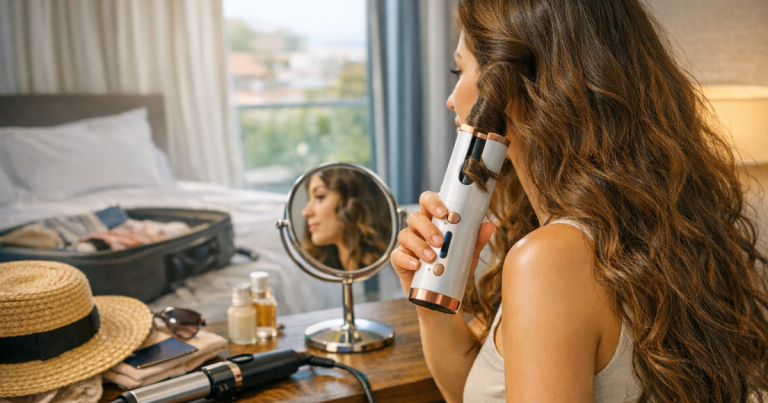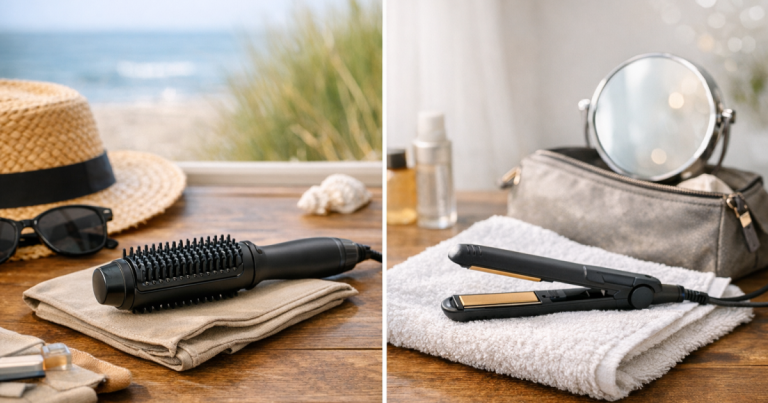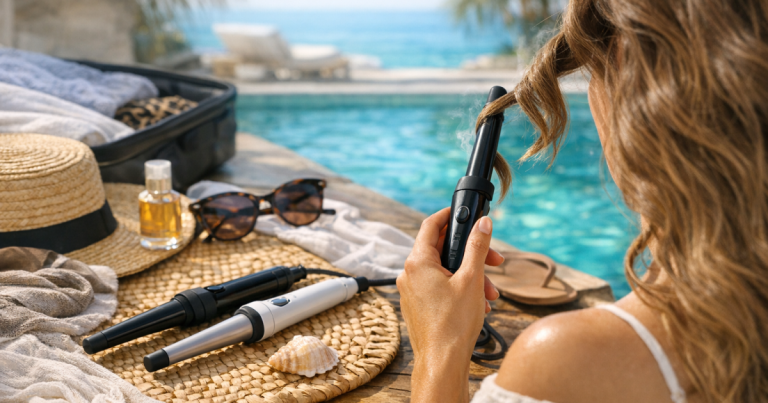
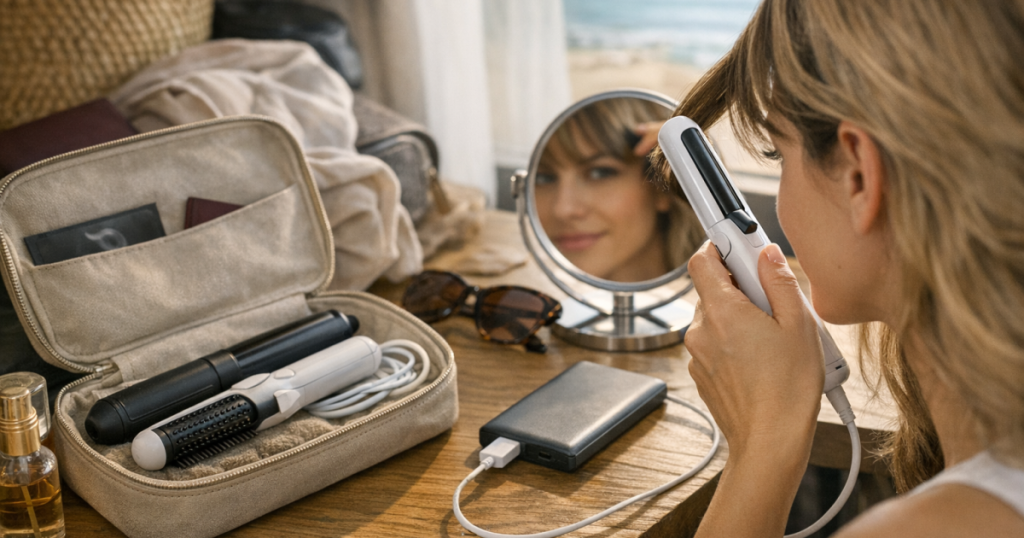
Hotel mirrors, humid station platforms and day-two fringes are where USB hair stylers sound most appealing: a small tool that promises a quick fix without unpacking a full-size kit. The reality is more nuanced. For travel touch-ups, they can be genuinely useful, but only when the job is small, the hair is prepped, and expectations stay realistic.
What to know first
A USB-charged styler is usually worth considering if you want to smooth a fringe, tame face-framing pieces, neaten flicked-out ends or refresh small sections after wearing a hat, scarf or clip. It is not a like-for-like replacement for a full-size straightener, dryer brush or salon-power hair dryer, especially on dense, coarse, very long or tightly coiled hair.
The biggest difference is workload. A compact travel tool can polish hair that is already dry and mostly styled. It is far less convincing when asked to take hair from freshly washed, puffy or fully textured to sleek in one session. Think of it as a handbag correction tool, not your main styling method.
- Most useful for: fringes, curtain bangs, flyaways, small bends, kinked ponytail marks and short face-framing layers.
- Least useful for: full-head straightening, reshaping thick lengths, smoothing damp hair or creating long-lasting curls from scratch.
- Best travel pairing: a protective style plan, a mini brush or comb, a heat-resistant pouch and a low-bulk overnight method.
How USB-charged travel stylers actually fit into a routine
Most disappointment with USB hair stylers comes from expecting them to behave like full-size heated tools. Many are designed around convenience and portability rather than sustained salon-level output. Some charge through a USB cable but are not intended to run directly from a power bank while you style, so the practical question is not simply whether the tool has a USB port; it is whether its charging method, run time and heat behaviour match your real travel routine.
For a weekend away, the most realistic routine is: style properly before leaving home, protect the shape overnight, then use the compact tool only where hair has moved. That might mean running it lightly over a fringe before breakfast, smoothing the pieces around your ears after a train journey, or correcting one side that has flattened in a hotel pillowcase.
If your style needs a complete reset every morning, start by asking whether the plan is the issue rather than the tool. A sleek bob, soft waves and a stretched coily blow-dry all need different support. It is worth using a styling plan first, especially if you often pack tools you barely use; this guide on how to plan your style before choosing a hair tool is a sensible next step before adding another compact gadget to your case.
When a compact heated tool earns its place
Fringes, short layers and face-framing sections
This is the strongest use case. A fringe can split, puff up or bend the wrong way after sleep, wind, rain or a hooded coat. A small heated plate or mini styling surface can target that area without disturbing the rest of the hair. For fine fringes, one controlled pass is usually better than repeated smoothing, which can make the hair sit flat or greasy-looking. For thicker fringes, divide the section and smooth from underneath first so the top layer does not balloon.
Day-two polish after a proper style
If your hair was blow-dried or stretched before travel, a compact tool can help preserve the look. It can press down small frizz patches, re-direct flicked ends and tidy a parting. The key is to use it on dry hair only and avoid treating it as a rescue tool for sweaty roots or damp lengths. Damp hair needs drying and resetting, not a quick pass with a compact heater.
Humidity touch-ups
For GB travellers heading to warmer or wetter climates, humidity changes the equation. A small styler may smooth visible frizz at the surface, but it will not change how the hair responds to moisture over the day. Use it on the sections people see first: fringe, hairline, ends and crown. If humidity is the main reason you are considering a smaller tool, the advice in whether mini straighteners can control frizz in humid weather is closely related.
Where they fall short by hair type
Fine or low-density hair
Fine hair often responds quickly to compact heat, which makes these tools feel more worthwhile. The risk is overworking the same section. Too many passes can remove movement, create a limp fringe or leave the ends looking sparse. Use the lowest effective setting available on your device, keep the section small, and treat the tool as a finishing step rather than a full restyle.
Medium straight or wavy hair
This is usually the easiest hair type for travel touch-ups. A compact styler can smooth dents from clips, polish front pieces and refine the ends of a lob or layered cut. Wavy hair may need a different approach: instead of pressing every bend flat, choose the sections that affect the silhouette. Sometimes smoothing only the top layer and re-scrunching the lengths gives a fresher finish than trying to make the whole style uniform.
Thick, coarse or high-density hair
This is where compact tools can disappoint. The surface may look smoother for a short time, while the bulk underneath stays expanded. If your hair needs strong tension, larger plates, a comb attachment or a full blow-dry to look polished, a USB-charged styler is likely to be a minor helper rather than a main tool. It may still be useful for the hairline, fringe or very short layers, but it should not be expected to replace a proper wash-day routine.
Curly and coily hair
For curls and coils, the question is not just heat; it is shape. A small straightening tool can neaten edges or smooth a section that has stretched awkwardly, but repeated touch-ups can interrupt curl pattern and create uneven texture. If your travel goal is to preserve shape rather than straighten, a wrap, bonnet, silk scarf or heatless curler may protect the style better overnight. For curl-focused packing, the comparison of silk and satin heatless curlers is more relevant than adding more heat.
USB-powered, USB-charged or cordless: check the wording carefully
Not every compact styler with a USB cable behaves in the same way. Some devices are USB-charged and then used cordless. Others may require a specific charging plug, dock or cable. Some travel tools are simply mini mains-powered stylers and need a socket, even if they are smaller than standard versions.
Before packing one, check the manufacturer’s instructions for charging method, compatible adaptors, use while plugged in, heat settings, automatic shut-off and storage guidance. Avoid assuming that a hotel television USB port, train socket or portable power bank will charge a heated styler properly. Heated tools demand more power than a phone cable accessory, and vague product listings can make a tool sound more flexible than it is.
For flights, also check airline and airport guidance for cordless heated tools and lithium batteries. Rules can vary depending on the device type and route, and the safest place for the answer is your airline’s current baggage information plus the product manual. A heat-resistant cover or pouch is useful for packing after use, but only once the tool is cool enough according to its own instructions.
Real examples you may come across
Recognisable cordless and compact heated tools include the ghd Unplugged Cordless Styler, BaByliss 9000 Cordless Straightener and Revamp Progloss Liberate Cordless Compact Hair Straightener. The point is not that one format suits every traveller; it is that names, charging claims and styling promises need reading closely. Check whether the model is intended for quick touch-ups, how it is charged, what hair lengths it is designed to handle, and whether replacement cables or travel covers are easy to manage.
Also be wary of very cheap, no-name mini tools that rely on dramatic before-and-after images but give little detail about safe use, materials, temperature control or support. A travel styler sits close to your hairline, fingers and luggage, so clarity matters more than novelty.
How to use one for a better travel touch-up
1. Start with dry, detangled hair
Compact heated stylers are not dryers. Brush or comb the section first, then make sure the hair is fully dry. If the hair feels damp from rain, sweat or product, let it dry before using heat. A small detangling brush, wide-tooth comb or travel comb can make more difference than extra passes with the tool.
2. Isolate the problem section
Do not run the tool over the whole head out of habit. Pick the section that is actually making the style look untidy: a bent fringe, puffy temple, flicked end or flattened front layer. Clip the rest away if needed. Smaller sections give compact tools a fairer chance.
3. Use tension before heat
Light tension from a comb or fingers helps guide the hair. On fringes, direct the hair the way you want it to sit rather than pulling straight down automatically. On ends, curve the wrist slightly if you want a bevel rather than a poker-straight finish.
4. Let the section cool before touching it
A common travel mistake is smoothing a section, then immediately tucking it behind the ear, putting on sunglasses or pushing it under a hat. Let the hair cool in its intended position first. That cooling moment is what helps the shape hold.
5. Stop before it looks overdone
Travel lighting can be harsh, and it is easy to keep correcting tiny flaws. Stop once the overall shape looks intentional. Over-smoothing one section can make the rest of the hair look frizzier by comparison.
When a heatless option is the smarter packing choice
If your main concern is waking up with a better shape, heatless tools often beat compact heated tools. A silk hair wrap can help preserve a smooth blow-dry finish. Satin heatless curling rods can support soft bends without morning heat. Velcro rollers can revive lift at the crown or fringe while you get ready, provided your hair type holds shape from tension and cooling.
Heatless methods are especially useful when luggage space is tight, plug access is uncertain or your hair becomes fragile with frequent heat. They also suit trips where you want consistency rather than emergency fixes: pack the method that protects the style overnight, then use a heated tool only if a visible section still needs polishing.
So, are they worth it?
Yes, USB hair stylers can be worth it for travel touch-ups if your goal is small-scale correction: fringe control, face-framing polish, minor frizz smoothing and tidying ends on already styled hair. They are less worthwhile if you expect them to replace a full-size straightener, hot brush or dryer on thick, textured, damp or high-maintenance hair.
The most reliable approach is to decide what problem you are solving before you pack. If the problem is a crease, kink or fluffy hairline, a compact heated tool may earn its space. If the problem is loss of shape overnight, start with better wrapping, curl-setting or protective storage. If the problem is a full restyle every morning, a travel-size tool is unlikely to save enough time to justify the compromise.
Things readers ask
Can a USB hair styler replace my normal straighteners on holiday?
Usually not. It may help with visible touch-ups, but full-head straightening needs more time, section control and consistent heat than many compact travel tools are designed to provide.
Are they good for airport hand luggage?
They can be convenient, but cordless heated tools and devices with lithium batteries may be subject to airline rules. Check your airline’s current guidance and the product manual before travelling.
Can I use one on wet hair?
No. Treat compact heated stylers as dry-hair finishing tools unless the manufacturer clearly states otherwise. For most travel touch-ups, dry hair gives a safer, smoother and more predictable result.
What should I pack with one?
A comb or compact brush, sectioning clip, heat-resistant storage pouch and a small amount of smoothing product are usually more useful than extra tools. For curls or waves, add a wrap or heatless curler to protect the shape overnight.
Final thoughts
A USB-charged styler is at its best when it solves one small, annoying travel problem. It is not the hero tool for every hair type, but it can be a neat finishing aid for fringes, short layers and polished face-framing pieces. Pack it when your hairstyle is already planned, your hair type suits quick correction, and you have checked how the device charges and travels. Otherwise, a heatless overnight method and a good brush may do more for your holiday hair with less faff.