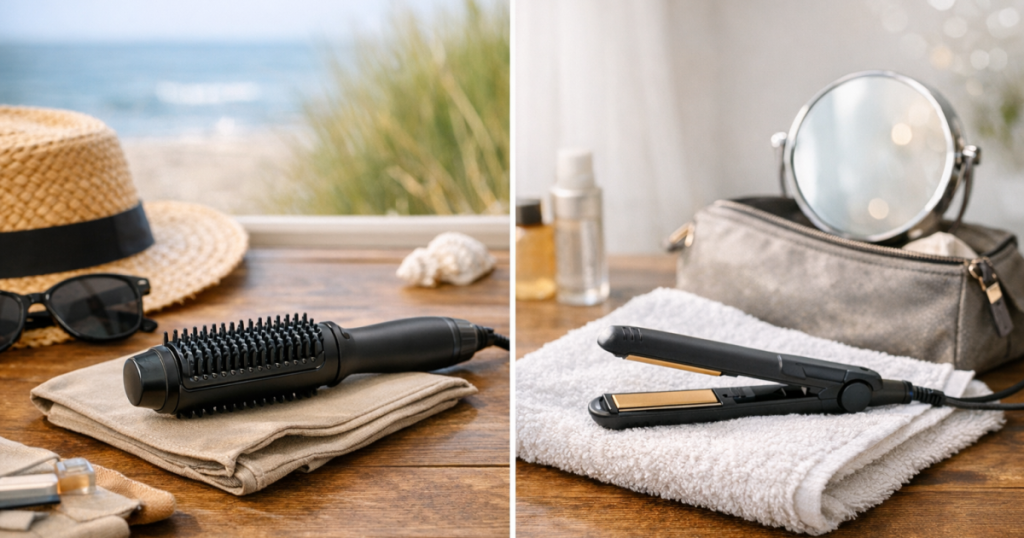
Short hair can be surprisingly awkward to style away from home: there is less length to grip, layers spring out, and a hotel mirror rarely helps. The choice of travel hot brush vs mini straighteners comes down to whether you need shape and lift, or sharper smoothing and bend control. Both can earn a place in a washbag, but they solve different short-hair problems.
For most short bobs, crops and fringes, a compact straightener gives more precision around the hairline. A travel hot brush is usually better when your hair looks flat, fluffy or slept-on rather than truly kinked. The right answer depends on your cut, hair density, texture and how much styling time you realistically have while travelling.
The short version
- Choose a travel hot brush if your main problem is flat roots, puffy ends or second-day hair that needs soft reshaping.
- Choose mini straighteners if your main problem is cowlicks, flicky layers, fringe control or smoothing very short sections.
- For fine short hair, a hot brush can add movement without making the shape too sharp, but it can also over-fluff if the brush head is too large.
- For thick short hair, mini straighteners give better tension in small sections, although styling can take longer.
- For textured, wavy, curly or coily short hair, decide whether you want gentle stretch, a polished finish or curl preservation before packing either tool.
Travel hot brush vs mini straighteners: the practical difference
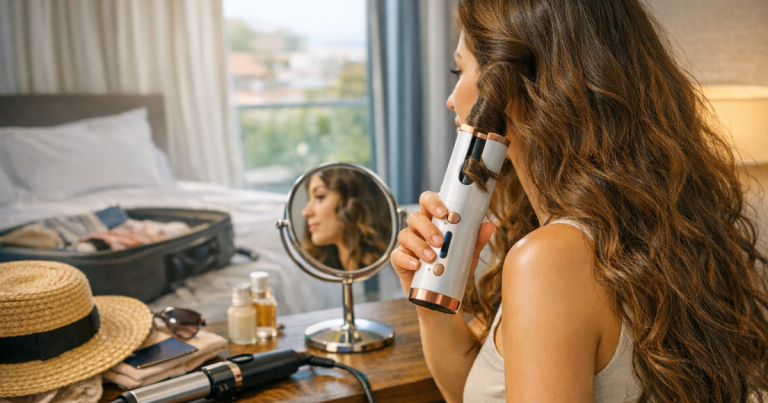
A travel hot brush is designed to smooth while adding shape. Depending on the design, it may work more like a heated smoothing brush or a hot air brush. On short hair, the key benefit is that it can lift the roots, turn the ends under and revive hair that has gone flat after sleeping, wearing a hat or sitting on a plane.
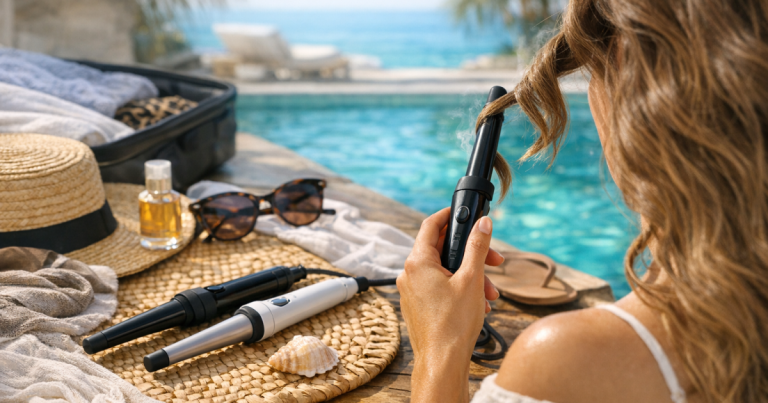
Mini straighteners are smaller versions of flat irons. Their strength is grip and precision. They can catch a short fringe, smooth the nape, tidy around the ears and control awkward pieces that a larger tool misses. They are not just for making hair poker-straight; on short hair, they can create a bend, tuck, bevel or soft flick if you rotate the wrist gently.
The main trade-off is softness versus control. A hot brush tends to leave short hair looking more airy and natural. Mini straighteners tend to leave a cleaner, more deliberate finish. If your cut relies on movement, a hot brush may feel more flattering. If your cut relies on lines, shine and neat edges, mini straighteners usually win.
Step 1: Start with your haircut, not the tool
Short hair is not one category. A pixie crop, French bob, grown-out fringe and jaw-length blunt cut all behave differently in a suitcase. Before choosing, look at the shortest section you actually need to style.
Pixie cuts and cropped layers
Mini straighteners are usually the easier option because they can pick up tiny sections around the crown, fringe and sideburns. A hot brush may be too bulky unless your pixie has longer top layers. If you want lift at the crown, a small heated brush can help, but avoid forcing short pieces around a large brush head because it can make the shape look round rather than styled.
Short bobs and jaw-length cuts
This is where both tools can work. A hot brush gives a softer salon-blow-dry effect, especially if your bob collapses at the roots. Mini straighteners are better for tucking one side under, controlling a kink near the cheekbone or smoothing the underneath layers that flick out after sleep.
Fringes, curtain bangs and face-framing pieces
Mini straighteners are usually more reliable for a fringe because they offer targeted control. Use light pressure and avoid clamping for too long, as short front pieces show dents quickly. A hot brush can soften curtain bangs, but it needs enough length for the hair to curve over the brush without springing away.
Step 2: Match the tool to your hair type
Hair density and texture matter as much as length. If you are unsure where your texture sits, the Type 1 to 4 hair styling tool guide is a useful next step because short hair can look completely different depending on curl pattern.
Fine or low-density short hair
A travel hot brush can make fine hair look fuller, especially at the crown and sides. The risk is that too much brushing can make fine hair airy but shapeless. Work in fewer passes and concentrate on the roots and ends rather than repeatedly brushing through the whole head. Mini straighteners are better if your fine hair bends in odd places, but use a light touch so the finish does not look flat against the scalp.
Thick or coarse short hair
Mini straighteners often give more reliable smoothing because they compress small sections. The catch is time: very dense short hair may need more sectioning than you expect. A hot brush can reduce puffiness, but it may not create enough tension on resistant layers unless the sections are thin and fully dry.
Wavy short hair
A hot brush suits waves when you want to keep movement but remove the slept-in halo. Mini straighteners suit waves when certain pieces sit in the wrong direction. For a bob with natural wave, use straighteners only where needed rather than flattening every section.
Curly and coily short hair
A travel hot brush can help stretch roots or reshape a blow-dried style, but it may disturb definition if used on curls you want to keep intact. Mini straighteners offer more precision for smoothing edges, a fringe or short face-framing sections. If your priority is definition rather than smoothing, a compact diffuser, silk wrap or heatless refresh routine may make more sense than either hot tool.
Step 3: Decide what problem you are fixing
The easiest way to choose is to name the problem before you pack. “My hair looks messy” is too vague; “my fringe bends upwards” or “my bob goes flat at the crown” points to the right tool.
- Flat crown: travel hot brush.
- Flicky ends: mini straighteners for precision, hot brush for a softer turned-under finish.
- Puffy outline: hot brush for airy smoothing, mini straighteners for sleeker control.
- Cowlicks: mini straighteners, especially around the fringe or hairline.
- Second-day roots: travel hot brush if the hair is dry and only needs reshaping.
- Humidity frizz: mini straighteners can smooth sharper pieces, but product prep and drying method matter just as much.
If you are not sure whether your hair needs frizz control, definition or volume first, use the styling priority guide before blaming the tool. Many travel hair issues come from solving the wrong problem: adding volume to frizz, smoothing hair that really needs definition, or brushing curls that need moisture and hold.
Step 4: Use the right technique for short hair
How to use a travel hot brush on short hair
- Dry the hair fully first unless the tool is specifically designed for damp styling. Short hair can feel dry on the outside while the roots are still holding moisture.
- Work from the underneath layers upwards so the top does not become overworked.
- Lift at the root, pause briefly, then roll or glide through the ends depending on the shape you want.
- Use the brush to direct hair, not to yank it into place. Short hair can show tug marks and flyaways quickly.
- Let the section cool before touching it. This helps the shape settle rather than dropping straight away.
How to use mini straighteners on short hair
- Take narrow sections so the plates can grip evenly without repeatedly passing over the same area.
- Angle the tool in the direction you want the hair to sit: down for sleekness, slightly under for a bob, away from the face for soft movement.
- For a fringe, start lower than you think and glide lightly. Clamping too close to the root can create a visible bend.
- Use clips to separate top layers from underneath layers, particularly on thick bobs or layered crops.
- Stop once the section behaves. Short hair can go from polished to over-styled quickly.
Heat protection is still worth taking seriously, even with a compact tool. If you want a product-specific example of what to check, the GHD Bodyguard heat protect spray review explains the kind of finish, feel and suitability questions to ask before straightening.
Step 5: Pack around real travel conditions
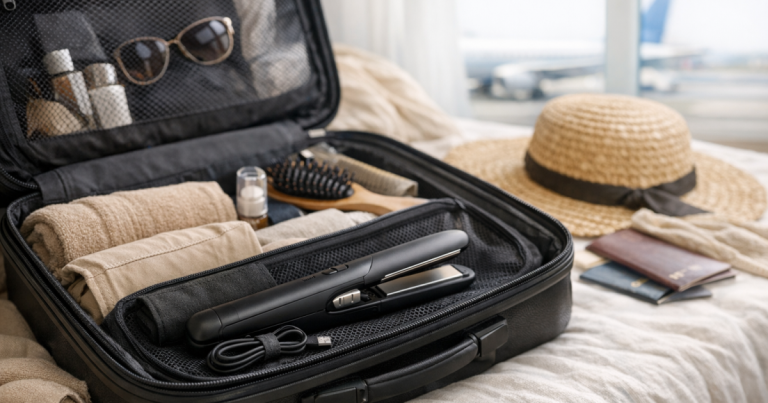
Travel styling is not the same as styling at home. You may be dealing with a smaller mirror, harder water, damp weather, a rushed morning or a plug socket in the wrong place. The most compact tool is not always the most useful one if it takes too many passes to get a presentable finish.
- Check the plug, voltage information and manufacturer travel instructions before taking a hot tool outside the UK.
- Pack sectioning clips if your hair is thick, layered or blunt-cut; they make compact tools far easier to control.
- Use a heat-resistant pouch or mat once the tool has cooled enough according to the manufacturer’s guidance.
- Take a silk or satin wrap if your short hair loses shape overnight. It can reduce how much heat styling you need the next morning.
- Keep styling product light. Heavy creams and oils can make short hair collapse faster in warm or humid weather.
Real examples can help you picture the category. A ghd Mini Styler is the kind of compact flat iron people consider for short hairlines and fringes, while a BaByliss 9000 Cordless Hot Brush represents the softer reshaping route. You may also see mini heated brush formats such as the Drybar Baby Brush Crush Mini Heated Straightening Brush. Treat these as examples of tool types rather than automatic answers: always verify plate width, brush head size, heat settings, plug suitability and how easily the tool grips your shortest layers.
Where each tool struggles
A travel hot brush struggles when hair is too short to wrap, too dense for the brush to reach the underlayers, or too curly to smooth without disrupting the pattern. It can also make a sharp bob look too rounded if you over-roll the ends.
Mini straighteners struggle when you want root lift, airy volume or a blow-dried curve. They can make fine short hair look flat if used from root to tip everywhere. They also require careful wrist angle; too much rotation can create obvious bends on a short cut.
Neither tool is a full styling routine on its own. The best results usually come from starting with a good dry, sleeping on hair carefully and only correcting the sections that need it. On holiday, that selective approach often looks fresher than trying to recreate a full home blow-dry every morning.
The big picture
For short hair, mini straighteners are the safer choice if you need control: fringes, cowlicks, flicky napes, face-framing layers and polished bobs. A travel hot brush is the better choice if your main concern is softness: root lift, second-day refresh, gentle volume and a less “done” finish.
If your short hair is fine, start with the hot brush only if you need body; otherwise use mini straighteners sparingly. If your hair is thick, coarse or strongly textured, mini straighteners usually offer more grip, but sectioning and heat protection become more important. If your hair is curly or coily and you want to preserve definition, consider whether a heatless refresh, satin wrap or curl-friendly styling product would protect the shape better than packing another hot tool.
What people usually ask
Can a travel hot brush replace mini straighteners on a short bob?
Sometimes, but only if your bob needs lift and soft smoothing rather than precise edge control. If the underneath layers flick out or your fringe kinks, mini straighteners are usually more dependable.
Are mini straighteners damaging on short hair?
They can be if you repeatedly pass over the same small sections or clamp too tightly. Use heat protection, work on fully dry hair and stop once the piece sits correctly.
Which is better for a fringe while travelling?
Mini straighteners are usually better because they can grip small sections and control direction. A hot brush works for longer curtain bangs but can be too bulky for a short fringe.
What should I pack if my short hair goes flat overnight?
A travel hot brush, sectioning clips and a silk or satin wrap make sense. The wrap helps preserve shape overnight, while the brush revives root lift in the morning.
Do I need both tools for a weekend away?
Usually no. Pack mini straighteners for precision or a hot brush for volume. If your cut needs both sleek edges and root lift, choose the issue that bothers you most in photos and pack for that.
Quick Buying Links
Travel Hot Brush
The choice of travel hot brush vs mini straighteners comes down to whether you need shape and lift, or sharper smoothing and bend control.
Mini Straighteners for Short Hair
Worth considering if its strengths better match your needs.