The trick with heated rollers on thick hair is not leaving them in longer; it is using smaller, cleaner sections so heat reaches the whole strand and the curl cools in shape. Dense hair can look beautifully bouncy with rollers, but it needs more control than fine hair because weight, product build-up and uneven sectioning can pull the set out quickly.
Think of heated rollers as a volume and bend tool rather than a tight-curl shortcut. They are excellent for root lift, soft waves, flicked layers and a salon-style blowout finish, but they work best when the hair is fully dry, properly divided and allowed to cool before you touch it.
At a glance
- Start with completely dry hair unless your roller set specifically says otherwise.
- Use narrower sections than the width of the roller so dense hair heats evenly.
- Place the largest rollers where you want volume and the smaller rollers where you want stronger bend.
- Let the rollers cool fully before removing them; thick hair often needs this more than extra heat.
- Brush, shake or separate only after the set has cooled and settled.
Why thick hair needs a different roller method
Thick hair can mean two things: lots of individual strands, coarse individual strands, or both. Either way, there is more hair for the roller to warm through. If the section is too wide or too deep, the outer layer may take shape while the inner strands stay almost straight. That is why a set can look promising when the rollers come out, then drop by the time you have finished getting ready.
Weight is the other issue. Long, dense hair pulls curl down, especially if the ends are blunt or the hair is one length. Layers usually help because they remove some weight and allow the curl to sit higher. If your hair is thick and curly or wavy, heated rollers can soften and stretch the pattern, but they will not usually give the same definition as a curl routine. For curlier textures, use them when you want smooth volume rather than a wash-day ringlet result.
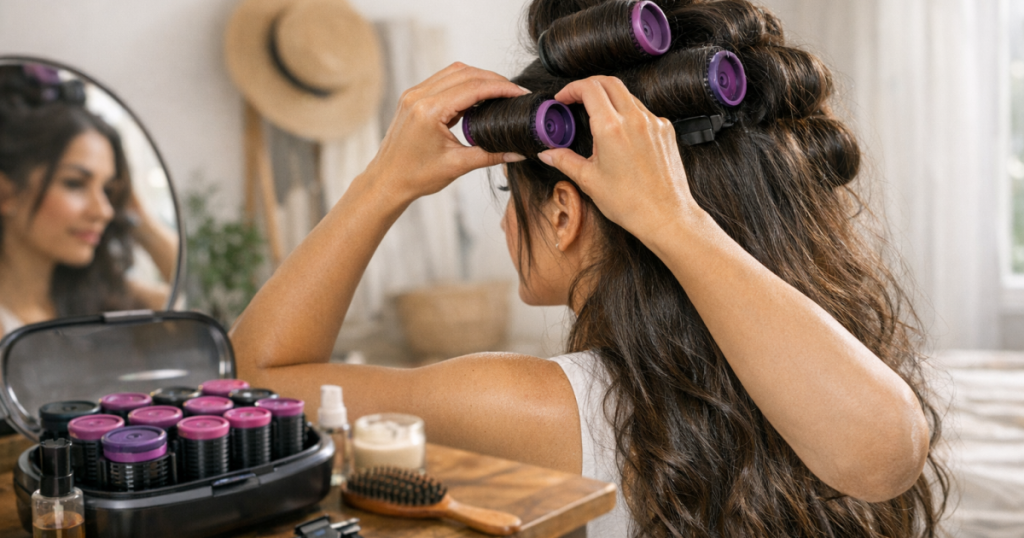
Heated roller sets vary, so always follow the instructions for your actual tool. Examples such as BaByliss Thermo-Ceramic Rollers and Remington PROluxe H9100 Heated Rollers are useful reference points because they show the kind of roller systems many UK shoppers recognise, but you should verify the roller sizes, clips, heat guidance and hair suitability for the set you are using.
Prep your hair before you plug the rollers in
1. Wash and condition with slip, not heaviness
Roller sets last better when thick hair is smooth but not overloaded. A moisturising conditioner can help reduce roughness and snagging, especially if your lengths are dry from regular heat styling. If heat damage is already a concern, our Moroccanoil Moisture Repair Conditioner review explains what to consider when choosing a conditioner for compromised lengths.
Avoid very heavy masks or rich oils immediately before using heated rollers unless your hair genuinely needs them. Too much coating can make the hair feel soft but slippery, which encourages the set to collapse. If you use an argan oil hair treatment, keep it light and focus on dry ends rather than roots.
2. Dry the hair completely
Most heated rollers are designed for dry hair. Damp sections are harder to set evenly and can increase frizz, especially on dense, porous or wavy hair. Blow-dry or air-dry first, then smooth any puffy areas before rolling. You do not need poker-straight hair, but you do want the strands arranged neatly so they wrap around the roller without lumps.
3. Add heat protectant and a little hold
Use a heat protectant suitable for dry styling, then add a small amount of mousse or styling spray if your hair drops quickly. Thick hair often benefits from hold at the root and mid-lengths, not just the ends. Keep hairspray light before rolling; you can always add more after the curls have cooled.
Sectioning: the make-or-break step
Good sectioning matters more on thick hair than the exact roller brand. Start by dividing the hair into a top mohawk section, two sides and a back section. If your hair is very dense, split the back into upper and lower layers rather than treating it as one large area. For a deeper walkthrough, use this guide on sectioning thick hair for even waves; the same logic applies when you need every layer to set cleanly.
As a rule, each subsection should be slightly narrower than the roller and not too thick from scalp to surface. Around 2 to 4 cm of depth is a workable starting point, but adjust by feel: if the hair bunches, slips or will not warm through, the section is too large. Dense hair usually needs more rollers than fine hair for the same head shape.
Step-by-step: setting thick hair with heated rollers
1. Start at the crown for lift
Take the first section from the top of the head, lift it upward and smooth it with a brush or comb. Place the roller under the ends, tuck the tips neatly, then roll down towards the scalp with steady tension. Secure it firmly without crushing the hair. Rolling away from the face gives a classic blowout feel; rolling forward can create fringe lift or a more vintage curve.
2. Match roller size to the result
Larger rollers give more volume and a softer bend. Smaller rollers create a stronger curl or flick, which can be useful around layers, face-framing pieces and stubborn ends. On long, heavy hair, do not rely only on the biggest rollers if you want visible movement. A mix usually works better: larger at the crown, medium through the sides and smaller through the lower layers or ends.
3. Roll the sides away from the face
For a flattering, modern shape, roll the side sections away from your face. Keep the hair flat against the roller rather than twisted like a rope. Twisting creates uneven heat contact and can leave thick hair with dents instead of smooth bends. If your front pieces are layered, use smaller sections so the shortest hairs do not spring out.
4. Treat the back as smaller panels
The back of thick hair is where roller sets often fail. Work in horizontal rows and keep each subsection controlled. If your arms get tired, clip the unrolled hair out of the way and pause briefly rather than grabbing bigger pieces. Bigger sections feel faster, but they usually cost you hold and polish.
5. Let the rollers cool completely
Cooling is the setting phase. The hair changes shape as it cools around the roller, so removing the rollers while they are still warm weakens the result. Thick hair may feel cool on the outside while inner strands are still warm, so give the set enough time. Use that waiting period to do make-up, get dressed or let humidity settle before finishing.
How to remove rollers without losing the shape
Unclip each roller gently and unwind rather than pulling it straight out. Pulling can stretch the curl and rough up the cuticle, which is especially noticeable on coarse or colour-treated hair. Start at the bottom and work upwards so loose curls do not get caught in clips above them.
Once all rollers are out, leave the curls alone for a minute or two. Then choose your finish. For a bouncy blowout, rake through with fingers and lift at the roots. For softer waves, use a wide-tooth comb or a flexible detangling brush very lightly through the ends. For maximum hold, tilt your head back and mist hairspray underneath the layers rather than coating the top until it feels stiff.
Fixes for common thick-hair roller problems
The curls drop within an hour
Your sections are probably too big, the hair was not fully cool, or the finish is too heavy. Use smaller subsections, add a little styling mousse before drying, and avoid smoothing oil until after the set has settled. If your hair is very long and blunt, use smaller rollers through the lower half to create a firmer bend that can relax into a wave.
The roots look flat
Lift the crown sections straight up before rolling and place the roller close to the scalp without pulling uncomfortably. You can also over-direct the hair slightly forward or backward before rolling so it cools with more height. Avoid heavy conditioner or oil near the roots on styling day.
The ends look crimped or hooked
The ends were not wrapped smoothly. Brush each section first, keep the ends flat, and use end papers if your hair is layered, coarse or prone to flicking in the wrong direction. If only the bottom few centimetres are misbehaving, a tiny amount of styling cream after removal can soften the bend.
The set looks too big at first
That is not always a problem. Thick hair often relaxes within the first 20 minutes. Let the shape settle before brushing. If it still feels too full, smooth the top layer with your hands and separate curls underneath rather than brushing from root to tip.
Heated rollers versus heatless methods for thick hair
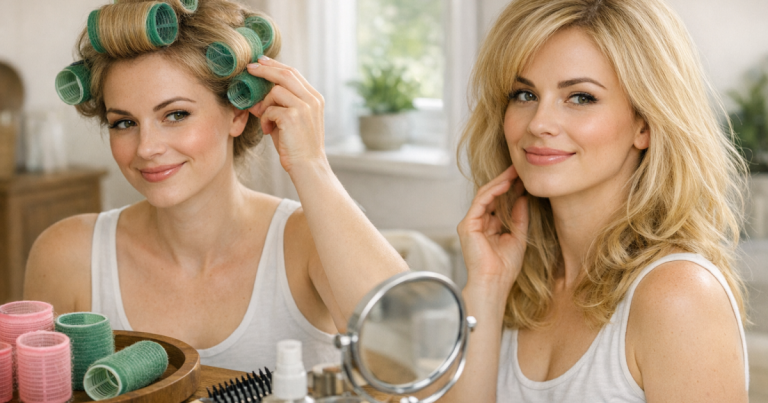
Heated rollers are faster when you want volume on dry hair, especially before work, an event or a last-minute refresh. Heatless curling rods, satin wraps and soft overnight tools are gentler for frequent styling, but they need more time and usually work best when the hair is slightly damp or prepped with the right level of hold.
If your thick hair is fragile, bleached or prone to snapping, you may want to alternate heated sets with heatless styling. Heated rollers can still be part of a sensible routine, but daily use on already dry lengths can make frizz and breakage harder to manage. A silk hair wrap or satin pillowcase can help preserve the shape overnight so you do not need to restyle from scratch.
Cleaning and maintaining your roller set
Product build-up makes rollers less pleasant to use and can transfer old hairspray back onto clean hair. Once the set is unplugged and fully cool, remove loose hairs and wipe the roller surfaces according to the manufacturer’s care instructions. Do not soak electrical bases or heated components.
If you rotate between heated rollers and Velcro rollers, mousse and hairspray residue can build up quickly. This separate guide to cleaning Velcro rollers after styling product is useful for keeping your non-heated rollers fresher between wash days.
Things readers ask
Can I use heated rollers on freshly washed thick hair?
Yes, but freshly washed hair can be too soft if you have used rich conditioner or no styling product. Dry it fully, add heat protectant, and use a light hold product if your curls usually fall quickly.
How long should thick hair stay in heated rollers?
Follow your roller set’s instructions, then focus on cooling rather than simply adding time. Thick sections need to feel cool all the way through before you remove the rollers.
Are heated rollers better than a curling tong for dense hair?
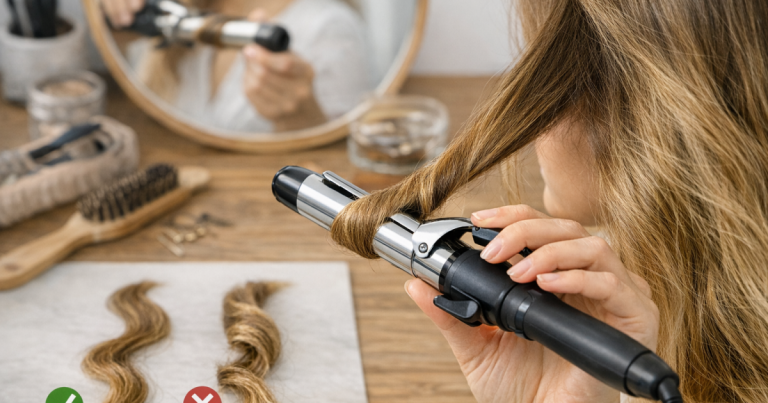
They are better for soft volume, root lift and a blowout finish. A tong usually gives more defined curls, but it can be slower on very dense hair and may create a more styled, less airy result.
Should I brush out the curls?
Only after they have cooled. Finger-combing gives the most control, while brushing creates a softer, fuller wave. If your hair expands easily, brush only the ends and smooth the top with your hands.
Why do rollers leave dents in thick hair?
Dents usually come from clips pressing too tightly, sections that are too bulky, or twisted hair on the roller. Use smaller sections, smooth before rolling and secure without clamping the curl flat.
Main lessons
Heated rollers can work beautifully on thick hair, but the method needs to respect density. Smaller sections, smooth wrapping, a sensible mix of roller sizes and proper cooling will do more for longevity than simply using more product. Treat the set like a structured blowout: prep lightly, roll neatly, wait patiently and finish only once the hair has settled.