A powerful dryer can make thick hair smoother and fine hair flatter, so the details matter. This Parlux 385 Power Light Hair Dryer review focuses on whether the salon favourite still makes sense for at-home styling in 2026: how it handles different hair types, where it feels genuinely useful, and where a lower-heat or heatless route may be kinder.
Main points
The short verdict: the Parlux 385 Power Light Hair Dryer is a strong choice if you want a robust, no-fuss dryer that can speed up a classic blow-dry and help smooth dense hair with the right brush and nozzle technique. It feels most convincing for medium, thick, wavy and coarse hair that needs airflow control rather than gadget-style attachments.
It is less compelling if your main concern is heat reduction, quiet luxury styling, or creating curls without tension. For those routines, the better upgrade may be a styling plan rather than a stronger dryer; this is where planning your style before choosing a hair tool can save you from buying power you do not really need.
Before you buy, check the exact retailer listing for plug type, included concentrator nozzles and warranty terms for the UK market. Parlux dryers are widely sold through salon and beauty retailers, but pack contents and aftercare support can vary.
Product overview
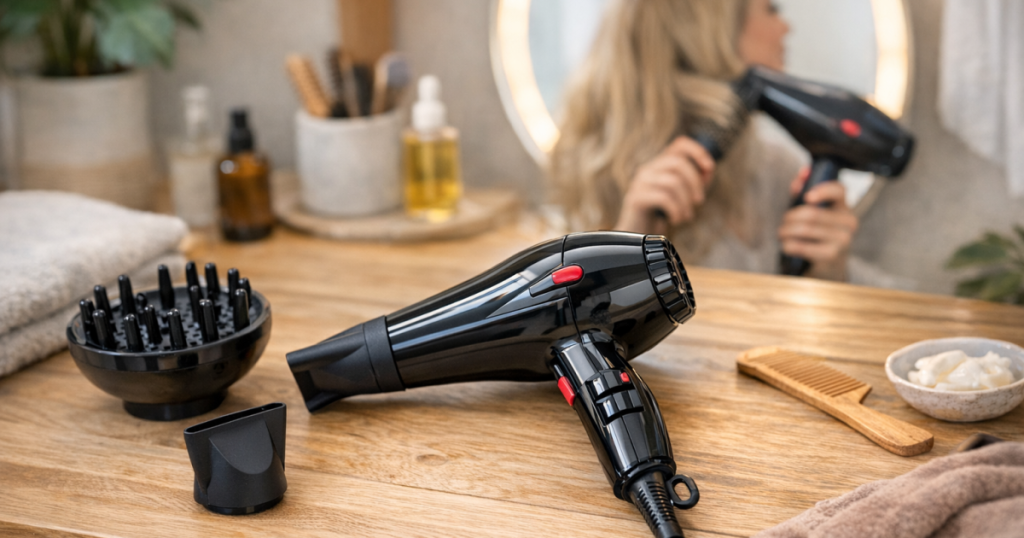
The Parlux 385 Power Light Hair Dryer is a professional-style dryer designed around strong airflow, a relatively compact body and straightforward controls. It is not trying to be a curling system, hot brush or heatless styler. Its job is simple: dry hair efficiently, direct air through a concentrator nozzle, and support a smoother brush-led finish.
That makes it feel quite different from attachment-heavy tools. There is no complicated learning curve beyond good sectioning, sensible heat choice and using the nozzle properly. If you already know how to rough-dry roots, use a round brush through the lengths and finish with cooler air, it slots into a routine quickly.
The trade-off is that it still depends on technique. A powerful dryer can polish hair, but it can also rough up the cuticle if you blast hair from every direction. For frizz-prone hair, the concentrator should stay angled down the hair shaft, and the highest heat should not be treated as the default setting.
Key specs
- Product type: salon-style hair dryer for at-home and professional blow-drying.
- Brand: Parlux.
- Commonly listed power: 2150 W; verify this on the retailer page before ordering.
- Commonly listed settings: multiple heat and speed settings plus a cold-shot button.
- Technology commonly described by retailers: ceramic and ionic conditioning features, intended to support a smoother finish.
- Typical accessories: concentrator nozzles are usually supplied, but confirm the exact number and style included.
- Weight and cable: often promoted as lightweight with a salon-length cable; check the current listing for exact figures.
- Best use case: controlled blow-drying, smoothing, root drying and brush styling rather than heatless curls or air-wrap styling.
Pros and cons
Pros
- Strong drying performance: useful for thick, dense or long hair where low-powered dryers can feel slow and tiring.
- Simple controls: the layout is easy to understand, which suits people who want a reliable dryer rather than a multi-step styling system.
- Good nozzle control: with a concentrator attached, it can help create a smoother, more directional finish.
- Salon-style feel: the build and airflow make it feel more serious than many basic high-street dryers.
- Works with your existing brushes: it pairs well with round brushes, paddle brushes and sectioning clips, so you do not need to change your whole routine.
Cons
- Still relies on heat and tension: it is not the gentlest choice if your hair is already brittle, over-lightened or heat-fatigued.
- Not a curl-making tool: it can support a bouncy blow-dry, but it will not replace rollers, a curling wand or heatless curling rods.
- Power can be too much for fine hair: fine, flyaway hair may need lower settings and careful sectioning to avoid a wispy finish.
- Price varies by retailer: compare UK sellers, warranty details and returns policies rather than judging it on headline cost alone.
- Nozzle discipline matters: using it without direction can create puffiness on coarse or porous hair.
Performance in real use
Drying speed and control
The Parlux 385 Power Light Hair Dryer feels most useful when hair holds water and takes ages to dry. On medium to thick hair, the airflow helps remove moisture quickly at the roots and through the mid-lengths. That does not mean using the hottest setting from start to finish. A better routine is to rough-dry until the hair is damp rather than wet, then switch to sections with a brush and nozzle.
For fine hair, the benefit is less about speed and more about control. Use a lower speed near the hairline and fringe, otherwise the airflow can blow the section out of shape before the brush has done its work. If your hair collapses easily, avoid over-drying the lengths; stop when the section is dry and let it cool in shape.
Smoothing and frizz management
This dryer can give a smoother result than a weak dryer because it lets you keep airflow concentrated and consistent. The biggest difference appears when you use the concentrator and point air downwards. That helps reduce the lifted, fuzzy look that happens when hair is dried from underneath or blasted against its natural fall.
On coarse, wavy or porous hair, prep matters. A leave-in conditioner or lightweight heat protectant can help, but the tool cannot fully compensate for dehydrated hair or rushed sectioning. If your finish often swells after styling, focus on smaller sections, lower speed near the ends and cooling each section before letting it drop.
Roots, shape and volume
At the roots, the dryer is good for lift when used with clips, a vent brush or a round brush. The airflow has enough strength to shift moisture from dense root areas, which is helpful if your hair looks smooth on top but stays damp underneath. For volume, dry the root in the opposite direction first, then guide it into place as it cools.
The same power can flatten hair if you over-direct everything downwards too early. Fine or straight hair usually benefits from root drying first, then smoothing only the mid-lengths and ends. Thick hair can take more tension and more airflow, but it still needs sectioning to avoid a puffy outer layer with damp inner layers.
Comfort, handling and everyday use
The shape feels familiar if you have used salon dryers before: a handle, barrel, switches and nozzle rather than a bulky styling head. It is straightforward for weekly blow-dries and quick wash-day drying. People with wrist fatigue should still check current weight details before buying, because even a lighter professional dryer can feel tiring during a full, brush-led blow-dry on long hair.
Noise is also worth considering. Powerful dryers rarely feel whisper-soft, so if you dry early in the morning or share a small flat, check buyer feedback on sound level. The key question is not whether it is silent, but whether the drying time saved makes the sound acceptable for your routine.
Maintenance and longevity habits
With any dryer, performance drops when the rear filter clogs with dust, product residue or lint. Keep the filter clear according to the instructions, avoid wrapping the cable tightly around the body while it is still warm, and store the nozzles where they will not crack or warp. These small habits matter more than most people expect, especially if you use styling sprays or dry shampoo regularly.
Who it’s best for / who should skip it
It is best for: medium, thick, long, wavy and coarse hair that needs quicker drying and a smoother brush finish. It also suits anyone who prefers a traditional dryer over a styling system and already owns brushes they like using.
It can work for fine hair if: you are disciplined with the lower settings and do not chase a poker-straight finish with too much heat. Use a smaller brush around the hairline, reduce speed near fragile sections and avoid repeatedly drying the same piece.
Skip it if: your priority is heatless styling, soft overnight waves, minimal noise, or a tool that creates curls for you. If your hair is heavily bleached, snapping or very dry, you may get more improvement from reducing heat frequency and adding recovery time between blow-dries.
Alternatives
If you like the idea of salon airflow but need more help with textured or coily hair, a dryer-and-comb-nozzle route may be more relevant than this exact Parlux model. The ghd Helios comb nozzle review for coily hair is a useful next read because it focuses on tension, stretch and attachment control rather than just drying speed.
If your real aim is smoothness with less heat, consider whether an overnight wrap, silk hair wrap, satin heatless curling rod or Velcro rollers would solve more of the problem than a stronger dryer. The Parlux is a dryer first; it is not the most logical purchase if you mainly want heat-free shape, second-day polish or soft curls without a blow-dry.
Things readers ask
Is the Parlux 385 Power Light Hair Dryer good for thick hair?
Yes, it is one of the hair types it makes most sense for. Thick and dense hair usually benefits from stronger airflow, provided you section properly and use the concentrator nozzle to keep the finish smooth.
Will it make fine hair too flat?
It can if you use high heat and high speed throughout. Fine hair needs lower settings, root lift first and less smoothing through the lengths to avoid losing body.
Does it replace a hot brush?
No. A hot brush adds tension and shape through the brush head, while this dryer needs a separate brush. It gives you more traditional blow-dry control, but it asks more from your technique.
Can it reduce frizz on coarse hair?
It can help when used directionally with a nozzle, but it will not fix frizz caused by dryness, damage or poor prep. Coarse hair usually needs controlled sections, moisturising prep and a cool finish.
Is it worth choosing over heatless styling?
Choose it if faster drying and a polished blow-dry are your priorities. Choose heatless options if your goal is curl, wave or smoothness with less heat exposure during the week.
Verdict + score
The Parlux 385 Power Light Hair Dryer is a dependable, powerful, salon-style dryer that earns its place for people who want faster drying and a smoother brush-led finish at home. It is particularly persuasive for thick, wavy, coarse and long hair, where airflow strength and nozzle control can noticeably improve the routine.
Its limitations are just as clear. It is not a low-heat styling solution, it will not create curls on its own, and it can overwhelm fine or fragile hair if used without restraint. Buy it for efficient drying and classic blow-dry control, not because you expect it to replace a full styling wardrobe. Overall score: 8.4/10.
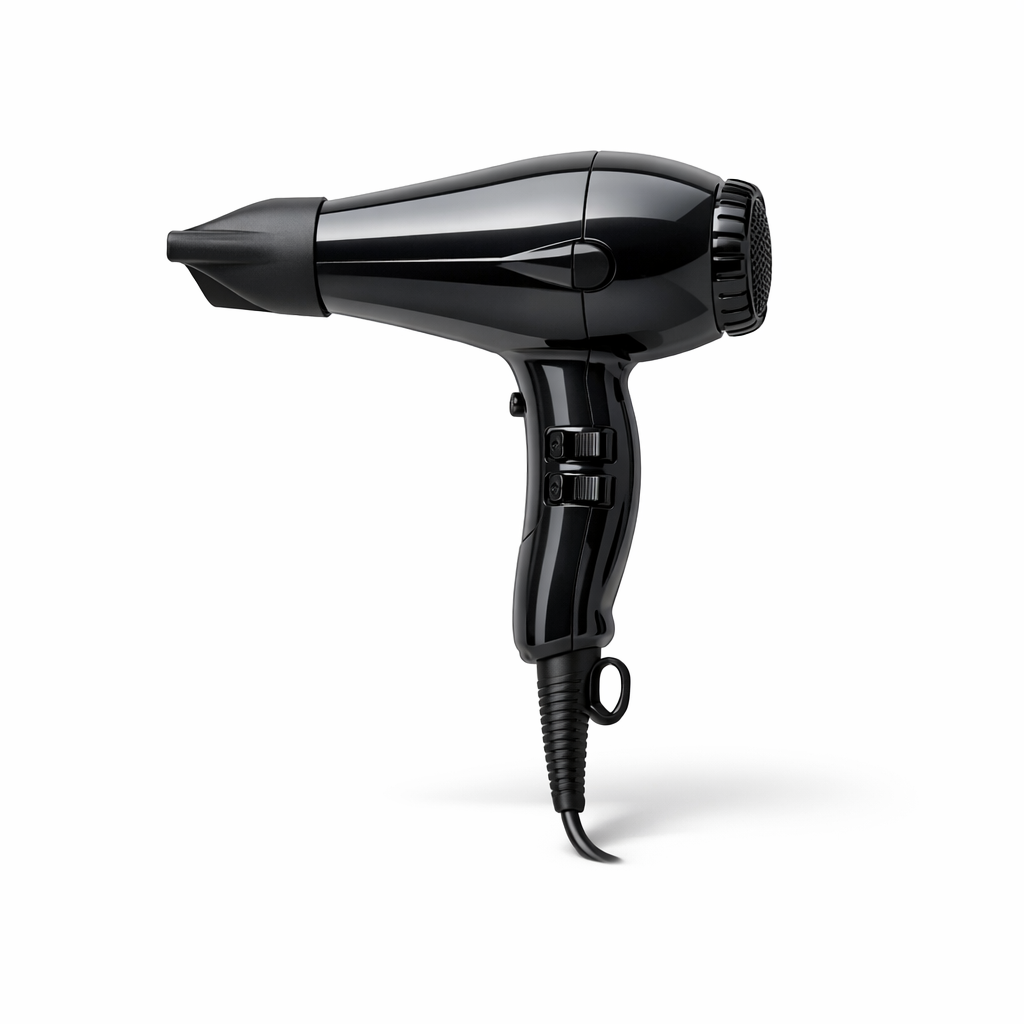
Parlux 385 Power Light Hair Dryer
Buy it for efficient drying and classic blow-dry control, not because you expect it to replace a full styling wardrobe.
You might also like: How to Use a Hair Straightening Brush on Coarse Hair Without Puffiness.