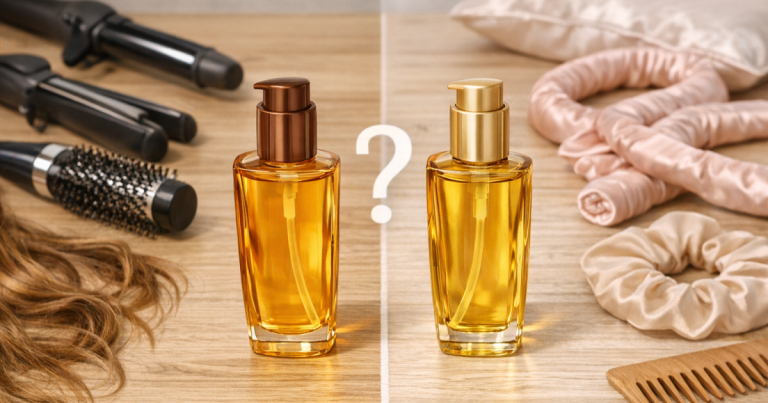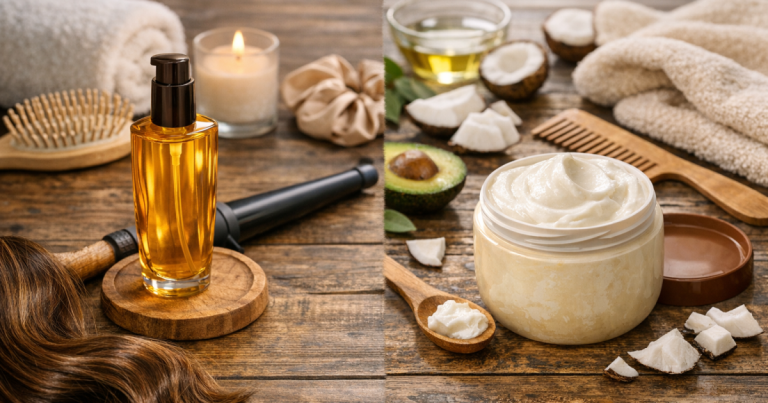
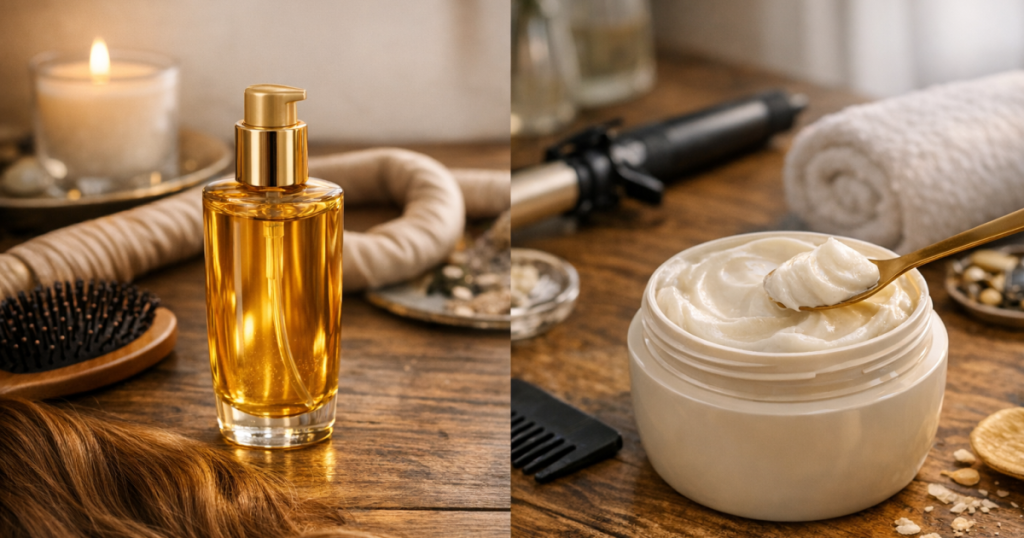
When your hair feels dry but your routine is already crowded, the choice is not always another styling tool. Sometimes it is a finish product, sometimes it is a wash-day treatment. Kerastase Elixir Ultime vs L’Oreal Elvive mask is really a question of whether your hair needs instant polish on the surface or a richer conditioning step before styling.
The short answer
Choose Kerastase Elixir Ultime L’Huile Originale Hair Oil if your main issue is dullness, flyaways, rough-looking ends or a style that loses its expensive-looking finish by mid-afternoon. It is a leave-in finishing oil, so it suits people who want shine and control after drying, heatless setting, brushing out waves or refreshing second-day hair.
Choose L’Oreal Paris Elvive Total Repair 5 Hair Mask if your hair feels dry, brittle, tangly or generally overworked before you even style it. It is a rinse-out mask, so it belongs in the shower rather than in your handbag, and it makes more sense when your lengths need slip and softness from wash day onwards.
Neither product is a true replacement for the other. One is a shine-and-smoothness finisher; the other is a conditioning treatment. The better buy depends less on brand prestige and more on where your routine is breaking down: before styling, during detangling, or after the finished shape starts to frizz.
Side-by-side: what actually changes in your routine?
- Product type: Kerastase Elixir Ultime is a leave-in hair oil used in small amounts on damp or dry hair. L’Oreal Paris Elvive Total Repair 5 Hair Mask is a rinse-out treatment used during washing.
- Main job: The Kerastase oil is better for shine, smoothing and a polished finish. The L’Oreal mask is better for softening, detangling and improving the feel of dry lengths before styling.
- Best timing: Use the oil after styling, before brushing out curls, or as a light refresh. Use the mask on wash day, before you reach for rollers, a brush, a dryer or heatless tools.
- Hair that benefits most: The oil suits medium to thick, coarse, frizz-prone or dull hair particularly well, provided it is applied sparingly. The mask suits dry, stressed, colour-treated-looking or hard-to-detangle lengths, though very fine hair may need careful placement.
- Biggest risk: The oil can make fine roots look greasy if overused. The mask can make limp hair feel heavy if it is used too often or too close to the scalp.
- Budget role: Kerastase sits in the luxury haircare space. L’Oreal Paris Elvive is a more accessible high-street option, so it is easier to use generously and repurchase frequently.
What Kerastase Elixir Ultime does best
The appeal of Kerastase Elixir Ultime is finish. It is the kind of product that can make styled hair look more deliberate: smoother ends, more light reflection, less fuzzy separation and a softer feel when you run your fingers through the lengths. That makes it useful if your hair looks good straight after styling but becomes fluffy, matte or slightly shapeless as the day goes on.
It is particularly handy with heatless styling because many no-heat methods rely on the hair drying or setting in a shape. Once you remove a satin curling rod, rollers or a wrap, you often need something that helps separate and soften the result without brushing away the pattern. A tiny amount of oil warmed between the palms can help smooth the surface while keeping movement.
The trick is restraint. Fine hair may only need a trace on the very ends. Medium hair can usually tolerate a little more through the mid-lengths. Thick, coarse or high-density hair may benefit from section-by-section application, but it still pays to start small. If you regularly confuse strand thickness with the amount of hair on your head, this guide to hair texture versus density is a useful next step before judging whether an oil feels too rich or just badly placed.
Where L’Oreal Paris Elvive Total Repair 5 Hair Mask makes more sense
The L’Oreal Paris Elvive Total Repair 5 Hair Mask is less about the final photograph and more about how your hair behaves after washing. If your brush catches, your ends feel dry even before blow-drying, or your lengths seem rough after colouring, frequent heat use or everyday friction, a mask can be the more useful first fix.
A rinse-out mask gives you slip and softness before you start styling. That matters because hair that is easier to detangle is often easier to set, smooth, braid, wrap or roll. You are not asking a finishing oil to solve knots, dryness and frizz all at once; you are building a better base.
This option is also more forgiving if you like a simple routine. You can use it instead of, or after, conditioner depending on your hair’s needs and the product instructions. For many people, using a mask once or twice a week is enough, but your ideal frequency depends on how quickly your hair becomes weighed down. Always check the directions on the pot and adjust based on how your hair feels once dry, not just how soft it feels in the shower.
Fine, thick, curly or colour-treated: which one fits your hair?
Fine hair
Fine hair needs the most careful decision. If your ends are dry but your roots go flat quickly, the L’Oreal mask may help, but apply it mainly from mid-lengths down and avoid treating it like a scalp product. The Kerastase oil can work too, but only in a tiny amount on the very ends or as a finishing touch after styling. If your hair collapses easily, a heavy-handed oil application will be more noticeable than a slightly over-generous rinse-out mask.
Thick or coarse hair
Thick, coarse or high-density hair is more likely to appreciate both products, but not necessarily on the same day. The mask can make wash day easier by improving slip, while the oil can add polish once hair is dry. If your hair absorbs product quickly and still looks matte, the oil is likely to feel more rewarding than it does on fine hair.
Curly and wavy hair
For curls and waves, the mask is useful when the curl pattern looks dry, frizzy or uneven after washing. Better conditioning can help curls clump more neatly before styling. The oil is better at the end, when you want to break up a cast, soften heatless waves or calm halo frizz. Avoid dragging oil through curls roughly; press or glaze it over the surface instead.
Bleached, coloured or stressed hair
If your hair is stressed from colour, bleach, straighteners or frequent hot tools, the mask is the more logical first purchase because dryness and tangling usually start before the finish stage. The oil can make damaged-looking ends appear smoother, but it will not replace a consistent wash-day routine. If your hair feels fragile, look at your shampoo, conditioner, treatment and styling habits together rather than expecting one product to carry the whole routine.
How they work with at-home styling tools
For blow-drying, hot brushes and wet-to-dry tools, the mask belongs before the styling session and the oil belongs after it, unless the brand directions say otherwise. The mask helps create a smoother base; the oil helps refine the finish. If you are deciding between heat and no-heat methods, the product choice should support the styling approach rather than fight it. Our guide to heatless or heated styling for curls, waves and volume breaks down when a gentler method is worth prioritising.
With Velcro rollers, the oil is usually best after the rollers come out, not before. Too much slip before setting can reduce grip and make the root lift fall sooner. With a satin heatless curling rod or silk wrap, a small amount on dry ends can make the final result look softer, but overuse can stretch out waves. With a detangling brush, the mask is the product that usually makes the biggest difference because it improves slip before brushing.
If you use an argan oil hair treatment already, think carefully before adding another oil. Layering oils can be lovely on coarse or porous-looking ends, but it can quickly flatten fine hair. In that case, the mask may add more value because it works at a different stage of the routine.
Common mistakes that make either product seem worse than it is
- Using the oil like a serum for every section: Start with less than you think you need. Add more only to the driest-looking areas.
- Putting the mask at the roots: Unless the product directions specifically suggest scalp use, keep richer masks mainly on the lengths and ends to avoid flatness.
- Judging results while hair is wet: A mask can feel amazing in the shower but too heavy once dry. Wait until your hair is fully dry before deciding on frequency.
- Expecting shine to equal repair: A glossy finish can make hair look healthier, but it does not necessarily mean the underlying routine is enough for stressed lengths.
- Using both heavily before styling: A rich mask followed by too much oil can make curls drop, rollers slide and fine hair lose movement.
- Ignoring fragrance and sensitivity: Both luxury and high-street hair products may contain fragrance. If your scalp or skin reacts easily, check the ingredient list and stop using a product that causes irritation.
Value: luxury finish or affordable treatment?
The value comparison is not as simple as luxury versus budget. Kerastase Elixir Ultime is likely to appeal if you are happy to pay more for a small-amount finishing product that can last well when used sparingly. It is also easier to justify if your hair is often styled, photographed, worn smooth, or prone to looking dull at the ends.
L’Oreal Paris Elvive Total Repair 5 Hair Mask is easier to justify if you need a practical wash-day product and do not want to be precious about how much you use. It is the more accessible option for households where more than one person may use it, or for long, thick hair that needs generous coverage.
Before buying either, check the current size, price, retailer availability and ingredient list from a UK retailer you trust. Product ranges can vary by market and packaging can change, so it is better to verify the exact version in your basket than rely on an old product photo.
Which should you buy first?
Buy the L’Oreal Paris Elvive Total Repair 5 Hair Mask first if your hair is difficult to detangle, feels rough after shampooing, tangles overnight, or looks dry no matter how you style it. It is also the better first step if you are trying to reduce heat styling because well-conditioned hair usually behaves better with braids, wraps, rollers and other heatless methods.
Buy Kerastase Elixir Ultime first if your hair is already manageable but lacks shine, your ends look fluffy after styling, or your finished curls and waves need softening. It is the better finishing product for making a style look smoother without re-washing your hair.
Buy both only if you have two separate problems: dry, tangly hair on wash day and dull or frizzy ends after styling. Use the mask as your base treatment and the oil as your final polish. For many medium, thick, curly or colour-treated hair types, that pairing makes sense. For very fine or easily weighed-down hair, start with one product and judge the result before layering.
What to remember before you choose
The simplest way to frame Kerastase Elixir Ultime vs L’Oreal Elvive mask is this: the oil improves the look and feel of the finished style, while the mask improves the condition-like feel of the hair before styling. If your main frustration happens after you have styled your hair, choose the Kerastase oil. If the problem starts in the shower or during detangling, choose the L’Oreal mask.
For fine hair, be cautious with both and use less than the packaging glamour might tempt you to apply. For thick, coarse, curly or dry lengths, the mask-first approach is usually the safer foundation, with oil added only where the finish needs extra gloss. The best choice is the one that solves the point in your routine where your hair actually starts to misbehave.
Quick Buying Links
Kerastase Elixir Ultime Hair Oil
A strong contender depending on your priorities.
L'Oreal Paris Elvive Total Repair 5 Hair Mask
Choose L'Oreal Paris Elvive Total Repair 5 Hair Mask if your hair feels dry, brittle, tangly or generally overworked before you even style it.
Questions people ask
Can I use Kerastase Elixir Ultime and L’Oreal Elvive Total Repair 5 Hair Mask together?
Yes, but use them at different stages. Apply the mask on wash day, rinse it out as directed, then use a small amount of oil on dry or nearly dry ends if your finished style needs shine or smoothing.
Which is better for frizz?
If frizz comes from dryness and tangling, start with the mask. If frizz appears after styling as flyaways or fluffy ends, the oil is more targeted. Many thick or curly hair types may benefit from both, used lightly.
Will the hair oil make fine hair greasy?
It can if you use too much or apply it near the roots. Fine hair usually needs a tiny amount on the ends only. If your hair is very limp, a rinse-out mask used sparingly may be easier to control.
Is the L’Oreal mask enough for damaged hair?
It can improve softness and manageability, but very stressed hair often needs a wider routine rethink. If your shampoo feels stripping, read our Olaplex No. 4 Bond Maintenance Shampoo review for another comparison point.
Which product is better before heatless curls?
Use the mask before styling if your hair needs softness and slip. Use the oil after removing your heatless curler to separate waves and add shine. Too much oil before setting can make the shape drop faster.