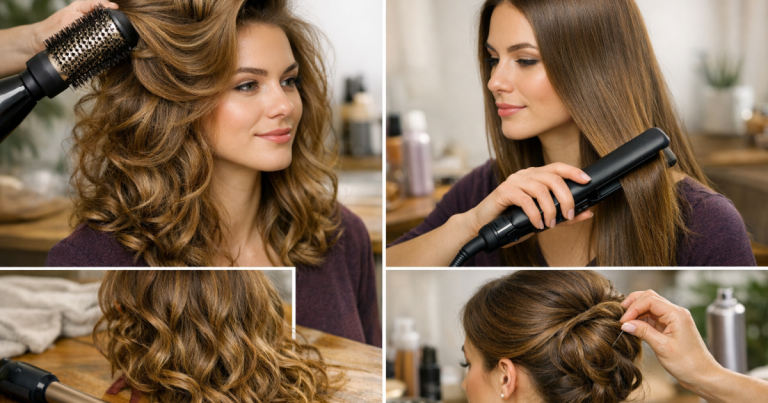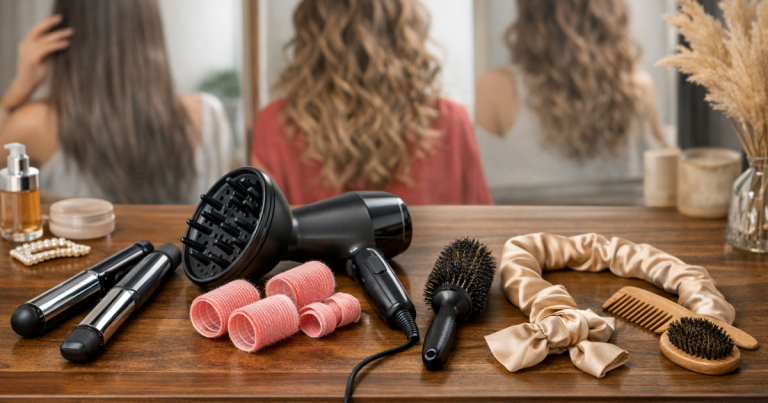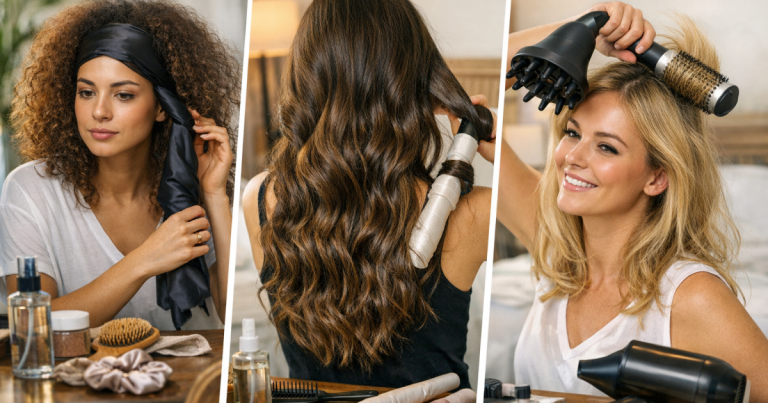
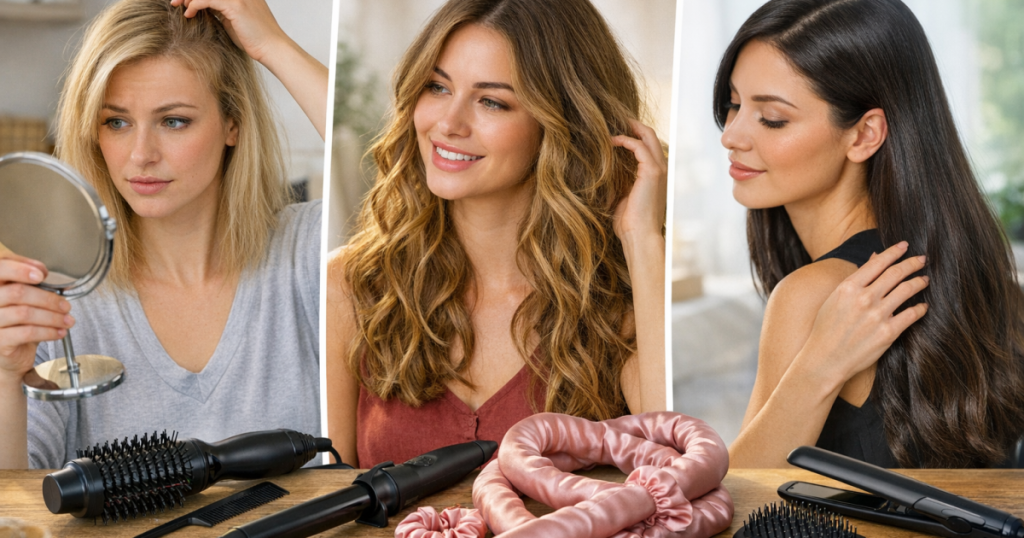
It is easy to blame your hair when a style falls flat, turns fluffy, or looks too stiff by lunchtime. The fastest way to choose is to work backwards from your desired hair look, then match the method to your hair type, time, and tolerance for heat. A sleek bob, airy curtain fringe, soft waves, and polished curls all need different combinations of lift, shape, smoothness and hold.
The right choice is rarely just one gadget. Most good at-home routines use a simple pairing: a preparation tool, a shaping tool, and a finishing step that protects the result without making the hair feel coated.
Main points
- For root lift: choose lightweight tension, airflow, or rollers rather than heavy smoothing tools.
- For soft waves: heatless rods, rollers, a curling wand, or a diffuser can all work, but the finish changes depending on hair texture and drying time.
- For sleekness: a dryer, smoothing brush, and straightener are more useful than curl-forming tools.
- For frizz control: start with detangling and drying technique before relying on high heat.
- For definition: preserve natural bends and curls with a wide-tooth comb, diffuser, or satin-based heatless method.
If you find it easier to think in outcomes, the lift, shape, smoothness and hold framework is a useful next step because it separates the finish you want from the tool you assume you need.
Start with the finish, not the tool
A common mistake is choosing the tool that looks most impressive rather than the one that solves the styling problem. A straightener can make hair glossy, but it will not create natural-looking root volume on fine hair. A curling wand can build shape, but it may exaggerate puffiness on hair that needs controlled drying first. Velcro rollers can give beautiful movement, yet they need enough grip, sectioning and cooling time to last.
Ask one question first: do you want lift, bend, smoothness, definition or control? Once that is clear, the tool choice becomes much simpler. Lift needs the roots to set in an elevated position. Bend needs the lengths to form around a shape. Smoothness needs cuticle alignment and controlled tension. Definition needs the natural pattern to be encouraged rather than brushed out.
If you want volume and lift
Volume is mostly about where the hair sets as it dries or cools. For fine hair, oversized tools can collapse the shape because the hair does not have enough weight or grip to hold a large curve. Smaller rollers, a vented brush at the root, or careful upside-down drying can create better lift than a bulky hot brush.
For medium hair, Velcro rollers are a strong choice for crown lift, fringe shaping and soft bounce. Use them when hair is dry or nearly dry, place them where you want height, and let the section cool or settle before removing. For thick hair, volume tools need stronger sectioning. Larger sections often look quicker but can leave the roots flat and the outer layer puffy.
If your volume drops quickly, the problem may be product weight rather than the tool. Heavy oils, rich leave-ins and too much serum can make the roots look clean but limp. Keep conditioning products through the mid-lengths and ends, then use your lifting tool on hair that still has movement.
If you want waves or loose curls
Waves can be made with heatless rods, soft rollers, a curling wand, straightener bends, braids, or a diffuser. The difference is not just how curly the hair looks; it is how controlled the pattern feels. Heatless methods tend to give softer, more relaxed movement. Heated tools usually create a more deliberate shape and can be useful when the hair resists bending.
A satin heatless curling rod is a good match for medium to long hair when you want overnight movement without using heat. It works best when hair is slightly damp or prepped with a light styling product, not soaking wet. Velcro rollers are better for bounce and a blow-dry effect than spiral curls. A curling wand gives more targeted shaping around the face or ends, but it needs careful sectioning so the result does not look patchy.
For naturally wavy hair, the goal is often not to create waves from scratch but to stop them from expanding into frizz. A diffuser, microfibre towel, wide-tooth comb and light hold product can be more useful than a curling tool. If that sounds familiar, read the guide to wavy hair styling tools for definition, frizz and volume.
If you want a sleek, polished finish
Sleek hair depends on drying direction, tension and finishing control. A paddle brush or smoothing brush can help align hair while drying, while a straightener refines the surface afterwards. A premium straightener such as ghd Platinum+ Styler may suit someone who regularly wants a polished finish, but the key point is to check whether the plate shape, temperature approach and size suit your hair length and texture before buying.
For thick or coarse hair, a good dryer is often more important than the straightener. If the hair is rough-dried in random directions, a straightener has to do too much work afterwards. A focused nozzle, steady brush tension and smaller sections usually give a smoother result with less repeated pass-through. A dryer such as the Dyson Supersonic Hair Dryer is a recognisable premium example, but any dryer should be judged on control, attachments, comfort in the hand and how well it fits your routine.
For fine hair, sleekness can quickly become flatness. Keep the roots moving, smooth only the areas that look fuzzy, and avoid overworking the front pieces. A smooth finish with a little root lift looks more modern than hair that is pressed completely flat.
If your main problem is frizz
Frizz is not always a sign that you need more heat. It can come from rough towel-drying, brushing textured hair when dry, skipping section control, or using a tool that disrupts the hair pattern. The first tool to check is often the one you use before styling. A detangling brush such as Tangle Teezer The Original can be helpful for working through knots, but use it in the right moment: many curls and waves prefer detangling when damp and conditioned, while straighter hair may tolerate dry brushing more easily.
For smooth frizz control, use a dryer nozzle, brush tension and a light finishing product. For curl frizz control, use a diffuser, avoid aggressive brushing, and let the pattern set before touching it too much. The more your hair relies on natural texture, the more gentle your tool choice should be.
For a deeper breakdown of finish-led choices, the guide to matching tools to frizz, shine and definition explains which tools support a smoother surface and which ones help preserve texture.
Match the tool to your hair type
Fine or low-density hair
Choose lightweight tools that build shape without dragging the hair down. Velcro rollers, a small round brush, soft heatless curls and a controlled dryer setting can all work well. Be cautious with large hot brushes, heavy oils and oversized rollers if your style drops quickly.
Thick or dense hair
Look for tools that improve control and reduce styling fatigue. Sectioning clips, a reliable dryer, a wide-tooth comb, smoothing brush and larger rollers can all help. Thick hair often needs more preparation before shaping, so do not skip detangling or partial drying.
Wavy hair
Use tools that encourage the wave rather than stretching it out. A diffuser, satin heatless rod, wide-tooth comb and scrunch-friendly towel can help keep movement. If the top layer is frizzy but the underneath forms waves, focus on drying technique rather than adding more curl.
Curly or coily hair
Definition usually comes from moisture, product distribution and low-disruption drying. A wide-tooth comb, sectioning clips, diffuser and satin wrap are often more useful than a standard brush. If using heat, keep the goal specific: stretching, smoothing roots, or refining individual pieces.
Straight hair
Straight hair often needs tools that create bend and memory. Rollers, a curling wand, round brush or heatless curling rod can add movement. If the hair is very silky, prep matters: a little hold before shaping can make the result last longer.
Heatless, heated or hybrid?
Heatless styling is ideal when you want softer movement, less daily heat exposure, or an overnight routine. It is not always quicker, because it needs setting time, but it can be easier to fit around sleep or getting ready slowly. Satin rods, soft rollers, silk wraps and plopping methods are all useful when comfort and hair condition matter.
Heated styling is better when you need a fast, deliberate finish or when your hair does not hold shape easily. The trade-off is that you need more care with heat protection, section size and how often you restyle the same areas. A hybrid routine often works best: dry and smooth carefully, then use rollers to cool and set, or create heatless waves overnight and tidy the front with a heated tool in the morning.
If you are still deciding between broad tool families, the guide to straighteners, curlers, rollers and dryers gives a clear overview of what each category does well.
FAQ
Can one tool create every style?
Usually not. A dryer can prepare almost any look, but it will not replace rollers for lift, a diffuser for curls, or a straightener for a very sleek finish. Most routines work better with two or three well-chosen basics.
What should I choose if I only style my hair occasionally?
Choose the tool that solves your most common problem. If your hair looks flat, start with rollers or a round brush. If it looks fuzzy, focus on a dryer nozzle, detangling tool and smoothing brush before buying a specialist curler.
Are heatless tools better for damaged hair?
They can be gentler because they avoid direct heat, but they still need careful use. Do not wrap hair too tightly, avoid sleeping on wet heavy sections, and remove rollers or rods slowly to prevent pulling.
Why does my style look good at first then disappear?
The hair may not have fully dried or cooled in shape, the sections may be too large, or your products may be too heavy. Let the style set before brushing out, and use lighter prep if your roots collapse.
What stands out
The most useful hair styling tools are chosen by outcome: lift for volume, controlled shape for waves, tension for sleekness, and gentle handling for definition. Hair type then narrows the choice. Fine hair needs lightness, thick hair needs control, wavy hair needs pattern support, and curly or coily hair needs low-disruption styling. Start with the finish you want, choose the method that creates it most naturally, and build a routine around the least effort needed to make it last.