The trick with heatless curls on fine hair is not making them bigger at the start; it is building enough grip, dryness and structure for them to stay. Fine strands can take shape quickly, but they also lose it quickly when the hair is too clean, too wet, too heavy with product or wrapped around the wrong tool size.
A good routine should feel light, not crunchy. Think of it as controlled prep: add a small amount of hold, wrap with even tension, let the hair dry fully, then separate the curls only as much as the hair can handle.
At a glance
- Start with hair that is slightly damp or dry with a little styling mist, not wet.
- Use smaller sections than you would on medium or thick hair so each curl has enough definition.
- Choose a slimmer curling rod or smaller rollers for longer-lasting bend; larger tools create softer waves that drop sooner.
- Keep product lightweight: mousse, setting spray or a fine mist hairspray usually works better than heavy creams or oils.
- Do not brush out immediately. Let the set settle, then loosen with fingers or a wide-tooth comb.
If you are unsure whether you want loose waves, fuller curls or root lift first, the guide to matching your tool to your desired hair look is a useful next step before you change the whole routine.
Step 1: Start with the right level of clean
Fine hair often behaves best for heatless styling when it is not freshly washed and silky. Very clean hair can be too smooth, so the curl has little to grip. Day-one hair can still work, but it usually needs a little more hold at the prep stage.
If your hair gets oily quickly, wash as normal and use conditioner only through the mid-lengths and ends. Avoid rich masks, heavy leave-ins and oil-based finishing products before setting curls, as they can soften the shape before it has formed. If your hair is clean but slippery, a small amount of volumising mousse or setting spray can give it the texture it needs.
For second-day hair, brush or comb through gently, then refresh with a light mist of water or a curl-setting spray. The goal is flexibility, not saturation. If the hair feels wet against your fingers, it is too damp for fine hair to hold reliably overnight.
Step 2: Prep for grip without weight
Fine hair needs hold, but too much product collapses volume. Work in thin layers and add more only if the hair still feels too soft to set. A walnut-sized amount of mousse is often enough for shoulder-length fine hair, but the right amount depends on density and length.
Lightweight products that usually suit fine hair include:
- Volumising mousse worked through the lengths before wrapping.
- Setting spray misted section by section for targeted hold.
- Fine hairspray used before and after the set, applied from a distance.
- Texture spray at the roots only if the crown tends to go flat.
For a recognisable example, VO5 Extra Body Mousse is the type of lightweight mousse many UK shoppers use for volume-focused styling. Another example is Color Wow Raise the Root Thicken and Lift Spray, which is more about root support than curl formation. With any product, check that it suits your hair’s texture, colour treatment and sensitivity before making it part of an overnight routine.
Step 3: Get the dampness right
This is where many fine-hair curl sets fail. Wet hair wrapped around a heatless rod or roller may still feel damp in the morning, especially in cooler or humid UK weather. When the hair is not fully dry, the curl can look promising at first and then fall within an hour.
Aim for hair that is around 80–90% dry before wrapping. It should feel cool and flexible, not wet. If your hair is naturally very straight, you may need slightly more moisture to encourage bend, but still avoid wrapping hair that is freshly towel-dried.
If you prefer setting completely dry hair, mist each section lightly before wrapping or use a setting spray. This gives the strand enough memory without adding the drying-time problem that fine hair often struggles with.
Step 4: Use sections that support the curl
Fine hair does not always mean low-density hair. You may have fine strands but lots of them, or fine hair that is also sparse. Section size should be based on how much hair each wrap can control, not only on strand thickness.
For fine, low-density hair
Use smaller sections around the face and crown, where curls tend to drop first. Avoid over-separating after removing the tool because the hair can start to look wispy. A few defined pieces often look fuller than many brushed-out strands.
For fine but dense hair
Divide the hair more carefully so the underneath layers dry properly. If too much hair is wrapped together, the outside may set while the inside remains damp and loose. Two rods, several soft rollers or a mixed method can work better than one large curling ribbon.
For fine wavy hair
Work with your natural pattern rather than pulling it flat. Wrap in the direction your waves already want to sit, then use fingers to separate in the morning. If frizz is the main issue, you may find the guide to choosing styling tools by hair type, finish and damage risk helpful for balancing shape with gentleness.
Step 5: Choose a tool size that gives a tighter set than your final look
Fine hair usually drops by at least one level once it is released, touched and exposed to weather. If you want soft waves, set the hair slightly curlier than the finished look. If you set it as a loose wave from the beginning, it may become a bend rather than a style by lunchtime.
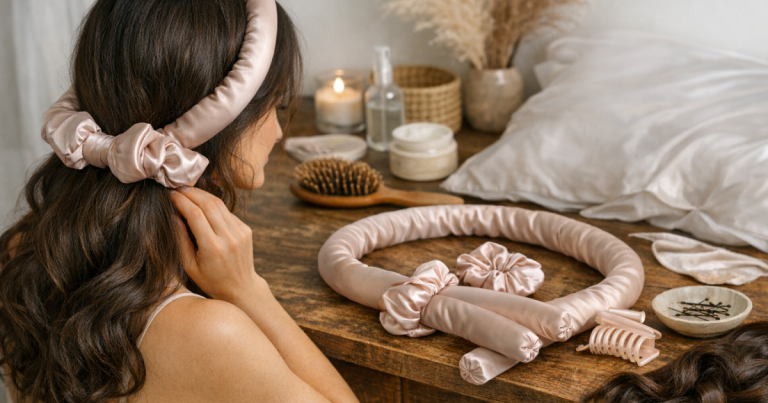
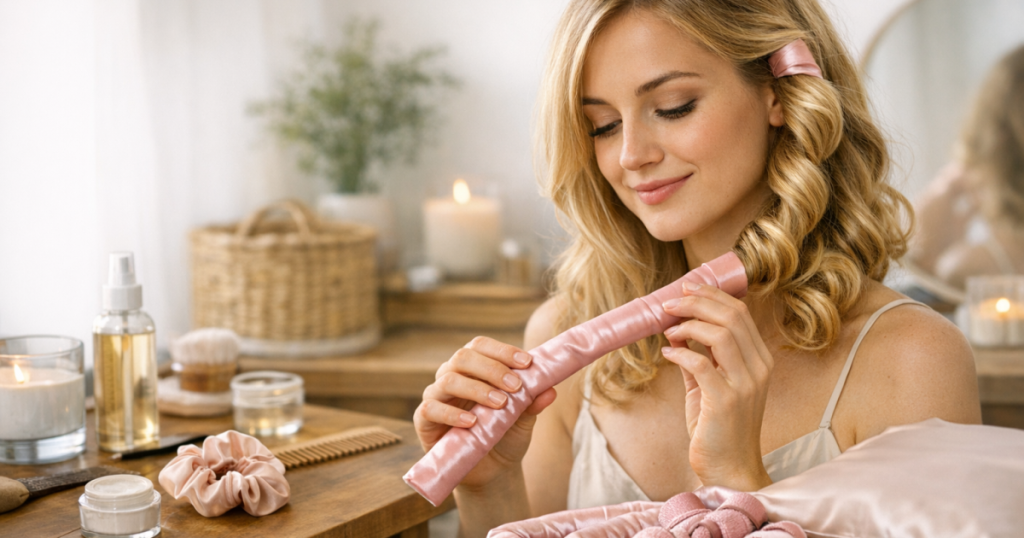
- Satin curling rods: Good for soft, uniform waves with less friction. Use smaller sections and firm wrapping for fine hair.
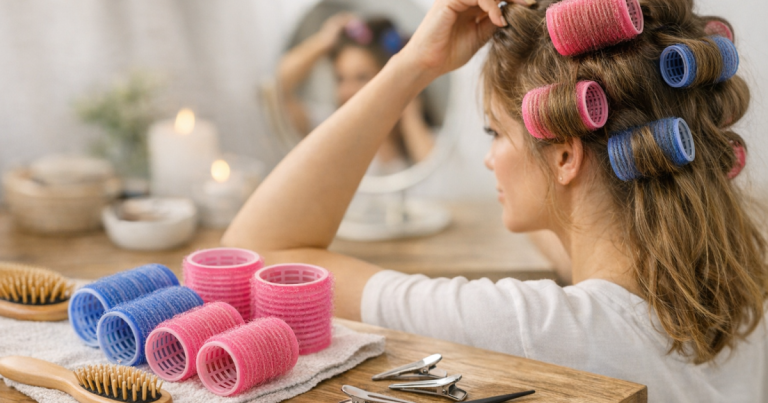
- Foam rollers: Useful when you want more bounce or shorter-layer definition. Smaller rollers usually last longer than oversized ones.
- Velcro rollers: Better for root lift and bend than true overnight curls. They can help fine hair look fuller at the crown.
- Pin curls: A strong option for shorter fine hair because the curl is compact and close to the head.
If you are deciding between different overnight formats, the comparison of soft heatless rollers and satin curling sets shows how tool shape changes the finished curl and the sleep experience.
Step 6: Wrap with even tension, not tight pulling
Tension matters because loose wrapping creates loose results. However, fine hair can crease or flatten if it is pulled too tightly, especially near the roots. Keep the wrap smooth and secure, with enough tension that the section stays in place but not so much that it feels uncomfortable.
For longer fine hair, twist each section very lightly before wrapping if it tends to slip. For layered hair, keep shorter pieces tucked by wrapping the section flat against the tool rather than spiralling too loosely. A soft scrunchie or satin tie is usually kinder than a tight elastic at the ends.
Step 7: Let the set cool, dry and settle before separating
Heatless curls still need setting time. After removing rods or rollers, resist the urge to brush straight away. Let the curls sit for five to ten minutes while you do make-up, get dressed or finish your routine. This short pause helps the shape settle before you disturb it.
Then separate with your fingers. Start underneath, gently splitting only the pieces that look too chunky. If you want more polish, use a wide-tooth comb only through the very ends. A dense brush can turn fine curls into fluff and remove the structure you have just created.
Finish with a fine mist of hairspray, lifting sections rather than spraying only the top layer. If your hair falls flat at the crown, tip your head slightly and mist the roots from underneath. Keep shine sprays and oils minimal; one drop too many can pull the curl down.
Common reasons fine hair drops heatless curls
- The hair was too wet: It looked curled when released but had not dried into the shape.
- The tool was too large: Oversized rods and rollers create a pretty finish at first but less staying power on fine strands.
- The product was too heavy: Curl creams, oils and rich leave-ins can soften fine hair too much.
- The curls were brushed out too soon: Fine hair needs a short settling window before styling.
- The sections were too big: Large sections do not create enough internal structure for lasting curl.
- The weather was working against you: Damp air and wind can loosen fine hair quickly, so a humidity-resistant finishing spray may help.
A simple overnight routine to try
Start with hair that is almost dry. Apply a small amount of lightweight mousse through the mid-lengths and ends, then mist the face-framing pieces with setting spray if they usually drop first. Part your hair where you want it to sit in the morning, because changing the parting after setting can disturb the shape.
Wrap small to medium sections around a satin rod or soft rollers, keeping the ends smooth. Secure without pulling at the scalp. In the morning, remove everything gently, let the curls rest, then separate with fingers. Finish with a light mist of hairspray, focusing on the underneath layers and the front pieces.
If the result is too curly, do not brush immediately next time. Use a larger section size or a slightly bigger tool. If the result drops too fast, use smaller sections, a little more setting product, or begin with hair that is drier before wrapping.
FAQ
Should fine hair be wet or dry for heatless curls?
Slightly damp or almost dry is usually best. Wet fine hair can take too long to dry while wrapped, which makes the curl fall quickly once released.
How do I stop heatless curls looking flat at the roots?
Set your parting before wrapping, use light root support and avoid heavy conditioner near the scalp. Velcro rollers at the crown can add lift while the lengths are set separately.
Why do my curls look good in the morning but disappear by midday?
The most common causes are too much moisture, too little hold, large sections or brushing too soon. Fine hair also needs a slightly tighter set than the final look you want.
Can I use oil to reduce frizz after heatless curling?
Use it very sparingly, if at all. Fine hair is easily weighed down, so a tiny amount on the ends is safer than smoothing oil through the lengths.
Are heatless curls better than using a curling wand on fine hair?
They can be gentler because they avoid direct heat, but they need more planning and drying time. A curling wand is faster; a heatless set is better when damage reduction is the priority.
What stands out
Fine hair can hold heatless curls, but it needs a more deliberate set than thicker hair. The biggest improvements usually come from starting less wet, using lighter products, choosing a slightly smaller tool and handling the finished curls less.
If one change makes the biggest difference, make it drying time. A fully dry, lightly supported set will nearly always last better than a wet set overloaded with product. Once that foundation is right, you can fine-tune the curl size, root lift and finish to match your hair’s natural behaviour.