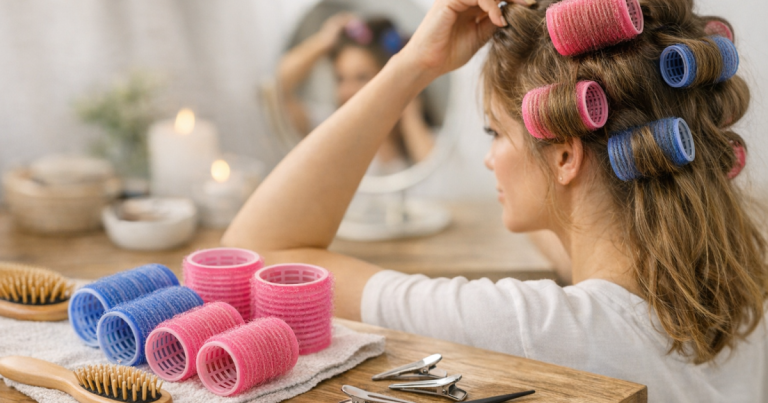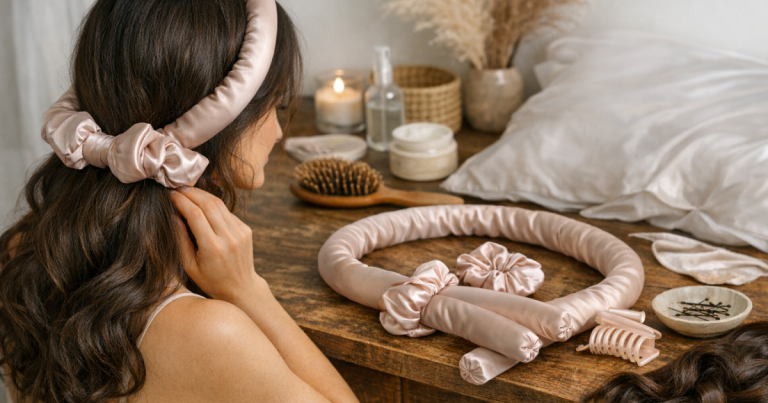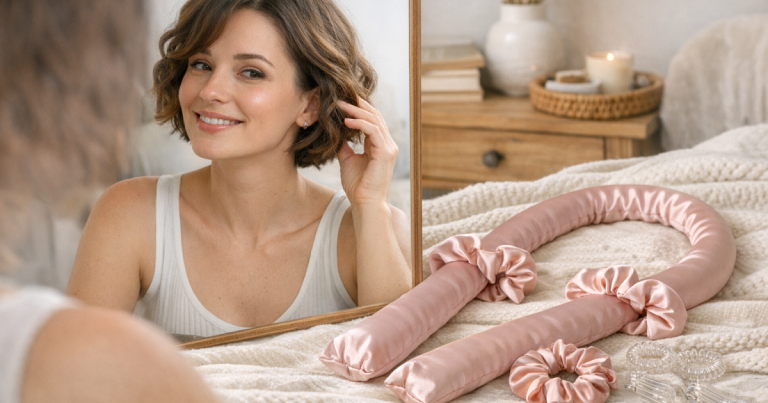
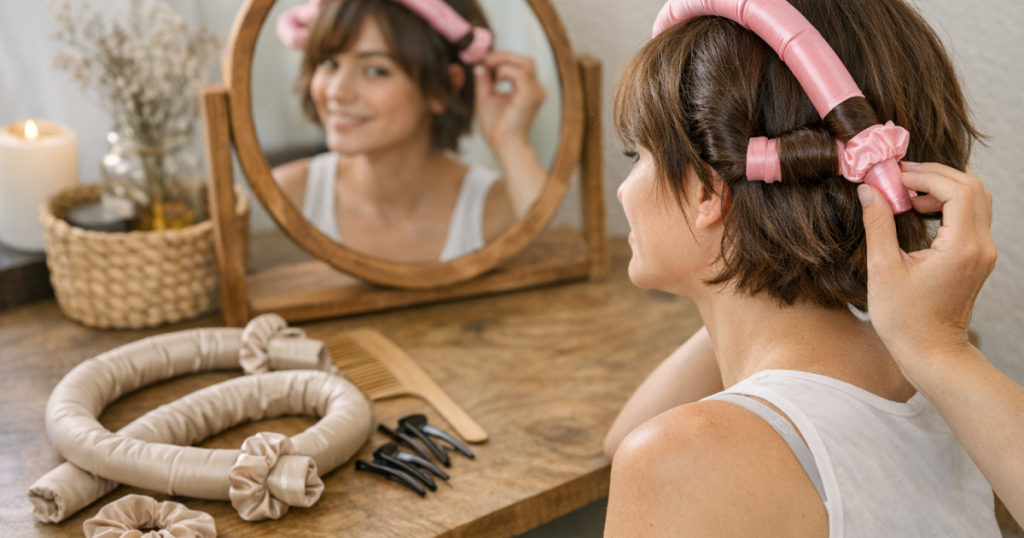
Short hair can absolutely work with heatless curling rods, but the method needs to be tighter and more intentional than the long-hair wrap you see on social feeds. The key is to use smaller sections, start higher on the head, and keep the ends controlled so a bob, lob or grown-out pixie bends rather than flicks.
The biggest mistake is treating short hair as if it simply needs less wrapping. It actually needs better sectioning, the right level of dampness, and enough hold at the ends to stop pieces springing out overnight.
The short version
- Start with hair that is nearly dry, not wet; slightly damp hair sets more predictably and dries by morning.
- Use smaller sections than you would on long hair, especially around the nape and hairline.
- Wrap away from the face for a softer, salon-style finish, or alternate direction for a tousled look.
- Keep ends tucked smoothly against the rod to avoid little hooks or flicks.
- For fine hair, use a light mousse or setting spray rather than heavy creams or oils before wrapping.
- For thick or coarse short hair, work in extra sections and allow more drying time before removing the rod.
What changes when your hair is short?
Short hair has less length to travel around the rod, so each wrap has to count. A long section can spiral several times and still look soft; a chin-length section may only wrap once or twice, which means placement affects the final shape much more.
On a bob or lob, the goal is usually a bendy wave rather than a tight ringlet. On a grown-out pixie, you may be styling just the longer top layers, leaving very short sides and nape pieces alone. If your hair is above jaw length, a slim or flexible rod is usually easier to control than a bulky one. A satin-style set such as the Kitsch Satin Heatless Curling Set is a recognisable example of the soft overnight rod format, but the technique matters more than the label on the packet.
Step 1: Prep your hair so the curl can set
Begin with clean or second-day hair that has some grip. Freshly washed short hair can be too silky, especially if it is fine, so add a small amount of lightweight mousse, texture spray or setting mist through the mid-lengths and ends. Avoid coating the roots unless you want a flatter result.
Hair should feel around 80–90% dry before you wrap it. If it is too wet, the inner layers may still be damp when you remove the rod, and the curl will collapse quickly. If it is completely dry and very smooth, mist the lengths lightly with water or setting spray so the hair has enough flexibility to mould.
Fine hair needs a particularly light touch. Heavy creams, rich oils and thick leave-ins can make short curls drop before lunchtime. For more hold-specific guidance, the method in making heatless curls last on fine hair is useful if your hair usually loses shape quickly.
Step 2: Place the rod higher than you think
For short hair, rod placement is everything. Place the centre of the rod across the crown like an Alice band, then clip it in place while you wrap. If you place it too low, the shortest front pieces may not reach far enough around the rod and the finished curl can sit too close to the ends.
For a bob, start wrapping near the front hairline and work backwards. For a lob, you can use a more traditional front-to-back wrap. For a grown-out pixie or short layered crop, concentrate on the top and front sections only; forcing very short nape pieces around the rod usually creates kinks rather than shape.
Step 3: Use smaller sections for a neater result
Take a front section about 2–3 cm wide. Wrap it over and around the rod, then add a little more hair to the next wrap, almost like a loose French braid technique. This keeps short layers anchored and stops them slipping out as you sleep.
If you want soft waves, keep the sections neat but not tiny. If you want more defined curls, use narrower sections and wrap with a little more tension. The tension should feel secure, not tight. Pulling too firmly can flatten the roots, create marks near the parting and make the style uncomfortable overnight.
As you move towards the back, the nape sections may be too short to join the main wrap cleanly. You can leave them out, twist them lightly with styling product, or use a small roller or pin curl if you want every piece shaped. Short hair rarely needs perfectly uniform curls; a few looser underneath pieces often make the result look more modern.
Step 4: Tuck the ends properly
Most short-hair heatless curl problems happen at the ends. If the last 1–2 cm sticks out, it can dry into a sharp flick. Before securing the rod, smooth the end of each section flat against the curve of the rod and wrap it under, not straight out.
A small amount of styling cream on the very ends can help if your hair is coarse, dry or colour-treated. Keep it minimal: the aim is to smooth the tip, not soften the whole curl. Fine or oily-prone hair is usually better with a mist of setting spray instead.
Secure the rod with a scrunchie, soft tie or the fastening included with your set. If the rod feels bulky against your neck, angle each side slightly forward rather than letting it sit directly behind the ears.
Step 5: Let it set without squashing the roots
Heatless curling rods work best when the hair has enough time to dry and cool into its new shape. Overnight is convenient, but a few daytime hours can also work if your hair is already almost dry and naturally holds shape.
To protect root volume, avoid pulling every section downwards as you wrap. Lift the first few pieces slightly away from the scalp, especially around the crown. If your roots go flat easily, try a centre rod position with looser tension at the top, then tighten the wrap only through the mid-lengths and ends.
A silk or satin hair wrap can reduce friction while you sleep, particularly if your short layers tend to escape. It will not create hold by itself, but it can help preserve the shape and keep the surface smoother.
Step 6: Take the rod out without undoing the curl
Do not pull the rod straight out. Unfasten one side, then unwind the hair in the opposite direction to the wrap. Let each curl fall before touching it. Short hair can puff up quickly if you brush it too soon.
Once both sides are released, use your fingers to separate the curls. For a polished bob, smooth the top layer gently and define the front pieces. For a tousled finish, shake lightly at the roots and break up the ends with your fingertips. If you need more lift, flip your parting for a minute, mist lightly, then place it back where you want it.
Short-hair adjustments by hair type
Fine or low-density hair
Use fewer products, lighter tension and slightly larger sections to avoid a tight, fluffy result. Fine short hair often looks better with a soft S-wave than a compact curl. If your ends look sparse, curl from the mid-lengths rather than trying to wrap every last piece tightly.
Thick or dense hair
Divide the hair into more sections before wrapping. Dense short hair can hide damp inner layers, so start drier than you think and give it longer to set. A stronger setting spray through the lengths can help, but avoid soaking the hair.
Wavy hair
Use the rod to organise your natural pattern rather than fight it. Wrap in the direction your front pieces already want to fall, then alternate a few back sections for movement. This helps reduce frizz without making the style look overly set.
Curly or coily short hair
Heatless rods can stretch and reshape curls, but very short curls may need smaller flexible rollers or pin curls instead. Work with moisturised, nearly dry hair and avoid high tension at the hairline. The aim is definition and shape, not pulling the curl pattern straight.
What if your fringe or front layers are too short?
Fringes, curtain bangs and face-framing layers often need a different tool from the rest of the head. If the front pieces do not wrap securely around the main rod, use a small roller, a soft pin curl or a separate mini section instead. For face-framing pieces, setting curtain bangs with Velcro rollers can give more lift at the root and a cleaner bend through the ends.
If your fringe is very short, do not force it around a wide rod. Smooth it into place while slightly damp, clip it in the direction you want it to fall, and style the longer sections separately. Mixing methods is often the best approach on short layered cuts.
Common mistakes to avoid
- Wrapping soaking wet hair: it may not dry fully, leaving limp or uneven bends.
- Using sections that are too wide: short layers slip out and the finished shape looks patchy.
- Pulling too tightly at the root: this can flatten volume and create an obvious parting mark.
- Ignoring the ends: untucked ends are the main cause of flicks on bobs and lobs.
- Brushing immediately after removal: use fingers first, then only a wide-tooth comb if you need extra softness.
- Using too much oil before setting: oil can make short heatless curls look separated and heavy.
How to make the result look intentional
Once you have removed the rod, decide whether you want a neat bob wave, a textured everyday shape or a more dressed-up curl. For a neat finish, keep the top smooth and separate only the lower half of each curl. For texture, separate more pieces and add a small amount of dry texturising spray at the roots.
If one side has curled more strongly than the other, do not panic. Short hair often sets differently depending on your parting, sleep position and layers. Mist the stronger side lightly and stretch it with your fingers, or re-wrap the weaker side for 20–30 minutes while you get ready.
For days when you need a different finish, it helps to know which tool creates which result. The breakdown of styling tools for everyday, occasion and overnight results is a useful next step if you are deciding between rods, rollers, brushes and multi-stylers for different routines.
FAQ
Can very short hair use a heatless curling rod?
Yes, if the top or front layers are long enough to wrap at least once around the rod. For pixie-length sides or very short nape sections, small rollers or pin curls are usually easier.
Should short hair be wet or dry before wrapping?
It should be mostly dry with a little dampness or styling mist. Wet short hair may not dry evenly around the rod, while bone-dry hair may not hold the new shape.
How do I stop the ends flicking out?
Smooth the ends flat against the rod and tuck them under before securing. Smaller sections help because each end sits more neatly against the curve.
Will heatless curling rods work on a blunt bob?
They can, but expect soft bends rather than long spirals. A blunt bob usually looks best with medium sections, light tension and careful end smoothing.
How long should I leave the rod in?
Overnight is the most reliable option, but a few hours can work if the hair is already nearly dry and holds shape well. Thick hair usually needs longer than fine hair.
The big picture
Using heatless curling rods on short hair is less about copying a long-hair routine and more about adapting the wrap to your length, density and layers. Start with nearly dry hair, use smaller sections, place the rod high enough to catch the front pieces, and take extra care with the ends. Once the technique is right, short bobs, lobs and longer pixie cuts can get soft, wearable movement without relying on daily heat.