The wrong barrel can make freshly styled hair look too tight, too flat or oddly uneven. Understanding curling wand barrel sizes helps you match the tool to your haircut, density and the kind of bend you actually wear, rather than copying a tutorial on completely different hair.
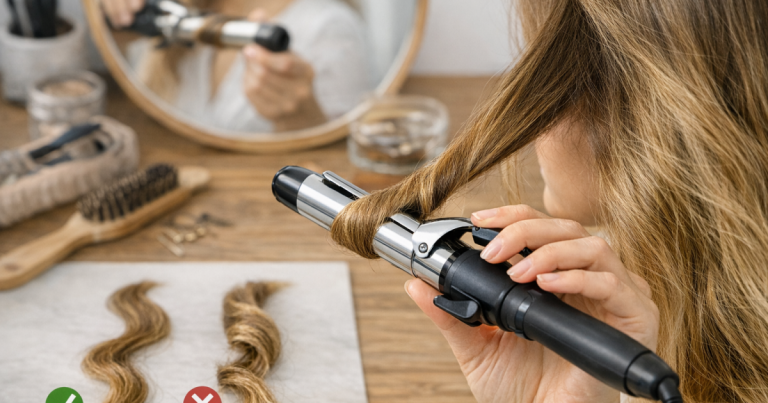
Because a curling wand is a direct-heat tool, use a heat-resistant glove where supplied, keep the barrel away from the scalp and face, and follow the manufacturer’s heat and timing guidance. For fragile, bleached or frequently heat-styled hair, keep heat use controlled and avoid repeated passes over the same section.
The short version
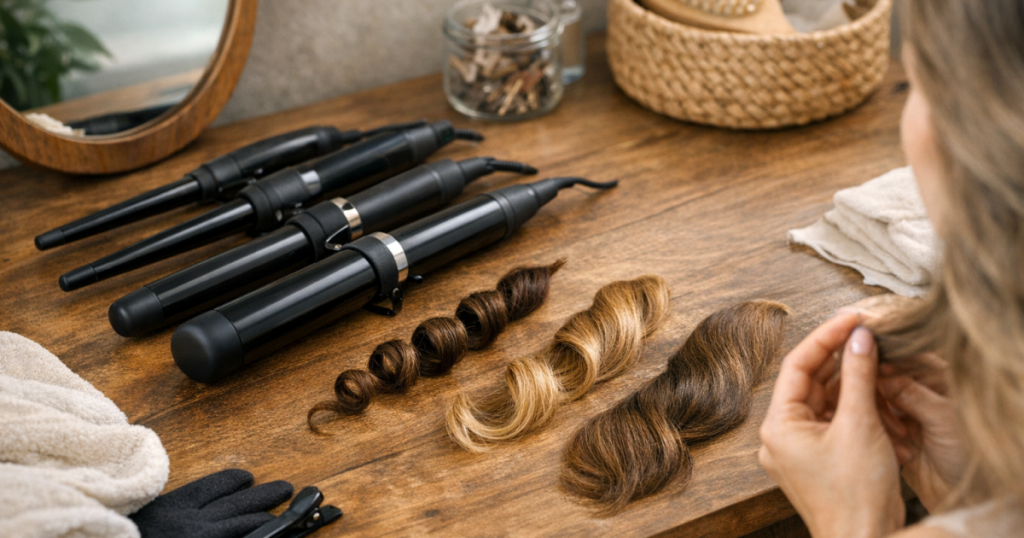
Smaller barrels create tighter, springier curls; larger barrels create looser waves and softer movement. If your hair is short, fine, layered or quick to drop, a smaller barrel often gives better staying power. If your hair is long, dense or already holds shape well, a larger barrel can look more relaxed and modern.
Most home stylers sit somewhere between 13 mm and 38 mm. The middle ground, around 25 mm, is usually the most versatile for shoulder-length to long hair. Very large barrels can look polished on long hair but may do very little on a bob, while very narrow barrels can look too ringlet-like unless you brush them out or use wider sections.
A simple curling wand barrel sizes reference
Treat barrel size as a starting point, not a rule. Your section size, heat setting, product use and how long you let the curl cool will all change the result. Brand descriptions also vary, so check the listed diameter in millimetres rather than relying only on terms such as loose wave, beach wave or classic curl.
- 10–13 mm: tight curls, defined coils and strong hold on short to medium hair. Useful for curls that need to last, but can look very structured on long hair unless brushed out.
- 16–19 mm: defined curls with a bit more softness. Good for fine hair that loses shape, shorter layers, fringes that need bending, and vintage-style sets.
- 25 mm: the classic all-rounder. It can create soft curls on medium hair, brushed-out waves on longer hair and more controlled shape than a very large barrel.
- 28–32 mm: loose waves, soft bends and salon-style movement on mid-length to long hair. Better for hair that already holds a curl than for very slippery fine hair.
- 38 mm and above: large, blow-dry-style bends on long hair. This size is more about shape and polish than curl, and it can fall flat quickly on fine or freshly washed hair.
Step 1: choose the finish before the size
Start with the style you actually want to wear. If you want bouncy curls that can be brushed into waves, choose smaller than the final look you want. Curls naturally relax as they cool and as the day goes on, so a slightly tighter curl at first often gives a better finish by lunchtime.
If you want a soft, barely-there bend, a larger barrel makes sense, but only if your hair has enough length to wrap around it properly. On a chin-length bob, a 32 mm barrel may create a flick rather than a wave. On hair past the shoulders, the same size can create relaxed movement through the mid-lengths and ends.
For beachy texture, barrel shape matters too. A straight barrel gives more uniform curls from root to tip. A tapered wand, such as the ghd Curve Creative Curl Wand, creates a less even curl pattern because the hair wraps around different diameters. That can look more undone, but it may be harder to repeat section by section.
Step 2: adjust for hair length
Short hair and bobs
Short hair usually needs a narrower barrel than you might expect. A 16–19 mm wand gives enough curve within a shorter length, while 25 mm can work for a soft bend on a longer bob. Very large barrels tend to skim the hair rather than shape it, especially around the nape and face.
If you wear a bob and want smoothness as well as movement, think about your whole styling routine rather than the wand alone. A smooth base with light root lift will make bends look more deliberate; this is where a technique such as blow-drying a bob without losing volume can make the curl pattern sit better.
Shoulder-length hair
Shoulder-length hair is the most flexible. A 19 mm barrel gives a more defined curl, 25 mm gives everyday waves, and 28–32 mm gives a softer, looser finish if the hair holds well. Layers matter: shorter face-framing pieces often need a smaller section or a slightly narrower barrel so they do not flick out awkwardly.
Long hair
Long hair can handle larger barrels, but weight pulls curls down. If your long hair is fine or very silky, a 25 mm barrel often lasts better than a 32 mm one. If your long hair is thick, coarse or naturally wavy, 28–32 mm can create a softer finish without making the lengths look over-curled.
Step 3: match the barrel to your hair type
Fine or slippery hair
Fine hair usually needs a curl that starts slightly tighter than the finished look. A 16–25 mm barrel is often more reliable than a large one, particularly if your curls drop within an hour. Use smaller sections, let each curl cool fully in your hand or clipped up, and brush only once the hair is cold.
Product weight matters. Heavy oils or rich creams before heat styling can make fine hair collapse. A light heat protectant is normally easier to layer; if this is your sticking point, read our notes on lightweight heat protection for fine hair.
Thick or coarse hair
Thick hair can make a small barrel feel time-consuming because there is more hair to wrap and cool. A 25–32 mm barrel is often a better balance for loose curls or waves, provided you work in clean sections and do not overload the barrel. If the top layer curls but the underneath stays straight, the issue is often section thickness rather than barrel size.
Coarser hair may need more tension as you wrap, but avoid pulling hard at the root. Work in manageable layers, curl away from the face around the front, then alternate directions through the back for a fuller, less uniform result.
Curly, wavy or textured hair
For naturally wavy or curly hair, the wand is usually there to refine pieces rather than curl the whole head. Choose a barrel close to your natural curl size if you want to blend stretched or uneven sections. Choose slightly larger if you want a softer, elongated finish through the top layer.
On textured hair that has been stretched smooth first, larger barrels can create a polished wave, while narrower barrels add more defined shape. Keep an eye on dryness and repeated heat exposure, especially on colour-treated ends.
Step 4: use section size to fine-tune the result
The same barrel can create several finishes depending on how much hair you wrap around it. A narrow section on a 25 mm wand will look curlier and last longer. A wider section on the same wand will look looser and more relaxed. This is why two people can use the same tool and get completely different results.
- For tighter hold: use smaller sections, wrap neatly, hold the curl shape while it cools, and avoid brushing too soon.
- For softer waves: use medium sections, leave the ends slightly straighter, alternate direction, then brush out once cool.
- For volume: start wrapping slightly higher up the section, but keep the hot barrel away from the scalp.
- For a modern undone finish: leave the last few centimetres out, then soften the ends with your fingers.
If your curls look right at first but fall fast, do not immediately assume you need a stronger tool. You may need a smaller barrel, lighter prep, better cooling time or a different brush-out method. The same logic applies to heatless sets, and the principles in stopping curls dropping on fine hair are useful even when you are using heat.
Step 5: check the details before you commit to a tool
When reading a wand description, look for the actual barrel diameter in millimetres, whether the shape is straight or tapered, and whether the usable heated length suits your hair. Very long hair can feel cramped on a short barrel, while shorter hair can be harder to control on a very long one.
Some tools are sold as conical or tapered wands, such as the BaByliss Rose Quartz Conical Wand. These can be brilliant for relaxed, non-identical waves, but they do require more attention to where you place the section. Hair wrapped near the narrower end will curl more tightly than hair wrapped near the wider end.
Also check whether you prefer a wand or a tong. A wand gives more freedom and fewer clamp marks, but it needs more hand control. A tong can feel easier for neat, repeated curls, especially on shorter hair. The right choice depends on how polished you want the finish and how confident you are working around the back of your head.
When a wand is not the easiest answer
A curling wand is fast and flexible, but it is not always the lowest-effort route. If your hair is fragile, your ends are dry, or you want curls overnight without direct heat, a heatless method may suit your routine better. Heatless tools usually create a softer set and need more planning time, but they reduce the need for repeated hot-tool styling.
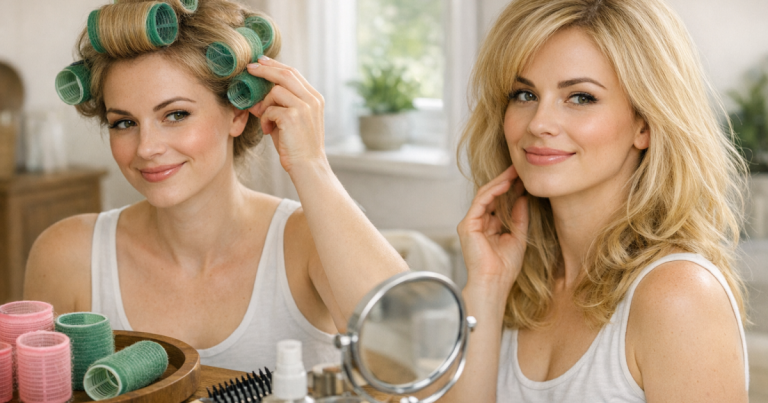
For loose bends, a satin heatless curling rod can be easier than a large wand if your hair holds shape overnight. For root lift and soft volume, Velcro rollers are often more useful than trying to curl right up to the root. If you are weighing up no-heat methods, compare a heatless curling ribbon and foam rollers before assuming you need another heated tool.
In brief
Choose the barrel for the finished effect, then adjust for your length and hair type. Shorter hair and fine hair usually need smaller diameters for visible, lasting shape. Longer, thicker or naturally textured hair can often use larger barrels for softer movement. If you are torn between two sizes, go slightly smaller for hold and slightly larger for polish.
The most reliable home-styling approach is to test one front section and one underneath section before curling your whole head. If the curl is too tight, increase your section size or brush out more. If it disappears, use a smaller section, let it cool longer or step down in barrel size next time.
FAQ
What is the most versatile curling wand size?
Around 25 mm is the most versatile for many people because it can create defined curls, brushed-out waves and everyday movement. Very short hair may need smaller, while very long hair may prefer 28–32 mm for softer waves.
Is a bigger barrel better for loose waves?
Only if your hair is long enough and holds shape well. On fine, short or slippery hair, a bigger barrel can create a wave that drops almost immediately. A medium barrel brushed out often lasts better.
What barrel size should I use for fine hair?
Fine hair usually does best with 16–25 mm, depending on length. Smaller barrels create more initial structure, which helps the curl relax into a wearable wave rather than disappearing.
Can I use one wand for every style?
You can get several finishes from one wand by changing section size, wrap direction and brush-out technique. However, one barrel will not perfectly mimic both tight curls and very loose blow-dry waves.
Should I choose a tapered or straight barrel?
Choose a straight barrel for more even, predictable curls. Choose a tapered barrel for a softer, less uniform look, but expect the result to vary depending on where the hair sits on the barrel.