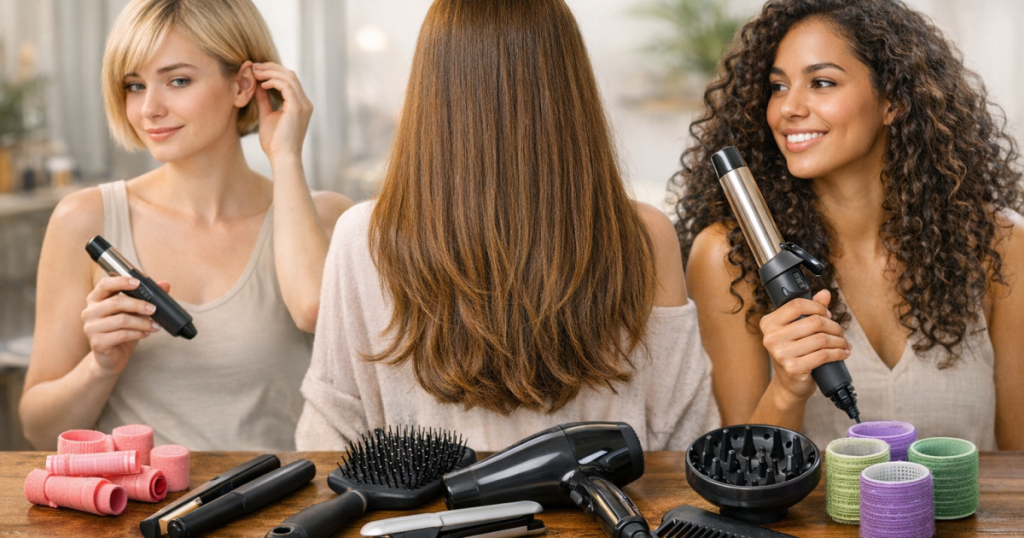
A curler, roller or wrap that works beautifully at shoulder length can feel awkward once your hair sits above the jaw or reaches the waist. Getting hair length tool choice right means looking at two things together: how much hair the tool can hold and how your hair type behaves once it is bent, lifted or wrapped. The aim is not to own every tool, but to avoid the common mismatch that gives fine hair dents, thick hair half-shaped ends or curls that collapse before lunchtime.
Length changes access, tension and drying time. Hair type changes grip, weight and how long the shape lasts. When you put both together, tool decisions become much clearer.
At a glance
- Short hair: needs smaller tools, more control at the root and less bulk around the face.
- Shoulder-length hair: is the most flexible, but can flick out if the tool diameter is too large.
- Long hair: needs enough surface area or wrapping room so the mid-lengths and ends are shaped evenly.
- Fine hair: usually benefits from light tension, softer accessories and smaller sections.
- Thick hair: needs tools that can hold denser sections without slipping or leaving the underlayers untouched.
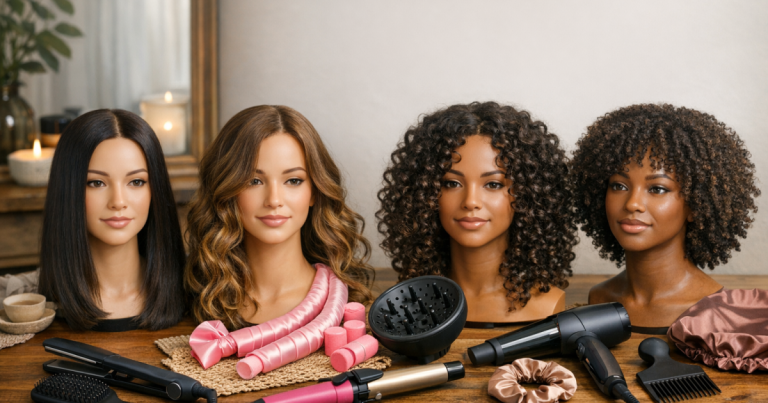
- Curly and coily hair: often needs definition-preserving tools rather than brushes or rollers that disturb the curl pattern.
Why length changes the way a tool behaves
Tool size is not just about the curl size you want. It affects how much hair can wrap cleanly, how much tension you can create and whether the roots, mids and ends receive the same shaping effort.
On short hair, a large roller or chunky heatless rod may not leave enough length to wrap securely. On long hair, a very small tool can create tight ends while the upper lengths stay stretched or flat. Shoulder-length hair sits between those extremes, which is why it can work with more methods, from velcro rollers to heatless wraps and soft blow-dry brushes.
When hair length tool choice is treated as part of hair-type matching, the results are usually more predictable. Fine chin-length hair and thick chin-length hair may share a haircut outline, but they rarely need the same tension, section size or securing method.
Short hair: control matters more than curl size
Short hair gives tools less length to grip, so precision matters. Pixie crops, jaw-length bobs and short layered cuts often need smaller rollers, slim brushes, compact straighteners or narrow curling tools if heat is being used. Oversized tools can lift the roots but fail to shape the ends, especially around the nape and fringe.
For fine short hair, avoid anything that clamps or grips too aggressively unless you are deliberately creating polish. Dents show quickly when there is not much length to soften them. Soft velcro rollers, small round brushes and low-tension heatless methods can add lift without making the top layer look pressed.
For thick short hair, the issue is usually not grip but bulk. A tool needs to reach the underneath sections rather than only styling the top layer. Smaller sections and a firmer brush can help. Curly short hair is different again: a curl-defining brush such as the Denman D3 Original Styler can be useful for controlled styling on damp hair, but brushing dry curls can create frizz and disrupt shape.
Shoulder-length hair: the widest tool range, but also the most flick-prone
Shoulder-length hair is forgiving because it has enough length to wrap, roll or bend, but not so much weight that shape instantly drops. This is where many people can move between heatless curlers, velcro rollers, heated rollers, blow-dry brushes and traditional tongs depending on the finish they want.
The main problem is the shoulder flick. If the ends sit directly on the shoulders, a tool that creates a wide bend may make the hair kick out rather than curve under or wave evenly. Medium rollers, oval brushes and softer heatless wraps usually give more control than very large barrels.
Fine shoulder-length hair can look flat at the crown but over-shaped at the ends, so root lift and lighter styling products matter. Thick shoulder-length hair may need sectioning clips and more time so the inner layers are not left damp or unshaped. If you are moving away from tongs, the process is easier when you adjust wrapping direction and section size rather than expecting the same routine to translate exactly; the guide to switching from curling tongs to heatless curls explains that transition in more detail.
Long hair: capacity, weight and staying power become the issue
Long hair needs tools that can handle both length and weight. A roller that works at collarbone length may not hold waist-length hair securely. A heatless rod that is too short can crowd the ends, leaving uneven bends. A brush that is too small can create lots of tension without producing a smooth, continuous curve.
For long fine hair, the problem is often collapse rather than lack of curl. The hair may take shape quickly but lose it as the lengths pull down. Larger, softer sections can create a natural bend, while smaller sections create more defined waves but can look stringy if the hair is sparse at the ends.
For long thick hair, section capacity is everything. Long dense hair usually needs stronger sectioning, longer drying time and tools with enough surface area. Heated rollers such as BaByliss Thermo-Ceramic Rollers may suit some long-hair routines, but readers should check roller sizes, how many usable rollers are included for their density and whether the finish matches their hair’s tendency to drop.
Long curly or coily hair needs a different lens. Stretching tools, diffusers, satin wraps and wide-tooth combs may be more relevant than rollers if the goal is definition and reduced frizz. The longer the curl, the more important it is to support the pattern rather than drag through it.
How hair type changes the same length
Fine hair
Fine hair usually needs light tools and careful tension. Short fine hair can be overwhelmed by bulky accessories. Mid-length fine hair often benefits from root lift before the lengths are shaped. Long fine hair needs enough hold to resist dropping, but heavy oils, dense creams and large tools can pull the style down.
If heat is part of your routine, fine hair normally needs a more cautious approach than coarse hair. For a broader breakdown by texture and tolerance, see how much heat each hair type needs.
Thick or coarse hair
Thick hair is less forgiving of tools that cannot hold enough hair. A small roller may only shape the outer layer, while the underneath stays straight or puffy. Coarse hair can also resist soft bends, so longer setting time, damp-to-dry styling or stronger section control may matter more than the tool category itself.
Curly hair
Curly hair needs tools that respect pattern. Short curls often need finger styling, small brushes or diffusing rather than big rollers. Shoulder-length curls can become triangular if the roots are flat and the ends are overworked. Long curls need support while drying, because weight can stretch the top while the ends remain defined.
Straight or slippery hair
Straight hair can be easy to smooth but hard to hold. Short straight hair may slip out of heatless tools. Mid-length straight hair often responds well to rollers or soft bends. Long straight hair may need smaller sections, a longer set and a finishing method that preserves shape without brushing it away.
Heatless, heated and hybrid routines
Length often decides whether heatless styling feels effortless or fiddly. Short hair can be harder to secure overnight, while long hair may need a longer rod, wrap or multiple sections so the curl does not bunch at the ends. Shoulder-length hair is usually the easiest length for satin rods, velcro rollers and soft overnight shaping.
Heated tools can offer more immediate control, particularly on short cuts and resistant thick hair, but they are not automatically better for every hair type. A hybrid routine can work well: heatless shaping for the main bend, then a brief touch-up only where the fringe, crown or face-framing pieces need refining.
Multi-styling tools such as the Dyson Airwrap multi-styler can be useful for some medium and long hair routines, but the important checks are still practical: whether the attachments suit your length, whether your hair holds an air-styled shape and whether the tool can manage your density without taking too long.
Common mismatches to avoid
- Large tools on short hair: often create lift but not shape, especially around the ends.
- Tiny rollers on very long hair: can over-curl the ends while leaving the upper lengths under-styled.
- Heavy brushes on fine hair: may flatten the root before the style is finished.
- Soft accessories on very thick hair: can slip unless the hair is sectioned more carefully.
- Dry brushing curly hair after styling: can undo definition and increase frizz.
Finishing technique matters as much as the tool. If the shape is good but the surface looks fluffy, use targeted smoothing rather than brushing everything out. The tutorial on smoothing flyaways after heatless curls is a useful next step for keeping definition intact.
Common questions
Does short hair need smaller tools?
Usually, yes. Short hair needs enough length to wrap or grip securely, so compact rollers, smaller brushes and narrower styling tools tend to give better control than oversized options.
Is long hair harder to style without heat?
It can be, mainly because of weight and drying time. Long hair often needs larger or longer heatless tools, smaller sections and a longer setting period to stop the shape dropping.
What matters more: hair length or hair type?
Neither works alone. Length affects access and wrapping room; hair type affects grip, hold, frizz and weight. The best tool fit accounts for both.
Can the same tool work after a haircut?
Sometimes, but the technique may need changing. A shorter cut may need smaller sections or a different wrapping angle, while longer hair may need more capacity and stronger securing.
Why do my ends curl but my roots stay flat?
The tool may be shaping only the lower lengths, or the sections may be too large. Root lift usually needs separate attention, especially on fine, long or heavy hair.
Key takeaways
Good hair length tool choice is about fit, not just trend. Short hair needs control, shoulder-length hair needs balance, and long hair needs capacity. Fine hair benefits from light tension, thick hair from stronger sectioning, curly hair from pattern-friendly tools and straight hair from methods that improve hold.
Before changing your entire routine, adjust one variable: tool size, section size, wrapping direction or setting time. Small changes often solve the problem without adding more products or more heat.