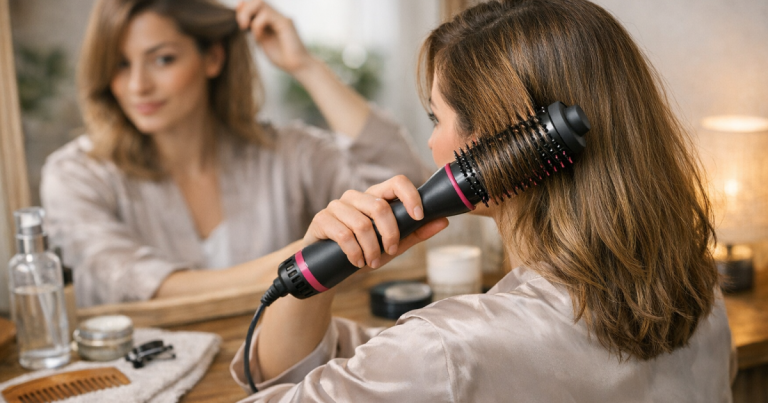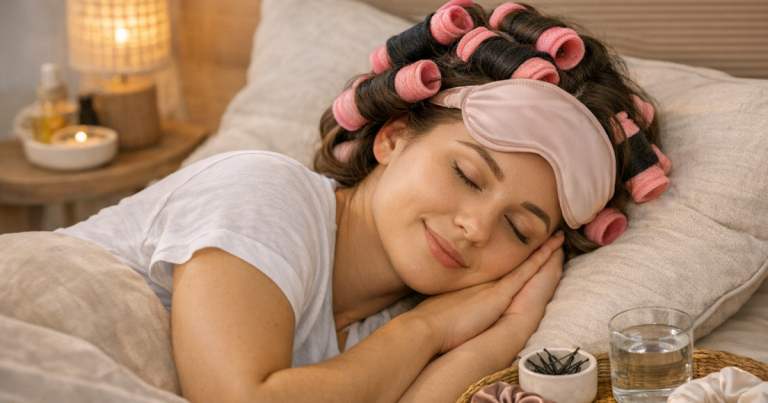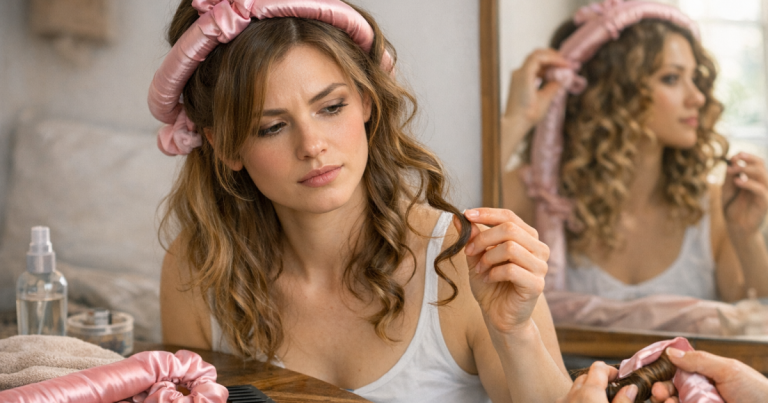
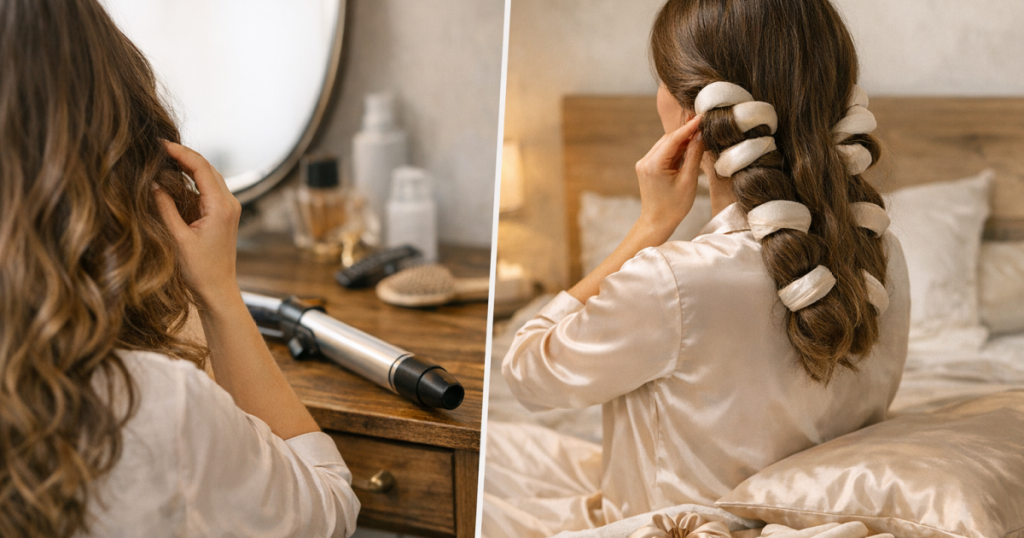
If you want to switch from curling tongs to heatless curls, the biggest change is not the tool; it is how you prep, set and release the hair. Tongs give instant bend by forcing the cuticle into shape with heat, while heatless methods rely on tension, drying time and hold. The payoff is softer styling, fewer hot-tool sessions and a more flexible routine once you know how to match the method to your hair.
The short version
Do not expect heatless curls to behave exactly like tonged curls on the first try. Start by copying the curl size you already like, then adjust the setting method rather than changing everything at once.
- For polished barrel curls: use a satin curling rod or robe-belt style wrap on slightly damp or product-prepped hair.
- For soft volume and bend: use large rollers, a loose wrap or a claw-clip twist on dry hair with light styling spray.
- For fine hair: use less moisture, smaller sections and lighter products so the roots do not collapse.
- For thick or coarse hair: use more drying time, slightly firmer tension and section the hair more carefully.
- For curly or textured hair: stretch and smooth first, then set for shape rather than trying to force a tong-style ringlet.
Start by reducing heat, not banning it overnight
The easiest transition is a mixed routine. If you use curling tongs several times a week, begin by keeping them for the front pieces, fringe area or day-two touch-ups, while setting the rest of the hair heatlessly. This helps you keep your usual finish while learning what your hair needs to hold shape without direct heat.
Hair that has been styled hot for a long time can feel less responsive at first because it is used to a quick, strong shape change. A gradual switch lets you assess whether your issue is lack of hold, too much moisture, weak sectioning or the wrong curl size. If you are unsure how much heat is reasonable for your texture and condition, use this breakdown of how much heat each hair type really needs as a sensible reference point.
Match your tong result to a heatless method
Think about what your curling tongs are currently giving you. Is it tight definition, lift at the cheekbone, glossy ends, or just enough bend to stop the hair looking flat? Heatless styling works best when you choose the method by outcome, not by trend.
If you normally use small-barrel tongs
Small-barrel tongs create tighter curls with a more obvious pattern. To imitate that without heat, use narrower sections and a firmer wrap. Foam rollers, bendy rollers or a thin curling ribbon tend to work better than a chunky rod because they create enough curve through the mid-lengths and ends. Let the set fully dry or cool into place before removing it; taking it down too early is the fastest route to limp waves.
If you normally use large-barrel tongs
Large-barrel tong users often want movement rather than ringlets. A satin rod, large Velcro rollers or a loose overnight wrap can create that blown-out bend. The trick is to avoid soaking the hair. Slightly damp lengths may work on medium or thick hair, but fine hair often does better with dry hair, a light mist and a flexible-hold product.
If you use tongs mainly for the front pieces
Face-framing sections need more control because they are the first thing people notice. Wrap these pieces away from the face, keep the ends smooth, and secure them without dents. If the front drops quickly, make the sections smaller rather than adding more product straight away.
Choose a setting tool that suits your hair type
Heatless tools are not interchangeable. A chunky satin rod can be brilliant on long hair but awkward on a short bob. Foam rollers can give lift and bend, but may feel too structured if you want a loose, glossy finish. The right choice is the one that gives enough tension without making the hair uncomfortable to sleep in or difficult to release.
- Fine, flat hair: lightweight rollers, smaller sections and dry setting usually work best. Avoid heavy creams near the roots.
- Medium-density hair: satin rods, soft rollers and robe-belt wrapping are all realistic options. Adjust the section size to control curl tightness.
- Thick hair: divide the hair into more sections and give it longer to set. A single large wrap may only curl the outer layer.
- Short hair: foam rollers, mini rollers or pin-curl style sections are usually easier than a long curling rod.
- Layered hair: use clips to keep shorter layers from slipping out, and wrap the ends neatly so they do not flick in different directions.
A satin rod can be a good starting point if your hair is shoulder length or longer and you like soft, uniform curls. For a closer look at how this type of tool behaves in real use, read the Kitsch Satin Heatless Curling Rod review. If you prefer a branded example to compare against your current routine, the Kitsch Satin Heatless Curling Rod is a recognisable option in this category.
Prep matters more than you think
Curling tongs can disguise imperfect prep because heat forces the shape in quickly. Heatless curls are less forgiving. If the hair is too wet, the set may still feel damp in the morning. If it is too dry and product-free, it may slip out before it has formed properly.
For most hair types, the sweet spot is around 80 to 95 per cent dry. The finer the hair, the closer it should be to fully dry before wrapping. Medium and thick hair can usually handle a little more moisture, but the roots should not be wet unless you have plenty of drying time.
- Use leave-in conditioner sparingly: enough to smooth the hair, not enough to soften all the hold away.
- Add mousse for collapse-prone hair: a small amount through the mid-lengths can help fine hair keep its bend.
- Use oil after, not before: oil before setting can make some hair too slippery. Smooth the finished curls instead.
- Detangle first: knots create uneven tension and frizzy patches when the curls are released.
A brush such as the Tangle Teezer Original Detangling Brush can be useful before setting, provided you use it before the curls form rather than brushing through the finished result.
Wrap with tension, but do not pull the life out of the roots
Heatless curls need steady tension to form, but too much pulling can flatten the crown and make the curl start too low. This is a common complaint from people moving away from tongs, because tongs let you place the curl exactly where you want it. With a wrap, the root direction is set by how you position the hair at the start.
For lift, take the section slightly upwards before wrapping. For a smoother, more relaxed finish, direct the section downwards and away from the face. Keep the ends tucked neatly; messy ends are far more obvious in heatless sets because there is no hot barrel sealing them into shape.
Leave enough time for the set to form
Heatless curls need time rather than temperature. Overnight is convenient, but not compulsory. If you dislike sleeping in rollers, try setting the hair for several hours during the evening, then sleeping in a loose silk wrap or soft scrunchie arrangement to preserve the shape.
If your curls fall out within an hour, check three things before blaming the tool: was the hair too wet, were the sections too large, and did you release the set too soon? Thick hair may feel dry on the outside while the inner layers are still slightly damp, which weakens the curl as soon as you separate it.
Release curls like you are styling, not undoing
The takedown is where many heatless sets are lost. Unwrap slowly in the direction of the curl rather than tugging the tool out. Let the curls sit for a few minutes before separating them, especially if your hair is fine or freshly washed.
Use fingers first. If you want more volume, shake gently at the roots rather than brushing through the lengths. A wide-tooth comb can work for loose waves, but it may turn defined curls into frizz if the hair is dry, porous or layered. For a smoother finish, use a tiny amount of lightweight oil or serum on the palms and glaze over the surface.
If the shape is good but the finish looks fluffy, follow these tips to smooth flyaways after heatless curls without brushing them out rather than starting again with heat.
Troubleshooting the first few attempts
The curls are too tight
Use larger sections, a chunkier tool or less setting time. You can also stretch the finished curls by gently pulling each section down with lightly oiled hands. Do not brush immediately unless you actually want a soft wave or fluffy blowout effect.
The curls drop too quickly
Use smaller sections, add a light mousse before setting, and make sure the hair is fully dry before release. If your hair is very silky, a little texture spray before wrapping can give the style more grip.
The roots are flat
Do not wrap everything downwards from the crown. Lift the top sections as you set them, or use one or two rollers at the crown while the lengths are wrapped separately. Fine hair may need root support rather than more curl through the ends.
The ends look bent or untidy
Smooth the ends before securing each section and make sure they are not folded sharply under an elastic. If your ends are dry or uneven, they will show up more in heatless curls, so a tiny amount of finishing oil can help them sit together.
Things readers ask
Can heatless curls really replace curling tongs?
Yes for everyday waves, soft curls and volume, but not always for very precise, high-gloss event styling. Many people keep tongs for occasional detailing and use heatless methods for regular styling.
Should I set heatless curls on wet or dry hair?
Slightly damp or product-prepped hair is usually best. Fine hair often needs to be almost dry, while thick hair may need a little more moisture and longer setting time.
Why do my heatless curls look frizzier than tonged curls?
Heat smooths the hair surface as it shapes it. Without that smoothing effect, prep, neat wrapping and careful release become more important, especially on porous, highlighted or naturally wavy hair.
How long does the transition take?
You can get a wearable result straight away, but it may take three or four attempts to find the right dampness level, section size and product amount for your hair.
Do I need to stop using heat completely?
No. A realistic routine might use heatless curls most of the time, then low or occasional heat for front pieces, stubborn sections or special occasions.
Key takeaways
The move from tongs to heatless styling is easiest when you keep the result familiar and change the method gradually. Match your tool to your current curl size, prep the hair with restraint, set with even tension and release gently. Once the basics are working, you can reduce tong use without feeling as though you have given up shape, polish or control.