Heat damage rarely shows up as one neat problem. It can mean rough ends, limp waves, frizz that will not sit down, colour that looks dull, or curls that no longer spring back. This K18 Leave-In Molecular Repair Mask review looks at whether the cult leave-in treatment is genuinely useful for at-home styling routines, especially if you are trying to keep shape without relying on high heat every wash day.
Quick verdict: K18 is one of the more convincing repair treatments for hair that feels weakened by straighteners, curling tongs, bleach or colour, but it is not an instant smoothing mask. It works best when you can follow the instructions properly, use a light hand, and pair it with lower-damage styling habits.
Product overview
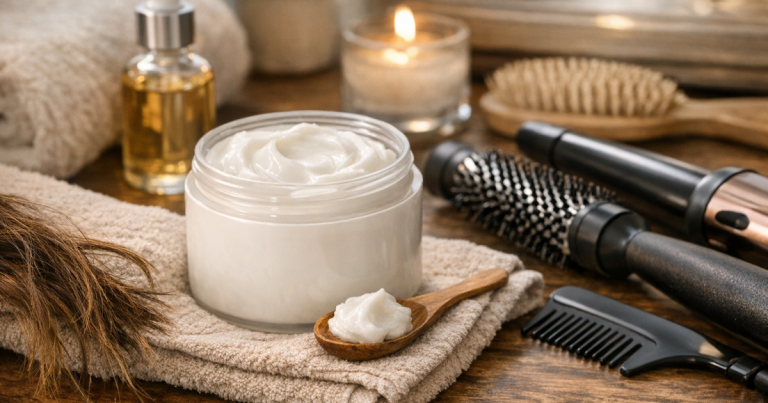
K18 Leave-In Molecular Repair Mask is a leave-in treatment designed to be used after shampooing and before styling. Unlike a traditional rinse-out conditioning mask, it is not there mainly to coat the hair for slip and shine. Its positioning is repair-led: the brand markets it as a molecular repair treatment for damage linked to bleach, colour, chemical services, heat styling and mechanical wear.
The big adjustment is the routine. You shampoo, skip conditioner, towel-dry, apply the treatment, wait the required time stated on the packaging, then style as usual. That can feel counterintuitive if your hair is dry or curly and you are used to conditioning generously, but the stripped-back application is part of how the product is meant to be used.
For heat-damaged hair, the appeal is obvious: if your ends look glossy only when sealed with hot tools, a repair-focused leave-in may help your hair feel stronger between styles. It will not replace a trim on split ends, and it will not make over-processed hair behave like untouched hair, but it can make a damaged routine feel less like a cycle of washing, frizzing, heat-smoothing and repeating.
Key specs
- Product type: leave-in molecular repair hair mask.
- Best-known use case: visible and tactile damage from bleach, colour, chemical services, repeated heat styling or brushing stress.
- Application point: after shampooing on towel-dried hair, before styling; follow the current label for exact timing and amount.
- Conditioner step: the standard routine involves skipping conditioner before application, then styling after the waiting period.
- Hair types: marketed broadly, but the amount and sectioning matter a lot for fine, thick, curly and coily hair.
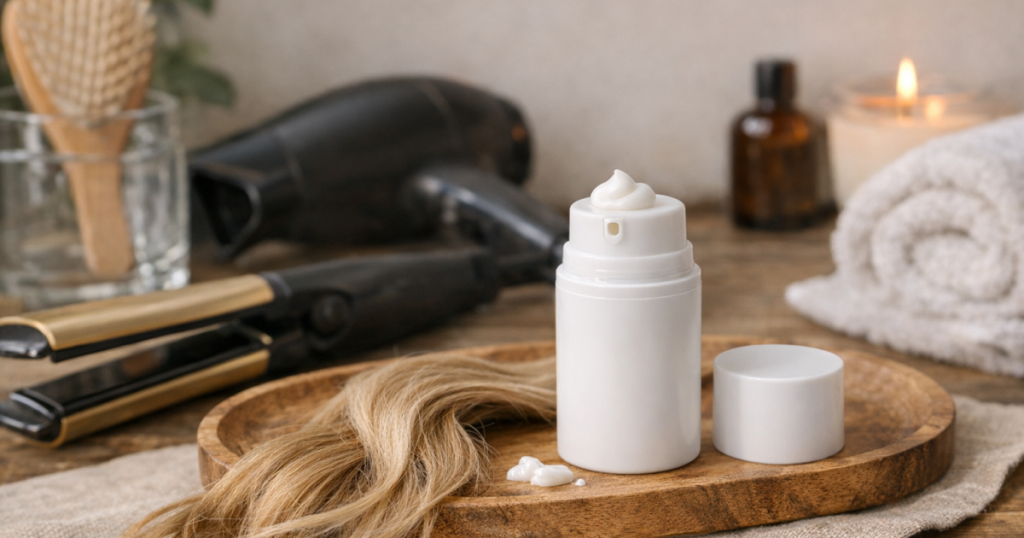
- Texture: lightweight leave-in cream rather than a rich butter mask.
- Routine frequency: commonly used as an intensive start-up phase followed by maintenance; check the instructions on your bottle or tube.
- Retail check: buy from reputable UK beauty retailers, salons or authorised sellers, and verify size, packaging and directions before use.
Pros and cons
Pros
- Feels more repair-focused than a basic shine mask, which is helpful if your hair feels weak rather than simply dry.
- Light enough for many fine and medium hair types when used sparingly.
- Works well as part of a heat-reduction routine, because it does not require hot-tool activation.
- Useful after periods of heavy straightening, curling, colouring or bleaching.
- Can help reduce the temptation to mask damage with repeated high-heat styling.
Cons
- The no-conditioner application step can feel awkward on very dry, curly or coily hair.
- Over-applying can leave fine roots or mid-lengths feeling coated rather than airy.
- It is not a softening mask in the traditional sense, so the first use may feel less silky than expected.
- It will not mend split ends that need cutting.
- Results depend heavily on correct use and on reducing the styling habits that caused the damage.
Performance in real use
On heat-damaged lengths and ends
K18 performs best when the problem is structural-feeling damage: hair that has lost elasticity, feels rough even after conditioner, or collapses into frizz after blow-drying. It is not the same as applying a heavy silicone serum and seeing instant glassy shine. The improvement is more about the hair feeling less fragile and more manageable over repeated uses.
If your ends are visibly split, the mask can make the surrounding hair feel better, but those splits still need a trim. Treat it as a support product, not a way to avoid cutting off damage indefinitely.
On fine, flat hair
Fine hair needs the smallest amount and the most restraint. Apply through the damaged mid-lengths and ends rather than treating it like a scalp-to-tip conditioner. Used carefully, it can be a good fit because it is not a heavy oil mask. Used too generously, it may make hair feel a little too dressed, especially if you already struggle to keep volume at the roots.
If you rely on curling tongs for body, K18 makes most sense alongside a gentler styling reset. The goal is not just to repair after heat; it is to reduce how often you need heat in the first place. If that is your next step, the routine advice in switching from curling tongs to heatless curls is a useful companion read.
On thick, coarse, curly and coily hair
Thicker hair usually needs more careful distribution, not a random extra handful. Work in sections so the treatment reaches the areas that actually feel damaged. Curly and coily textures may miss the slip of conditioner during application, so detangling before shampooing or being very gentle after washing helps keep the process kinder.
The finish can feel surprisingly light, which is good if heavy masks tend to flatten curl pattern. However, very dry hair may still need styling cream, gel or oil after the waiting period. K18 is the repair step; it is not necessarily your full moisture, hold and definition routine.
Styling compatibility
For at-home styling, the best results come when K18 is treated as part of a wider damage-control plan. After the waiting time, you can move into your normal styling routine, but it is worth choosing lower-tension, lower-heat options where possible. Heatless curling rods, silk wraps, loose rollers and gentle detangling all fit the same aim: preserving the hair you are trying to repair.
If you still use heat, keep your styling realistic. One careful blow-dry or occasional tong session is very different from daily straightening on already compromised ends. A repair mask can support your hair, but it cannot cancel out repeated aggressive styling.
Finish, feel and patience
The most important expectation check is that K18 does not behave like a classic rich mask. If you judge it only by immediate slip in the shower, you may be disappointed. The payoff is more noticeable when you assess how the hair dries, how the ends feel over the next few washes, and whether your usual style holds without needing as much heat or smoothing product.
Who it’s best for / who should skip it
K18 is best for hair that feels compromised rather than just thirsty. If your hair has been through colour, bleach, straighteners, curling tongs or repeated blow-drying and now feels weaker, duller or less elastic, it is a strong candidate. It is also a good fit if you are deliberately moving towards heatless styling and want a repair step that does not weigh everything down.
Fine hair can use it well, but only with precise application. Medium hair is probably the easiest match. Thick, curly and coily hair can benefit too, but may need more sectioning and a separate styling layer afterwards for moisture, hold and definition.
Skip it if your main issue is simply surface dryness and you want a plush, buttery mask experience. A nourishing conditioner, oil treatment or richer mask may feel more satisfying. Also skip or pause it if your scalp or skin reacts poorly to leave-in products; cosmetic irritation is a reason to stop using any product and check the ingredient list carefully.
Alternatives
If your damage routine starts in the shower, a repair-led shampoo or a smoothing wash product may feel easier to use than a leave-in treatment with a stricter method. For that decision, the site’s repair shampoo versus glossy-oil wash comparison helps separate strengthening support from a softer, shinier finish.
If your main frustration is not breakage but post-style frizz, K18 may be only one part of the answer. Heatless curls can still need careful finishing, especially around the crown and hairline. A separate smoothing technique, used without brushing out the shape, can be more useful than adding more repair product.
Helpful questions
Can I use conditioner with K18?
The standard method is to shampoo, skip conditioner, apply K18, wait the time stated on the label, then style. After that waiting period, you can use suitable styling products if your hair needs moisture, hold or frizz control.
How quickly will heat-damaged hair look better?
Some hair feels better after the first use, but the more realistic test is how it behaves across several wash days. If you keep using high heat frequently, improvement will be harder to maintain.
Does K18 replace heat protectant?
No. If you use hot tools, you still need a heat protectant suitable for your hair type. K18 is a repair treatment, not a styling shield for direct heat.
Is it suitable for curls?
Yes, it can be, but curls often need careful sectioning and styling products afterwards. Do not expect it to replace your curl cream, gel or leave-in moisture step.
Can I use it with heatless styling?
Yes. That is one of its better uses: repair support on wash day, then a lower-damage styling method while the hair is still recovering from previous heat or chemical stress.
Verdict + score
K18 is worth considering if your hair has moved beyond ordinary dryness into true heat or chemical damage. It asks more from your routine than a standard mask, and it is not the most comforting product if you love a slippery conditioned feel, but it has a clear role: helping weakened hair feel more resilient while you reduce the styling habits that caused the problem. For fine hair, use less than you think. For thick, curly or coily hair, section carefully and plan your moisture and styling layers afterwards. Overall, the K18 Leave-In Molecular Repair Mask scores 8.6/10.
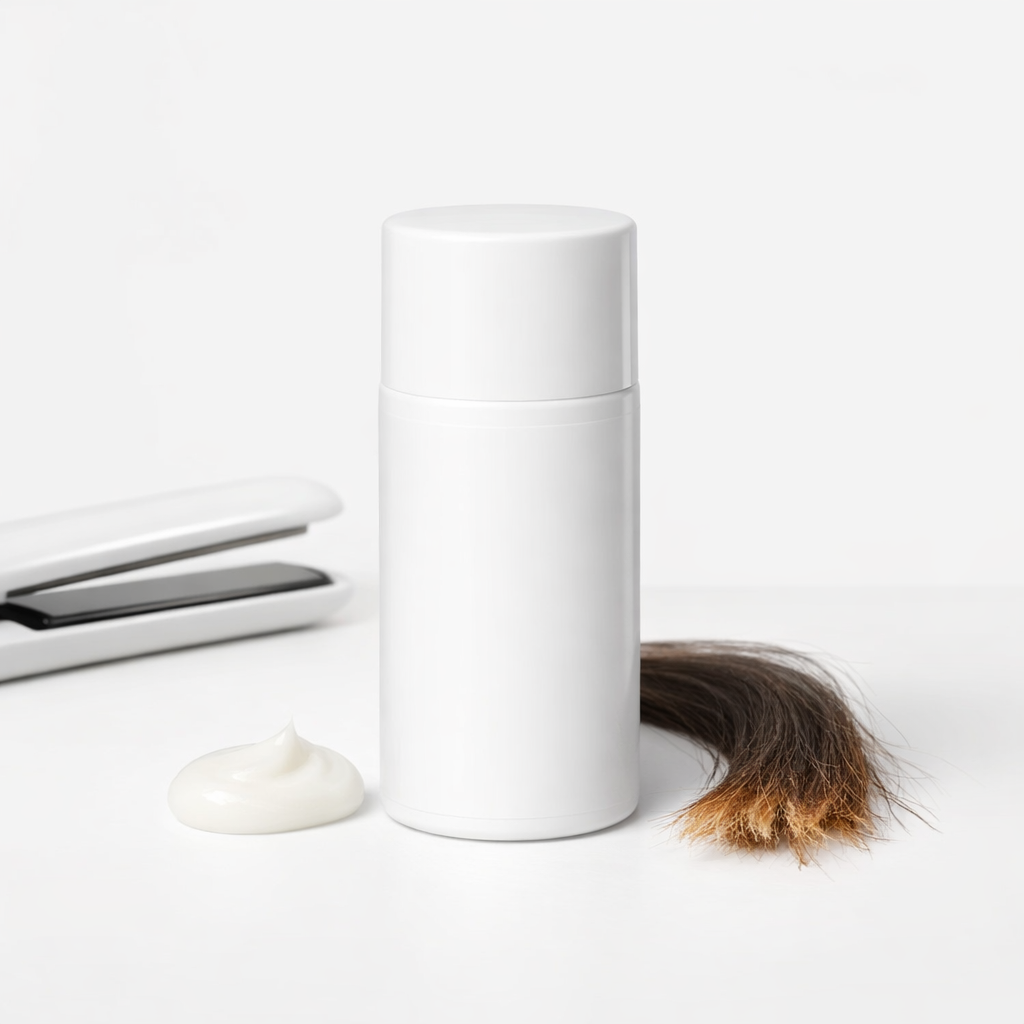
K18 Leave-In Molecular Repair Mask
For thick, curly or coily hair, section carefully and plan your moisture and styling layers afterwards.
You might also like: Volume, Waves or Sleekness: Which Styling Goal Comes First?.