Straightener curls look effortless when the bend is smooth, but one sharp clamp line can make the whole style feel awkward. The trick to curl hair with straighteners without kinks is to treat the iron like a gliding ribbon rather than a crimping tool: clamp lightly, rotate early and keep the plates moving.
This method suits soft waves, polished bends and loose curls, but the details change with hair length, density and frizz level. Start with a low-pressure technique first, then adjust section size and speed before turning up the heat.
The short version
- Use dry, detangled hair and apply a heat protectant before styling.
- Work in small, even sections; around 2–4 cm wide is usually easier to control than a chunky panel.
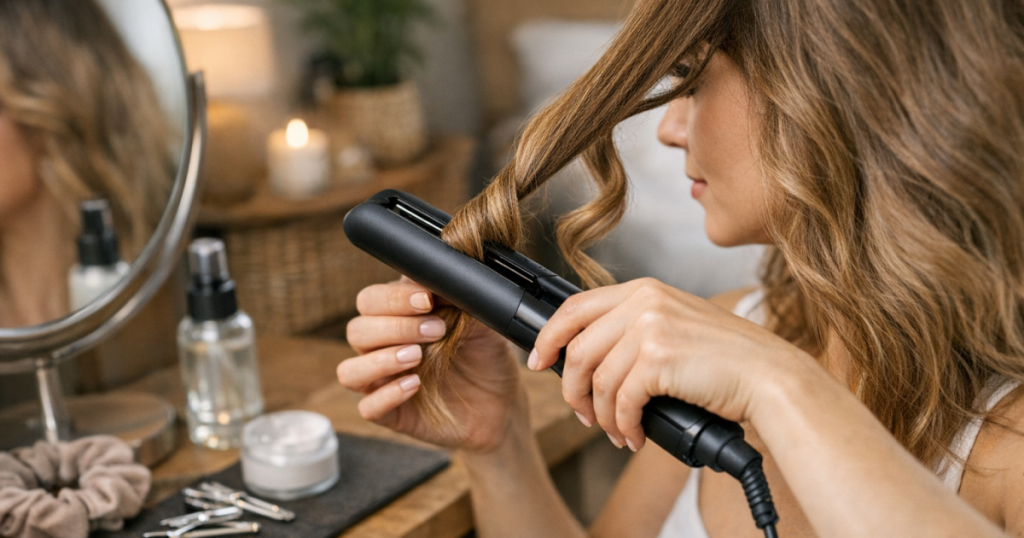
- Clamp gently near the mid-lengths, rotate the straighteners away from your face, then glide down without stopping.
- Keep the wrist movement continuous. Pausing is one of the fastest ways to create a kink.
- Let each curl cool before brushing, separating or adding finishing product.
Set up the hair before you touch the straighteners
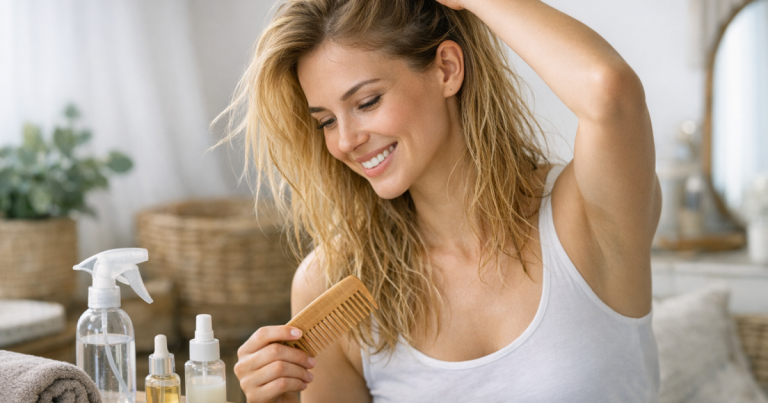
Kinks are often blamed on the tool, but preparation makes a big difference. Hair should be fully dry, because damp sections can swell, snag and lose shape. Brush through knots first with a detangling brush or wide-tooth comb so the straighteners can move in one clean pass.
Use a heat protectant that suits your finish: a light mist for fine hair, a smoothing cream or serum layered sparingly for coarse or frizz-prone hair, and a flexible styling spray if your hair drops quickly. A product such as ghd Bodyguard Heat Protect Spray is a recognisable example of the kind of heat-prep product many people use, but the important check is whether your chosen formula feels light enough for your hair and is intended for heat styling.
Do not overload the roots with oil before using straighteners. Oil-heavy prep can make fine hair collapse and may make the plates drag on some textures. If you want shine, add a tiny amount to the ends after the curls have cooled.
Choose the curl direction before sectioning
Decide the finish before you begin. If you want face-framing movement, curl the front pieces away from the face. If you want a softer, beachier finish, alternate directions through the back and sides. For a more polished look, keep most sections turning the same way, then loosen with your fingers once cool.
This matters because hesitation causes marks. When you know the direction before clamping, your hand can rotate immediately rather than stopping midway. If you are unsure whether your priority is lift, wave pattern or a sleeker finish, the guide to choosing between volume, waves or sleekness is a useful next read before changing your technique.
The no-kink straightener curl method
1. Take a narrow, flat section
Clip away the top layers and start underneath. Take a section wide enough to sit neatly between the plates without bunching. Thick hair usually needs smaller sections than fine hair; if the hair is stacked too deeply inside the plates, the outside strands curl while the inner strands stay straighter.
2. Place the straighteners slightly lower than the root
For most everyday curls, avoid clamping directly at the scalp. Start a few centimetres down unless you specifically want root lift. Hold the section taut with your other hand, keeping fingers safely away from the heated plates.
3. Clamp lightly, then rotate straight away
Close the plates with enough pressure to hold the hair, not enough to stamp it. Turn your wrist so the hair wraps over the outer edge of the straighteners. The rotation should happen as soon as the plates close; this is what avoids the obvious horizontal dent.
4. Glide in one smooth motion
Pull the straighteners down the section at a steady pace. If you move too quickly, the curl may be weak. If you move too slowly or stop, the bend can become angular. Think of smoothing a ribbon with scissors: firm direction, light tension and no jerky pauses.
5. Release and let the curl cool
Drop the curl into your palm for a few seconds if you want extra hold, then leave it alone. Brushing while the hair is still warm relaxes the shape too quickly and can turn a neat curl into fluff, particularly on frizz-prone or porous hair.
Why kinks happen, and how to fix them quickly
- A crease near the top: you clamped before rotating. Close the plates and turn immediately next time.
- A sharp bend halfway down: you paused or changed wrist angle. Keep your elbow moving down with the tool.
- Flat ends: you stopped too high above the ends. Keep gliding until the final few centimetres pass through the plates.
- Hooked ends: your wrist turned too sharply at the bottom. Relax the rotation as you reach the ends for a softer finish.
- Patchy curl pattern: your sections are uneven. Match section width on both sides of the head.
If one section kinks, do not keep reheating it repeatedly. Let it cool, mist lightly if your product allows, brush it smooth, then redo it once with less pressure. Repeated passes can make the area look dull or frizzy.
Hair-type tweaks that make the curl smoother
Fine or slippery hair
Fine hair often needs grip more than heat. Use smaller sections, avoid heavy conditioner close to styling day, and consider a light flexible spray before curling if your hair usually drops within an hour. Keep the curl tighter than your desired finish, because it will soften as it cools.
Thick or dense hair
Do not try to style the full depth of the hair in one pass. Split each side into more layers, and curl smaller sections with controlled tension. Thick hair can hide straight pieces underneath, so check the back with a mirror before finishing.
Frizz-prone hair
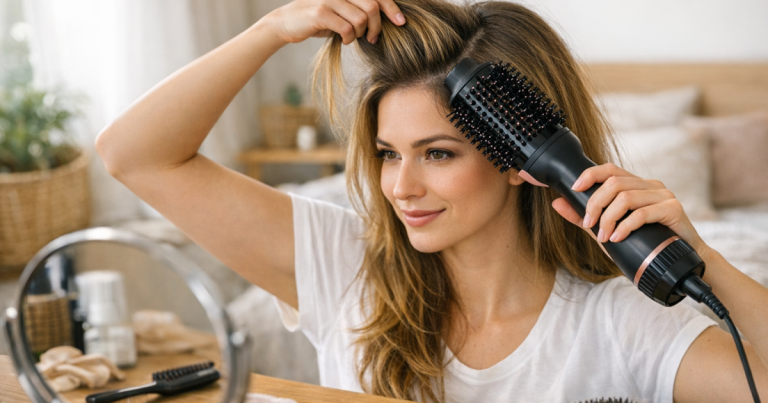
Frizz-prone hair needs a smooth glide and minimal disruption after styling. Use a moisturising prep routine, avoid rough brushing once curls are formed, and separate with fingers rather than a bristle brush if the hair expands easily. If your main issue is puffiness rather than curl shape, the tutorial on using a hot air brush on frizz-prone hair explains when airflow styling may give a smoother base before adding bends.
Short hair and fringes
Use a narrower section and turn the wrist only half a rotation for short layers. A full rotation can create a loop rather than a bend. Around the fringe, aim for a soft bevel rather than a tight curl, and keep the tool moving away from the face.
Long hair
Long hair can drag curls down as it cools. Work in smaller panels, hold each curl briefly after release, and avoid brushing until every section is completely cool. If your ends are very dry, finish with a tiny amount of lightweight oil on the last few centimetres only.
How to make both sides match
The awkward side usually feels difficult because your wrist is moving against its natural direction. Stand in front of a mirror and practise the motion with the straighteners switched off: clamp, rotate away from the face, then glide down. On the right side, many right-handed people find it easier to point the straighteners downwards; on the left, turning the wrist outwards often feels more natural.
Use the same starting height on both sides. A common mismatch is curling one side from cheekbone level and the other from jaw level. Before styling, place two front sections side by side and decide where the bend should begin.
Finishing without ruining the shape
Once all curls are cool, tip your head slightly back and shake at the roots with your fingers. For soft waves, use a wide-tooth comb or fingers through the mid-lengths. For more defined curls, separate only the sections that look too chunky.
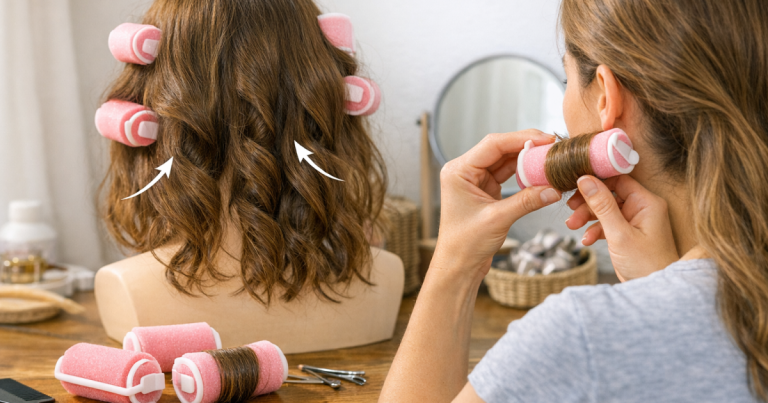
Use hairspray sparingly and aim it from a distance so the curls are supported rather than stiff. A silk hair wrap or smooth scrunchie can help preserve the finish overnight without flattening the bends as harshly as tight elastics. If you are reducing hot-tool use overall, the guide to switching from curling tongs to heatless curls gives a gentler route for keeping shape between heated styling days.
Questions people ask
Can any straighteners create curls?
Most can create some bend, but tools with smoother edges are usually easier for curls because the hair can wrap and glide without catching. Very square-edged plates are more likely to leave dents.
Should I curl towards or away from my face?
For face-framing pieces, away from the face is usually the most flattering and opens up the style. Through the back, alternating directions gives a softer, less uniform finish.
Why do my curls fall out so quickly?
The usual reasons are sections that are too large, brushing while warm, too much softening product, or not enough hold in the prep. Let curls cool fully before touching them.
How do I fix a kink without washing my hair?
Let the section cool, brush it smooth, then restyle once with lighter pressure and a smoother wrist turn. Avoid repeated passes over the same dent.
Is it better to curl clean or second-day hair?
It depends on your texture. Fine, slippery hair often holds better on second-day hair, while coarse or frizz-prone hair may look smoother when freshly washed, dried and prepped properly.
Why it matters
No-kink straightener curls are less about force and more about rhythm. Smooth sectioning, an early wrist turn and steady movement create a softer bend with fewer redo passes, which is better for the finish and kinder to the hair. Once the motion clicks, you can adjust the same technique for loose waves, polished curls or relaxed bends without changing tools.