The easiest way to use a hot brush without losing root lift is to dry the roots first, lift each section up and away from the scalp, and avoid pressing the brush down as if it were a straightener. A hot brush smooths by tension and warm airflow or heated bristles, so your angle, section size and finishing routine matter more than clamping pressure.
Flat roots are not a sign that the tool is wrong for you. They usually happen when the brush is dragged from root to end in one downward motion, when the hair is still too damp, or when styling products make the root area too soft and heavy.
At a glance
- Start with roots that are dry or almost dry, not wet and heavy.
- Lift sections vertically or diagonally away from the scalp before smoothing the lengths.
- Keep the brush moving slowly but lightly; do not squash the roots into the head.
- Use smaller sections around the crown, hairline and parting where volume shows most.
- Let the lifted section cool before brushing it down or touching it too much.
- Choose your main styling priority first: lift, polish, frizz control or shape. If your results feel inconsistent, this guide to choosing whether frizz control, definition or volume matters most can help you adjust your routine.
Why hot brushes can make roots look flat
A hot brush is designed to smooth and shape with a combination of heat, bristle grip and tension. That makes it brilliant for soft bends, polished ends and everyday smoothing, but it can flatten the root area if you treat it like a paddle brush and pull everything downwards.
The root area needs lift before it needs polish. If the first movement is down and flat, the hair cools in that position. Once the roots have set close to the scalp, it is much harder to create airy volume without misting, re-drying or reworking the section.
Product build-up can also cause root collapse. Rich leave-in creams, oils and heavy smoothing products are better kept through the mid-lengths and ends unless your hair is very coarse or porous. Fine hair in particular can look freshly styled at the ends but limp at the crown if too much product sits near the scalp.
Prep your hair so the roots have a chance
Before styling, remove excess water thoroughly. A hot brush is not always meant to replace a full blow-dry from soaking wet hair, and even tools that can be used on damp hair work better for volume when the roots are not waterlogged. Towel-blot gently, detangle from ends upwards, then rough-dry the root area until it feels light.
Apply heat protection in a fine, even layer and avoid saturating the scalp. If you are deciding whether a spray step is worth adding before heated styling, our GHD Bodyguard heat protect spray review explains how to think about protection, feel and finish before straightening or smoothing.
For volume, your prep should create grip without stiffness. A light root mist or volumising foam can help fine or silky hair hold shape, but use less than you think at first. Too much styling product can make the brush skid at the surface while the root stays heavy underneath.
The root-lift method, step by step
1. Section from the bottom up
Clip the top layers away and begin around the nape or lower sides. This stops the crown from being overworked while you practise the angle. Use sections that are narrow enough for the bristles to reach through the hair, not just skim over the top layer.
2. Place the brush under the section at the root
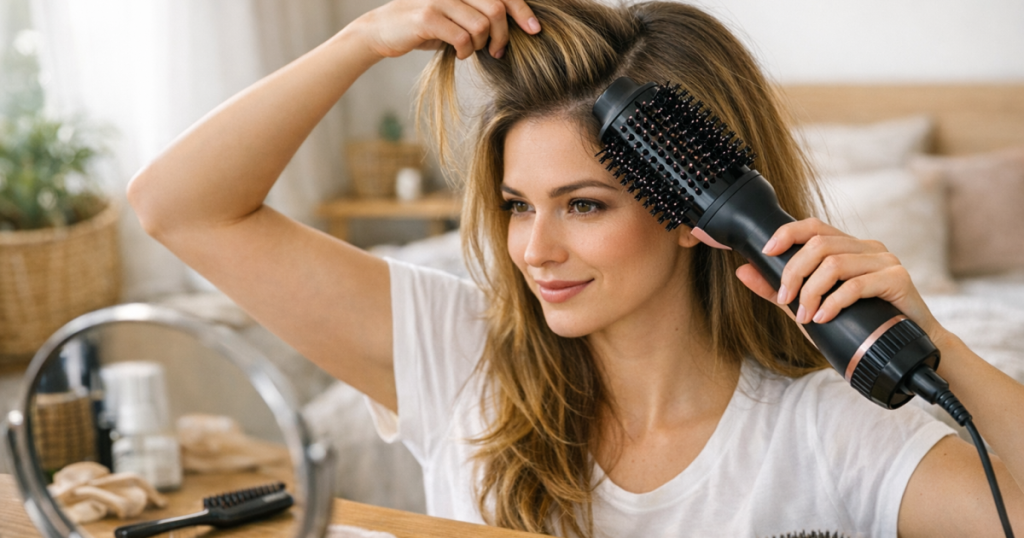
For lift, the brush usually works best underneath the section rather than on top of it. Place it close to the root without pressing hard into the scalp. The aim is to support the hair as it rises, not flatten it with pressure.
3. Lift up before you glide out
Raise the section vertically or at a diagonal for a few seconds, then slowly guide the brush through the mid-lengths. Think of the motion as up, pause, then out. If you go straight down, the root never gets a chance to set with height.
4. Roll slightly at the crown
At the crown, use a small roll-and-lift motion. Place the brush under the section, lift away from the scalp, then turn the brush just enough to create a soft bend at the root. Hold briefly, release gently and allow the section to cool before combing it into place.
5. Smooth the ends separately
Do not sacrifice root volume just to polish the ends in one pass. Once the root has lift, move the brush through the lengths with a lighter downward motion. Curve the ends under, flick them out or keep them straight depending on your haircut.
Adjust the technique for your hair type
Fine hair needs the lightest touch. Use smaller sections at the crown, keep conditioner away from the roots, and avoid repeatedly brushing through finished sections. Let each lifted piece cool, then use fingers rather than a dense brush to arrange the style.
Medium-density hair can usually take a little more tension. Focus on diagonal elevation around the sides and vertical elevation through the top. If your roots look good at first but drop quickly, your sections may be too large or the hair may not be dry enough before styling.
Thick hair needs more sectioning, not more force. Work in layers so the brush reaches the inner hair, especially around the back of the crown. Flattening often happens when only the surface is smoothed while the heavier underlayers pull everything down.
Wavy and curly hair needs a clear decision: are you preserving pattern, stretching the root, or smoothing the whole section? A hot brush can soften frizz and add shape, but too much brushing can disturb curl definition. If you are working from type 1 to type 4 hair and choosing tools by texture, the styling tool guide by curl pattern gives a useful framework.
Short hair, fringes and awkward layers
Short hair can flatten quickly because there is less length to balance the root shape. Use the edge of the brush to lift small sections rather than wrapping too much hair around the barrel. Around the hairline, direct the roots opposite to where they naturally fall, let them cool, then place them back softly.
For fringes, avoid pulling straight down from the root unless you want a very sleek result. Lift the fringe forward and slightly up, then curve the ends under or to the side. If your fringe separates, use less product near the front and style it before the rest of your hair has fully cooled into its natural parting.
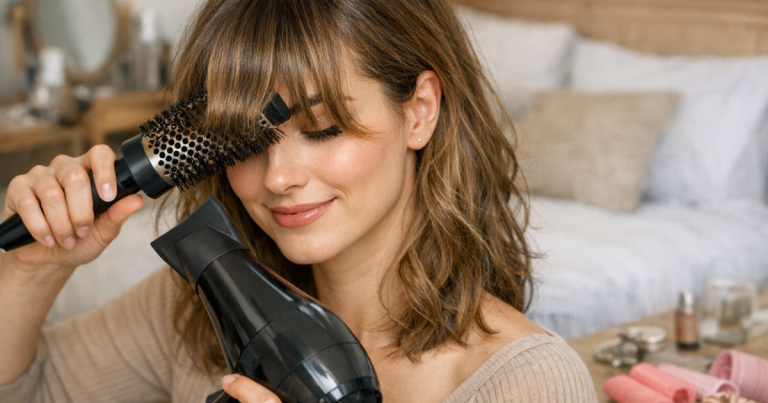
Layers around the crown often need the most patience. Pick up a shallow horizontal section, lift it straight up, and hold the brush under the root for a moment before gliding. Shallow sections create more visible lift than thick chunks because the heat reaches the root area more evenly.
Common mistakes that flatten the roots
- Starting with wet roots: hair is heavier when damp, so the root sets flatter and takes longer to lift.
- Dragging from root to tip in one motion: this smooths the hair but trains the root downwards.
- Using sections that are too wide: the outer hair gets polished while the inner root stays untouched.
- Pressing the brush into the scalp: pressure creates sleekness, not volume.
- Overloading the crown with product: heavy creams and oils can make fresh styling collapse.
- Touching the hair while it cools: warm hair is still setting, so fiddling can undo the lift.
How to make the lift last longer
Once you have styled the top sections, let them cool in the lifted position. You can hold each section up with your fingers for a few seconds, clip it loosely while it cools, or flip the parting to the opposite side until the rest of your hair is finished.
Use finishing product sparingly. A flexible hairspray or texture mist can help at the roots, but spray from a sensible distance and build gradually. If your hair is fine, spray the underside of the lifted section rather than coating the top, which can make the finish look stiff or dusty.
Humidity also matters in the UK, especially if your hair is porous or prone to frizz. On damp days, prioritise a smooth, sealed finish through the outer layer while keeping the root area light. A tiny amount of serum on the ends can help, but keep it away from the scalp unless your hair is very coarse.
When a hot brush is not the best root-volume tool
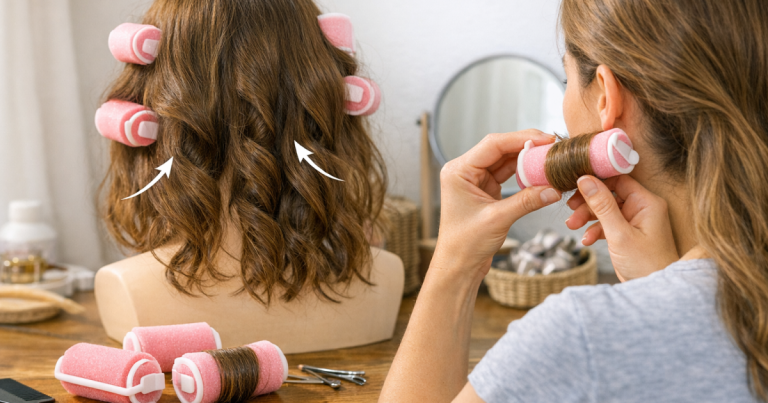
A hot brush gives soft, wearable lift rather than the sharp root height you might get from rollers, a round-brush blow-dry or targeted backcombing. If your hair is very fine, very long or freshly conditioned with a rich mask, it may need extra support from Velcro rollers at the crown while the hair cools.
If your priority is poker-straight roots, a straightener may give more compression and control. If your priority is airy movement, the hot brush is usually kinder to volume because it does not clamp the root flat. The trade-off is that you need better sectioning and more attention to cooling time.
Questions people ask
Should I use a hot brush on wet or dry hair for root volume?
For root lift, dry or nearly dry roots usually work best. Wet roots are heavier and more likely to set flat, even if the lengths can still be shaped.
Why does my crown go flat after ten minutes?
The section may be too large, too damp, or still warm when you brush it down. Lift smaller crown sections and let them cool before arranging your parting.
Can a hot brush add volume to fine hair?
Yes, but fine hair needs light product, small sections and minimal re-brushing. Too much tension or product at the roots can make fine hair look smooth but limp.
How close should the brush go to the scalp?
Close enough to lift the root, but not pressed hard into the scalp. Keep the tool moving and use the bristles to support the section rather than squash it.
Do I need hairspray to keep the roots lifted?
Not always. Cooling the hair in an elevated position is the first step. If your hair drops quickly, a light flexible spray at the underside of the root can help.
Main lessons
The best hot-brush root lift comes from preparation, angle and patience. Dry the roots first, lift each section before smoothing, work in smaller pieces around the crown and let the hair cool before touching it. If the result still looks flat, reduce product at the scalp and spend more time on sectioning rather than increasing pressure.
A hot brush should leave the hair looking polished but still soft and movable. Treat the roots and ends as separate styling zones, and you will get a smoother finish without losing the shape that makes the style look fresh.