Thick hair asks more from any heated tool: more sectioning, more passes, and usually more time. That is why the real question is whether cordless curlers thick hair users can rely on for a full style are genuinely practical, or whether they are better kept for fringe pieces, travel touch-ups and soft face-framing curls.
The honest answer is: sometimes, but not always. A cordless curler can work on thick hair when the hair is prepped, sectioned neatly and the style is not too ambitious. For a full head of long, dense hair, battery runtime is often the limiting factor, not the curl itself.
The short answer
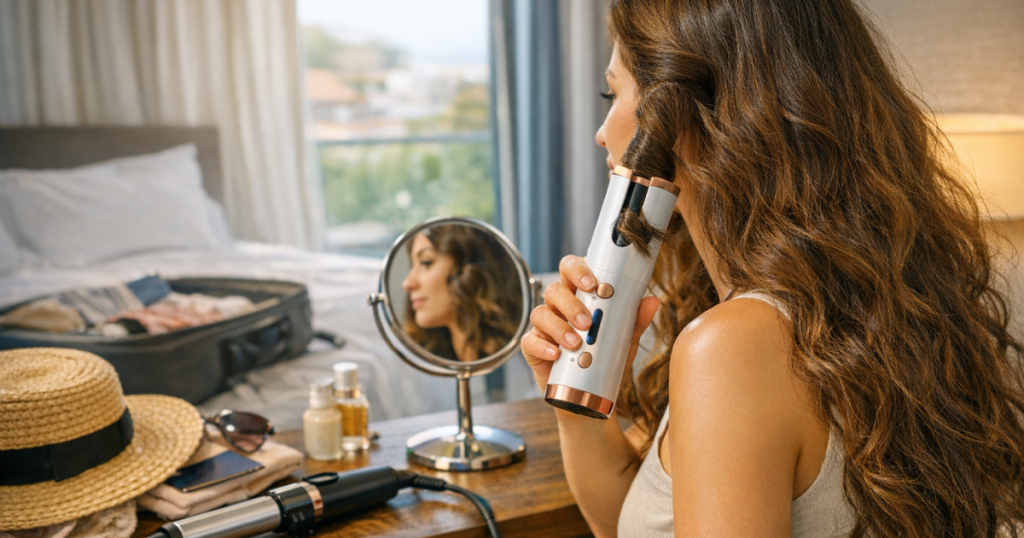
Most cordless curlers are better thought of as compact convenience tools than full replacement styling tools for very thick hair. They are useful for travel, post-commute tidying, refreshing the top layer, or adding shape to curtain bangs and front sections. They are less ideal when you want polished curls from roots to ends across a dense head of hair in one uninterrupted session.
For thick hair, the battery has to support three things at once: heating up, staying hot enough through repeated sections, and lasting long enough for you to finish before the charge drops. If any one of those slips, curls can become uneven, looser on the underneath layers, or flatter by the time you reach the back.
Why thick hair uses up more styling time
Thick hair is not just “more hair”. It changes the whole workflow. Dense sections need to be smaller so heat can reach the strand evenly. Coarse strands may need a little more time around the barrel than fine strands. Long hair also takes longer because each section has more length to wrap, release and cool.
That means a cordless tool that feels generous on shoulder-length, medium-density hair can feel rushed on long, heavy hair. You may start carefully, then take bigger sections as the battery drops, which usually gives a mixed finish: defined pieces near the front, softer bends underneath, and weaker curl formation at the back.
This is where finish expectations matter. If you want neat, glossy curls, you need more consistency. If you want an undone wave, you can work more loosely and make a cordless tool stretch further. For a broader look at matching your tool choice to the result you actually want, the guide to choosing tools by finish is a useful next step.
Battery checks that matter before you style
Do not judge a cordless curler by the product name alone. For thick hair, the useful details are the ones that tell you how long the tool can keep working in real life, not just how portable it looks in a wash bag.
- Claimed runtime: check the manufacturer’s stated styling time, then assume thick hair may use that time quickly because you will be working through more sections.
- Charge time: a long recharge can be annoying if the tool runs out before you finish. This matters more when you are getting ready away from home.
- Heat settings: thicker or coarser hair often needs a higher setting than fine hair, but higher heat may reduce usable battery time. Always check the instructions for the tool and use the lowest effective setting for your hair.
- Barrel size: a very narrow barrel creates tighter curls but takes longer across thick hair. A larger barrel can be quicker for waves, though it may not give strong curl on heavy lengths.
- Section capacity: automatic cordless curlers may only accept a small amount of hair at once. For dense hair, that can be the difference between a quick refresh and a long full-head session.
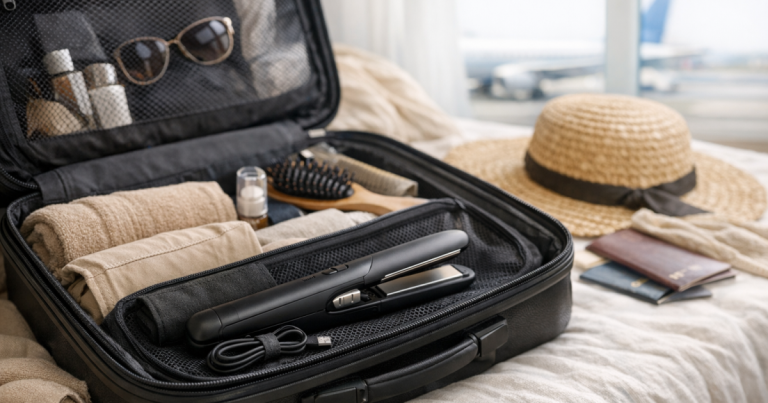
- Travel rules: if you are packing a rechargeable styling tool, check the current airline and airport guidance for lithium battery devices before travelling.
How to make the battery go further on thick hair
1. Start with completely dry hair
Even slight dampness slows everything down. A cordless curler is not designed to dry hair while styling, and thick hair can hold moisture underneath even when the surface feels dry. If the underneath layers are cool or damp at the roots, give them more drying time before you curl.
2. Decide which sections actually need curling
For everyday styling, you may not need to curl every strand. Focus on the face frame, crown layer and visible ends. Leaving the underneath layer smoother can make thick hair feel less bulky while still giving the impression of styled movement.
3. Section before switching the curler on
Clipping the hair first saves battery because the tool is not sitting hot while you work out where to begin. Divide thick hair into manageable zones: underneath, mid-layer, crown and front pieces. Smaller sections usually curl better, but keep them consistent so the finish looks deliberate.
4. Curl strategically, not repeatedly
Try not to re-curl the same piece several times. If a curl drops immediately, the section may be too thick, too product-heavy, or not cool enough before being touched. Let each curl cool in your hand for a few seconds before releasing it fully, then leave it alone while you finish the rest.
5. Use product lightly
Heavy oils, rich leave-ins and too much styling cream can make thick hair harder to curl because the strand feels coated. Use heat protection as directed, then keep finishing products for the end. If your ends are dry or heat-stressed, hair care can make styling easier over time; the review of L’Oréal Elvive Dream Lengths Shampoo looks at whether it is a better fit for fragile, heat-damaged lengths.
When a cordless curler is enough
A cordless curler is most convincing on thick hair when the brief is controlled and realistic. It can be enough for:
- refreshing second-day curls that have dropped around the face;
- adding bend to front layers after wearing hair tied up;
- styling shorter thick hair where there is less length to wrap;
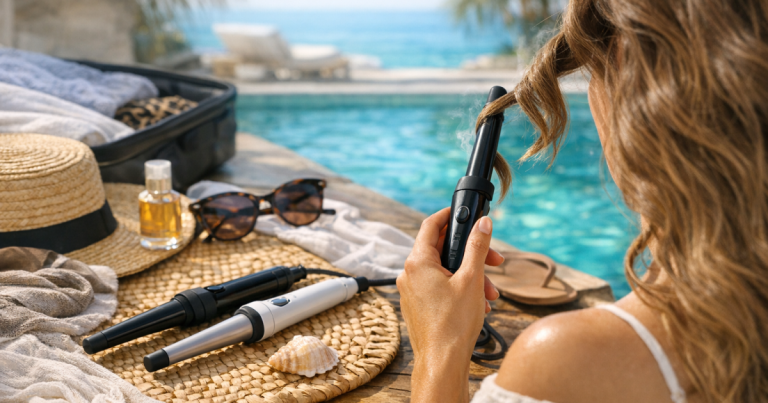
- creating a few soft waves before dinner while travelling;
- tidying one side that has flattened under a coat, hat or scarf.
Examples shoppers may come across include the BaByliss 9000 Cordless Curling Tong and the Revamp Progloss Liberate Cordless Compact Hair Curler. Treat names like these as starting points, not proof they will suit thick hair automatically. Check the listed runtime, barrel size, heat range, charging requirements and whether the tool’s shape suits the kind of curl you wear most.
When to choose a plug-in tool instead
If you regularly curl a full head of long, dense hair, a mains-powered curler is usually less stressful. You are not racing the battery, and the heat is more likely to feel consistent across the whole session. That matters if you want a uniform finish for an event, a wedding guest look or a style that needs to last from morning to evening.
Automatic curlers can also be worth considering if you like a more consistent curl pattern and do not mind working in small sections. For context on how an automatic plug-in option behaves, the BaByliss Curl Secret review is helpful because it shows the trade-off between convenience, section size and finish.
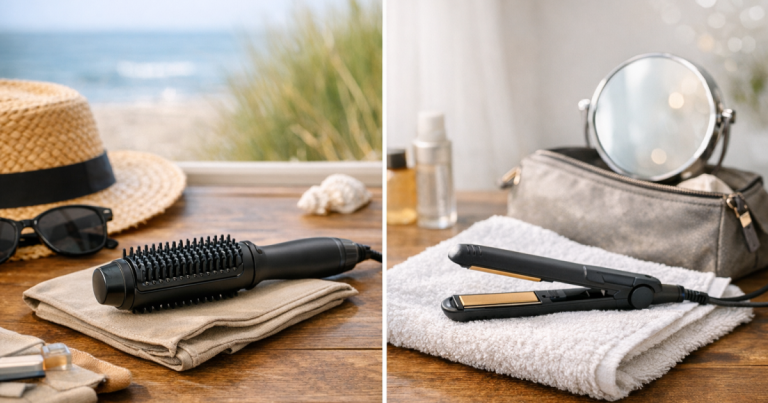
For short thick hair, the decision can be different. You may need less runtime, but you also need a tool shape that can get close enough to shorter layers without making the style too round. If your main issue is packing light rather than curling long lengths, the comparison of a travel hot brush versus mini straighteners for short hair gives a useful compact-tool perspective.
Hair-type guidance for thicker textures
- Thick and straight: cordless curling can work for bends and loose waves, but smooth hair may drop if sections are too large. Let curls cool fully before brushing.
- Thick and wavy: use the curler to refine selected pieces rather than restyling the whole head. This saves battery and keeps natural texture intact.
- Thick and coarse: check whether the tool reaches a suitable heat setting for your hair, but avoid automatically choosing the hottest option. Prep, section size and cooling time matter just as much.
- Thick and frizz-prone: avoid rushing. Repeated passes can roughen the finish. A smoother blow-dry or stretched base usually helps a cordless curler work more evenly.
- Thick, layered hair: cordless tools are often more useful here because shorter top layers can be styled quickly while longer underneath sections are left softer.
What people usually ask
Can one charge curl a full head of thick hair?
It depends on your hair length, density, section size and the tool’s stated runtime. Some people with shorter thick hair may manage a full style, while long or very dense hair is more likely to need a plug-in tool for a complete finish.
Will using smaller sections drain the battery faster?
Smaller sections take more time, so they can use more of the charge. However, they usually curl better. Taking sections that are too large may seem quicker but often leads to weak curls and repeat passes, which can waste time anyway.
Are cordless curlers better than heatless curlers for thick hair?
They solve different problems. Cordless curlers are useful for quick shaping and travel touch-ups. Heatless curlers are better when you want to avoid heat and are happy to set the hair for longer. Thick hair often responds well to heatless methods when it is slightly prepped, evenly wrapped and fully set before release.
The big picture
Cordless curlers can have enough battery for thick hair if you use them with a limited styling goal: front pieces, top layers, short thick cuts or soft travel waves. They are less reliable as an only tool for long, dense hair that needs a polished full-head curl.
The smartest approach is to match the tool to the job. Use cordless for portability and quick corrections, mains-powered curlers for full styling sessions, and heatless options when you want shape without adding more heat to already stressed ends.