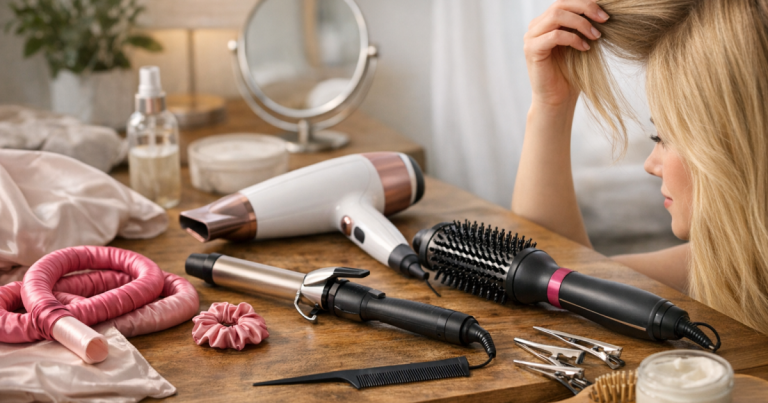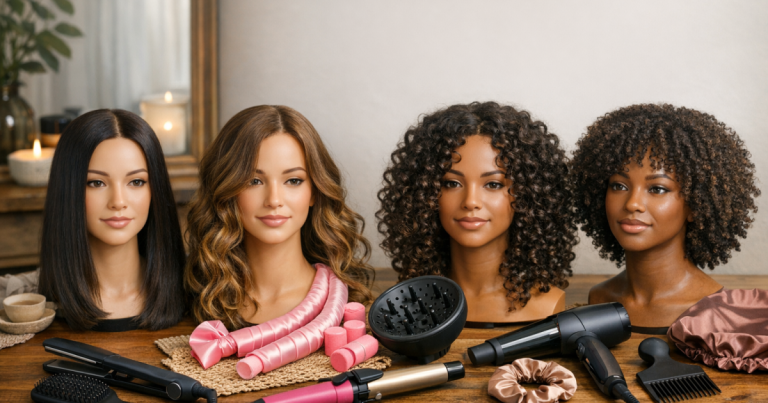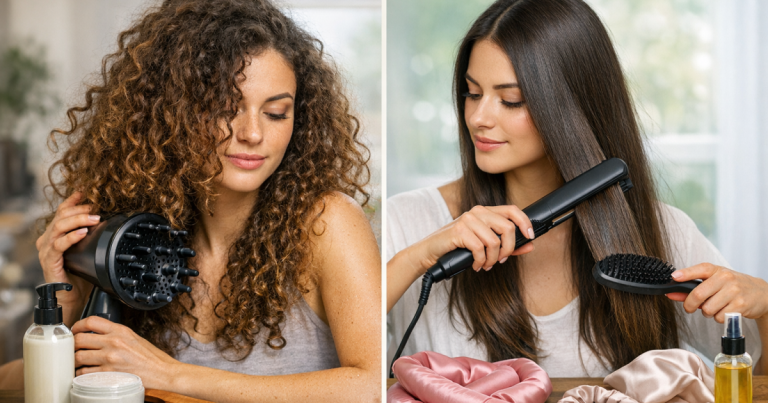
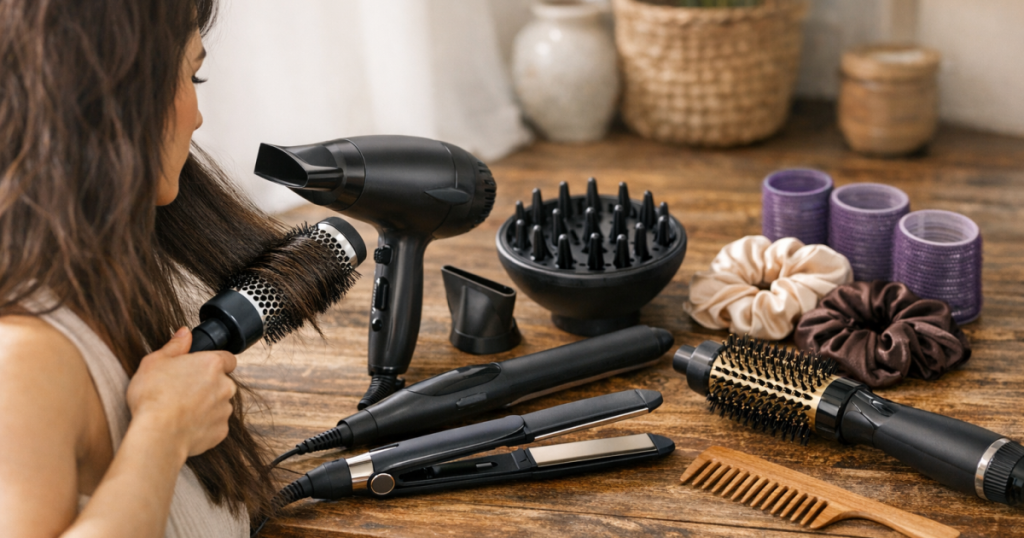
Thick, coarse hair can look incredible when a tool has enough grip, surface area and control to work with the hair rather than fight it. Choosing tools for thick hair is less about finding the hottest option and more about matching the method to your density, strand texture, drying time and preferred finish.
The common mistake is treating thick and coarse hair as one single hair type. Some hair is dense but fine-stranded. Some is coarse but not especially full. Some is curly, wavy or frizz-prone, while some is straight but resistant to bending. A tool that smooths one head of thick hair beautifully can make another look puffy, stretched or unfinished.
The short version
- For thick, coarse hair, prioritise tension, airflow, section control and durability over novelty features.
- Wide plates, larger barrels and firm bristles can help, but only if they suit your hair length and finish.
- Heatless tools need more time, stronger anchoring and often slightly damp hair to shape dense hair evenly.
- Curly or wavy thick hair usually responds better to diffusing, stretch-drying or setting than aggressive brushing.
- If a tool works only on very small sections, factor in the full styling time before relying on it for everyday use.
Why thick and coarse hair overwhelms some tools
Dense hair creates two practical problems: the tool has to reach enough of the hair, and it has to hold the shape long enough for the result to set. Coarse strands add another layer because they are often less willing to bend smoothly around a barrel, roller or brush.
This is why lightweight hot brushes, small curlers and soft rollers can disappoint. They may work well on the top layer but leave the underneath bulky or barely styled. The result is often a polished surface with a swollen shape below, which makes the hair feel bigger but not more styled.
Good tools for thick hair usually offer one or more of four things: stronger tension, a larger working surface, better airflow, or a shape that can stay in the hair for longer. That does not always mean using more heat. In many cases, a better sectioning routine and the right brush shape make more difference than turning the temperature up.
Start with the finish you actually want
Before choosing a tool, decide whether you want sleek, stretched, bouncy, defined or natural volume. Thick hair can be styled in all of these directions, but the tool choice changes.
Sleek and smooth
For a smoother finish, you need controlled tension. A paddle brush with firm bristles, a hot brush with enough grip, or a straightener with plates that suit your hair length can help flatten the cuticle and reduce the bulky outline. If hot brushes tend to leave your hair inflated rather than sleek, the issue is often section size, dryness level or brushing direction; this tutorial on using a hot brush without making hair puffy is a useful next step.
Bouncy and polished
For bounce, thick hair usually needs larger barrels, strong clips or rollers that do not collapse under the weight of the hair. Smaller barrels can create shape, but they may also make the styling process long and give a more curled result than intended. Larger sections can work only if the tool still grips the full depth of the hair.
Textured, wavy or natural
For texture, the aim is control without over-smoothing. Diffusers, heatless curling rods, satin curlers and flexible rollers can all work, but dense hair needs enough time to dry or set fully. Removing a heatless curler too early is one of the fastest ways to lose shape within an hour.
Tool types that tend to cope better
No single tool suits every thick or coarse hair routine, but some categories are more realistic than others.
- Wide or longer straighteners: Useful for long, dense hair because they cover more hair per pass. Check that the plate size suits your length and that you can still reach roots and face-framing sections comfortably.
- Firm-bristled detangling brushes: A brush such as the Tangle Teezer The Ultimate Detangler Thick & Curly can help with wet detangling and product distribution, though you should still work in sections to avoid snapping knots.
- Styling brushes with stronger tension: A classic styling brush such as the Denman D4 Original Styler can help define, stretch or shape thicker hair, depending on how it is used and how much product slip the hair has.
- Diffusers with a deep bowl: Better for thick curls and waves because they can support more hair at once. A shallow diffuser may still work, but drying often takes longer.
- Heatless rods and satin curlers: Best when you can leave them in long enough for the hair to set. Dense hair often needs smaller sections wrapped neatly rather than one oversized twist on each side.
- Large Velcro or foam rollers: Better for lift and bend than tight curls. They need secure placement because heavy hair can pull them loose.
If your hair is thick but fragile, bleached or heat-damaged, do not assume a stronger tool is automatically the answer. A smoother routine may come from better prep, slower drying, lower heat where effective, and a tool that needs fewer repeat passes.
Where heatless methods fit in
Heatless styling can work beautifully on thick and coarse hair, but it is less forgiving of rushed technique. The hair has to be wrapped with even tension, secured firmly and left until the shape has taken. On very dense hair, this may mean styling when hair is nearly dry rather than wet, because wet thick hair can take too long to dry inside a curler.
Satin-covered curlers, soft rods and foam rollers are often kinder to frizz-prone hair because they reduce rough contact. The trade-off is hold. If your hair is heavy, you may need a setting spray, mousse or light styling cream to give the shape something to grip.
A product such as the Kitsch Satin Heatless Curling Set can be a useful example of the type of tool that favours comfort and reduced friction, but the result still depends on section size, wrapping tension and drying time. Thick hair rarely sets well if it is wrapped in sections that are too chunky.
Curly, wavy, straight or resistant: adjust the method
Thick hair behaves very differently depending on pattern. Curly and wavy textures usually need tools that preserve definition while managing volume. Diffusers, wide-tooth combs, styling brushes and satin heatless curlers are often more useful than tools that pull the curl pattern too straight.
If your thick hair is straight but resistant, the challenge is usually hold. Rollers, curling wands and heatless rods may need smaller sections and a longer cooling or setting time. Brushing the curls out too soon can turn shape into bulk, so let the hair cool or fully set before softening it.
If your hair is coarse and frizz-prone, be careful with tools that rely on repeated brushing through dry hair. They can create a fluffy surface even when the ends look styled. For curl routines, a diffuser can be more compatible than a brush-based tool; for a more detailed curl-specific option, see this Toni & Guy diffuser review.
Checks that matter before relying on a tool
For thick and coarse hair, the real test is not whether a tool can style one front section. It is whether it can finish the whole head without excessive time, arm fatigue or repeated passes.
- Section size: If the tool only works on very thin sections, it may be better for occasion styling than weekday mornings.
- Grip: Brushes, curlers and rollers need to hold hair securely without snagging. Slipping tools create uneven results.
- Drying or setting time: Dense hair often looks dry on the outside while staying damp inside, which weakens hold.
- Root access: Thick hair can hide bulk near the roots. A tool that only smooths the lengths may not change the overall shape.
- Finish control: Some tools add volume by default. That is helpful for limp hair, but not always ideal for coarse hair that already expands.
- Hair condition: Damaged, porous or colour-treated thick hair may need gentler prep and fewer passes, even if it can physically tolerate a stronger tool.
Cordless curlers can be convenient for touch-ups, but dense hair can expose their limits because styling often takes longer and requires more sections. If you are considering one, read whether cordless curlers have enough battery for thick hair before assuming it will replace a mains-powered tool.
Prep makes the tool work harder for you
Thick, coarse hair usually styles better when it is prepared rather than forced. Detangle from the ends upwards, apply product evenly through layers, and avoid overloading the roots if you want movement. A leave-in conditioner, smoothing cream or lightweight oil can help reduce friction, but too much product can make heatless curls drop or hot tools feel greasy.
For frizz-prone lengths, the balance between moisture and slip matters. Hair masks can soften coarse hair, while oils can help seal and smooth the surface when used sparingly. If your ends feel rough or your style expands quickly, the comparison of L’Oréal Elvive Extraordinary Oil vs Garnier Ultimate Blends Hair Mask explains where each type of product fits.
Sectioning is the unglamorous step that makes the biggest difference. Clip the hair into workable layers before drying, curling or smoothing. For very dense hair, four sections may not be enough; six or eight smaller sections often give a cleaner finish with less frustration.
Helpful questions
Are wide straighteners always better for thick hair?
Not always. Wide plates can speed up smoothing on long, dense hair, but they can feel awkward around fringes, roots and shorter layers. If your hair is shoulder-length or heavily layered, control may matter more than plate width.
Can heatless curls last on coarse hair?
Yes, but the hair needs enough time to set and the sections must not be too large. Slightly damp hair, even wrapping tension and a light hold product usually help more than simply leaving the curler in loosely overnight.
Why does my hair look bigger after using a hot brush?
The hair may be too damp, the sections too large, or the brush may be lifting the roots more than smoothing the lengths. Coarse hair can also puff up if brushed repeatedly once dry without enough smoothing product.
What tool is gentlest for thick, frizz-prone hair?
A satin heatless curler, diffuser or good detangling brush can be gentler than repeated high-heat styling. The best choice depends on whether you want curls, definition, stretch or a smooth finish.
Final thoughts
Thick and coarse hair does not need to be battled into shape. It needs tools that can keep contact with the hair, manage enough section depth and support the finish you want. For sleek styles, prioritise tension and controlled smoothing. For curls and waves, focus on drying, setting time and frizz-friendly surfaces. For everyday styling, be honest about how long a tool takes to complete your whole head, not just the easiest layer.
The most reliable routine is usually a combination: a brush that detangles properly, a styling tool matched to your finish, and a prep product that reduces friction without weighing the hair down. Once those pieces line up, thick hair becomes far easier to style at home and much less dependent on excessive heat.