A hot brush can turn freshly washed hair into a soft, salon-style blow-dry, but it can also create unwanted width if the hair is too damp, too fluffy at the roots or overworked at the ends. The aim is to use a hot brush for controlled smoothing and shape, not to rough-dry every strand into a cloud.
Puffiness usually comes from a mismatch between hair type, moisture level, product choice and brush direction. Once those are adjusted, a hot brush becomes much easier to control, whether your hair is fine and flyaway, thick and heavy, wavy, frizz-prone or layered.
The short version
Start with hair that is mostly dry, use lightweight prep, take smaller sections than you think, keep tension steady, and direct the brush down the hair shaft before adding bend. Avoid repeatedly brushing the same section once it is dry, because that tends to disturb the cuticle and build bulk instead of polish.
- For fine hair: keep products light, lift only where you want volume, and avoid rolling the brush too tightly at the sides.
- For thick hair: rough-dry thoroughly first, then work in narrower sections so the surface smooths properly.
- For wavy or frizz-prone hair: use a smoothing leave-in or cream, but avoid heavy roots unless you want a flatter finish.
- For layered hair: shape each layer separately, letting the brush glide through before curling the ends.
Why a hot brush makes hair puffy
A hot brush combines airflow or heat with bristles, so it moves hair while shaping it. That movement is useful, but it can also lift shorter hairs, disturb natural wave patterns and make the outer layer expand if the hair is still holding too much water.
The most common mistake is treating a hot brush like a dryer from soaking wet hair. Many hot-air brushes can dry as they style, but they are usually easier to control when hair is already around 80–90% dry. If the roots are wet and the ends are drying quickly, the finished shape can look wide at the middle and frazzled at the tips.
Direction matters too. Brushing outwards from the head creates width. That can be flattering at the crown, but around the temples, cheeks and jaw it may give a mushroom effect. For a smoother result, think of the brush as a finishing tool: down the shaft first, curve at the end second.
If you are unsure whether you want a sleek, bouncy or deliberately undone result, it helps to decide before styling rather than correcting afterwards. The guide to choosing tools by finish is useful if your hair looks technically styled but not quite the way you intended.
Step 1: Prep hair so it smooths instead of swelling
Good hot-brush styling starts before the brush goes near your hair. After washing, squeeze out water gently with a towel or microfibre wrap rather than rubbing. Rubbing lifts the surface of the hair and makes frizz more likely once heat and bristles are added.
Apply product according to hair type, not by habit. Fine hair usually needs a small amount of heat protectant spray or light styling mist through the lengths, avoiding heavy creams at the roots. Medium or coarse hair can often take a smoothing cream through the mid-lengths and ends. Frizz-prone hair may benefit from a leave-in conditioner or light oil on the ends, but too much can make the brush drag and separate the finish.
Detangle before styling. A hot brush should not be used as the first pass through knots, because snagging creates uneven tension and can make the finished shape rough. Use a wide-tooth comb or detangling brush, then rough-dry until the hair feels damp rather than wet. The underneath layers should not feel cold and heavy.
Step 2: Section smaller than you would for normal brushing
Puffy results often come from sections that are too wide or too deep. The brush only smooths the hair it can control, so if the section is bulky, the outer hairs may polish while the inner hairs stay damp and expand later.
As a guide, take sections that are no wider than the barrel or paddle area of your brush. For dense hair, work with slices around 2–4 cm deep. For fine hair, the section can be wider, but keep it shallow so it does not collapse or balloon.
Clip the top layers away and start underneath. This keeps the outer surface cleaner and prevents you from over-brushing the face-framing pieces. If your hair goes puffy at the sides, style the side sections last and direct them slightly downwards rather than straight out.
Step 3: Use tension before volume
The smoother the first pass, the less you need to keep going over the same hair. Place the brush under the section near the roots, hold the ends lightly with your fingers if needed, and glide down slowly with even tension. Keep the nozzle, barrel or paddle moving; lingering too long in one place can over-dry that patch and make the surrounding hair look uneven.
For root lift, raise the brush upwards only at the crown or areas where you want height. Around the sides, use a diagonal downward angle so the hair follows the shape of the head. This is the biggest difference between bouncy and puffy: volume is placed; puffiness spreads everywhere.
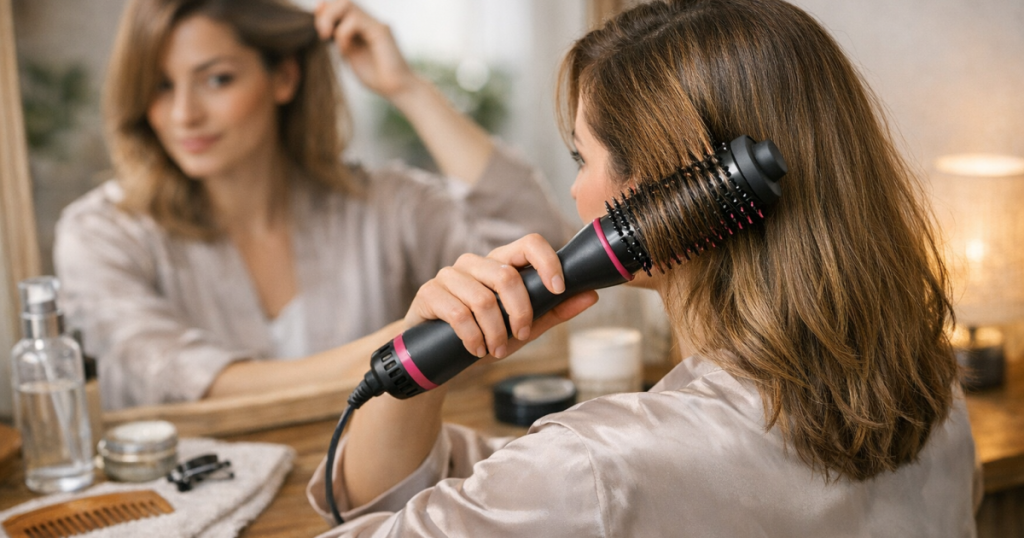
With a round hot-air brush such as the Revlon One-Step Volumiser Plus, roll the last few centimetres under or away from the face after the section has already been smoothed. With a heated smoothing brush such as the ghd Glide Hot Brush, use slow passes through dry hair and avoid repeatedly lifting outwards at the sides.
Step 4: Match the brush technique to your hair type
Fine or flat hair
Fine hair needs lift without roughness. Use minimal product, dry the roots well before styling, and concentrate volume at the crown. If the sides puff out easily, keep the brush vertical around the face and turn the ends under only slightly. Velcro rollers can be a gentler way to set lift without repeatedly brushing delicate lengths; this tutorial on Velcro rollers for volume on fine hair explains how to build height without making the shape too wide.
Thick or dense hair
Thick hair tends to puff when the outside is styled but the inside remains damp. Rough-dry thoroughly, then section patiently. Work from underneath and keep each section narrow enough for the brush to grip. If the brush is struggling to move through the hair, the section is too big or the hair is not dry enough.
Wavy hair
Wavy hair can expand if the natural pattern is half-stretched and half-left alone. Decide whether you want a smooth blow-dry or a softer, more textured finish. For smoothness, use firm tension from root to tip and style in consistent sections. For movement, smooth the top layer and shape only the ends, rather than brushing through every wave until it becomes fluffy.
Curly hair
Curly hair usually needs more prep and more controlled tension. A hot brush may soften and stretch curls, but it can also create a brushed-out halo if used on hair that is not properly detangled, moisturised and sectioned. If your priority is curl definition rather than a blow-dried finish, a diffuser may suit your routine better; the Toni & Guy diffuser review gives more context on that kind of finish.
Step 5: Cool, set and stop at the right moment
Hair often looks smoother while it is warm, then expands as it cools if the shape has not been set. After each section, hold it in place for a few seconds or let it fall naturally without touching it. If your brush has a cool setting, use it once the section is dry to help the shape settle.
Do not keep brushing finished sections while styling the rest of your head. Overworking dry hair is one of the quickest ways to turn a neat blow-dry into puff. Instead, clip completed sections loosely away or leave them alone until the end.
Once all sections are done, finish with your hands rather than more brushing. Smooth a tiny amount of serum, cream or lightweight oil over the ends if needed, keeping it away from the roots unless your hair is very coarse. If the crown needs adjustment, lift only that area rather than reworking the full head.
Quick troubleshooting checks
- If hair looks wide at the sides: angle the brush downwards and avoid rolling the barrel horizontally near the cheeks.
- If roots are flat but ends are puffy: dry the roots more before styling and use less product through the ends.
- If the top layer is frizzy: take thinner sections, smooth from root to tip, and avoid brushing against the natural growth direction.
- If hair feels rough after styling: reduce repeat passes and check whether your hair was too wet when you started.
- If the finish drops quickly: let each section cool before touching it and avoid heavy finishing products on fine hair.
In brief
A hot brush gives the best smoothing result when it is used on mostly dry, detangled hair in manageable sections. Puffiness is not usually caused by the tool alone; it is more often caused by too much moisture, too little tension, brushing outwards in the wrong areas or continuing after the section is already dry.
Think in zones: lift at the crown, smooth at the sides, polish the top layer, and shape the ends last. That simple order keeps the finish intentional rather than inflated.
Helpful questions
Can I use a hot brush on wet hair?
It depends on the tool, but for a less puffy result, hair is usually easier to control when it is mostly dry. Soaking wet hair takes longer to shape and is more likely to expand unevenly.
Why does my hair go fluffy after using a hot brush?
Fluffiness usually means the hair was too damp, the sections were too large, or the brush was moved outwards too much. Focus on downward tension first, then add bend only at the ends.
Should I use mousse before a hot brush?
Mousse can help fine or flat hair hold root lift, but too much can make the lengths feel airy and swollen. Apply it mainly at the roots and use a small amount.
Is a hot brush better than straighteners for smoothing puffiness?
A hot brush gives a softer, blow-dried finish, while straighteners create a flatter, sleeker result. If you want movement with less bulk, the hot brush technique matters more than simply using more heat.
How often should I use a hot brush?
Use it when you need a styled finish, but avoid unnecessary daily reworking of already dry hair. Refreshing only the front pieces or crown is usually kinder than restyling every section.