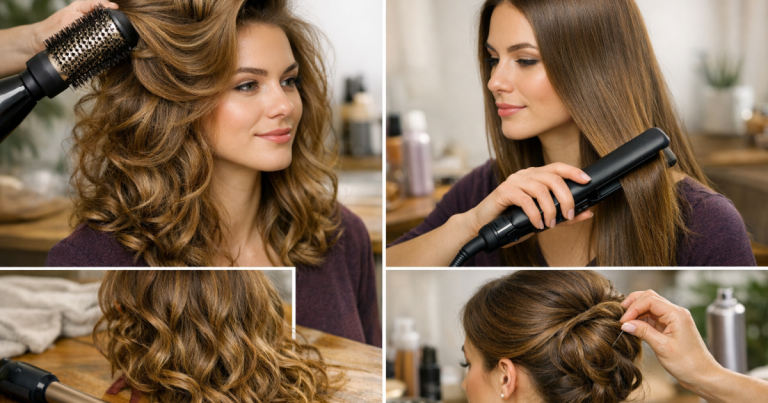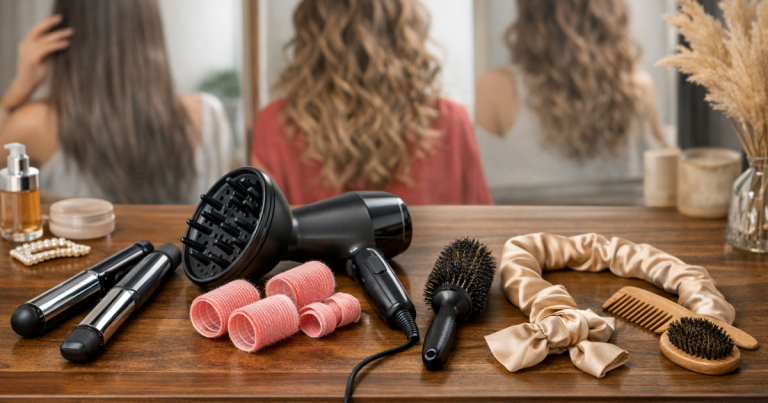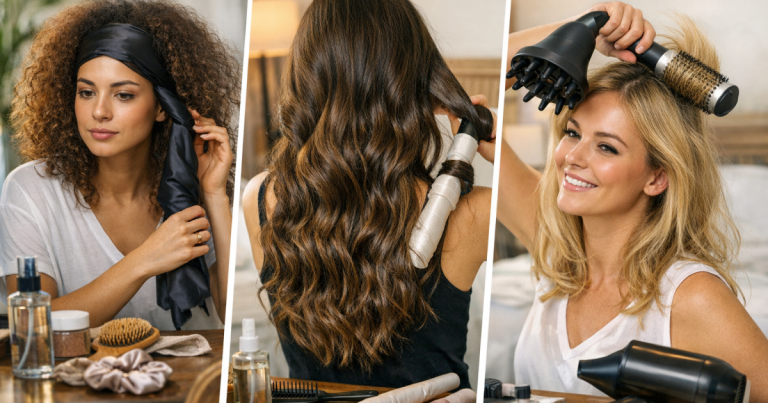
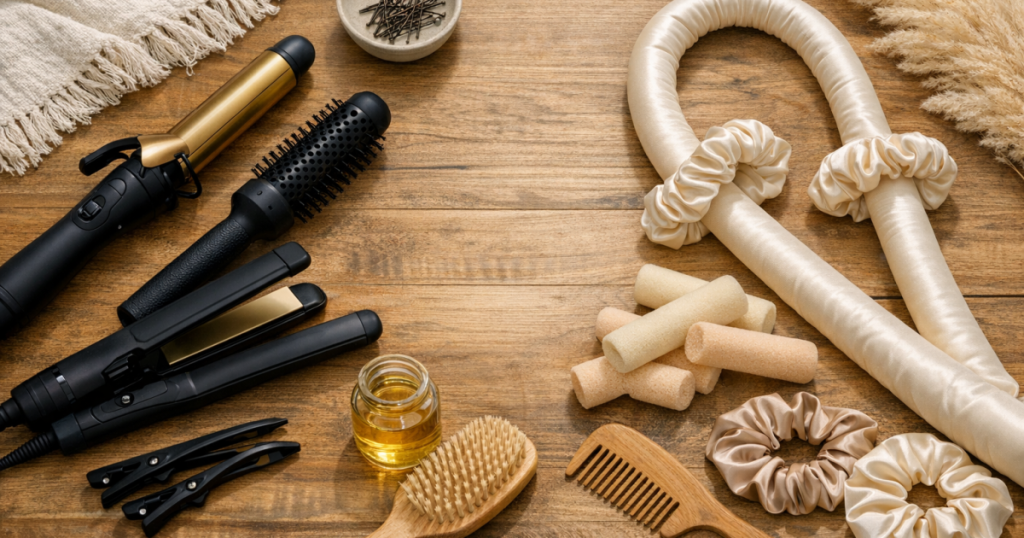
Choosing between heatless vs heated styling is not about which method is universally better; it is about the result you want, how long it needs to last, and how much stress your hair can comfortably handle. Heatless methods are brilliant for soft bends, overnight curls and low-damage volume, while heated tools are faster, more precise and easier to control on stubborn hair. The right answer can change from wash day to day three, and from loose waves to polished root lift.
For most at-home routines, the smartest approach is not choosing one camp forever. It is knowing when to reach for a satin rod, rollers, clips, a hot brush, a curling wand or an air styler depending on your hair type and your styling goal. If you are building a flexible kit, our guide to styling tools by goal and hair type is a useful next step after you have worked out which method suits your routine.
The short answer
Use heatless styling when your priority is lower damage, softer movement, overnight convenience or preserving the health of colour-treated, bleached or fragile hair. It works especially well for loose curls, relaxed waves, bendy ends, fringe shaping and gentle lift at the crown.
Use heated styling when you need speed, definition, stronger hold, root control or a more polished finish. Heat is usually better for smoothing frizz, reshaping resistant sections, creating uniform curls and adding visible volume quickly before an event or workday.
The trade-off is simple: heatless styling asks for more time and the right set-up; heated styling asks for more care, heat protection and restraint. Neither method guarantees a salon finish on its own. Prep, section size, hair dryness, product choice and your natural texture all matter.
How curls, waves and volume are actually formed
Hair changes shape when its internal bonds are temporarily rearranged by moisture, tension, heat or a mix of all three. Heatless styling relies mainly on moisture, controlled tension and time. A satin curling rod, soft rollers, braids or pin curls hold the hair in a new shape while it dries or settles. The result tends to be softer and less uniform, which can look modern and effortless when the placement is right.
Heated styling uses temperature to speed up the same broad idea. Curling wands, hot brushes, heated rollers and air stylers help the hair take on a new shape quickly, then the shape sets as it cools. That cooling step is why dropping a curl while it is still warm can make it fall faster. For stronger hold, clip the curl or leave a roller in place until the hair feels fully cool.
For curls, heat gives more precision. For waves, heatless methods often look softer and less “done”. For volume, heated tools create fast lift at the root, but heatless rollers and clips can give a gentler, bouncier finish if you have time to let them set.
Where heatless methods work beautifully
Heatless styling shines when the look does not need to be perfectly identical from root to tip. Overnight curls, robe-belt waves, satin rod curls, Velcro roller lift and claw-clip bends can all make hair look styled without the repeated exposure of a tong or straightener.
A dedicated heatless curler such as the Beauty Works Heatless Curler is most useful when you want long, soft curls through the lengths rather than tight definition at the roots. It is generally easiest on medium to long hair, because there is enough length to wrap securely and create a consistent bend.
Heatless methods are particularly helpful for:
- Bleached or highlighted hair: less direct temperature exposure helps reduce cumulative dryness and snapping.
- Fine hair that marks easily: soft rods, silk wraps and loose rollers can create body without flattening delicate strands.
- Loose waves and undone curls: the finish tends to look relaxed rather than overly uniform.
- Second-day styling: rollers, clips and a light mist can refresh shape without fully restyling.
- Scalp comfort: no hot barrel near the skin, which is useful around fringes and hairlines.
The main limitation is predictability. Hair that is too wet may still be damp in the morning; hair that is completely dry may not take the shape well. A lightly damp or product-prepped finish usually works better than soaking wet hair. Section size matters too: bigger sections give looser movement, while smaller sections give more curl but can look uneven if wrapped inconsistently.
Where heated styling earns its place
Heated styling is hard to beat when you need a fast, controlled finish. If your hair drops curls quickly, has coarse strands, has a strong natural pattern or needs smoothing as well as shaping, heat can make the result more reliable. A curling wand can create clear spiral definition; a hot brush can smooth and lift; heated rollers can add bounce without having to hold each section around a barrel.
For example, the Remington H9100 PROluxe Heated Rollers can be useful for classic bounce and root lift, while a tool such as the Cloud Nine Curling Wand is better suited to more deliberate curl placement. The important point is to match the tool to the finish, not to assume every heated tool creates the same result.
Heated styling is usually the stronger choice for:
- Polished curls: consistent sections and controlled barrel direction make curls look more intentional.
- Stubborn straight hair: heat can help strands hold a curve that heatless wrapping may not create strongly enough.
- Thick hair: hot air tools, tongs and heated rollers can reach bulkier sections more effectively when used patiently.
- Frizz-prone hair: smoothing heat plus tension can create a sleeker surface than most overnight methods.
- Time-limited mornings: heat can deliver visible shape in minutes rather than hours.
The downside is cumulative stress. High temperatures, repeated passes and styling damp hair with tools designed for dry hair can all increase roughness, split ends and breakage. A heat protectant, lower effective temperature and fewer passes are more important than chasing the highest setting. Fine or fragile hair often needs less heat than you think; coarse or dense hair may need more time per section rather than extreme temperature.
Choosing by hair type
Fine or low-density hair
Fine hair often responds well to heatless rollers, soft rods and root clips because it does not need much force to change shape. The risk is losing volume by using products that are too heavy or wrapping sections too tightly overnight. For volume, Velcro rollers at the crown or soft foam rollers through the top layers can be more flattering than tight curls all over.
When using heat, keep sections airy and avoid clamping down too firmly. A hot brush or heated rollers can add lift without making the ends look stringy. Let curls cool fully, then brush out gently rather than overloading with hairspray.
Thick, dense or coarse hair
Thick hair can look fantastic with both approaches, but heatless styling needs more preparation. Sections should be smaller, hair should be mostly dry before wrapping, and the set needs enough time to work through the density. A single large overnight rod may curl the outside layers while leaving the underneath too loose.
Heated tools are often more reliable for thick hair, especially when you need smoothing and shape together. Air stylers are popular because they combine drying, tension and shaping, but attachment size and airflow make a real difference. For a deeper tool-specific comparison, see our guide to Dyson Airwrap vs Shark FlexStyle for thick hair.
Curly and coily hair
For naturally curly and coily textures, the question is often whether you are enhancing your pattern, stretching it, or creating a completely different finish. Heatless methods such as twists, braid-outs, flexi rods and satin wrapping can define shape while keeping direct heat out of the routine. They also help preserve moisture when paired with the right leave-in or styling cream.
Heated styling can be useful for stretching, smoothing or creating a blown-out base before waves or curls, but it should be used thoughtfully. Work in clean sections, avoid repeated passes over the same area, and consider alternating heated styling days with lower-heat or no-heat sets to protect elasticity.
Short hair, fringes and layers
Shorter hair can be harder to wrap around large heatless rods, but it often responds well to mini rollers, pin curls and sectioning clips. Fringes are usually easier to shape with a small roller, a round brush or a brief pass with a hot brush. Layers can benefit from a hybrid method: heatless lift at the crown, then quick heated refinement around the face.
Matching the method to the styling goal
For loose waves
Heatless is often the most flattering option for casual waves because it creates irregular bends rather than identical curls. Try wrapping hair away from the face on both sides, keeping the ends slightly straighter for a softer finish. If your waves drop quickly, use a light mousse or setting spray before wrapping and wait until the hair is fully dry before taking it down.
Heated waves are better when you want a more polished look. Use a wand or tong vertically, alternate curl direction through the back, and brush out only after the hair cools. For a modern finish, leave the last few centimetres straighter rather than curling right to the tips.
For defined curls
Heated tools usually give cleaner curl definition, especially on straight or resistant hair. The key is consistent section size and enough cooling time. If you want heatless definition, use smaller rods or flexi rollers and wrap neatly from mid-lengths to ends. Sleep comfort can be the limiting factor, so do not choose a set-up so bulky that you remove it halfway through the night.
For root volume
Root volume is where hybrid styling can be strongest. Heatless clips or rollers can lift the crown while you do make-up, get dressed or let skincare settle. Heated rollers or a hot brush can create faster lift when roots are flat, oily or recently washed. Sectioning clips make a bigger difference than they get credit for; if slipping is your main frustration, our Scunci No-Slip Grip Hair Clips review explains how grip-focused clips perform in real use.
Common reasons the result falls flat
- The hair is too wet: heatless sets need hair to dry fully in the new shape. Damp roots or wrapped lengths will collapse quickly.
- The sections are too large: thick sections may look smooth on the outside but fail to set through the middle.
- There is no cooling time: heated curls need to cool before brushing, shaking or dressing out.
- The product is too heavy: oils and rich creams can drag down fine waves and reduce bounce.
- The tool is fighting the haircut: heavy one-length hair may need layers for long-lasting movement, whatever method you use.
- The wrong brush is used at the end: a dense brush can turn curls fluffy; a wide-tooth comb or fingers may preserve shape better.
A detangling brush such as the Tangle Teezer Ultimate Detangler is useful before styling because knots can make sections uneven, but it is usually better to switch to fingers or a wide-tooth comb after curls are formed.
The big picture
Heatless styling is the gentler, slower route to soft curls, relaxed waves and natural-looking lift. Heated styling is the quicker, more controlled route to definition, smoothness and stronger hold. Most people get the best results by using both strategically rather than treating one as the only correct option.
If your hair is fragile, colour-treated or prone to dryness, make heatless methods your everyday base and save heat for refinement. If your hair is thick, coarse or resistant, use heat when you need reliability, but reduce unnecessary passes and give every curl time to cool. For volume, do not overlook rollers, clips and sectioning: lift often comes from placement and tension, not just temperature.
The most useful styling routine is the one that fits your hair, your schedule and the finish you actually wear. Start with the goal — curls, waves or volume — then choose the method that gets you there with the least effort and the least avoidable damage.