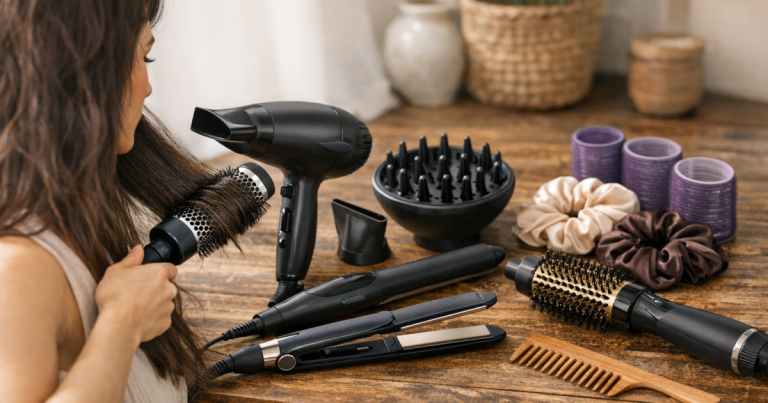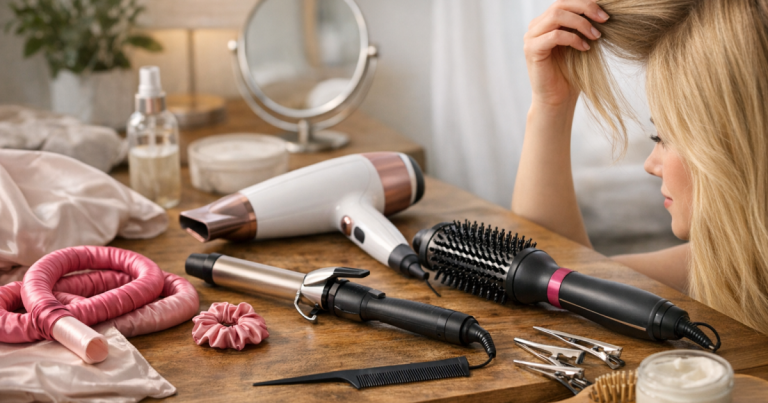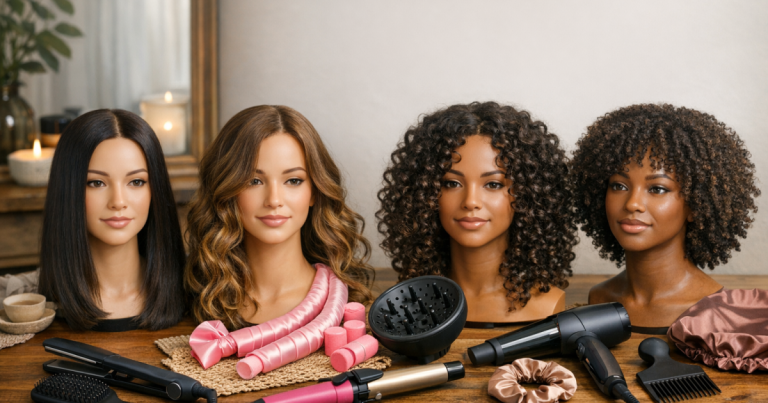
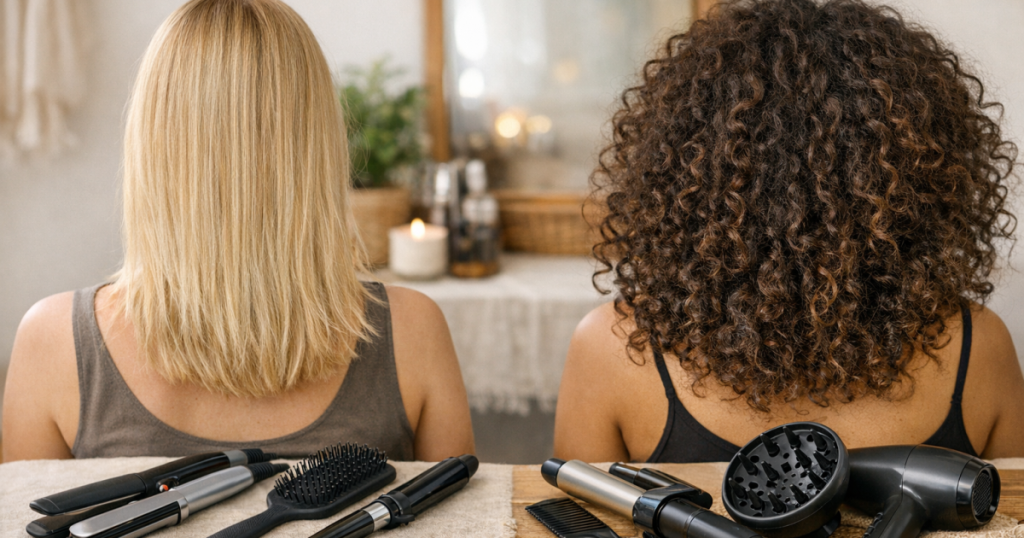
Choosing a styling tool gets much easier once you separate hair density vs texture: density is how much hair you have on your scalp, while texture is how each strand behaves. Two people can both have waves, yet one needs featherlight root lift and the other needs stronger sectioning and longer setting time. The right tool has to respect both, otherwise curls drop, roots flatten, or ends turn puffy.
At a glance
- Density describes how many strands grow from your scalp: low, medium or high.
- Texture usually describes the feel and thickness of individual strands: fine, medium or coarse.
- Curl pattern adds another layer: straight, wavy, curly or coily hair can each be low or high density.
- Tool size should match how much hair you need to wrap, lift, clamp, diffuse or smooth at once.
- Tool weight and tension should match how delicate, slippery, resistant or frizz-prone your strands are.
Density is about the amount of hair, not the strand
Low-density hair means the scalp is easier to see, your ponytail feels slimmer, and heavy tools can make the shape collapse quickly. It does not automatically mean the hair is weak or unhealthy; it simply means there are fewer strands sharing the style. Low-density hair often benefits from smaller sections, light accessories, root lift and tools that do not squash the crown.
Medium-density hair tends to be the most flexible for at-home styling because it can usually handle rollers, brushes, curling ribbons and diffusers without needing extreme adjustments. The main decision is usually texture: fine medium-density hair may need less product and lighter tension, while coarse medium-density hair may need more smoothing and longer setting time.
High-density hair has more strands to manage. It can look full and impressive, but it can also hide damp areas, resist shaping and overwhelm small accessories. Dense hair usually needs secure sectioning, enough tool surface area and patient layering. A single large section wrapped around a wand, roller or heatless rod may style only the outer layer while the inner strands stay limp.
Texture changes how the tool behaves
Fine texture has a smaller strand diameter, so it can mark, dent, overheat or become weighed down more easily. Fine hair often needs gentle tension, lightweight oils or sprays, soft clips and tools that create shape without flattening the roots. For keeping sections tidy without obvious dents, see our Kitsch creaseless clips review for fine hair.
Medium texture is more forgiving. It can usually tolerate moderate tension and a wider range of tool types, though density and curl pattern still matter. Medium strands are often easier to reshape, so the main aim is choosing the right section size and finish: smooth, bouncy, stretched, defined or airier at the roots.
Coarse texture has a larger strand diameter and can feel strong, wiry or resistant. It may need firmer tension, more time to set and tools that smooth the cuticle rather than rough it up. Coarse hair is not always dense; a person can have fewer coarse strands and still need a different approach from someone with lots of fine strands.
The combinations that cause most styling confusion
Low density and fine texture
This combination is easily overwhelmed. Large heated brushes, bulky rollers and heavy oils can pull the shape down before it has a chance to last. Choose light sectioning clips, slim or medium rollers at the crown, soft heatless rods and gentle brushing. Avoid loading too much hair onto one tool, because the style can look flat at the root and stringy at the ends.
High density and fine texture
This hair can look thick overall but still behave delicately. It may tangle, puff or drop because there are many fine strands competing for space. Strong sectioning matters more than heavy styling. Use clips that hold clean layers, work in smaller sections than you think you need, and avoid relying on one oversized tool to style everything at once.
Low density and coarse texture
This pairing can look full through the ends but sparse at the scalp. The aim is to shape the strand without dragging down the root area. Lightweight root lift, controlled smoothing and careful placement help. A brush or roller with too much pull can expose partings, while a tool with too little tension may not encourage the strand to bend.
High density and coarse texture
This is where tool capacity really matters. Dense, coarse hair often needs robust sectioning, longer drying or setting time and a realistic expectation that styling will happen in layers. Heatless curling ribbons, satin rods, wide-tooth detangling tools and diffusers can all work, but only if the hair is divided cleanly enough for each section to dry or cool into shape.
Do not ignore wave, curl and coil pattern
Texture is not the same as curl pattern, but the two affect each other. Straight fine hair might need grip and root lift; wavy coarse hair might need smoothing at the canopy; curly low-density hair might need volume preservation more than curl creation. If your waves lose shape when air-dried but turn fluffy with rough drying, a diffuser can help preserve pattern while controlling airflow. The steps in our guide to using a diffuser attachment on wavy hair are useful when your main issue is definition without flattening.
Curly and coily hair also need tools that protect clumps. Brushing dry curls with the wrong tool can break up definition, while wrapping too-large sections can stretch the pattern unevenly. For mixed patterns, style by zone rather than treating the whole head as one type: looser front pieces, tighter underneath sections and denser crown areas may all need different tension.
Matching tools to styling goals
For root lift, density is usually the leading factor. Low-density roots need lightweight lift and careful placement; high-density roots need stronger sectioning so the top layers are not dragged down by the hair beneath. Velcro rollers, root clips, a diffuser and a light round brush can all help, but the right choice depends on whether you want airy volume, a smooth blow-dry effect or curl preservation.
For lengths, texture becomes more important. Fine strands may prefer soft heatless curls, low tension and smaller wrapped sections. Coarse strands often need firmer wrapping, a smoother base and more time to set. If curls only form at the ends, the section is usually too thick, too wet, too dry or not secured evenly enough.
For ends, consider whether the problem is flicking, frizz, dryness or limpness. A detangling brush can help distribute product through damp hair, while a tiny amount of argan oil treatment may smooth coarse or dry-feeling ends. Fine hair usually needs far less product than dense or coarse hair, and applying it below ear level often keeps the crown fresher.
If you are deciding between tools by result rather than hair label, our guide to choosing tools for roots, lengths and ends is a helpful next step.
Small checks before you change your whole routine
- Check scalp visibility: if your parting widens easily when styling, avoid heavy root tools and focus on lift without drag.
- Check section depth: if only the outside of a curl forms, your section is too dense for that tool or method.
- Check strand response: if hair dents quickly, reduce clip pressure or tool tension; if it springs back straight, increase setting time or use smaller sections.
- Check drying time: dense hair can feel dry outside while staying damp inside, which weakens both heatless and heat-styled results.
- Check product weight: fine or low-density hair usually needs less oil, cream or mousse than coarse or high-density hair.
When you understand hair density vs texture, the aim is not to collect more tools; it is to stop asking one tool to solve every problem. A satin heatless curling rod might be brilliant for soft bends through medium-density lengths, while velcro rollers may be more useful at the crown. A diffuser may be essential for waves and curls, yet unnecessary for straight hair that mainly needs smoothness and lift.
Things readers ask
Is fine hair always low density?
No. Fine hair describes the strand, not the amount of hair. You can have lots of fine strands, which often looks full but tangles, flattens or frizzes easily.
Does thick hair mean coarse texture?
Not necessarily. “Thick” is often used casually for density, texture or both. High-density fine hair and low-density coarse hair need very different tools.
Should dense hair always use bigger rollers or rods?
Not always. Bigger tools can help cover more surface area, but dense hair still needs clean sectioning. Too much hair on one roller or rod gives weak, uneven shape.
Can heatless styling work on coarse hair?
Yes, but coarse strands usually need smoother wrapping, enough tension and longer setting time. Starting with slightly damp, well-detangled hair often gives a more even result.
Why do my roots go flat but my ends look bulky?
This usually means the tool is adding shape where your hair already has weight, rather than supporting the scalp area. Use lighter root lift and avoid oversized sections.
Key takeaways
- Density tells you how much hair a tool must hold, lift, wrap or dry.
- Texture tells you how much tension, smoothing and setting time the strand may need.
- Fine hair is not always thin, and coarse hair is not always dense.
- Low-density hair often needs lighter tools and careful root placement.
- High-density hair usually needs better sectioning, not just larger tools.
- The most reliable routine matches the tool to the job: roots, lengths, ends, definition, smoothing or volume.
Quick Buying Links
Hair Density
Choosing a styling tool gets much easier once you separate hair density vs texture: density is how much hair you have on your scalp, while texture is how each strand behaves.
Texture: Choosing Styling Tools That Match Both
Worth considering if its strengths better match your needs.