Fine hair exposes every weak clip, which is why a Kitsch Creaseless Hair Clips Review needs to focus on three things: whether the clip actually stays put, whether it marks the hair, and whether it is useful beyond holding back a fringe during make-up. The short answer: these are genuinely handy for light sectioning and face-framing pieces, but they are not a replacement for stronger salon sectioning clips if your hair is very dense, slippery or heavily layered.
Main points
- Quick verdict: a neat everyday accessory for fine hair, fringes, soft layers and setting front pieces without obvious dents.
- Best use: clipping hair away while applying make-up, cooling styled sections, pinning a fringe, or controlling small sections during heatless styling.
- Main limitation: they are not designed to clamp large, heavy sections with the same grip as stronger sectioning clips.
- Worth considering if: you want a low-fuss clip that looks tidy enough to leave in while you get ready. The main product to search for is Kitsch Creaseless Hair Clips.
Product overview
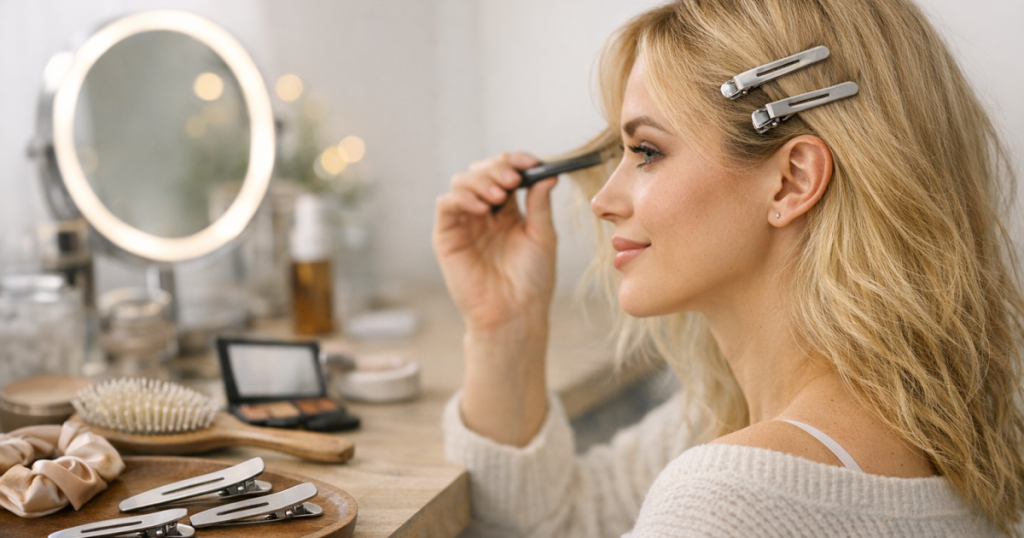
Kitsch Creaseless Hair Clips sit in that useful middle ground between beauty accessory and practical styling tool. They are made for holding hair back without leaving the sharp clamp mark that standard metal or plastic clips can create, particularly around the fringe, temples and crown where fine hair shows every bend.
For at-home styling, that makes them more useful than they look at first glance. They can keep the front sections tidy while you apply skincare, stop a fringe from dropping into your face while make-up sets, or hold a soft wave in place while it cools. They are also helpful when you are styling in stages: clip away the pieces you are not working on, then release them without having to smooth out a dent.
Their appeal is strongest for fine to medium hair. Fine hair often needs gentle hold rather than maximum pressure, because too much clamp can flatten roots or leave a visible kink. These clips are better for small, controlled sections than for gathering a whole side of hair. If your hair is thick, coarse or long with lots of weight, you can still use them, but expect to work in smaller sections.
Key specs
- Product name: Kitsch Creaseless Hair Clips.
- Brand: Kitsch.
- Product type: creaseless hair clips for styling, sectioning and keeping hair off the face.
- Best suited to: fine hair, fringes, face-framing layers, light sectioning and styling prep.
- Useful for: make-up routines, skincare, heatless styling prep, blow-dry section control and cooling styled pieces.
- What to verify before buying: pack quantity, exact colour, finish, clip size and material listed by the retailer, as these can vary by listing or set.
- Care: wipe away product residue regularly, especially if you use hair oil, mousse, setting spray or dry shampoo near the roots.
Pros and cons
Pros
- Good for fine front sections: they hold small pieces without the heavy clamp feel of stronger styling clips.
- Less obvious marking: when used on dry or nearly dry hair, they are much less likely to leave a hard crease than ordinary clips.
- Useful during make-up: they keep hair away from the face without pulling the hairline flat.
- Neat enough for visible use: they look more polished than bulky sectioning clips if you are getting ready, filming content, or working from home.
- Helpful for heatless routines: they can hold small sections while you organise curling ribbons, rollers or overnight styles.
Cons
- Not the strongest grip: very silky, freshly conditioned or product-heavy fine hair may still slip.
- Limited for thick hair: dense sections can push the clip open or slide out unless you use much smaller pieces.
- Not ideal for active wear: they are better for getting ready than for holding hair through exercise, wind or a busy commute.
- Can still mark damp hair: no creaseless clip is magic if hair is wet, compressed for too long, or loaded with styling product.
- Easy to misplace: small styling clips tend to disappear into make-up bags, dressing tables and coat pockets.
Performance in real use
Grip on fine hair
On fine hair, the clips perform best when used close to the hairline or on small surface sections. They can hold a fringe back comfortably, control wispy layers around the temples, or keep a face-framing piece in place while you work on the rest of your style. The hold feels gentle rather than rigid, which is exactly what many fine-haired users want.
The trade-off is that gentle hold does not behave like a firm salon clamp. If your hair is very smooth, freshly washed or coated in a silicone-rich conditioner, the clips may need a little help. A light mist of texture spray, dry shampoo at the roots, or simply clipping slightly more hair than you think you need can improve the grip without making the style stiff.
Crease control
The creaseless effect is strongest on dry hair that has not been pressed under tension for ages. For example, clipping a fringe away while doing make-up is where they make the most sense: the hair stays controlled, then drops back without the obvious horizontal dent a standard clip can leave.
They are less foolproof on damp hair. Fine hair sets quickly when it dries in a compressed shape, so even a gentler clip can leave a bend if the hair is wet or packed with styling cream. If you are using them around the roots, give the hair a little lift before clipping rather than pinning it flat to the scalp.
Root volume and fringe control
For root volume, the trick is placement. Slide the clip in so it supports the hair slightly upwards, not plastered flat. This is particularly useful around a curtain fringe, soft side fringe or grown-out layers that need to stay out of the face but still fall naturally afterwards. If your main styling goal changes from roots to lengths and ends, the site’s guide to how to choose tools by roots, lengths and ends is a useful next step.
Compatibility with heatless styling
These clips are not curlers, but they do support heatless styling routines. They can hold spare sections while you wrap hair around a curling ribbon, keep shorter layers out of the way, or secure the front pieces while the rest of the hair is set. For fine hair, that control matters because messy sectioning can make waves look uneven or leave the top flat.
They are also helpful when you want a smoother finish without adding heat. Clip the front pieces neatly while skincare or make-up dries, release them, then finger-shape the hair rather than brushing aggressively. That keeps fine hair looking fuller because you are not repeatedly flattening the root area.
Comfort and day-to-day use
Comfort is one of their strongest points. They are light, quick to place and easy to remove without tugging when used properly. They are much nicer for front-of-face use than bulky claw clips, which can feel excessive if you only need to hold back a fringe.
For everyday organisation, they work well in a small styling kit alongside a detangling brush, heatless curler, rollers or a silk wrap. If you already use several Kitsch accessories, it is worth checking how the broader Kitsch clip styles work for everyday sectioning, because the right clip depends on whether you need crease control, stronger hold or quick clipping while styling.
Durability and maintenance
As with most small hair accessories, longevity depends on how they are treated. Throwing them loose into a handbag with keys, compacts and hairbrushes is more likely to scuff or bend them than keeping them in a pouch or drawer. Product build-up can also reduce grip, so wipe the surface now and then if you use dry shampoo, root spray, hair oil or hairspray.
The main thing to avoid is forcing too much hair into one clip. If the clip has to strain to close, it is the wrong tool for that section. Use two clips, take a smaller piece, or switch to a stronger sectioning clip.
Who it’s best for / who should skip it
Best for
- Fine hair that dents easily: especially around the fringe, temples and crown.
- People who style in small sections: ideal for controlled, tidy prep rather than heavy-duty clipping.
- Fringes and face-framing layers: useful when you want hair off the face without flattening the shape.
- Make-up and skincare routines: a cleaner-looking alternative to large clips or tight headbands.
- Heatless styling fans: helpful for organising pieces while using ribbons, wraps or rollers.
Skip it if
- You need strong hold for thick sections: these are not the most secure option for heavy, dense hair.
- Your hair is extremely slippery: you may need texture at the roots or a clip with more bite.
- You want gym-proof grip: they are not intended to replace elastics, claw clips or firm sectioning clips.
- You mostly clip wet hair: fine hair can still dry with a bend if compressed while damp.
Alternatives
If you like the idea but need more grip, look for a stronger salon-style sectioning clip rather than another delicate creaseless clip. Framar Big Bite Clips are a recognisable option for holding larger sections while blow-drying, curling or separating dense hair, though they are more functional than discreet.
If your main issue is overnight shape rather than daytime sectioning, a silk wrap or soft heatless curler may be more useful than clips. Fine hair often responds well to low-tension overnight styling, provided the roots are not pulled flat and the ends are not over-compressed.
Common questions
Do Kitsch Creaseless Hair Clips hold fine hair?
Yes, for small sections, fringes and face-framing pieces. They are better for light control than for clamping a large amount of fine, silky hair at once.
Will they leave marks in fine hair?
They are designed to reduce dents, and they perform best on dry hair. Damp hair can still set into a bend if it is clipped tightly or left compressed for too long.
Can you use them while blow-drying?
You can use them for light sectioning or to keep front pieces away, but avoid expecting them to hold heavy sections under tension. For a full blow-dry, stronger sectioning clips may be easier.
Are they useful for curly or wavy hair?
They can be useful around the hairline, but curls and waves need gentle placement. Avoid dragging them through the curl pattern, and remove them carefully to prevent frizz.
How many clips do you need?
For fine hair, a small set is usually enough for fringe control, make-up and light sectioning. If you section your whole head, check the pack quantity before buying.
Verdict + score
Kitsch Creaseless Hair Clips are a worthwhile accessory for fine hair if your expectations are realistic. They are best for neat, light-touch styling: holding back a fringe, preserving face-framing shape, organising sections and avoiding obvious clip dents while you get ready. They are not the strongest clips for dense hair or heavy styling work, but for fine hair that marks easily, they solve a very specific everyday problem well. Score: 8.2/10.
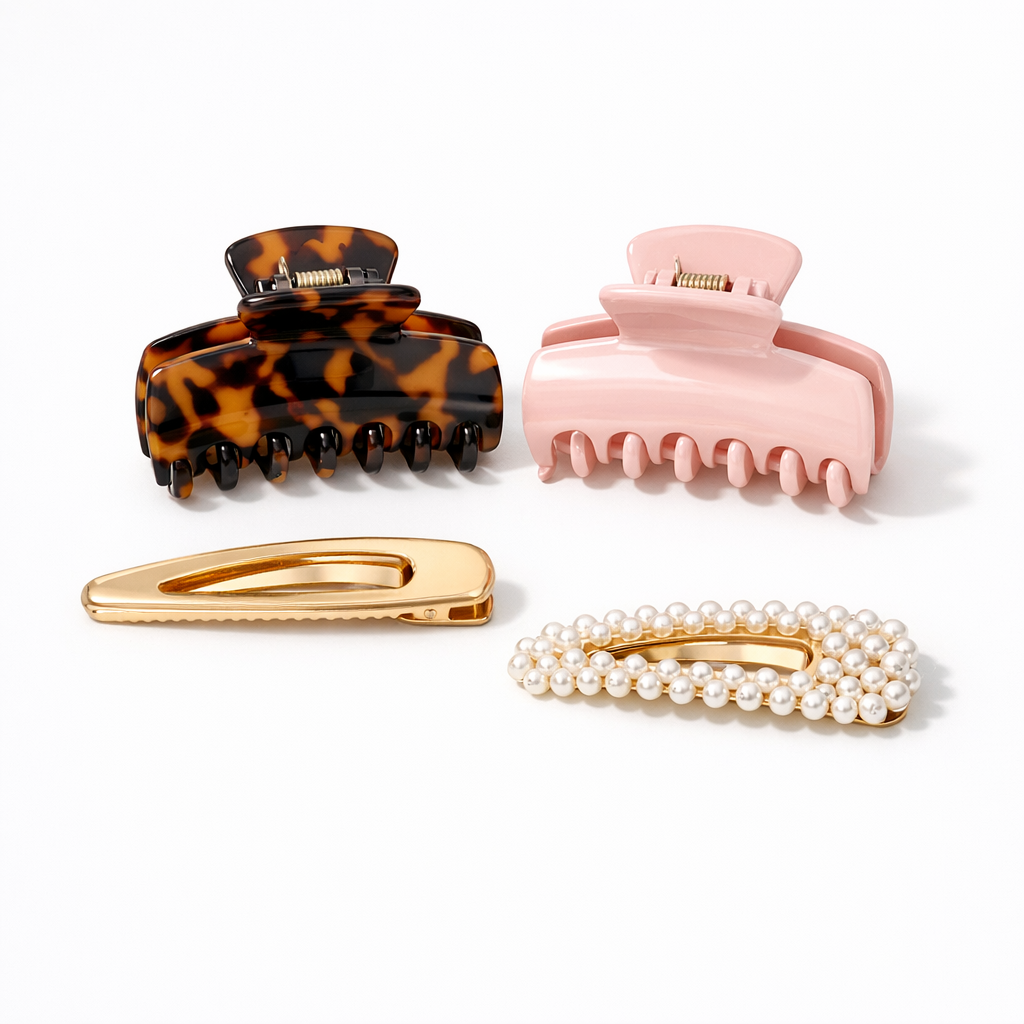
Kitsch Hair Clips
They are not the strongest clips for dense hair or heavy styling work, but for fine hair that marks easily, they solve a very specific everyday problem well.
You might also like: How to Use a Diffuser Attachment on Wavy Hair.