Thick hair can look incredible with overnight waves, but it also has a habit of dropping shape by breakfast or turning bulky at the ends. For heatless curls thick hair needs a slightly different routine from fine or medium hair: smaller sections, controlled dampness and a longer setting window.
The goal is not to force the hair into the tightest wrap possible. It is to help each section dry or set fully in a curved shape, then release it without stretching the curl before it has had time to settle.
The short version
- Start with hair that is only slightly damp, not wet, because thick hair can stay damp inside the wrap for hours.
- Use smaller sections than you think you need, especially around the back and underneath layers.
- Add a light hold product before wrapping, then avoid heavy oils or rich creams until after the curl has formed.
- Wrap with even tension, but do not pull so tightly that the roots feel sore or the curl pattern becomes stretched.
- Leave the style in until the hair feels fully dry and cool, then separate curls with your fingers rather than brushing straight away.
Why thick hair drops heatless curls
Thick hair usually has more density, more internal moisture to dry through, and more weight pulling the curl down. Even if the outer layer feels dry, the middle of a wrapped section can still be slightly damp. Once the hair is released, that remaining moisture lets the shape relax quickly.
The other common issue is section size. A large chunk of thick hair wrapped around a satin rod, belt or flexi rod may look neat from the outside, but the inner strands may not sit close enough to the tool to form a defined curve. Smaller sections create better contact, more even drying and less weight per curl.
Product choice matters too. Rich leave-in creams, oils and masks can make thick hair feel smooth, but they can also soften the set if used too generously before wrapping. For hold, think light layers: a touch of mousse, styling spray or curl-enhancing lotion is usually more useful than a heavy coating of conditioning product.
Start with the right level of dampness
For most thick hair, the sweet spot is around 80–90% dry before wrapping. The hair should feel cool or lightly damp to the touch, not wet, slippery or heavy. If you wrap wet thick hair before bed, it may still be damp in the morning, which is one of the fastest ways to lose the curl.
How to test it
- Squeeze a section at the back of your head, not just the top layer. If it feels wet inside, wait longer.
- Run your fingers through the mid-lengths. They should glide through without feeling saturated.
- Check the ends. If they are bone dry but the roots are damp, lightly mist only the lengths before wrapping rather than re-wetting the whole head.
If your hair takes a long time to dry, wash it earlier in the evening or style on second-day hair with a fine water mist. This gives you more control than trying to wrap hair straight from the shower.
Prep the hair so it has grip, not heaviness
Heatless curls hold better when the hair has a little styling memory. Freshly washed, very silky hair can be too soft, while overloaded hair can feel heavy and limp. The best prep sits somewhere between the two.
Apply a lightweight styling product through the lengths before wrapping. A mousse, flexible hold spray or curl-setting lotion can help thick hair keep its shape without creating a crunchy finish. Use less product near the roots if your hair gets oily quickly, and concentrate on the mid-lengths and ends where the curl shape needs support.
If your hair is very dry or porous, condition it well on wash day but keep heavy oil for the finishing stage. Hair that is damaged or prone to snapping may also need a stronger care routine alongside styling; if that sounds familiar, the Olaplex No. 3 Hair Perfector review is a useful next read for understanding where a bond-building treatment fits around styling.
Section thick hair before you wrap
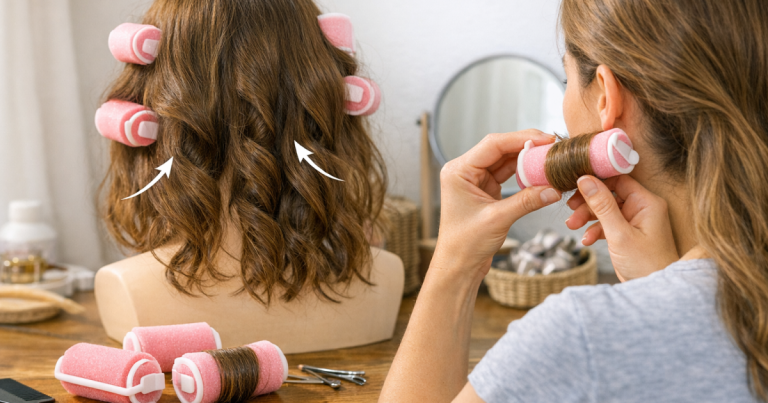
Sectioning is the biggest difference between a curl that lasts and one that falls flat. Thick hair usually needs more sections than tutorials show on medium-density hair. If you are using one long curling rod, split each side into at least three working sections: front, middle and back. Very dense hair may need four per side.
For robe-tie or satin rod curls, start at the front where you want the most visible shape, then add small pieces as you wrap downwards. Keep each added piece similar in size so the curl forms evenly. If one section is twice as thick as the others, it will dry slower and may become the piece that drops first.
Section size by result
- For soft waves: use medium sections, wrap loosely, and avoid overloading the ends.
- For bouncy curls: use smaller sections and wrap with consistent tension from roots to ends.
- For root lift: start the wrap slightly higher and keep the first turn firm, but not tight.
- For frizz control: smooth each section with a brush or fingers before wrapping, then avoid disturbing it overnight.
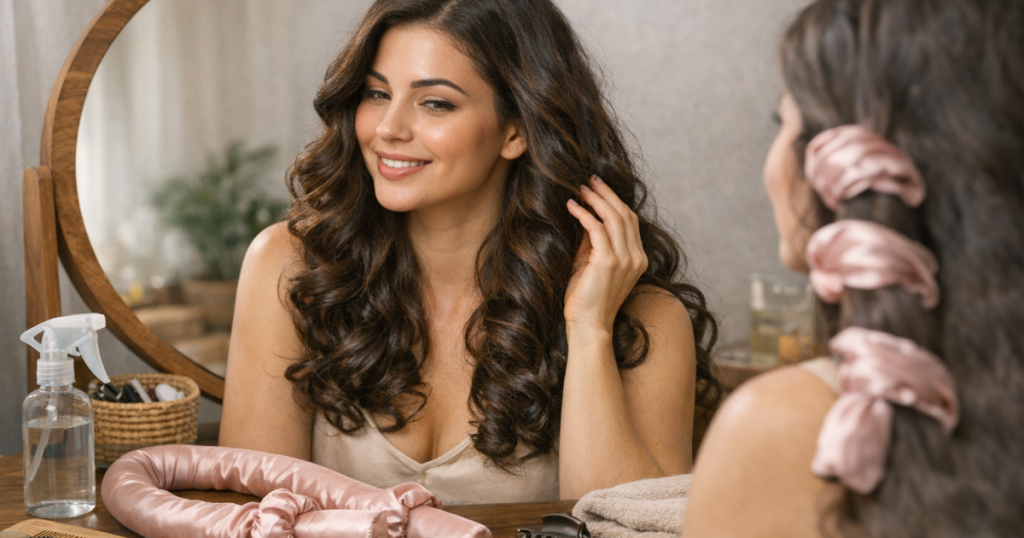
If you are using a dedicated satin tool, the fabric can help reduce friction while you sleep. The Kitsch Satin Heatless Curling Set review explains how this type of set performs for overnight curls and what to expect from the shape.
Wrap with even tension from roots to ends
Thick hair needs enough tension to remember the curve, but too much tension can create stretched roots, uncomfortable pulling and uneven bends. Aim for a firm, smooth wrap that holds the hair against the tool without tugging at the scalp.
Before you secure the end, check that the hair has not twisted into a rope. A twisted section creates a different result: more wave than curl, with less definition through the middle. If you want a polished curl, keep the section flat as it travels around the rod or fabric.
Common wrapping mistakes
- Using sections that are too wide, so the inner strands do not set properly.
- Wrapping the ends carelessly, which leaves them straight or flicked out.
- Securing with a tight elastic that dents the curl at the bottom.
- Taking the tool out too quickly and pulling the curl down as you release it.
For the ends, use a soft scrunchie, satin tie or spiral hair tie where possible. A harsh band can create a crease that is difficult to blend once the curls are dry.
Give thick hair enough time to set
Thick hair usually needs a longer setting window than finer hair. Overnight is often the easiest option, but only if your hair is already mostly dry before wrapping. If you are styling during the day, allow several hours and resist checking every 20 minutes, as repeated unwrapping loosens the shape.
When you think the curls are ready, touch the thickest section at the back and underneath. It should feel fully dry, not cool-damp. If it feels even slightly moist, leave the tool in longer or use a cool airflow setting from a dryer at a distance to help finish the drying process without relying on heat styling.
Sleep setup also affects hold. Thick hair can get flattened by pillow pressure, especially around the back. A satin pillowcase, loose silk or satin wrap, and careful positioning can help preserve the curl shape. For more detail on the overnight part, read how to sleep in heatless curls without flattening them.
Take the curls down without stretching them
The takedown is where many thick-hair heatless styles lose their shape. Do not pull the rod or tie straight down. Unwind each curl in the direction it was wrapped, supporting the section with your other hand so the weight of the hair does not drag the curl out immediately.
Once everything is released, leave the curls alone for a few minutes. This short pause helps the shape settle before you start separating. Then use your fingers to split large curls into smaller pieces. Avoid brushing at this stage unless you deliberately want a soft, brushed-out wave.
Finishing for hold without stiffness
- Flip the hair gently and shake at the roots for volume rather than combing through the lengths.
- Use a light mist of flexible hairspray if your curls tend to fall within an hour.
- Add a tiny amount of oil or serum to the ends only if they look dry or fluffy.
- Clip the front pieces up for 10 minutes after release if you want extra lift around the face.
If your finished curls feel too tight, let them relax naturally before adjusting. Thick hair often drops a little within the first hour, so it is better to start slightly more defined than to over-separate too soon.
Troubleshooting by thick hair type
If your hair is thick and straight
Straight thick hair often needs more grip. Style on hair that is not freshly softened with heavy conditioner, use a light mousse before wrapping, and keep sections small. You may also get better results from a smaller rod or tighter wrap because the hair has less natural bend to support the curl.
If your hair is thick and wavy
Work with your natural pattern rather than against it. Smooth frizz before wrapping, but do not brush the finished curls too much. A curl-enhancing cream can help, but keep the amount modest so the waves do not become heavy.
If your hair is thick, coarse or porous
Coarse or porous hair can hold shape well, but it may frizz if wrapped while too dry or disturbed too much during takedown. Use a hydrating leave-in sparingly, then layer a small amount of hold product over the top. Keep the wrap smooth and sleep on a low-friction surface.
If your roots go flat but the ends curl
Start wrapping slightly closer to the root, use smaller front sections, and avoid applying rich products near the scalp. After takedown, lift the roots with your fingers and let the curls settle before adding spray. Heavy finishing oil near the crown will usually make root collapse worse.
Questions people ask
Should thick hair be wet or dry for heatless curls?
It should usually be mostly dry with a slight damp feel. Wet thick hair often fails to dry fully inside the wrap, which makes curls drop quickly after release.
Why do my heatless curls look good at first, then fall flat?
The most likely reasons are sections that were too large, hair that was still damp inside, or too much heavy product before wrapping. The curl can look set briefly, then relax as the remaining moisture and weight pull it down.
Can I make heatless curls last for two days on thick hair?
Yes, but the second day will usually be softer. Preserve the shape with a loose pineapple, satin wrap or low-friction pillowcase, then refresh individual front pieces with a light mist and re-wrap them for a short time.
Do thicker rods work better for thick hair?
Not always. A thicker rod gives looser waves, but very dense hair may need smaller sections to set properly. If your curls keep falling, reduce the section size before changing the tool.
Should I brush out heatless curls on thick hair?
Only if you want a soft wave or blowout effect. For longer-lasting definition, separate with fingers first and brush later once the curls have had time to settle.
Key takeaways
To make heatless curls hold in thick hair, control the dampness, reduce the section size and give the style enough time to dry completely. The best results usually come from a balanced routine: light styling product before wrapping, smooth even tension while setting, and gentle finger separation afterwards.
If your curls keep dropping, change one variable at a time. Start with smaller sections, then adjust your product amount, then experiment with a longer setting window. Thick hair can hold beautiful heatless shape, but it needs a routine that respects its density and weight rather than copying methods designed for finer hair.